The picks
The best portable air conditioners for a small room
Here is the awkward truth about this search: most small rooms need 5,000 to 8,000 BTU, and the portable market mostly starts well above that. The fix is usually not a smaller portable.
By Sawyer V. · Published
The short answer
A 12×12 room needs 5,000 BTU and a 12×14 needs 6,000. Portables generally start around 8,000 BTU on the box, which after the SACC haircut can land near 6,000 — so the honest small-room portable is the smallest one you can find. A 6,000 BTU window unit does the same job for a third of the running cost.
Fan & Frost earns a commission when you buy through our links, at no cost to you. It never changes a ranking, and we say so when the right answer is the cheaper unit or nothing at all. Full disclosure · How we pick.
At a glance
The picks, ranked
Tap any row to jump to the full reasoning. Prices are live from Amazon where we have them, and read “check price” where we don’t — never a number we cannot verify today.
| # | Product | Best for | Price |
|---|---|---|---|
| 1 | Best small-room answer overall Midea U-Shaped Window Air Conditioner, 6,000 BTU 6,000 BTU is genuinely the right capacity for a small room, and this uses 298 kWh a year to deliver it. | A bedroom up to about 250 sq ft with a sash window | |
| 2 | 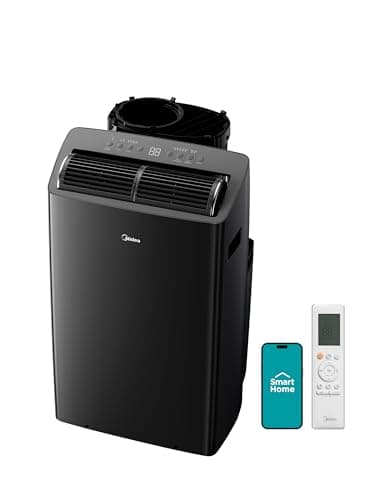 Best portable, if it must be portable Midea Duo Smart Inverter Portable Air Conditioner Substantially more capacity than a small room needs, but the smallest SACC haircut and the quietest published figure. | A small room with a casement window or a lease prohibition | |
| 3 | 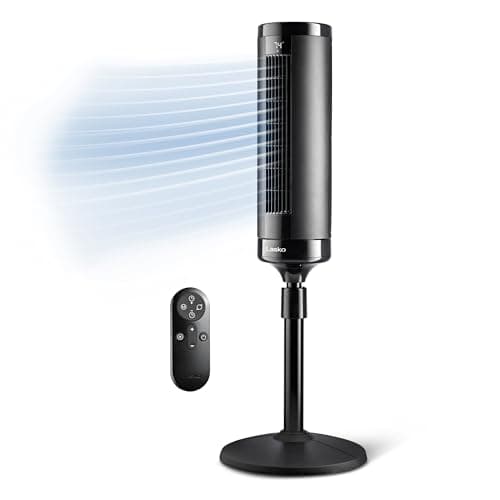 Try this first Lasko EcoQuiet 42" DC Tower Fan 19 W against roughly 900. For a lot of small bedrooms, most of the season, this is the whole answer. | A small room that is uncomfortable rather than unbearable | |
| — | The one to skip for a small room Whynter ARC-14S Dual Hose Portable Air Conditioner 9,500 BTU SACC and 1,300 W in a 150 sq ft bedroom is the definition of oversizing. | A 400 sq ft room, not a small one |
This search has a mismatch buried in it that most pages answering it do not mention. Small rooms need small capacities. Portable air conditioners are mostly not built small.
The numbers
What a small room actually needs
| Room area (sq ft) | Capacity needed (BTU/h) |
|---|---|
| 100 up to 150 | 5,000 |
| 150 up to 250 | 6,000 |
| 250 up to 300 | 7,000 |
| 300 up to 350 | 8,000 |
| 350 up to 400 | 9,000 |
| 400 up to 450 | 10,000 |
| 450 up to 550 | 12,000 |
| 550 up to 700 | 14,000 |
Source: ENERGY STAR, Room Air Conditioners. ENERGY STAR notes the capacities “are calculated based on an 8-foot ceiling.” The full chart, with the adjustments.
A 10×12 bedroom is 120 sq ft: 5,000 BTU. A 12×14 is 168 sq ft: 6,000 BTU. Even a generous 14×16 at 224 sq ft still only asks for 6,000.
Meanwhile the portable market largely begins at 8,000 BTU on the box and clusters at 12,000 and 14,000. And those box figures overstate real capacity: after the DOE’s SACC adjustment, a 14,000 BTU portable delivers between 9,500 and 12,000 depending on the unit. That haircut is explained here, and it is the one genuinely useful thing about it for small-room buyers: an 8,000 BTU portable may honestly be a 6,000 BTU machine, which is exactly what your room wants.
Say the unwelcome thing
Oversizing hurts most in a small room.
Everyone worries about buying too little. In a small room, too much is the more likely mistake and the more uncomfortable one.
An air conditioner removes moisture only while it is actually running. Put a 12,000 BTU machine in a 150 sq ft bedroom and it hits the set temperature in minutes, shuts off, and never runs long enough to dehumidify. The thermometer says 70°F and the room feels like a cellar. Then it restarts, and the cycling is both wasteful and hard on the compressor.
Buy the smallest unit that meets the number. If you land between two capacities, take the lower one.
The comparison
What each option costs to run
| Option in a 150 sq ft room | Power | 30 × 8-hr nights |
|---|---|---|
| DC tower fan | 19 W | 84¢ |
| 6,000 BTU window unit | 298 kWh/yr certified | $55 per YEAR |
| Small portable, approx. | 900 W | $40 |
| 14,000 BTU portable | 1,300 W | $57 |
Window figure is ENERGY STAR certified annual energy use. Portable figures are nameplate draw, so treat them as a ceiling. Costs are our arithmetic at 18.34¢/kWh.
The window unit’s annual cost is close to the portable’s monthly cost. In a small room, where you need the least capacity and the window unit options are cheapest, that gap is at its widest.
Decide
Three questions, in order
- Is the room actually unbearable, or just warm? Small rooms respond well to a fan and a closed blind. Try that for a week before spending several hundred dollars — the bedroom sequence is here.
- Do you have a vertical sash window? If yes, a 6,000 BTU window unit is cheaper to buy, a third of the running cost, and quieter in a room this size.
- If not, buy the smallest portable you can find and check its SACC rather than its box figure. Prefer an inverter model, because in an oversized application the ability to modulate down is what saves the comfort.
In full
Every pick, and what is wrong with it
Published specifications only, each linked to the page it came from. Where a manufacturer publishes nothing, the row says so — we do not fill blanks in.
1. Best small-room answer overall
Midea U-Shaped Window Air Conditioner, 6,000 BTU
Midea · model MAW06V1QWT
6,000 BTU is genuinely the right capacity for a small room, and this uses 298 kWh a year to deliver it.
We are leading a portable roundup with a window unit, and the reason is arithmetic rather than contrarianism.
6,000 BTU is the capacity a small room actually wants — the ENERGY STAR table puts 150–250 sq ft there exactly. It is also close to the smallest capacity the portable market offers once you account for SACC, so at this size the two categories genuinely overlap and you get to choose on merit.
On merit it is not close. 298 kWh a year, about $55 at 18.34¢/kWh, for an entire cooling season. A portable in the same room, at a typical 900 W for eight hours a night, would use roughly 216 kWh in a single month.
The U-shape is what makes it practical in a small room: the sash closes through the middle of the unit, so the compressor sits outside the closed window and the room stays quiet. In a small bedroom, where you are within eight feet of the machine, that is worth more than it sounds. No bracket, no drilling, and the window still opens — which is usually what a lease cares about.
What’s wrong with it
It is a window unit, not a portable — so it occupies the window and needs a vertical sash. At 53.1 lb it is also not a light lift.
Running cost — MAW06V1QWT
| Annual energy use | 298 kWh | ENERGY STAR certified figure |
|---|---|---|
| Annual cost | $55 | 298 × 18.34¢/kWh |
| Per cooling month | $14 | spread over a four-month season |
The annual figure is the certified value from the ENERGY STAR Certified Room Air Conditioners dataset, which models a standard cooling season rather than your actual summer. It is more useful than a nameplate wattage here, because a variable-speed compressor spends most of its life well below nameplate.
Rate: 18.34¢/kWh, the US average residential price for June 2026 (EIA Electric Power Monthly, Table 5.3). Yours will differ — swap it in: (watts ÷ 1000) × hours × your rate.
| Cooling capacity | 6,000 BTU/h |
|---|---|
| CEER | 15.1 |
| Annual energy use | 298 kWh/yr |
| vs federal standard | 37% less energy |
| Dimensions | 13.5 H x 19.2 W x 22.0 D in |
| Weight | 53.1 lb |
| Refrigerant | R-32 |
| Installation | U-shape; sash closes through the middle of the unit |
| Compressor | Variable speed |
| ENERGY STAR | Certified, and on the Most Efficient list |
Every figure above is from ENERGY STAR Certified Room Air Conditioners dataset. Blanks are shown as “not published” rather than filled in.
2. Best portable, if it must be portable
Midea Duo Smart Inverter Portable Air Conditioner
Midea · model MAP14S1TBL
Substantially more capacity than a small room needs, but the smallest SACC haircut and the quietest published figure.
If your window will not take a window unit, this is the portable to get — and you should understand what you are accepting.
12,000 BTU SACC serves 450–550 sq ft. In a 150 sq ft bedroom that is roughly triple the required capacity. The unit will cool the room fast, hit the set point, and shut down before it has removed meaningful humidity, leaving the room cold and slightly clammy. That is the oversizing problem, and it is worse in a small room than anywhere.
The inverter compressor mitigates it. Rather than cycling hard on and off, it modulates down and holds a low output — which is precisely what an oversized unit in a small room needs to do. That, plus 43 dBA, is why this is the pick despite the capacity mismatch. A fixed-speed portable of the same size in the same room would be a much worse experience.
Look for the smallest capacity you can find in a portable, and check its SACC rather than its box figure — the gap runs from 14% to 32%, so an 8,000 BTU box figure may be nearer 6,000 in practice, which for a small room is ideal.
What’s wrong with it
12,000 BTU SACC in a 150 sq ft room is roughly double what the room needs, which means short-cycling and poor dehumidification. Midea publishes no wattage either.
Running cost
Midea does not publish a wattage for the MAP14S1TBL, so we cannot calculate what it costs to run. We are not going to estimate one. If Midea publishes a nameplate figure, this block will show the arithmetic.
| Marketing capacity | 14,000 BTU |
|---|---|
| DOE-rated capacity | 12,000 BTU SACC |
| Hoses | Dual |
| Noise | 43 dBA |
| Speeds | 3 |
| Refrigerant | R-32 |
| Dimensions | 19.52 W x 16.73 D x 32.48 H in |
| Weight | 74.96 lb |
| Manufacturer coverage claim | 550 sq ft |
| Power | Not published (115 V stated, no wattage) |
| Warranty | 1 year |
Every figure above is from Midea product page, MAP14S1TBL. Blanks are shown as “not published” rather than filled in.
3. Try this first
Lasko EcoQuiet 42" DC Tower Fan
Lasko · model T42710
19 W against roughly 900. For a lot of small bedrooms, most of the season, this is the whole answer.
Small rooms are where a fan is most likely to be sufficient, because you are close to it and the airflow reaches the whole space.
The arithmetic is stark. 84¢ for a month of eight-hour nights against roughly $40 for a portable at 900 W — and this fan is 23 dBA on low, a published figure, which is quieter than any compressor will ever be.
A fan does not cool the room; it moves air across your skin and makes you feel several degrees cooler. Combined with a blackout blind closed during the day it handles most of the season in most climates. Buy the compressor for the weeks when it genuinely does not.
What’s wrong with it
It does not lower the room's temperature at all, and above about 95°F moving hot air stops helping. If your room is genuinely 88°F at bedtime, this is not enough.
Running cost — T42710
| Nameplate power | 2.9 W – 19 W | manufacturer's published figure |
|---|---|---|
| Energy, 8-hour night | 0.15 kWh | 19 ÷ 1000 × 8 |
| Cost per hour | 0.3¢ | at 18.34¢/kWh |
| Cost per 8-hour night | 2.8¢ | on the highest speed |
| Cost per 30 nights | 84¢ | 4.6 kWh |
| Same month, lowest speed | 13¢ | at 2.9 W |
Rate: 18.34¢/kWh, the US average residential price for June 2026 (EIA Electric Power Monthly, Table 5.3). Yours will differ — swap it in: (watts ÷ 1000) × hours × your rate.
| Power | 2.9 W - 19 W (0.06-0.303 A at 120 V) |
|---|---|
| Noise | 23 dBA low, 46 dBA high |
| Speeds | 12 |
| Height | 41.6 in |
| Footprint | 12.8 x 12.8 in |
| Weight | 7.8 lb |
| Timer | 8 hours |
| Air delivery (CFM) | Not published |
| Warranty | 2 years |
Every figure above is from Lasko product page, T42710. Blanks are shown as “not published” rather than filled in.
Skip this one
Whynter ARC-14S Dual Hose Portable Air Conditioner
Whynter · model ARC-14S
9,500 BTU SACC and 1,300 W in a 150 sq ft bedroom is the definition of oversizing.
Nothing is wrong with this unit — it is the best-documented portable we found, and it earns its place in the main portable roundup. It is wrong for this room.
9,500 BTU SACC serves 350–400 sq ft. In a 150 sq ft bedroom it is roughly double what is needed, and it draws 1,300 W to deliver it — about $57 for a month of nights against $55 for a whole year of the window unit at the top of this page.
The comfort problem is the real one. An oversized unit cools the air quickly, satisfies the thermostat, and stops before it has pulled water out of the air. You end up cold and damp, then the compressor restarts a few minutes later. ENERGY STAR puts it plainly: an oversized air conditioner “costs more to purchase, wastes energy and does not provide better cooling.”
What’s wrong with it
1,300 W to cool a room that needs 5,000 BTU, with a fixed-speed compressor that will short-cycle rather than modulate. It is a capable machine in the wrong room.
Running cost — ARC-14S
| Nameplate power | 1300 W | manufacturer's published figure |
|---|---|---|
| Energy, 8-hour night | 10.40 kWh | 1300 ÷ 1000 × 8 |
| Cost per hour | 24¢ | at 18.34¢/kWh |
| Cost per 8-hour night | $1.91 | on the highest speed |
| Cost per 30 nights | $57 | 312.0 kWh |
Rate: 18.34¢/kWh, the US average residential price for June 2026 (EIA Electric Power Monthly, Table 5.3). Yours will differ — swap it in: (watts ÷ 1000) × hours × your rate.
| Marketing capacity | 14,000 BTU (ASHRAE-128) |
|---|---|
| DOE-rated capacity | 9,500 BTU SACC |
| Hoses | Dual |
| Power | 1,300 W / 11.6 A at 115 V |
| Noise | Under 51 dBA low, under 56 dBA high |
| Dehumidification | 71 pints/day |
| Refrigerant | R-32 |
| Dimensions | 16 W x 19 D x 35.5 H in |
| Weight | 73 lb |
| Manufacturer coverage claim | 500 sq ft |
| Warranty | 1 year unit, 3 years compressor |
Every figure above is from Whynter product page, ARC-14S. Blanks are shown as “not published” rather than filled in.
We are not linking a buy button for this one. If you want to look at it anyway, it is easy enough to find — but we would rather send you to something that fits your room.
Questions people actually ask
Frequently asked
What size portable air conditioner do I need for a small room?
A 12 by 12 room needs 5,000 BTU and a 12 by 14 needs 6,000, per the ENERGY STAR table. Since portables mostly start at 8,000 BTU on the box, look for the smallest one available and check its SACC figure — an 8,000 BTU box rating can be closer to 6,000 in practice.
Is an 8,000 BTU portable AC too big for a bedroom?
Often, on the box figure — 8,000 BTU serves 300 to 350 sq ft, which is a very large bedroom. But its SACC rating may be nearer 6,000, which suits a normal bedroom well. Check the SACC number rather than the headline. Why the two differ.
What happens if a portable air conditioner is too big for the room?
It cools the air quickly, reaches the set temperature, and shuts off before it has removed humidity — so the room feels cold and clammy rather than cool and dry. It then short-cycles, which wastes energy and is hard on the compressor. An inverter model handles oversizing much better because it modulates instead of stopping.
Is a window air conditioner better for a small room?
Considerably, if you have a sash window. A certified 6,000 BTU window unit uses 298 kWh for a whole year, about $55, against roughly $40 a month for a small portable at nameplate draw. It is also quieter, which matters when you are eight feet away from it.
Can a fan cool a small bedroom instead?
Often, for most of the season. Small rooms are where a fan is most likely to be enough, because the airflow reaches the whole space. A good DC tower fan costs about 84¢ for a month of nights and runs at 23 dBA. It will not help once the room is genuinely in the high 80s. The bedroom sequence.
What is the smallest portable air conditioner available?
Most ranges start around 8,000 BTU on the box, which is roughly 6,000 to 7,000 SACC. Smaller units marketed as personal or ventless coolers are evaporative coolers or fans, not air conditioners, and will not lower a room's temperature.
Sources
Where these numbers came from
- ENERGY STAR — Room Air Conditioners sizing table and oversizing guidance
- ENERGY STAR Certified Room Air Conditioners dataset — annual kWh
- Midea Duo MAP14S1TBL specifications — 12,000 SACC, 43 dBA
- Whynter ARC-14S specifications — 9,500 SACC, 1,300 W
- Lasko EcoQuiet T42710 specifications — 2.9-19 W, 23 dBA
Read next
Where to go from here
Back to Air Conditioners, or read how we pick.