Guide and picks
How to install a through-the-wall air conditioner
There are two completely different jobs behind this question, and only one of them is something to take on yourself.
By Sawyer V. · Published
The short answer
If a sleeve already exists, this is a manageable job: confirm the sleeve dimensions, check it is sound and correctly pitched, slide the chassis in, seal the perimeter and connect power. If it does not, creating one means cutting a structural opening through an exterior wall — lintel, weatherproofing, and possibly a permit. That is contractor work. Certified through-the-wall units run CEER 14.1 to 14.2 at around 532 kWh a year.
Fan & Frost earns a commission when you buy through our links, at no cost to you. It never changes a ranking, and we say so when the right answer is the cheaper unit or nothing at all. Full disclosure · How we pick.
At a glance
The picks, ranked
Tap any row to jump to the full reasoning. Prices are live from Amazon where we have them, and read “check price” where we don’t — never a number we cannot verify today.
| # | Product | Best for | Price |
|---|---|---|---|
| 1 | Lightest for an existing sleeve Midea Through-the-Wall Air Conditioner, 10,000 BTU 10,000 BTU at CEER 14.1 and 531.9 kWh, at 56.2 lb — half the weight of the alternative, on the Most Efficient list. | Replacing a failed unit in a sleeve that is already there | |
| 2 | Most efficient in the format Friedrich Through-the-Wall Air Conditioner, 10,100 BTU 10,100 BTU at CEER 14.2 and 533.5 kWh, on the Most Efficient list — the best certified through-the-wall figure we hold. | A sleeve replacement where running cost matters most | |
| 3 | 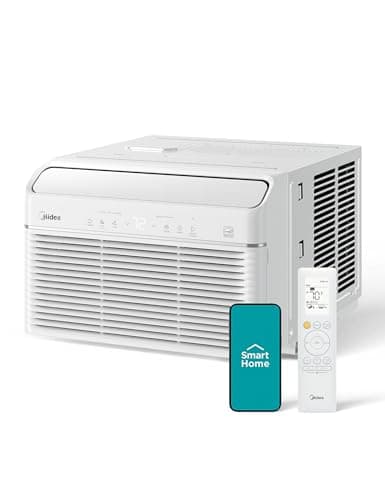 Smaller sleeve, smaller room Midea Through-the-Wall Air Conditioner, 8,000 BTU 8,000 BTU through the wall — the smaller capacity when the room does not need 10,000. | A compact room with an existing through-the-wall opening | |
| — | 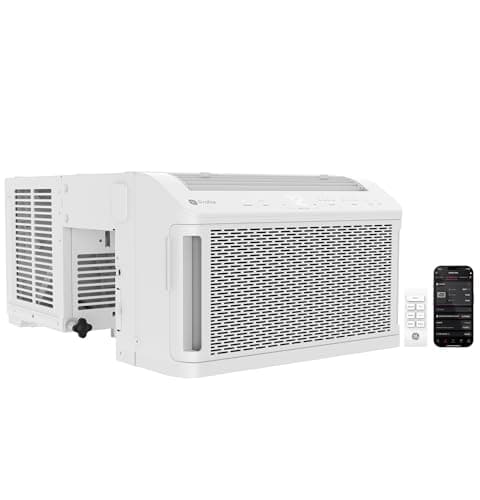 What a window costs you less to run GE Profile ClearView Window Air Conditioner, 8,000 BTU CEER 16 and 375 kWh a year — roughly 30% less energy than any certified through-the-wall unit. | A room with a usable window — where no sleeve is needed at all |
“How do I install a through-the-wall air conditioner” is really two questions, and the answer to one of them is “don’t”.
First
Which job are you actually doing?
Fitting a chassis into an existing sleeve is a contained job. The structural work is already done and signed off, the opening is weatherproofed, and you are replacing a component.
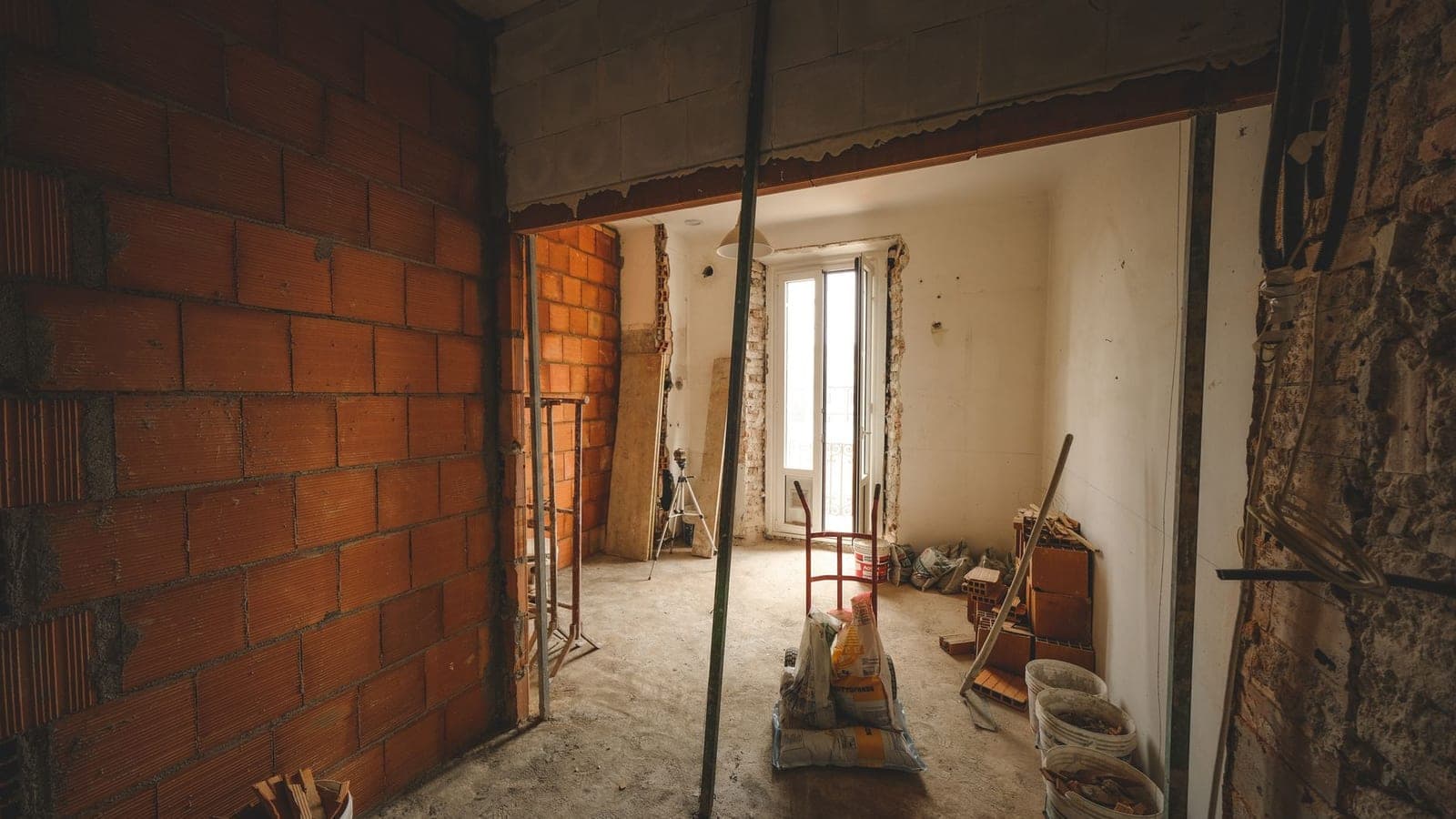
Creating a new opening is construction. It means cutting through an exterior wall, which requires understanding whether that wall is load-bearing, installing a lintel or header to carry the load above the opening, restoring the weather envelope and any vapor control, making good inside and out, and in many places pulling a permit.
This page covers the first job. The second one is contractor work, and the reason is not caution for its own sake — a badly formed opening in an exterior wall causes structural and moisture problems that surface years later.
Before you buy
Measure the sleeve, not the old unit
Sleeves are not standardized across manufacturers or eras, and the commonest mistake is ordering a chassis to match the old machine rather than the opening it sat in.
- Interior sleeve dimensions — height and width of the actual cavity, measured inside the sleeve rather than across the trim.
- Sleeve depth, and how far it projects beyond the exterior wall face. Some chassis need the sleeve to extend outward for condenser clearance.
- Louvre or grille type. Rear grilles are frequently part of the sleeve rather than the chassis, and a new chassis may need a matching grille.
- Electrical supply — voltage, amperage and receptacle type at the opening. Larger units frequently want a dedicated circuit.
Then check the chassis specification against those numbers, not against a nominal “standard” size.
This one is not a DIY job
Inspect the sleeve before trusting it. An existing sleeve is only an advantage if it is sound, and an old one frequently is not.
Corrosion. Steel sleeves rust from the outside in, and a sleeve carrying a 56 to 110 lb chassis needs to be structurally intact.
Pitch. The sleeve should slope very slightly toward the outside so condensate drains away from the building. Check with a level before fitting anything — correcting it afterward means taking the chassis out again.
Sealant and flashing. The perimeter seal between sleeve and wall is what keeps water out of the wall cavity. Perished sealant is a building problem, not a cooling one, and it is far easier to fix with the chassis out.
Kill the circuit at the breaker before any electrical work, and confirm it is dead.
The job
Fitting into an existing sleeve
- Kill the power at the breaker and confirm.
- Remove the old chassis. Most slide out on rails after removing a retaining strip or a few screws. They are heavy and the weight comes toward you, so have help and a clear route.
- Clean and inspect the empty sleeve — corrosion, pitch, sealant, and any debris or nesting in the rear grille.
- Confirm the new chassis dimensions against the sleeve before lifting it into position. This is the last easy moment to discover a mismatch.
- Slide the chassis in fully until it seats against its stops. It should go in without forcing; resistance usually means something is fouling rather than that it needs persuasion.
- Fit the perimeter seal. The gap between the chassis and the sleeve is a direct air path from outside to inside, and sealing it is where the efficiency lives.
- Fit the interior trim or frame supplied with the unit.
- Restore power and test. Run it for an hour and check for water on the interior sill — the sign the pitch is wrong.
Why the seal matters
The gap around the chassis
Certified figures like 531.9 kWh a year are measured under laboratory conditions with no air leaking around the machine.
A chassis sitting in a sleeve with an unsealed perimeter is pulling outdoor air into the room continuously whenever there is any pressure difference — and there almost always is. That is heat you are then paying to remove.
Through-the-wall units are already the less efficient format at CEER 14.1 to 14.2 against 16 and above for window units. Losing more to a poor seal is avoidable and expensive.
Use the gaskets supplied, and check them again each season along with the exterior sealant.
Maintenance
Once it is in
The format’s weakness is condenser airflow, so the maintenance that matters most is the part you can least easily see.
- Clean the rear grille and the condenser at least annually. A fouled condenser in an already-restricted sleeve raises compressor load directly.
- Rinse the filter every two to four weeks in season.
- Check the pitch and the drain path if water ever appears inside.
- Check exterior sealant annually — it is protecting the wall, not the machine.
The cleaning procedure applies with the caveat that the outdoor half is reached through the rear grille rather than by removing the unit.
Say the unwelcome thing
Do not cut a new wall opening yourself to save the installation cost.
It is the part of this job that looks approachable in a video and is not.
An opening in an exterior wall needs a lintel or header sized to carry the load above it, and getting that wrong shows up as cracking or deflection later rather than immediately. The weather envelope has to be restored properly, or water tracks into the wall cavity where you will not see it until there is damage.
There are also permit requirements in many places, and an undocumented structural alteration is a problem when you sell.
If no sleeve exists, get the opening made properly — then the chassis fitting is a job you can do. And check first whether a window unit would serve, since it needs no opening at all and runs on about 30% less energy.
In full
Every pick, and what is wrong with it
Published specifications only, each linked to the page it came from. Where a manufacturer publishes nothing, the row says so — we do not fill blanks in.
1. Lightest for an existing sleeve
Midea Through-the-Wall Air Conditioner, 10,000 BTU
Midea · model MAT10R1FWTK
10,000 BTU at CEER 14.1 and 531.9 kWh, at 56.2 lb — half the weight of the alternative, on the Most Efficient list.
56.2 lb. For a sleeve replacement that is the number that matters, because you are sliding a chassis into an opening at chest height rather than lifting it over a sill.
531.9 kWh a year, about $98 for a cooling season, and on the ENERGY STAR Most Efficient list despite the format’s inherent handicap.
CEER 14.1 is honestly below a good window unit — a closed sleeve restricts condenser airflow, and that is structural to the format rather than a fault of this machine.
R-32, variable-speed compressor. Full through-the-wall comparison.
What’s wrong with it
It still needs an existing sleeve, and CEER 14.1 carries the airflow penalty every through-the-wall unit does.
Running cost — MAT10R1FWTK
| Annual energy use | 531.9 kWh | ENERGY STAR certified figure |
|---|---|---|
| Annual cost | $98 | 531.9 × 18.34¢/kWh |
| Per cooling month | $24 | spread over a four-month season |
The annual figure is the certified value from the ENERGY STAR Certified Room Air Conditioners dataset, which models a standard cooling season rather than your actual summer. It is more useful than a nameplate wattage here, because a variable-speed compressor spends most of its life well below nameplate.
Rate: 18.34¢/kWh, the US average residential price for June 2026 (EIA Electric Power Monthly, Table 5.3). Yours will differ — swap it in: (watts ÷ 1000) × hours × your rate.
| Cooling capacity | 10,000 BTU/h |
|---|---|
| CEER | 14.1 |
| Annual energy use | 531.9 kWh/yr |
| Weight | 56.2 lb |
| Refrigerant | R-32 |
| Installation | Through the wall (existing sleeve required) |
| Compressor | Variable speed |
| ENERGY STAR | Certified, and on the Most Efficient list |
Every figure above is from ENERGY STAR Certified Room Air Conditioners dataset. Blanks are shown as “not published” rather than filled in.
2. Most efficient in the format
Friedrich Through-the-Wall Air Conditioner, 10,100 BTU
Friedrich · model WCVT10B10B
10,100 BTU at CEER 14.2 and 533.5 kWh, on the Most Efficient list — the best certified through-the-wall figure we hold.
CEER 14.2 at 10,100 BTU is the best through-the-wall figure in our certified data, and it is on the Most Efficient list.
533.5 kWh a year, about $98 — which is marginally more than the lighter Midea, because it is a fractionally larger machine.
So the honest comparison is: 0.1 of a CEER point and 100 BTU more capacity, for 110 lb against 56.2. Unless the sleeve is at a comfortable working height and you have help, the lighter unit is the sensible choice.
R-32, variable-speed, existing sleeve required.
What’s wrong with it
110 lb against 56.2 for the Midea, for essentially the same annual energy. That is a large handling difference for nothing.
Running cost — WCVT10B10B
| Annual energy use | 533.5 kWh | ENERGY STAR certified figure |
|---|---|---|
| Annual cost | $98 | 533.5 × 18.34¢/kWh |
| Per cooling month | $24 | spread over a four-month season |
The annual figure is the certified value from the ENERGY STAR Certified Room Air Conditioners dataset, which models a standard cooling season rather than your actual summer. It is more useful than a nameplate wattage here, because a variable-speed compressor spends most of its life well below nameplate.
Rate: 18.34¢/kWh, the US average residential price for June 2026 (EIA Electric Power Monthly, Table 5.3). Yours will differ — swap it in: (watts ÷ 1000) × hours × your rate.
| Cooling capacity | 10,100 BTU/h |
|---|---|
| CEER | 14.2 |
| Annual energy use | 533.5 kWh/yr |
| Weight | 110.0 lb |
| Refrigerant | R-32 |
| Installation | Through the wall (existing sleeve required) |
| Compressor | Variable speed |
| ENERGY STAR | Certified, and on the Most Efficient list |
Every figure above is from ENERGY STAR Certified Room Air Conditioners dataset. Blanks are shown as “not published” rather than filled in.
3. Smaller sleeve, smaller room
Midea Through-the-Wall Air Conditioner, 8,000 BTU
Midea · model MAT08R1FWTK
8,000 BTU through the wall — the smaller capacity when the room does not need 10,000.
Sleeve sizes vary, and so do rooms. If your opening suits a smaller chassis, or the room genuinely does not need 10,000 BTU, sizing down is the right call here as anywhere.
The oversizing penalty applies with full force in this format: a unit that reaches the setpoint in minutes and shuts off removes very little moisture, and a closed sleeve already restricts the airflow it depends on.
Size from the room before matching to the sleeve, then confirm the chassis fits the opening you have.
What’s wrong with it
Through-the-wall units are less efficient than window units at every capacity, and this is no exception.
Running cost — MAT08R1FWTK
| Annual energy use | 425.5 kWh | ENERGY STAR certified figure |
|---|---|---|
| Annual cost | $78 | 425.5 × 18.34¢/kWh |
| Per cooling month | $20 | spread over a four-month season |
The annual figure is the certified value from the ENERGY STAR Certified Room Air Conditioners dataset, which models a standard cooling season rather than your actual summer. It is more useful than a nameplate wattage here, because a variable-speed compressor spends most of its life well below nameplate.
Rate: 18.34¢/kWh, the US average residential price for June 2026 (EIA Electric Power Monthly, Table 5.3). Yours will differ — swap it in: (watts ÷ 1000) × hours × your rate.
| Cooling capacity | 8,000 BTU/h |
|---|---|
| CEER | 14.1 |
| Annual energy use | 425.5 kWh/yr |
| Refrigerant | R-32 |
| Installation | Through the wall (existing sleeve required) |
| Compressor | Variable speed |
| ENERGY STAR | Certified, and on the Most Efficient list |
Every figure above is from ENERGY STAR Certified Room Air Conditioners dataset. Blanks are shown as “not published” rather than filled in.
Skip this one
GE Profile ClearView Window Air Conditioner, 8,000 BTU
GE Profile · model PWJV08W
CEER 16 and 375 kWh a year — roughly 30% less energy than any certified through-the-wall unit.
Included so the format’s cost is explicit before you cut anything.
375 kWh a year against roughly 532 for a certified through-the-wall unit — about $29 more per season for the wall-mounted format, at similar capacity.
The cause is airflow. A window unit’s condenser sits in open air; a through-the-wall unit’s sits in a closed sleeve that restricts it. That is why the whole format tops out around CEER 14.2 while window units reach 16 and above.
You are buying permanence and a free window with that difference. If your window is usable and you do not mind the seasonal removal, the window unit is cheaper in every sense.
What’s wrong with it
It occupies the window for the season and has to come out, which is the entire reason through-the-wall exists.
Running cost — PWJV08W
| Annual energy use | 375 kWh | ENERGY STAR certified figure |
|---|---|---|
| Annual cost | $69 | 375 × 18.34¢/kWh |
| Per cooling month | $17 | spread over a four-month season |
The annual figure is the certified value from the ENERGY STAR Certified Room Air Conditioners dataset, which models a standard cooling season rather than your actual summer. It is more useful than a nameplate wattage here, because a variable-speed compressor spends most of its life well below nameplate.
Rate: 18.34¢/kWh, the US average residential price for June 2026 (EIA Electric Power Monthly, Table 5.3). Yours will differ — swap it in: (watts ÷ 1000) × hours × your rate.
| Cooling capacity | 8,000 BTU/h |
|---|---|
| CEER | 16 |
| Annual energy use | 375 kWh/yr |
| vs federal standard | 47% less energy |
| Dimensions | 12.6 H x 18.6 W x 15.3 D in |
| Weight | 46.2 lb |
| Refrigerant | R-32 |
| Installation | Does not straddle the windowsill |
| Compressor | Variable speed |
| ENERGY STAR | Certified, and on the Most Efficient list |
Every figure above is from ENERGY STAR Certified Room Air Conditioners dataset. Blanks are shown as “not published” rather than filled in.
We are not linking a buy button for this one. If you want to look at it anyway, it is easy enough to find — but we would rather send you to something that fits your room.
Questions people actually ask
Frequently asked
Can I install a through-the-wall air conditioner myself?
Into an existing sleeve, generally yes — it is a contained job of removing the old chassis, checking the sleeve, sliding the new one in and sealing the perimeter. Creating a new wall opening is structural work and belongs to a contractor.
How do I measure for a through-the-wall air conditioner?
Measure the sleeve, not the old unit. You need the interior cavity height and width, the sleeve depth and how far it projects past the wall face, the grille type, and the electrical supply at the opening.
Do through-the-wall air conditioners use more electricity?
Yes, at similar capacity. Certified through-the-wall units run CEER 14.1 to 14.2 against 16 and above for window units, because a closed sleeve restricts condenser airflow. That is roughly 532 kWh a year against 375.
Which way should a through-the-wall sleeve be pitched?
Very slightly toward the outside, so condensate drains away from the building. Check it with a level before fitting the chassis — correcting it afterward means taking the unit back out.
What should I check on an old sleeve?
Corrosion, since the sleeve carries 56 to 110 lb of chassis; the pitch; the perimeter sealant and flashing, which keep water out of the wall cavity; and debris or nesting in the rear grille.
Does the seal around the chassis matter?
A great deal. Certified figures assume no air leaking around the machine, and an unsealed perimeter pulls outdoor air into the room continuously. Through-the-wall units are already the less efficient format, so losing more to a poor seal is expensive. Through-the-wall comparison.
Sources
Where these numbers came from
Read next
Where to go from here
Back to Air Conditioners, or read how we pick.