The picks
The best dehumidifiers for drying clothes indoors
An airer in a cold room does not make the water disappear; it hands it to your walls and windows. A dehumidifier is the appliance that takes delivery, and its efficiency rating tells you the price per liter.
By Sawyer V. · Published
The short answer
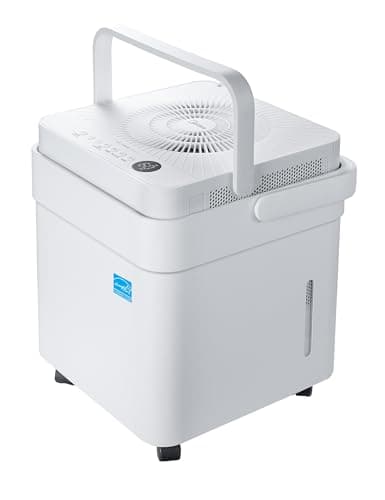
Buy the Midea 50-pint if you dry laundry indoors regularly — 49.67 pints a day on the federal test at a certified IEF of 2.08 L/kWh, the best figure of any household-name brand. Because IEF is liters per kilowatt-hour, the cost of drying is exactly calculable: 8.8¢ per liter of water taken out of the air at 18.34¢/kWh. In a cold room, use a desiccant unit instead.
Fan & Frost earns a commission when you buy through our links, at no cost to you. It never changes a ranking, and we say so when the right answer is the cheaper unit or nothing at all. Full disclosure · How we pick.
At a glance
The picks, ranked
Tap any row to jump to the full reasoning. Prices are live from Amazon where we have them, and read “check price” where we don’t — never a number we cannot verify today.
| # | Product | Best for | Price |
|---|---|---|---|
| 1 | Best overall Midea Dehumidifier, 50 pints/day 49.67 pints a day, about 23.5 liters, at IEF 2.08 L/kWh. The only household-name brand above the certified efficiency ceiling, and the cheapest per liter on this page. | A household that dries two or more loads a week indoors — enough capacity to clear an airer in a few hours rather than overnight | |
| 2 | 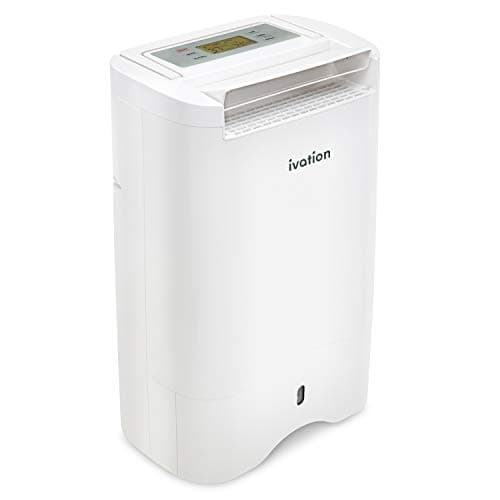 Best for a cold utility room or garage Ivation 19-Pint Desiccant Dehumidifier A desiccant rotor published down to 33 F, and it returns its heat to the room, which is the one place that side effect is actively useful. | An unheated laundry room, a garage, a porch or a cold outbuilding — where a compressor dehumidifier frosts instead of drying | |
| 3 | 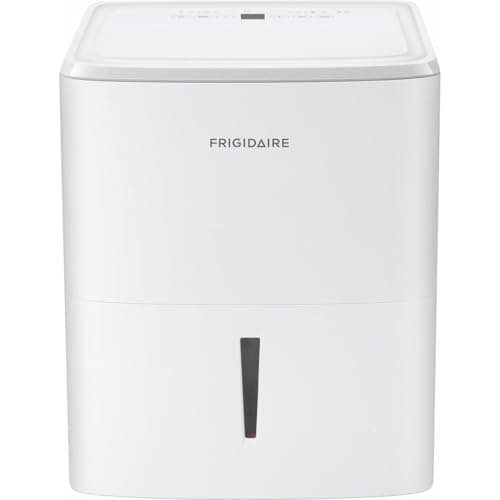 Best for one room and one airer Frigidaire Dehumidifier, 35 pints/day 35.85 pints a day, about 17 liters, at IEF 2.01 — the certified ceiling that 47 brands share — for about a cent more per liter than the Midea. | A single load at a time in a spare room or a bathroom with the door shut — the capacity that matches one airer rather than a laundry habit | |
| — | 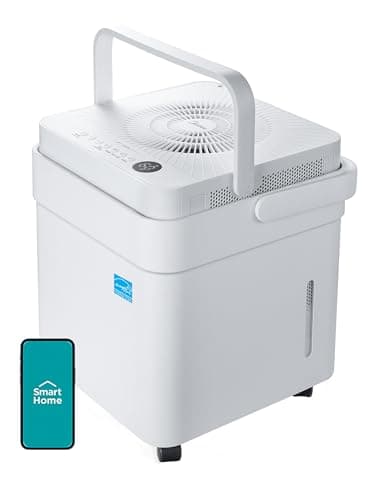 The one to skip Midea Dehumidifier, 20 pints/day 20.16 pints a day at IEF 1.70, the floor of the entire certified portable field. Both the smallest capacity and the worst efficiency, for a job that needs neither. | Nothing on this page — it is the small, cheap, obvious choice for a laundry airer and it is the most expensive way here to remove a liter of water |
Drying clothes indoors does not remove water from your house. It moves it from the washing to the air, and then from the air to the coldest surfaces in the building. A dehumidifier is the step that actually takes it out.
Criteria
How these are judged, in order
- Certified IEF. Integrated energy factor, liters of water removed per kilowatt-hour, from the federal test. For this job it is not an abstraction — it is the price of drying, divided directly into the electricity rate.
- Capacity on DOE Appendix X1. The comparable measurement. Several makers also print a bigger pint figure taken at a warmer, wetter condition, and we use the federal one.
- Whether it works at the room’s temperature. Laundry rooms are frequently the coldest room in the house, and a compressor dehumidifier frosts rather than drains below roughly 60 F. This outranks efficiency, because the wrong technology fails completely rather than expensively.
- Drainage. A continuous hose matters more here than almost anywhere else: laundry drying is a multi-liter job and a bucket you have to empty mid-cycle stops the machine.
- What is published at all. No dehumidifier publishes a noise rating — the certified dataset has no acoustic field for any of its 559 models. We show that as absent rather than filling it in.
We have tested none of these. Every figure is from the federal certified dataset or the manufacturer’s own page, with our arithmetic marked as ours. How we pick.
The arithmetic
What a liter of laundry water costs
This is the one appliance category where the efficiency rating converts into the task without any assumptions. IEF is liters per kilowatt-hour; electricity has a price per kilowatt-hour; so the cost of removing a liter is the rate divided by the IEF.
| Machine | IEF | Capacity, liters/day | Cost per liter |
|---|---|---|---|
| Midea 50-pint | 2.08 | 23.5 | 8.8¢ |
| Frigidaire 35-pint | 2.01 | 17.0 | 9.1¢ |
| Midea 20-pint | 1.70 | 9.5 | 11¢ |
| Ivation desiccant | Not published | 9.0 | Not calculable |
IEF and pint capacity from the ENERGY STAR Certified Dehumidifiers dataset (DOE Appendix X1). Liters and cost per liter are our arithmetic: pints × 0.473, and 18.34¢/kWh ÷ IEF. The Ivation is a desiccant unit, which no federal program covers.
Two things fall out of that table. The spread across the whole certified field is only about three cents a liter, so efficiency is not where this decision is won. And the capacity column spans two and a half times, which is where it is won: a machine that cannot keep ahead of a loaded airer runs all night at any efficiency.
One honest caveat on every capacity figure here. The federal test is run warm and humid. A cool laundry room will produce well under the rated figure, which is a second reason to buy more capacity than the arithmetic suggests.
The alternative
Against a tumble dryer
We cannot give you a like-for-like comparison, and it is worth saying why rather than inventing one. ENERGY STAR publishes savings for certified dryers, not an energy figure per load: “A full-size, electric clothes dryer that has earned the ENERGY STAR saves approximately $210 in energy bills over the life of the product”, and heat-pump models “use around 70% less energy than a conventional clothes dryers”. There is no published kWh-per-cycle on that page to divide by, so there is no honest per-load number to put against 8.8¢ a liter.
What we can say with confidence is the structural difference. A dryer heats water out of fabric and vents it outside. An airer plus a dehumidifier evaporates the water at room temperature and condenses it into a tank. Room-temperature evaporation needs no heating energy, which is the whole reason the second route is cheap — but it is also slow, and it puts every gram of that water through the air of your house on the way.
If you do use a dryer, the EPA has one instruction about it: “Vent appliances that produce moisture, such as clothes dryers, stoves, and kerosene heaters to the outside where possible.” An unvented or badly ducted dryer is the largest single moisture source in most houses, and it is the same water an airer would have released, delivered faster.
This one is not a DIY job
Shut the door, and put the machine in with the washing. A dehumidifier works on the air it can reach. Drying an airer in a closed small room concentrates the moisture around the machine and finishes in a fraction of the time; the same airer in an open-plan space spreads its water across the whole floor, where some of it condenses on cold glass before the dehumidifier ever sees it. Add a small fan moving air through the clothes and the evaporation rate goes up again for a few watts.
Buying
How to choose
- Start with the room temperature, not the capacity. Below about 60 F, a compressor unit is off the table however good its IEF is.
- Then buy more capacity than the square footage suggests. A loaded airer is a far heavier moisture load than ordinary room damp, and the rated pint figure is measured in warmer, wetter air than your laundry room has.
- Insist on continuous drainage if you will do this weekly. Several liters per session means a tank you would otherwise empty mid-job. Hose and pump options.
- Then, and only then, compare IEF. It is worth about three cents a liter across the entire certified field.
Say the unwelcome thing
Do not dry laundry indoors in an unheated room with no dehumidifier at all.
It is the specific combination that causes damage. The water leaves the clothes regardless — that is why they dry — and in an unheated room it has nowhere to go but the coldest surfaces, which the EPA names directly: mold is frequently found on walls in cold corners where condensation forms. Its stated window for drying a wet surface before mold grows is 24 to 48 hours, and a room that gets fresh washing twice a week never gets it.
Also, do not point a radiator at the airer and close the room. Heating the air lets it carry more water, which feels like progress, but as soon as it cools overnight the same water comes back out on the windows and walls. Heat moves the problem in time; the dehumidifier is what removes it.
In full
Every pick, and what is wrong with it
Published specifications only, each linked to the page it came from. Where a manufacturer publishes nothing, the row says so — we do not fill blanks in.
1. Best overall
Midea Dehumidifier, 50 pints/day
Midea · model MDUDMB-50AEN8-BB0F
49.67 pints a day, about 23.5 liters, at IEF 2.08 L/kWh. The only household-name brand above the certified efficiency ceiling, and the cheapest per liter on this page.
49.67 pints a day on DOE Appendix X1 — about 23.5 liters at 0.473 liters per US pint, our conversion — at a certified IEF of 2.08 L/kWh.
That efficiency figure is unusually useful for this particular job, because IEF is defined as liters of water removed per kilowatt-hour. Divide the electricity rate by it and you have the price of drying: 8.8¢ a liter at 18.34¢/kWh. Nothing else in home appliances converts this cleanly.
515 kWh a year certified, around $94 if it never stopped. For laundry it will not: you run it alongside the airer and switch it off, so the real cost is the liters you remove rather than the annual figure.
Capacity is the reason to take the 50-pint rather than something smaller. A loaded airer is a sustained, concentrated moisture source in one room, and a machine that can keep ahead of it finishes the job in an evening instead of running all night. The 20-pint against the 50-pint.
What’s wrong with it
515 kWh a year certified if it ran constantly, and it is a 50-pint box you have to find floor space for next to the airer. No dehumidifier publishes a noise figure, which matters if the airer lives in a bedroom.
Running cost — MDUDMB-50AEN8-BB0F
| Annual energy use | 515 kWh | ENERGY STAR certified figure |
|---|---|---|
| Annual cost | $94 | 515 × 18.34¢/kWh |
| Per cooling month | $24 | spread over a four-month season |
The annual figure is the certified value from the ENERGY STAR Certified Dehumidifiers dataset, which models a standard cooling season rather than your actual summer. It is more useful than a nameplate wattage here, because a variable-speed compressor spends most of its life well below nameplate.
Rate: 18.34¢/kWh, the US average residential price for June 2026 (EIA Electric Power Monthly, Table 5.3). Yours will differ — swap it in: (watts ÷ 1000) × hours × your rate.
| Water removal | 49.67 pints/day (DOE Appendix X1) |
|---|---|
| Efficiency (IEF) | 2.08 L/kWh |
| Annual energy use | 515 kWh/yr |
| Refrigerant | HFC-32 (GWP 675) |
| Connected | No |
| Noise | Not published in the certified dataset |
| ENERGY STAR | Certified |
Every figure above is from ENERGY STAR Certified Dehumidifiers dataset. Blanks are shown as “not published” rather than filled in.
2. Best for a cold utility room or garage
Ivation 19-Pint Desiccant Dehumidifier
Ivation · model IVADDH09
A desiccant rotor published down to 33 F, and it returns its heat to the room, which is the one place that side effect is actively useful.
Published operating range 33 F to 104 F, from a desiccant rotor with no compressor. That is the figure that puts it on this page: unheated laundry rooms, garages and back porches sit in the forties for months, and a compressor unit stops drying there.
19 pints a day at 68 F and 60 percent RH — about 9.0 liters by our conversion — across up to 410 sq ft, with a reservoir and a continuous drain hose.
The side effect is the selling point here. A desiccant machine drives moisture off its rotor with heat and sends that heat into the room, so it both dries the air and warms it. For a cold room with wet washing in it, warmer and drier are both the job — where in a July bedroom the same behavior is a nuisance.
What you give up is every number that would let you compare it. There is no ENERGY STAR program for desiccant dehumidifiers, so no IEF, no certified capacity and no published wattage. The 60-degree line.
What’s wrong with it
No federal program covers desiccant dehumidifiers, so there is no IEF, no annual kWh and no wattage — we cannot give you a cost per liter for it, and we are not going to estimate one. Its 19-pint rating is at the maker's condition, not DOE Appendix X1.
Running cost
Ivation does not publish a wattage for the IVADDH09, so we cannot calculate what it costs to run. We are not going to estimate one. If Ivation publishes a nameplate figure, this block will show the arithmetic.
| Water removal | 19 pints/day at 68 F and 60% RH (manufacturer condition, not DOE Appendix X1) |
|---|---|
| Coverage | Up to 410 sq ft |
| Operating range | 33 F to 104 F |
| Drying element | Desiccant rotor, no compressor |
| Drain | Removable reservoir plus continuous drain hose |
| Speeds | 2 |
| Controls | LCD, timer, sleep mode, outlet swing |
| ENERGY STAR | No program covers desiccant dehumidifiers |
| Efficiency (IEF) | Not published |
| Power | Not published |
Every figure above is from Ivation product page, 19-pint small-area desiccant dehumidifier. Blanks are shown as “not published” rather than filled in.
3. Best for one room and one airer
Frigidaire Dehumidifier, 35 pints/day
Frigidaire · model FHDD3534Y1
35.85 pints a day, about 17 liters, at IEF 2.01 — the certified ceiling that 47 brands share — for about a cent more per liter than the Midea.
35.85 pints a day, about 17 liters, at IEF 2.01 L/kWh and 379 kWh a year — $70 at 18.34¢/kWh on a constant run. R-32 refrigerant.
Per liter of laundry water that is 9.1¢ against 8.8¢ for the Midea. A real difference, a small one, and not a reason to buy the wrong capacity.
2.01 is the normal good machine. Across the certified portable field 47 separate brands have a best figure of exactly 2.01, which is why we treat it as the ceiling rather than a compromise.
The technique that makes a mid-capacity unit work: shut the door. Drying one airer in a closed small room concentrates the moisture where the machine is, instead of letting it spread through the house to condense on the coldest window you own. Which is how laundry ends up on the glass.
What’s wrong with it
A cent per liter more than the top pick, and 35 pints is still a substantial appliance for a small room. Like every dehumidifier, it publishes no noise figure at all.
Running cost — FHDD3534Y1
| Annual energy use | 379 kWh | ENERGY STAR certified figure |
|---|---|---|
| Annual cost | $70 | 379 × 18.34¢/kWh |
| Per cooling month | $17 | spread over a four-month season |
The annual figure is the certified value from the ENERGY STAR Certified Dehumidifiers dataset, which models a standard cooling season rather than your actual summer. It is more useful than a nameplate wattage here, because a variable-speed compressor spends most of its life well below nameplate.
Rate: 18.34¢/kWh, the US average residential price for June 2026 (EIA Electric Power Monthly, Table 5.3). Yours will differ — swap it in: (watts ÷ 1000) × hours × your rate.
| Water removal | 35.85 pints/day (DOE Appendix X1) |
|---|---|
| Efficiency (IEF) | 2.01 L/kWh |
| Annual energy use | 379 kWh/yr |
| Refrigerant | R-32 (GWP 675) |
| Connected | No |
| Noise | Not published in the certified dataset |
| ENERGY STAR | Certified |
Every figure above is from ENERGY STAR Certified Dehumidifiers dataset. Blanks are shown as “not published” rather than filled in.
Skip this one
Midea Dehumidifier, 20 pints/day
Midea · model MAD20S1QWT
20.16 pints a day at IEF 1.70, the floor of the entire certified portable field. Both the smallest capacity and the worst efficiency, for a job that needs neither.
Nothing is broken about it: 20.16 pints a day — about 9.5 liters — 249 kWh a year (about $46), HFC-32 refrigerant, certified.
IEF 1.70 L/kWh is the floor of the whole field, which runs 1.70 to 2.24. In this page’s currency that is 11¢ a liter against 8.8¢ for the 50-pint machine from the same manufacturer.
Capacity makes it worse rather than better. A wet load of washing is several liters of water, and at a nominal 9.5 liters a day — a figure measured at a warm, humid test condition rather than in your utility room — a single airer can occupy the machine for most of a day.
This is the general pattern in the category: capacity and efficiency move together, so the small unit is usually the expensive one per liter. Small is the right buy when the space is small, not when the job is.
What’s wrong with it
Drying laundry is a high-moisture, repeated task — exactly the duty where a 1.70 efficiency figure and a 20-pint capacity compound into a long run time and 22 percent more cost per liter than the 50-pint unit from the same brand.
Running cost — MAD20S1QWT
| Annual energy use | 249 kWh | ENERGY STAR certified figure |
|---|---|---|
| Annual cost | $46 | 249 × 18.34¢/kWh |
| Per cooling month | $11 | spread over a four-month season |
The annual figure is the certified value from the ENERGY STAR Certified Dehumidifiers dataset, which models a standard cooling season rather than your actual summer. It is more useful than a nameplate wattage here, because a variable-speed compressor spends most of its life well below nameplate.
Rate: 18.34¢/kWh, the US average residential price for June 2026 (EIA Electric Power Monthly, Table 5.3). Yours will differ — swap it in: (watts ÷ 1000) × hours × your rate.
| Water removal | 20.16 pints/day (DOE Appendix X1) |
|---|---|
| Efficiency (IEF) | 1.70 L/kWh |
| Annual energy use | 249 kWh/yr |
| Refrigerant | HFC-32 (GWP 675) |
| Connected | No |
| Noise | Not published in the certified dataset |
| ENERGY STAR | Certified |
Every figure above is from ENERGY STAR Certified Dehumidifiers dataset. Blanks are shown as “not published” rather than filled in.
We are not linking a buy button for this one. If you want to look at it anyway, it is easy enough to find — but we would rather send you to something that fits your room.
Questions people actually ask
Frequently asked
What is the best dehumidifier for drying clothes?
The Midea 50-pint. It removes 49.67 pints a day on the federal test — about 23.5 liters — at a certified IEF of 2.08 L/kWh, the best figure of any household-name brand, which works out at about 9 cents per liter of water removed. In an unheated laundry room use a desiccant unit instead, because a compressor machine frosts below roughly 60 F.
Is it cheaper to dry clothes with a dehumidifier than a tumble dryer?
Almost certainly, because a dehumidifier does not heat the water out of the fabric — the clothes evaporate at room temperature and the machine only condenses what is already in the air, at about 9 cents a liter on an efficient unit. We cannot give you an exact comparison: ENERGY STAR publishes dryer savings over a product's life rather than a kWh-per-cycle figure to divide.
Where should I put the dehumidifier when drying clothes?
In the same room as the airer, with the door shut. A dehumidifier only works on air it can reach, so a closed small room concentrates the moisture where the machine is and finishes the job far faster. In an open-plan space the water spreads out and some of it condenses on cold glass before the machine ever sees it. Placement.
What size dehumidifier do I need for drying laundry?
Bigger than the room's square footage suggests. A loaded airer is a concentrated multi-liter moisture source, and the rated pint capacity is measured at a warm, humid test condition that a cool laundry room will not match — so real output is below the label. A 50-pint unit clears an airer in an evening where a 20-pint can take most of a day. Sizing.
Will drying clothes indoors cause mold?
It can, in a cold or unventilated room. The water leaves the clothes either way and condenses on the coldest surfaces available; the EPA says mold is frequently found on walls in cold corners where condensation forms, and that wet material should be dried within 24 to 48 hours. A dehumidifier in the room removes the water instead of relocating it. Condensation and what stops it.
Can I use a dehumidifier to dry clothes in a cold garage?
Only a desiccant one. A compressor dehumidifier condenses water onto a cold coil, and below roughly 60 F that coil frosts rather than draining, so the machine defrosts instead of drying. The desiccant unit here publishes an operating range down to 33 F and returns its heat to the room, which helps the clothes as well. Desiccant or compressor.
Does a fan help clothes dry indoors?
Yes, and for very little electricity. Evaporation is limited by the saturated layer of air sitting against wet fabric, and moving air strips that layer away. A fan does not remove any water from the house — it speeds the handover to the air, which is why the pairing to aim for is a fan plus a dehumidifier rather than either alone. Fans for drying laundry.
Sources
Where these numbers came from
- ENERGY STAR Certified Dehumidifiers dataset — certified IEF, DOE Appendix X1 capacity and annual kWh for every dehumidifier on this page
- ENERGY STAR clothes dryers — the $210 lifetime saving for a certified full-size electric dryer and the 70 percent figure for heat-pump models
- EPA, A Brief Guide to Mold, Moisture and Your Home — vent clothes dryers outside; dry wet material within 24-48 hours; mold in cold corners where condensation forms
- Ivation product page, 19-pint small-area desiccant dehumidifier — 33 F to 104 F operating range, 410 sq ft
- EIA Electric Power Monthly, Table 5.3 — electricity rate
Read next
Where to go from here
Back to Dehumidifiers, or read how we pick.