The picks
Best indoor evaporative coolers
Every evaporative cooler on this site was designed for a garage or a patio. Bringing one indoors changes which specifications decide it.
By Sawyer V. · Published
The short answer
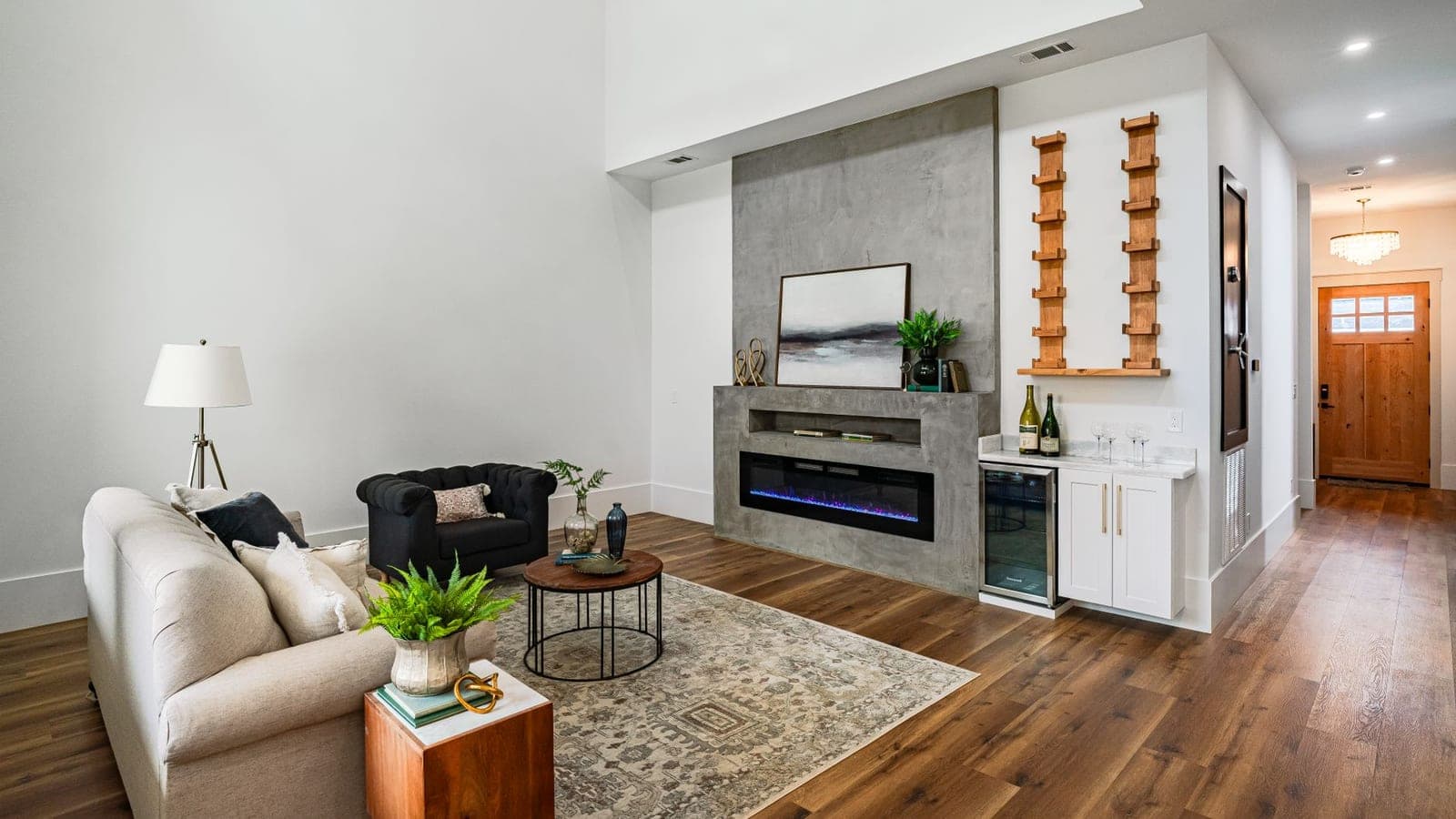
The Honeywell CL25AE is the indoor pick — 52 to 60 dBA, 25.4 lb and a 6.6 gallon tank, sized so a person can carry it to a tap. Indoors the constraints invert: noise and footprint matter more than airflow. And the requirement nobody puts on the box is that an evaporative cooler needs a window or door open to work — in a sealed room it saturates the air and stops cooling.
Fan & Frost earns a commission when you buy through our links, at no cost to you. It never changes a ranking, and we say so when the right answer is the cheaper unit or nothing at all. Full disclosure · How we pick.
At a glance
The picks, ranked
Tap any row to jump to the full reasoning. Prices are live from Amazon where we have them, and read “check price” where we don’t — never a number we cannot verify today.
| # | Product | Best for | Price |
|---|---|---|---|
| 1 | Best overall indoors Honeywell CL25AE Indoor Evaporative Cooler 52 to 60 dBA and 25.4 lb, with a 7.5 hour timer and a 33-foot air throw — the only unit here designed for a room. | A single dry-climate room where you want the machine out of the way | |
| 2 | For a large open space Honeywell CO60PM Indoor/Outdoor Evaporative Cooler 2,697 CFM on 220 W with a 15.9 gallon tank — more air on less power than the indoor pick, by a wide margin. | A workshop, a garage-turned-room, or a big open-plan area | |
| 3 | 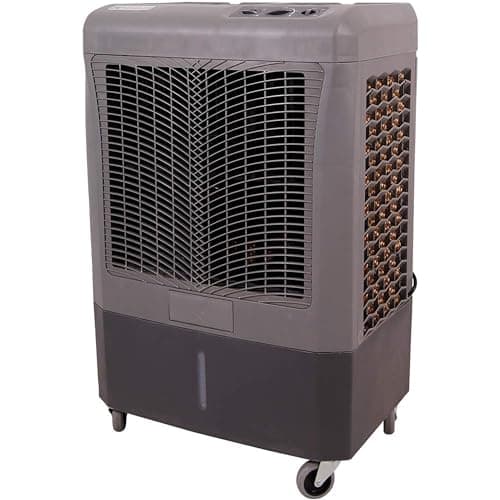 Most air per watt Hessaire MC37M Mobile Evaporative Cooler 3,100 CFM on 250 W — the best air-per-watt of any evaporative cooler we hold data for. | An indoor space that is functionally a workshop | |
| — | What to buy instead in a humid climate Midea Window Air Conditioner, 6,000 BTU 6,000 BTU at CEER 16 and 281.3 kWh a year — it removes moisture instead of adding it, and works in any humidity. | Any indoor room where the air is not reliably dry |
Almost every evaporative cooler sold is designed for a garage, a workshop or a patio — spaces where airflow matters and noise does not. Bringing one into a living room inverts the priorities, and adds one requirement that is easy to miss.
Read this first
It needs an open window to work
This is the constraint that causes most indoor disappointment, and it is rarely on the box.
An evaporative cooler cools by putting water vapor into the air. In a sealed room, that vapor has nowhere to go — the humidity climbs, and as it climbs the air’s ability to absorb more falls. The cooling effect diminishes toward zero while the machine keeps running.
You end up with a warm, humid room and a running cooler.
The fix is airflow through the space, not just within it. Open a window or a door, ideally on the opposite side of the room from the cooler, so there is a path: dry air in, humidified air out.
Which produces the awkward consequence people do not expect: an evaporative cooler and a closed-up house are incompatible. If your summer strategy is to shut everything and keep the heat out, an evaporative cooler is the wrong technology for that strategy.
Priorities
What changes indoors
| Specification | Garage / patio | Indoors |
|---|---|---|
| Noise | Barely matters | Decides whether you use it |
| Airflow | The main specification | Secondary — a room is small |
| Footprint | Irrelevant | Critical |
| Weight | It stays put | You will move it to fill and clean it |
| Tank size | Bigger is better | Bigger means heavier and more standing water |
| Humidity added | Disperses outdoors | Stays in the room unless vented |
The published figures line up with that inversion neatly:
| Unit | dBA | Weight | CFM | Watts |
|---|---|---|---|---|
| Honeywell CL25AE | 52 – 60 | 25.4 lb | 764 | 235 |
| Honeywell CO60PM | 61 – 65 | 39.2 lb | 2,697 | 220 |
| Hessaire MC37M | not published | 40 lb | 3,100 | 250 |
Manufacturer product pages. There is no certification program for evaporative coolers.
The quietest unit is also the least efficient, and that is the trade you are making indoors. 235 W for 764 CFM against 220 W for 2,697 — you are paying roughly three and a half times the power per unit of air for a machine you can stand to be in a room with.
This one is not a DIY job
Standing water in a living space is a maintenance commitment. These units hold 6.6 to 15.9 gallons in a warm tank feeding a permanently damp pad, and they sit in a room you breathe in.
Two habits make that manageable. Run the fan without the pump for the last ten to fifteen minutes of every session, which dries the media before it sits. And drain the tank whenever it will be idle more than a day — standing water is the origin of essentially every cooler smell.
Neither is optional indoors in the way it can be in a garage. If that routine does not fit your life, this is the wrong appliance for a living room.
Rooms
Where indoors this works
Good: a large open-plan space in a dry climate with a window that stays open. A converted garage or workshop. A sunroom or conservatory, which is usually well ventilated and where the alternative is nothing. Sunrooms in detail.
Poor: a bedroom — the noise floor is too high and the humidity is unwelcome overnight. A basement, which is the single worst pairing on this site: you would be adding moisture to the most humid space in the building. And any room you keep sealed against the heat.
Never: a nursery. Standing water, added humidity in a small closed room, and an occupant who cannot tell you something smells wrong. The nursery page covers why.
Say the unwelcome thing
Do not buy an indoor evaporative cooler without checking your climate first.
This is the one check that determines whether the machine works at all, and it takes a minute.
Evaporative cooling depends on the air having spare capacity to absorb water. In dry air that capacity is large and the temperature drop is real. In humid air it is small, so almost nothing evaporates — you get negligible cooling and a damper room.
Indoors that failure is worse than outdoors, because the humidity you add stays in the space with you rather than dispersing.
Check the humidity thresholds before anything else. If you are above them, a small certified window unit removes moisture instead of adding it, at 281.3 kWh a year.
In full
Every pick, and what is wrong with it
Published specifications only, each linked to the page it came from. Where a manufacturer publishes nothing, the row says so — we do not fill blanks in.
1. Best overall indoors
Honeywell CL25AE Indoor Evaporative Cooler
Honeywell · model CL25AE
52 to 60 dBA and 25.4 lb, with a 7.5 hour timer and a 33-foot air throw — the only unit here designed for a room.
52 to 60 dBA is the quietest published figure of any evaporative cooler we hold data for, and indoors that is the specification that decides whether you keep using it.
For context, the CO60PM is 61 to 65 dBA — loud enough that conversation and television compete with it.
25.4 lb and 18.9 x 14.6 x 33.3 inches. Light enough to carry to a tap for filling and to a sink for cleaning, which is what makes indoor maintenance realistic.
The 7.5 hour timer and 33-foot throw suit a room. The honest weakness is efficiency: 235 W for 764 CFM, about 26¢ for a six-hour evening.
What’s wrong with it
235 W to move 764 CFM is the worst air-per-watt of the three, and 6.6 gallons is a small tank.
Running cost — CL25AE
| Nameplate power | 235 W | manufacturer's published figure |
|---|---|---|
| Energy, 8-hour night | 1.88 kWh | 235 ÷ 1000 × 8 |
| Cost per hour | 4.3¢ | at 18.34¢/kWh |
| Cost per 8-hour night | 34¢ | on the highest speed |
| Cost per 30 nights | $10 | 56.4 kWh |
Rate: 18.34¢/kWh, the US average residential price for June 2026 (EIA Electric Power Monthly, Table 5.3). Yours will differ — swap it in: (watts ÷ 1000) × hours × your rate.
| Air delivery | 764 CFM |
|---|---|
| Power | 235 W |
| Water tank | 6.6 gallons |
| Air throw | 33 ft |
| Noise | 52-60 dBA |
| Speeds | 3, oscillating louvers |
| Timer | Up to 7.5 hours |
| Dimensions | 18.9 x 14.6 x 33.3 in |
| Weight | 25.4 lb |
| Manufacturer coverage claim | 466 sq ft |
| Warranty | 1 year |
Every figure above is from Honeywell Air Comfort product page, CL25AE. Blanks are shown as “not published” rather than filled in.
2. For a large open space
Honeywell CO60PM Indoor/Outdoor Evaporative Cooler
Honeywell · model CO60PM
2,697 CFM on 220 W with a 15.9 gallon tank — more air on less power than the indoor pick, by a wide margin.
The efficiency case is not close. 2,697 CFM on 220 W against 764 CFM on 235 W — three and a half times the air on slightly less power, about 24¢ for a six-hour evening.
Triple-sided honeycomb media is the reason: three faces of rigid, rinsable pad rather than one, which also makes it the easiest of these to maintain. Why media architecture matters.
15.9 gallons with continuous hookup removes the refilling problem, though it also means over 130 lb of water in a room when full.
61 to 65 dBA is the disqualifier for most indoor rooms. In an open workshop it is fine.
What’s wrong with it
61 to 65 dBA is genuinely loud indoors, and 27.6 inches wide is a substantial object in a normal room.
Running cost — CO60PM
| Nameplate power | 220 W | manufacturer's published figure |
|---|---|---|
| Energy, 8-hour night | 1.76 kWh | 220 ÷ 1000 × 8 |
| Cost per hour | 4.0¢ | at 18.34¢/kWh |
| Cost per 8-hour night | 32¢ | on the highest speed |
| Cost per 30 nights | $9.68 | 52.8 kWh |
Rate: 18.34¢/kWh, the US average residential price for June 2026 (EIA Electric Power Monthly, Table 5.3). Yours will differ — swap it in: (watts ÷ 1000) × hours × your rate.
| Air delivery | 2,697 CFM |
|---|---|
| Power | 220 W |
| Water tank | 15.9 gallons, continuous hookup |
| Air throw | 30 ft |
| Noise | 61-65 dBA |
| Speeds | 3, with oscillation |
| Pads | Triple-sided honeycomb |
| Dimensions | 27.6 W x 18.3 D x 40 H in |
| Weight | 39.2 lb |
| Manufacturer coverage claim | 1,643 sq ft |
| Warranty | 1 year |
Every figure above is from Honeywell Air Comfort product page, CO60PM. Blanks are shown as “not published” rather than filled in.
3. Most air per watt
Hessaire MC37M Mobile Evaporative Cooler
Hessaire · model MC37M
3,100 CFM on 250 W — the best air-per-watt of any evaporative cooler we hold data for.
3,100 CFM on 250 W is the efficiency leader here, and the 10.3 gallon tank with continuous hookup is the right design for something running all day.
It is on this page with a caveat rather than a recommendation: Hessaire publishes no noise rating. On a page about indoor use, that absence is the point. Buying an unrated machine for a room you sit in is a gamble.
To their credit they also publish no coverage claim, which is more honest than the alternative — the claims that do exist follow a formula.
40 lb, 28¢ for a six-hour evening.
What’s wrong with it
No published noise rating at all, and 40 lb on castors is a shop machine rather than a room appliance.
Running cost — MC37M
| Nameplate power | 250 W | manufacturer's published figure |
|---|---|---|
| Energy, 8-hour night | 2.00 kWh | 250 ÷ 1000 × 8 |
| Cost per hour | 4.6¢ | at 18.34¢/kWh |
| Cost per 8-hour night | 37¢ | on the highest speed |
| Cost per 30 nights | $11 | 60.0 kWh |
Rate: 18.34¢/kWh, the US average residential price for June 2026 (EIA Electric Power Monthly, Table 5.3). Yours will differ — swap it in: (watts ÷ 1000) × hours × your rate.
| Air delivery | 3,100 CFM |
|---|---|
| Power | 250 W / 2.4 A |
| Water tank | 10.3 gallons, continuous hookup capable |
| Dimensions | 24 L x 16 W x 38 H in |
| Weight | 40 lb |
| Pads | Industrial-grade cooling pads |
| Coverage claim | Not published on the product page |
Every figure above is from Hessaire product page, MC37M. Blanks are shown as “not published” rather than filled in.
Skip this one
Midea Window Air Conditioner, 6,000 BTU
Midea · model MAW06S1KWT-A
6,000 BTU at CEER 16 and 281.3 kWh a year — it removes moisture instead of adding it, and works in any humidity.
Listed as the alternative because the indoor evaporative case is narrow, and a lot of people arrive here who should not buy one at all.
An evaporative cooler adds humidity. An air conditioner removes it. In a room that is already muggy, those are opposite directions, and only one of them makes you comfortable.
281.3 kWh a year at CEER 16 — the lowest annual figure in the certified dataset, and 45% below the federal standard. It also does not need a window open, which is the constraint that defeats most indoor evaporative installs.
31.6 lb and 13.3 inches deep, the lightest certified unit we hold data for.
What’s wrong with it
It needs a window it can sit in, and at 31.6 lb it is a two-person lift over a sill even though one person can carry it.
Running cost — MAW06S1KWT-A
| Annual energy use | 281.3 kWh | ENERGY STAR certified figure |
|---|---|---|
| Annual cost | $52 | 281.3 × 18.34¢/kWh |
| Per cooling month | $13 | spread over a four-month season |
The annual figure is the certified value from the ENERGY STAR Certified Room Air Conditioners dataset, which models a standard cooling season rather than your actual summer. It is more useful than a nameplate wattage here, because a variable-speed compressor spends most of its life well below nameplate.
Rate: 18.34¢/kWh, the US average residential price for June 2026 (EIA Electric Power Monthly, Table 5.3). Yours will differ — swap it in: (watts ÷ 1000) × hours × your rate.
| Cooling capacity | 6,000 BTU/h |
|---|---|
| CEER | 16 |
| Annual energy use | 281.3 kWh/yr |
| vs federal standard | 45% less energy |
| Dimensions | 12.1 H x 16.0 W x 13.3 D in |
| Weight | 31.6 lb |
| Installation | Does not straddle the windowsill |
| Support bracket | Not required |
| Compressor | Variable speed |
| Refrigerant | R-32 |
| ENERGY STAR | Certified, and on the Most Efficient list |
Every figure above is from ENERGY STAR Certified Room Air Conditioners dataset. Blanks are shown as “not published” rather than filled in.
We are not linking a buy button for this one. If you want to look at it anyway, it is easy enough to find — but we would rather send you to something that fits your room.
Questions people actually ask
Frequently asked
Do evaporative coolers work indoors?
In a dry climate, with a window or door open, yes. In a sealed room they saturate the air — humidity climbs, the air's capacity to absorb more falls, and the cooling effect drops toward zero while the machine keeps running.
What is the quietest indoor evaporative cooler?
Of the units with a published figure, the Honeywell CL25AE at 52 to 60 dBA. The larger CO60PM is 61 to 65 dBA, which competes with conversation, and Hessaire publishes no noise rating at all.
Why does an evaporative cooler need a window open?
Because it cools by putting water vapor into the air, and that vapor needs somewhere to go. Open a window or door on the opposite side of the room from the cooler so there is a path — dry air in, humidified air out.
Can I use an evaporative cooler in a bedroom?
Not well. The quietest published figure in the category is 52 to 60 dBA, which is high for a room you sleep in, and the added humidity is unwelcome overnight. There is also several gallons of standing water to maintain in a space you breathe in.
Is a quiet evaporative cooler less efficient?
In this category, yes. The quietest unit here moves 764 CFM on 235 W; the loudest moves 3,100 CFM on 250 W. You are paying roughly three and a half times the power per unit of air for a machine you can stand to be in a room with.
Evaporative cooler or air conditioner for an indoor room?
Air conditioner unless your climate is reliably dry and you can leave a window open. An evaporative cooler adds humidity and an air conditioner removes it, and in a room that already feels muggy those are opposite directions. The full comparison.
Sources
Where these numbers came from
- Honeywell CL25AE product page — 764 CFM, 235 W, 52-60 dBA, 6.6 gal, 25.4 lb, 7.5 h timer
- Honeywell CO60PM product page — 2,697 CFM, 220 W, 61-65 dBA, 15.9 gal, 39.2 lb
- Hessaire MC37M product page — 3,100 CFM, 250 W, 10.3 gal, 40 lb, no published noise rating
- ENERGY STAR Certified Room Air Conditioners dataset — the window unit comparison
Read next
Where to go from here
Back to Evaporative Coolers, or read how we pick.