Guide and picks
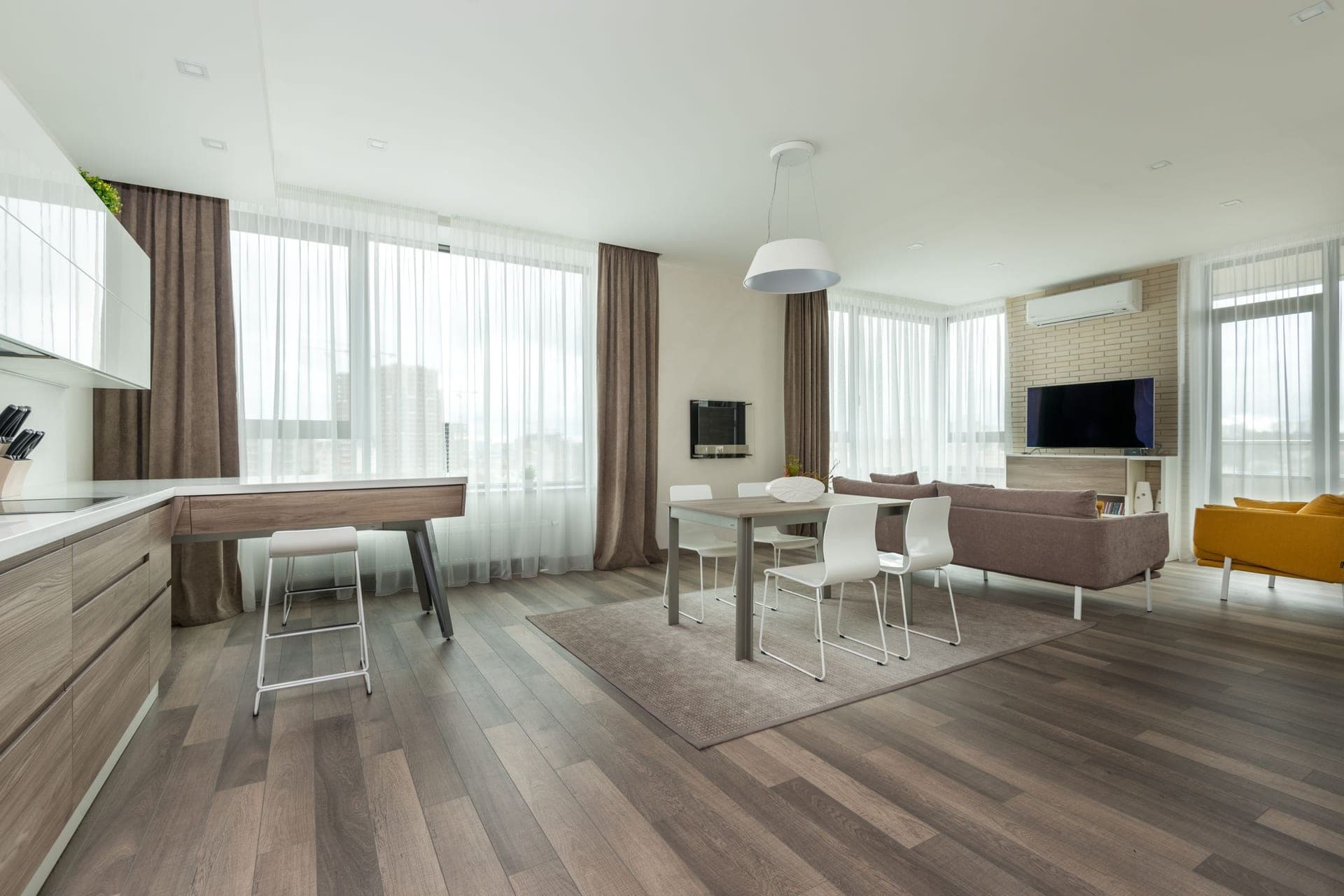
Cooling an open-plan living space
Every other room in the house can be shut off and dealt with on its own. This one cannot, which changes which appliance wins.
By Sawyer V. · Published
The short answer
Distribution beats capacity here. With no doors to close, a single powerful unit makes one end cold and leaves the other warm. Buy the largest ceiling fan span the room allows — median certified efficiency rises from 189.2 at bedroom spans to 306.0 CFM per watt at the largest — then add cooling sized for the whole connected volume, not one corner of it.
Fan & Frost earns a commission when you buy through our links, at no cost to you. It never changes a ranking, and we say so when the right answer is the cheaper unit or nothing at all. Full disclosure · How we pick.
At a glance
The picks, ranked
Tap any row to jump to the full reasoning. Prices are live from Amazon where we have them, and read “check price” where we don’t — never a number we cannot verify today.
| # | Product | Best for | Price |
|---|---|---|---|
| 1 | Best overall Aeratron AE+2 60" Ceiling Fan 483.0 CFM per watt at 60 inches on 16.2 W — the most efficient certified ceiling fan we hold data for, at a span that suits most open plans. | An open plan with 9 ft ceilings and no need for a light kit | |
| 2 | Best for a large span with a light Visual Comfort Kingston 72" LED Ceiling Fan 385.0 CFM per watt across 72 inches with a light kit — the best efficiency we hold data for in a lit fan. | A big open plan where the fan replaces the main light fitting | |
| 3 | Best actual cooling Midea Window Air Conditioner, 10,000 BTU CEER 16 and 468.8 kWh a year at 47.2 lb, needing no support bracket — the efficiency ceiling of the 10,000 BTU class. | The open plan that genuinely needs a compressor, not just air | |
| — | 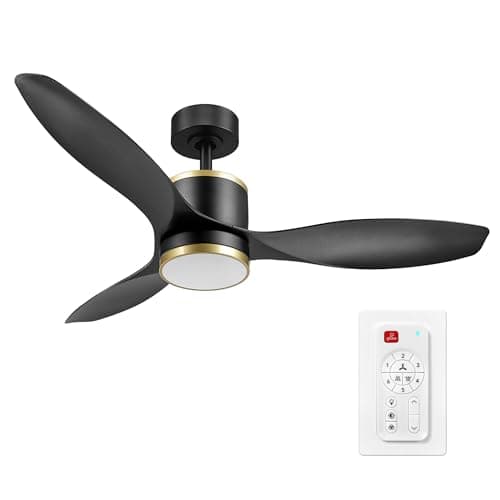 Too small for this space Globe 48" Ceiling Fan with Light Kit 270.7 CFM per watt at 48 inches, drawing more power on high than the 60-inch leader while moving less air. | A bedroom or study — not an open plan |
Open-plan living is the layout most modern homes are built or remodelled into, and it is the layout that cooling advice serves worst. Nearly every technique on this site assumes you can close a door.
The constraint
You cannot zone a space with no doors in it
The standard approach to a hot house is to give up on cooling all of it and win one room. That works because a closed door is a boundary the heat has to cross.
An open plan removes that boundary by design. Whatever you put in it conditions the whole connected volume — which usually includes the kitchen, often a dining area, frequently a stairwell, and sometimes a double-height void.
Three consequences that shape every decision below:
- Your load is larger than the room you are standing in. The volume that has to be conditioned is everything air can reach without opening a door.
- A single point source produces a gradient. One powerful unit at one end makes that end cold and leaves the other end unchanged, because air does not distribute itself usefully across a large space.
- Air movement is not optional here. In a closed room a fan is a comfort upgrade. In an open plan it is the distribution system.
Span
Span is the specification that matters
Across the certified ceiling fan field, blade span and efficiency are strongly related — and not in the direction most people assume.
| Band | Median CFM per watt |
|---|---|
| 42 to 56 inches (bedroom spans) | 189.2 |
| Largest spans | 306.0 |
| Best single fan, 60 in | 483.0 |
| Best 84 in fan | 422.2 |
A large fan turning slowly moves more air for less power than a small fan turning fast, because airflow scales with swept area while drag scales sharply with tip speed. In a room that needs air distributed rather than blasted, that is exactly the right trade.
Note the last two rows, though: span raises the floor, design sets the ceiling. The best 60-inch fan at 483.0 CFM per watt beats the best 84-inch fan at 422.2. Buy the largest span the room and the ceiling allow, then choose on certified efficiency within that band — ceiling fans compared in full.
This one is not a DIY job
In a long open plan, two fans beat one, and it is not a close call. A single fan in the middle leaves both ends untouched; two fans spaced along the length create movement across the whole space. At 2.9 W each on low, running two costs less than most standby loads in the house.
Height
Double-height ceilings and the stratification problem
Many open plans have a vaulted or double-height section, which looks wonderful and traps all your warm air at the top where nobody is.
Warm air rises and stays risen unless something moves it. In a double-height space the temperature difference between head height and the top of the void can be substantial, which means you are heating a volume you never occupy.
Two fixes, and they are not alternatives:
- A fan on a downrod, hung down into the occupied zone. A fan mounted at the apex of a vault is too far from people to do anything. It needs to be low enough to move air where bodies are — downrod sizing and fans for high ceilings.
- A route for the hottest air to leave. A high opening window, a roof vent or a whole-house fan gives the accumulated heat somewhere to go rather than merely stirring it — whether a whole-house fan suits your house.
The kitchen
There is a kitchen inside your living room
This is the part that makes open-plan cooling genuinely different rather than merely larger.
An oven, a hob, a dishwasher on heated dry and a fridge all sit inside the space you are trying to cool, with no door between them and the sofa. In a traditional layout the kitchen door contains that; here nothing does.
Which makes extraction the highest-leverage appliance in the room. A range hood that actually vents outside removes cooking heat and moisture at source, before it becomes the living room’s problem — range hoods compared and cooling a kitchen.
A recirculating hood that filters and returns the air to the room does nothing whatsoever about heat. It removes grease and some smell, and every joule of cooking energy stays in your living space.
Glazing
Open plans are glazed, because that is the point
Open-plan spaces are usually built with large glazed elevations or bifold doors, and that glass is the single biggest heat input in the room.
External shading remains the highest-return intervention: an overhang, a pergola, an awning or a tree stops the energy before it reaches the glass. Internal blinds stop it after it has arrived, which is considerably less effective and considerably cheaper — shading and film compared.
Bifolds are worth a specific note. Opening them wide feels like ventilating, and on a hot afternoon it is the opposite — a very large opening to air hotter than your room. Open them in the evening, not at two o’clock.
Say the unwelcome thing
Do not buy one large unit and put it at one end.
It is the standard open-plan mistake, and it produces exactly the outcome it is meant to prevent: a cold corner, a warm far end, and a unit that runs constantly because the thermostat beside it is reading the coldest air in the room.
Capacity is not the binding constraint in this layout. Distribution is. A correctly sized unit plus real air movement outperforms an oversized unit on its own, and an oversized unit also cycles — so it removes less humidity and leaves the space cool and clammy.
Size for the whole connected volume including any stairwell, then spend the difference on span. 483.0 CFM per watt on 16.2 W is what moving air across a big space should cost.
In full
Every pick, and what is wrong with it
Published specifications only, each linked to the page it came from. Where a manufacturer publishes nothing, the row says so — we do not fill blanks in.
1. Best overall
Aeratron AE+2 60" Ceiling Fan
Aeratron · model AE+2WI60
483.0 CFM per watt at 60 inches on 16.2 W — the most efficient certified ceiling fan we hold data for, at a span that suits most open plans.
In a space you cannot zone, the appliance that moves air across the whole volume is worth more than the one that cools one part of it hard.
483.0 CFM per watt against a large-span median of 306.0, and above even the best 84-inch fan at 422.2. Span raises the floor on efficiency; design sets the ceiling, and this is the ceiling.
16.2 W on high and 2.9 W on low. That low figure is 0.4¢ for an eight-hour evening at 18.34¢/kWh, which makes continuous running a non-decision.
Most Efficient certified. The honest limits: no light kit ships with it, so if the fan is replacing your main light fitting you need a different answer — fans with light kits.
What’s wrong with it
No light kit at all, and it needs the ceiling height for a downrod.
Running cost — AE+2WI60
| Nameplate power | 2.9 W – 16.2 W | manufacturer's published figure |
|---|---|---|
| Energy, 8-hour night | 0.13 kWh | 16.2 ÷ 1000 × 8 |
| Cost per hour | 0.3¢ | at 18.34¢/kWh |
| Cost per 8-hour night | 2.4¢ | on the highest speed |
| Cost per 30 nights | 71¢ | 3.9 kWh |
| Same month, lowest speed | 13¢ | at 2.9 W |
Rate: 18.34¢/kWh, the US average residential price for June 2026 (EIA Electric Power Monthly, Table 5.3). Yours will differ — swap it in: (watts ÷ 1000) × hours × your rate.
| Blade span | 60 in |
|---|---|
| Efficiency | 483.0 CFM per watt |
| Power, high speed | 16.2 W |
| Power, low speed | 2.9 W |
| Type | Indoor |
| Light kit | No ENERGY STAR lamp shipped |
| Warranty | 3 years, components |
| ENERGY STAR | Certified, and on the Most Efficient list |
Every figure above is from ENERGY STAR Certified Ceiling Fans dataset. Blanks are shown as “not published” rather than filled in.
2. Best for a large span with a light
Visual Comfort Kingston 72" LED Ceiling Fan
Visual Comfort & Co. · model Kingston 72 LED
385.0 CFM per watt across 72 inches with a light kit — the best efficiency we hold data for in a lit fan.
Most open plans want the fan where the light already is, and a 72-inch span genuinely reaches across a large connected space from one fixture.
385.0 CFM per watt against 483.0 for the fan-only leader — about a 20% gap, which is the practical price of the light kit and the mass it adds.
27.8 W on high and 4.1 W on low across 72 inches. At that span a single fixture covers ground that two smaller fans would need.
1.2 W standby, drawn all 8,760 hours — about $1.93 a year. And, as with every certified fan, no ENERGY STAR lamp is included: zero of 1,439 certified fans ship one.
What’s wrong with it
1.2 W of standby drawn all year, and no ENERGY STAR lamp ships with it.
Running cost — Kingston 72 LED
| Nameplate power | 4.1 W – 27.8 W | manufacturer's published figure |
|---|---|---|
| Energy, 8-hour night | 0.22 kWh | 27.8 ÷ 1000 × 8 |
| Cost per hour | 0.5¢ | at 18.34¢/kWh |
| Cost per 8-hour night | 4.1¢ | on the highest speed |
| Cost per 30 nights | $1.22 | 6.7 kWh |
| Same month, lowest speed | 18¢ | at 4.1 W |
Rate: 18.34¢/kWh, the US average residential price for June 2026 (EIA Electric Power Monthly, Table 5.3). Yours will differ — swap it in: (watts ÷ 1000) × hours × your rate.
| Blade span | 72 in |
|---|---|
| Efficiency | 385.0 CFM per watt |
| Power, high speed | 27.8 W |
| Power, low speed | 4.1 W |
| Standby power | 1.2 W |
| Type | Indoor, with light kit |
| Warranty | 3 years, components |
| ENERGY STAR | Certified |
Every figure above is from ENERGY STAR Certified Ceiling Fans dataset. Blanks are shown as “not published” rather than filled in.
3. Best actual cooling
Midea Window Air Conditioner, 10,000 BTU
Midea · model MAW10V1WWT
CEER 16 and 468.8 kWh a year at 47.2 lb, needing no support bracket — the efficiency ceiling of the 10,000 BTU class.
Where a compressor is needed, this is the right shape of one — with the caveat that sizing an open plan is where people go most badly wrong.
CEER 16 and 468.8 kWh a year — about $86 at 18.34¢/kWh, Most Efficient certified, 47% under the federal standard.
47.2 lb with no support bracket required, which at this capacity is unusual and makes it far easier to fit.
Size for the connected volume. If the space opens to a stairwell or a hallway, that volume is part of your load whether you counted it or not — the BTU chart and the adjustments.
What’s wrong with it
10,000 BTU is a large room, not an open plan plus a kitchen plus a stairwell.
Running cost — MAW10V1WWT
| Annual energy use | 468.8 kWh | ENERGY STAR certified figure |
|---|---|---|
| Annual cost | $86 | 468.8 × 18.34¢/kWh |
| Per cooling month | $21 | spread over a four-month season |
The annual figure is the certified value from the ENERGY STAR Certified Room Air Conditioners dataset, which models a standard cooling season rather than your actual summer. It is more useful than a nameplate wattage here, because a variable-speed compressor spends most of its life well below nameplate.
Rate: 18.34¢/kWh, the US average residential price for June 2026 (EIA Electric Power Monthly, Table 5.3). Yours will differ — swap it in: (watts ÷ 1000) × hours × your rate.
| Cooling capacity | 10,000 BTU/h |
|---|---|
| CEER | 16 |
| Annual energy use | 468.8 kWh/yr |
| vs federal standard | 47% less energy |
| Dimensions | 13.6 H x 19.0 W x 18.6 D in |
| Weight | 47.2 lb |
| Refrigerant | R-32 |
| Installation | Does not straddle the windowsill |
| Support bracket | Not required |
| Compressor | Variable speed |
| Noise | Not published in the certified dataset |
| ENERGY STAR | Certified, and on the Most Efficient list |
Every figure above is from ENERGY STAR Certified Room Air Conditioners dataset. Blanks are shown as “not published” rather than filled in.
Skip this one
Globe 48" Ceiling Fan with Light Kit
Globe · model 27105
270.7 CFM per watt at 48 inches, drawing more power on high than the 60-inch leader while moving less air.
Flagged because mid-size fans get bought for open plans constantly, on price rather than span, and the geometry does not forgive it.
48 inches moves air in a circle beneath itself. In a large connected space the seating at the edges feels nothing at all, which is the exact failure this room is prone to.
270.7 CFM per watt and 21.6 W on high — note that the 60-inch leader draws less power at 16.2 W while being far more efficient. Bigger is not more expensive to run here; it is cheaper.
It is a perfectly good fan for the room it is sized for — small-room fans compared. In an open plan, two large fans beat four small ones.
What’s wrong with it
48 inches will not reach the edges of an open plan, and 21.6 W on high buys less than 16.2 W does elsewhere.
Running cost — 27105
| Nameplate power | 3 W – 21.6 W | manufacturer's published figure |
|---|---|---|
| Energy, 8-hour night | 0.17 kWh | 21.6 ÷ 1000 × 8 |
| Cost per hour | 0.4¢ | at 18.34¢/kWh |
| Cost per 8-hour night | 3.2¢ | on the highest speed |
| Cost per 30 nights | 95¢ | 5.2 kWh |
| Same month, lowest speed | 13¢ | at 3 W |
Rate: 18.34¢/kWh, the US average residential price for June 2026 (EIA Electric Power Monthly, Table 5.3). Yours will differ — swap it in: (watts ÷ 1000) × hours × your rate.
| Blade span | 48 in |
|---|---|
| Efficiency | 270.7 CFM per watt |
| Power, high speed | 21.6 W |
| Power, low speed | 3.0 W |
| Standby power | 0.6 W |
| Type | Indoor, with light kit |
| Warranty | 3 years, components |
| ENERGY STAR | Certified |
Every figure above is from ENERGY STAR Certified Ceiling Fans dataset. Blanks are shown as “not published” rather than filled in.
We are not linking a buy button for this one. If you want to look at it anyway, it is easy enough to find — but we would rather send you to something that fits your room.
Questions people actually ask
Frequently asked
How do you cool an open-plan living space?
Treat it as a distribution problem rather than a capacity one. Buy the largest ceiling fan span the room allows, use two fans in a long space rather than one in the middle, extract cooking heat at source, and size any air conditioner for the whole connected volume.
Why is one end of my open plan always warmer?
Because there is no door to contain anything, and a single point source produces a gradient — air does not distribute itself usefully across a large space. The thermostat beside the unit reads the coldest air in the room, so it also runs longer than it should.
Are bigger ceiling fans more efficient?
Generally yes. Median certified efficiency rises from 189.2 CFM per watt in the 42 to 56 inch band to 306.0 at the largest spans, because airflow scales with swept area while drag scales sharply with tip speed. But the single best fan in the field is a 60-inch at 483.0. Ceiling fans compared.
How do I cool a double-height or vaulted space?
Two things together: hang the fan on a downrod low enough to move air where people are rather than at the apex, and give the accumulated hot air a route out through a high window, roof vent or whole-house fan. Stirring it is not the same as removing it. Fans for high ceilings.
Does the kitchen make an open plan harder to cool?
Considerably. An oven, hob, dishwasher and fridge all sit inside the space with no door to contain them. A range hood that genuinely vents outside is the highest-leverage appliance in the room — a recirculating one does nothing at all about heat. Range hoods.
Should I use one large air conditioner or two smaller ones?
Two correctly sized units placed apart beat one oversized unit at one end, on both comfort and running cost. An oversized unit also cycles, which removes less humidity and leaves the space cool and clammy rather than genuinely comfortable.
Sources
Where these numbers came from
- ENERGY STAR Certified Ceiling Fans dataset — CFM per watt by span band, low and high speed wattage, standby power, and the ENERGY STAR lamp field across 1,439 US records
- ENERGY STAR Certified Room Air Conditioners dataset — CEER, annual kWh, weight and bracket requirement for the unit cited
- EIA Electric Power Monthly, Table 5.3 — average residential electricity price
Read next
Where to go from here
Back to Room Cooling, or read how we pick.