Guide and picks
Types of home cooling, and what each one actually does
Six categories, and only three of them lower the temperature of a room. Knowing which is which saves most of the money people waste in this category.
By Sawyer V. · Published
The short answer
Only refrigeration (window, portable, through-the-wall, mini-split) genuinely removes heat from a room. Evaporative coolers cool real air but only in dry climates, and add humidity. Fans — including ceiling, whole-house and attic fans — move air; they make you feel cooler and change nothing on a thermometer.
Fan & Frost earns a commission when you buy through our links, at no cost to you. It never changes a ranking, and we say so when the right answer is the cheaper unit or nothing at all. Full disclosure · How we pick.
At a glance
The picks, ranked
Tap any row to jump to the full reasoning. Prices are live from Amazon where we have them, and read “check price” where we don’t — never a number we cannot verify today.
| # | Product | Best for | Price |
|---|---|---|---|
| 1 | 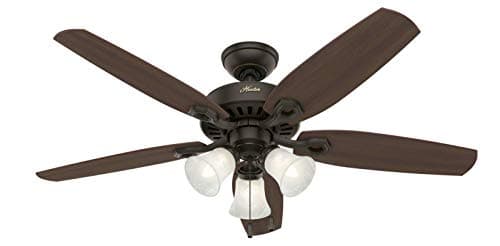 The fan category Hunter Vespucci 52" Ceiling Fan 1.8 W on low at a certified 366.7 CFM per watt — the cheapest cooling in any house. | Making a room feel cooler, for almost nothing | |
| 2 | The evaporative category Honeywell CO60PM Indoor/Outdoor Evaporative Cooler Real cooling from 220 W, at 2,697 CFM — a fifth of the power of refrigeration. | A dry climate, with a door or window open | |
| 3 | The refrigeration category GE Profile ClearView Window Air Conditioner, 8,000 BTU The only category that removes heat and humidity, at 375 kWh for a whole year. | Any room that genuinely needs to be colder | |
| — | The category to reach for last Whynter ARC-14S Dual Hose Portable Air Conditioner A portable is refrigeration with a structural handicap: its hot duct sits inside the room it is cooling. | A room where no window unit will physically fit |
The single most useful distinction in home cooling is not price or brand. It is whether a device removes heat from the room or merely moves air around inside it. Almost every wasted purchase in this category comes from buying something in the second group while expecting the first.
The overview
Six categories, side by side
| Type | What it does | Typical power | Needs |
|---|---|---|---|
| Fans (tower, box, pedestal, desk) | Moves air. No temperature change. | 2–102 W | Nothing |
| Ceiling fans | Moves air, permanently installed. No temperature change. | 1.8–28 W | A ceiling and wiring |
| Evaporative coolers | Cools real air by evaporating water into it. Adds humidity. | 220–250 W | Dry air, and ventilation |
| Window / through-the-wall AC | Removes heat and humidity from the room. | 300–1,400 W | A suitable window or a sleeve |
| Portable AC | Removes heat, but its duct is inside the room. | 700–1,500 W | A window to vent through |
| Whole-house / attic fans | Exhausts hot indoor or attic air, pulls outdoor air in. | 100–600 W | Cool outdoor air, or a hot attic |
Group one
Fans: they move air, and that is genuinely useful
A fan changes nothing on a thermometer. Its motor adds a small amount of heat to the room, so strictly it makes the room very slightly warmer. What it does is move air across your skin, which speeds evaporation of sweat and carries away the warm boundary layer sitting against you. The effect is worth several degrees of perceived temperature, which is not nothing — it is most of what people want.
Two consequences follow. A fan in an empty room is doing nothing at all — there is no one for it to cool. And above roughly 95°F a fan can stop helping, because moving air that is hotter than your skin adds heat faster than the extra evaporation removes it.
Within that limit they are extraordinarily cheap. A ceiling fan on low draws under 2 W — about 7.9¢ for a month of nights. A good DC tower fan is 19 W flat out. Even a 20-inch box fan on high is about $4.49 a month.
Where each type fits: tower fans for a bedroom footprint, box fans for maximum air per dollar, window fans when the outside air is cooler than the inside air, and ceiling fans if you have somewhere to hang one — they are the cheapest cooling that exists.
Group two
Evaporative coolers: real cooling, one hard condition
A swamp cooler pulls air through a wet pad. Evaporating water absorbs heat, so the air coming out is genuinely colder than the air going in — this is real cooling, not a perceived effect, and it costs about a fifth of what refrigeration costs. The Honeywell CO60PM moves 2,697 CFM on 220 W.
The condition is absolute: the air has to be dry enough to accept the moisture. In Phoenix in June that trade is excellent. In Houston the air is already close to saturated, there is almost no evaporation available, and you end up with air that is barely cooler and noticeably damper — which feels worse, not better.
They also need somewhere for the humid air to go, so an evaporative cooler wants an open window or door. That makes them ideal for a garage with the door up or a patio, and poor for a sealed bedroom. The humidity threshold is here.
Group three
Refrigeration: the only thing that lowers the temperature
Every air conditioner runs the same cycle: absorb heat from the room on the cold side, reject it somewhere else on the hot side. The categories differ only in where the hot side is, and that turns out to determine almost everything about efficiency.
Window and through-the-wall units
The hot side is outside, in the wall. This is the efficient configuration and the data shows it: a certified 8,000 BTU window unit uses 375 kWh a year — about $69 at 18.34¢/kWh — for a whole cooling season. They are ENERGY STAR certified with published CEER and annual kWh figures, so you can compare them on tested numbers rather than marketing. The picks are here.
Portable units
The whole machine is inside the room and the heat leaves through a duct. That duct is hot and it is in the space you are cooling, and a single-hose unit also blows room air outside — which is replaced by hot outside air infiltrating in. The DOE test procedure accounts for both, which is why a portable’s SACC rating is well below its box BTU. They are the right answer only when a window unit will not physically fit.
Mini-splits
The compressor lives outside and only refrigerant lines pass through the wall, which is the best of both worlds: high efficiency, very quiet indoors, no window occupied. The catch is installation — this is licensed work involving refrigerant handling, and the install cost typically exceeds the equipment cost. It is the right answer for a permanent solution in a room you own.
Group four
Whole-house and attic fans: a special case worth understanding
These are fans, so they cannot cool below the outdoor temperature. What they do is exchange air: a whole-house fan pulls cool outdoor air in through open windows and pushes hot indoor air out through the attic, dumping the day’s accumulated heat in minutes rather than hours. An attic fan does the same for the attic alone, reducing heat radiating down into your ceilings.
The condition, again, is absolute: your nights have to get genuinely cool. Where they drop into the 60s, a whole-house fan can replace air conditioning for a large part of the season. Where they stay in the 80s it is an expensive way to move hot air around. The temperature test is here.
Both involve cutting a ceiling or working in an attic with wiring. That is licensed-professional work, and we say so wherever it comes up.
Choosing
Which one you need, in four questions
- Does the room need to be colder, or do you need to feel cooler? If a fan on a hot day is enough, buy a fan and stop. It is a hundredth of the running cost.
- Is your air dry? If summer humidity is routinely below about 40%, an evaporative cooler gives real cooling for a fifth of the power. If it is not, skip the category entirely.
- Do you have a usable window? If yes, a window unit is cheaper to buy, cheaper to run and quieter in the room. If no, a portable is the compromise — or read this if there is no window at all.
- Do your nights get cool? If they do, a whole-house fan or even just a window fan run as an exhaust may do most of the work for a fraction of the cost.
Most people, most of the time, are best served by a layered answer: a fan for the majority of the season, blinds closed during the day, and a correctly-sized window unit for the two or three weeks when the fan is genuinely not enough. The bedroom page works that sequence through in order.
In full
Every pick, and what is wrong with it
Published specifications only, each linked to the page it came from. Where a manufacturer publishes nothing, the row says so — we do not fill blanks in.
1. The fan category
Hunter Vespucci 52" Ceiling Fan
Hunter · model Vespucci
1.8 W on low at a certified 366.7 CFM per watt — the cheapest cooling in any house.
About 7.9¢ for a month of eight-hour nights at 18.34¢/kWh. If a fan is enough for your room, buy a fan and stop — it is a hundredth of the running cost of refrigeration.
What’s wrong with it
It removes no heat at all. On a genuinely hot night, no fan of any kind will be enough, and above about 95°F moving air stops helping.
Running cost — Vespucci
| Nameplate power | 1.8 W – 13.9 W | manufacturer's published figure |
|---|---|---|
| Energy, 8-hour night | 0.11 kWh | 13.9 ÷ 1000 × 8 |
| Cost per hour | 0.3¢ | at 18.34¢/kWh |
| Cost per 8-hour night | 2.0¢ | on the highest speed |
| Cost per 30 nights | 61¢ | 3.3 kWh |
| Same month, lowest speed | 7.9¢ | at 1.8 W |
Rate: 18.34¢/kWh, the US average residential price for June 2026 (EIA Electric Power Monthly, Table 5.3). Yours will differ — swap it in: (watts ÷ 1000) × hours × your rate.
| Blade span | 52 in |
|---|---|
| Efficiency | 366.7 CFM per watt |
| Power, high speed | 13.9 W |
| Power, low speed | 1.8 W |
| Standby power | 0.8 W |
| Type | Indoor, fan only (no light kit) |
| Warranty | 3 years, components |
| ENERGY STAR | Certified |
Every figure above is from ENERGY STAR Certified Ceiling Fans dataset. Blanks are shown as “not published” rather than filled in.
2. The evaporative category
Honeywell CO60PM Indoor/Outdoor Evaporative Cooler
Honeywell · model CO60PM
Real cooling from 220 W, at 2,697 CFM — a fifth of the power of refrigeration.
$9.68 for thirty eight-hour periods. Genuinely colder air, not just moving air — but the humidity condition is absolute, and it is worth checking your own climate before buying.
What’s wrong with it
Useless above about 60% relative humidity, and it needs ventilation to work at all. 61-65 dBA is also conversational volume.
Running cost — CO60PM
| Nameplate power | 220 W | manufacturer's published figure |
|---|---|---|
| Energy, 8-hour night | 1.76 kWh | 220 ÷ 1000 × 8 |
| Cost per hour | 4.0¢ | at 18.34¢/kWh |
| Cost per 8-hour night | 32¢ | on the highest speed |
| Cost per 30 nights | $9.68 | 52.8 kWh |
Rate: 18.34¢/kWh, the US average residential price for June 2026 (EIA Electric Power Monthly, Table 5.3). Yours will differ — swap it in: (watts ÷ 1000) × hours × your rate.
| Air delivery | 2,697 CFM |
|---|---|
| Power | 220 W |
| Water tank | 15.9 gallons, continuous hookup |
| Air throw | 30 ft |
| Noise | 61-65 dBA |
| Speeds | 3, with oscillation |
| Pads | Triple-sided honeycomb |
| Dimensions | 27.6 W x 18.3 D x 40 H in |
| Weight | 39.2 lb |
| Manufacturer coverage claim | 1,643 sq ft |
| Warranty | 1 year |
Every figure above is from Honeywell Air Comfort product page, CO60PM. Blanks are shown as “not published” rather than filled in.
3. The refrigeration category
GE Profile ClearView Window Air Conditioner, 8,000 BTU
GE Profile · model PWJV08W
The only category that removes heat and humidity, at 375 kWh for a whole year.
About $69 a year at 18.34¢/kWh, from a certified figure. When a fan is not enough and your air is too humid for evaporative cooling, this is what is left — and a window unit is the efficient way to do it.
What’s wrong with it
Needs a vertical sash window and occupies it for the season. Costs several times a fan to run, though far less than most people assume.
Running cost — PWJV08W
| Annual energy use | 375 kWh | ENERGY STAR certified figure |
|---|---|---|
| Annual cost | $69 | 375 × 18.34¢/kWh |
| Per cooling month | $17 | spread over a four-month season |
The annual figure is the certified value from the ENERGY STAR Certified Room Air Conditioners dataset, which models a standard cooling season rather than your actual summer. It is more useful than a nameplate wattage here, because a variable-speed compressor spends most of its life well below nameplate.
Rate: 18.34¢/kWh, the US average residential price for June 2026 (EIA Electric Power Monthly, Table 5.3). Yours will differ — swap it in: (watts ÷ 1000) × hours × your rate.
| Cooling capacity | 8,000 BTU/h |
|---|---|
| CEER | 16 |
| Annual energy use | 375 kWh/yr |
| vs federal standard | 47% less energy |
| Dimensions | 12.6 H x 18.6 W x 15.3 D in |
| Weight | 46.2 lb |
| Refrigerant | R-32 |
| Installation | Does not straddle the windowsill |
| Support bracket | Required |
| Compressor | Variable speed |
| ENERGY STAR | Certified, and on the Most Efficient list |
Every figure above is from ENERGY STAR Certified Room Air Conditioners dataset. Blanks are shown as “not published” rather than filled in.
Skip this one
Whynter ARC-14S Dual Hose Portable Air Conditioner
Whynter · model ARC-14S
A portable is refrigeration with a structural handicap: its hot duct sits inside the room it is cooling.
$57 for thirty eight-hour nights, against $69 for a whole year of the window unit above. Same refrigeration cycle; different place to put the hot side.
It earns its place under a real constraint — a casement window, a lease, a need to move it between rooms — and not as a default.
What’s wrong with it
1,300 W, and its 9,500 BTU SACC against a 14,000 headline means the capacity is smaller than the box implies. Only correct when a window unit is impossible.
Running cost — ARC-14S
| Nameplate power | 1300 W | manufacturer's published figure |
|---|---|---|
| Energy, 8-hour night | 10.40 kWh | 1300 ÷ 1000 × 8 |
| Cost per hour | 24¢ | at 18.34¢/kWh |
| Cost per 8-hour night | $1.91 | on the highest speed |
| Cost per 30 nights | $57 | 312.0 kWh |
Rate: 18.34¢/kWh, the US average residential price for June 2026 (EIA Electric Power Monthly, Table 5.3). Yours will differ — swap it in: (watts ÷ 1000) × hours × your rate.
| Marketing capacity | 14,000 BTU (ASHRAE-128) |
|---|---|
| DOE-rated capacity | 9,500 BTU SACC |
| Hoses | Dual |
| Power | 1,300 W / 11.6 A at 115 V |
| Noise | Under 51 dBA low, under 56 dBA high |
| Dehumidification | 71 pints/day |
| Refrigerant | R-32 |
| Dimensions | 16 W x 19 D x 35.5 H in |
| Weight | 73 lb |
| Manufacturer coverage claim | 500 sq ft |
| Warranty | 1 year unit, 3 years compressor |
Every figure above is from Whynter product page, ARC-14S. Blanks are shown as “not published” rather than filled in.
We are not linking a buy button for this one. If you want to look at it anyway, it is easy enough to find — but we would rather send you to something that fits your room.
Questions people actually ask
Frequently asked
What are the main types of home cooling?
Six, in practice: portable fans, ceiling fans, evaporative coolers, window and through-the-wall air conditioners, portable air conditioners, and whole-house or attic fans. Only the air conditioners and evaporative coolers change the actual air temperature; everything else moves air.
Does a fan actually cool a room?
No. A fan does not lower the room's temperature and its motor adds a small amount of heat. It cools you by moving air across your skin, which speeds evaporation and is worth several degrees of perceived temperature. That is why a fan running in an empty room accomplishes nothing.
What is the cheapest type of home cooling to run?
A ceiling fan, by a wide margin. Certified models draw under 2 W on low, which is roughly 7.9¢ for a month of eight-hour nights. A large portable air conditioner at 1,300 W is around $57 for the same hours.
Is an evaporative cooler the same as an air conditioner?
No. An air conditioner uses a refrigeration cycle and removes both heat and humidity, working in any climate. An evaporative cooler cools by evaporating water into the air, so it adds humidity and only works where the air is already dry. It uses roughly a fifth of the power. The full comparison.
What is the most efficient type of air conditioner for one room?
A window or through-the-wall unit, because the hot side sits outside the room. Certified 8,000 BTU window units use around 375 kWh a year. A mini-split is more efficient still and quieter, but requires licensed installation with refrigerant handling.
Can I cool a room without an air conditioner?
You can make it feel considerably cooler, and if your outdoor air is cooler than your indoor air you can genuinely lower the temperature by exhausting hot air with a window fan. What you cannot do without refrigeration is get below the outdoor temperature. What works, ranked.
Sources
Where these numbers came from
- ENERGY STAR Certified Room Air Conditioners dataset — annual kWh and CEER
- ENERGY STAR Certified Ceiling Fans dataset — per-speed wattage
- eCFR — 10 CFR part 430, subpart B, appendix CC (portable AC test procedure)
- Honeywell CO60PM specifications — 2,697 CFM at 220 W
- EIA Electric Power Monthly, Table 5.3 — electricity rate
Read next
Where to go from here
Back to Guides & Calculators, or read how we pick.