Guide and picks
Cooling a home in a humid climate
Two identical houses at 78 degrees feel completely different at 45% and 70% relative humidity. Only one of them is comfortable.
By Sawyer V. · Published
The short answer
Buy machines that remove water. Air conditioners dehumidify as they cool, which is why they work here and evaporative coolers do not. Run the air conditioner so it dehumidifies properly — longer cycles, not colder air — and add a dedicated dehumidifier for basements and shoulder seasons, certified from 249 kWh a year. Whole-house fans and swamp coolers are the wrong machines in this climate.
Fan & Frost earns a commission when you buy through our links, at no cost to you. It never changes a ranking, and we say so when the right answer is the cheaper unit or nothing at all. Full disclosure · How we pick.

At a glance
The picks, ranked
Tap any row to jump to the full reasoning. Prices are live from Amazon where we have them, and read “check price” where we don’t — never a number we cannot verify today.
| # | Product | Best for | Price |
|---|---|---|---|
| 1 | 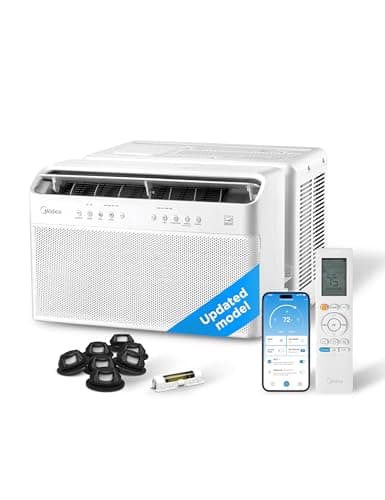 Best room unit for humid air Midea U-Shaped Window Air Conditioner, 8,000 BTU CEER 15 and 400 certified kWh with an inverter compressor — long, steady cycles are what actually wring water out of the air. | A bedroom or living room where the air is heavy as much as hot | |
| 2 | 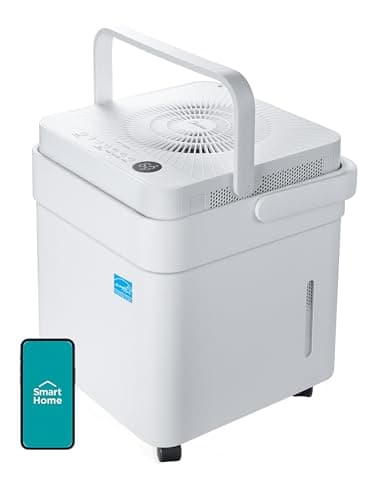 Best for the rooms the AC does not reach Midea Dehumidifier, 20 pints/day 20.16 certified pints a day at 249 kWh a year — the machine for damp that arrives without heat. | A basement, a closed-up room, or spring and autumn when it is damp but not hot | |
| — | 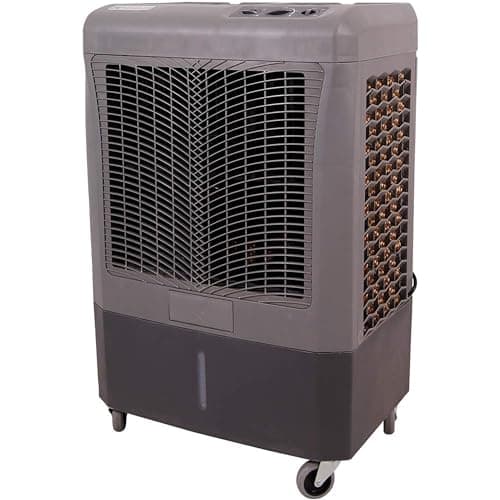 The one to skip in this climate Hessaire MC37M Mobile Evaporative Cooler 3,100 CFM on 250 W of genuinely cheap cooling — in dry air. In humid air it adds water to a house that already has too much. | The dry Southwest, where it is excellent, and nowhere near the Gulf |
The physics
Why humid heat is a different problem
Your body sheds heat mainly by evaporating sweat. That process slows as the air’s humidity rises, so the same air temperature feels substantially hotter in humid conditions — the mechanism is in why humidity makes heat worse.
Three consequences shape every purchase in this climate:
- Fans help less. Moving air speeds evaporation, and when evaporation is already limited by the air’s moisture there is less to speed up.
- Air exchange can hurt. Pulling in outdoor air at a higher dew point makes the house damper, even if the temperature falls.
- Removing water is comfort. A room at 78°F and 45% relative humidity is pleasant; the same room at 70% is not.
This one is not a DIY job
Machines
What each one does to indoor humidity
| Machine | Effect on humidity | In this climate |
|---|---|---|
| Air conditioner | Removes water | The core machine |
| Dehumidifier | Removes water | For damp without heat |
| Ceiling or pedestal fan | No change | Helps a little, cheaply |
| Window fan or whole-house fan | Imports outdoor moisture | Only when the dew point is low |
| Evaporative cooler | Adds water | Wrong machine |
| Misting fan | Adds water | Wrong machine |
Settings
Run the air conditioner for water, not just temperature
- Do not oversize. An oversized unit reaches the set point fast, shuts off, and leaves the room cold and clammy because the coil never ran long enough to condense much water. Sizing is in what size air conditioner you need.
- Use a lower fan speed when it is humid. Slower air spends longer against a colder coil and more water condenses out.
- Avoid eco modes that stop the fan with the compressor: water sitting on the coil evaporates straight back into the room. The trade-offs are in timers and eco modes.
- Keep the condensate draining freely. A blocked drain puts the water back where it came from — condensate and drainage.
Whole house
When one room is not the problem
Humid-climate houses tend to have a whole-building moisture problem rather than a hot room. If several rooms sit above 60% relative humidity, a dedicated whole-home dehumidifier does what room units cannot — the certified field, and the reason the class exists, is in whole-house dehumidifiers.
Ventilation strategy also inverts here. In a dry climate you flush the house with night air; in a humid one that imports moisture the air conditioner then has to remove, which is why a whole-house fan is a poor fit — see ceiling fan versus whole-house fan.
Say the unwelcome thing
Do not buy an evaporative cooler in a humid climate.
It is the clearest wrong-machine purchase in home cooling, and it is made constantly because the running cost looks irresistible. The machine cools by adding water to the air; in a climate whose problem is water in the air, it makes the house worse while barely lowering the temperature.
Buy something that removes water: an air conditioner for heat, a dehumidifier for damp. An inverter unit at CEER 15 handles the first, and a certified 20-pint dehumidifier the second.
In full
Every pick, and what is wrong with it
Published specifications only, each linked to the page it came from. Where a manufacturer publishes nothing, the row says so — we do not fill blanks in.
1. Best room unit for humid air
Midea U-Shaped Window Air Conditioner, 8,000 BTU
Midea · model MAW08V1QWT-S
CEER 15 and 400 certified kWh with an inverter compressor — long, steady cycles are what actually wring water out of the air.
An air conditioner dehumidifies by condensing water on a cold coil. The amount it removes depends on how long air spends against that coil, which is why a unit that runs steadily removes far more water than one that blasts and stops.
An inverter compressor does exactly that: it modulates to hold the set point instead of cycling between off and full. Certified at CEER 15 and 400 kWh a year, about $73 a season at 18.34¢/kWh.
The U-shaped chassis brings a second humid-climate advantage: the sash closes through the unit, so the opening is sealed rather than propped open around a box all summer.
What’s wrong with it
It only dehumidifies the room it serves, and a U-shaped unit needs a deep sill and standard sash geometry to fit at all.
Running cost — MAW08V1QWT-S
| Annual energy use | 400 kWh | ENERGY STAR certified figure |
|---|---|---|
| Annual cost | $73 | 400 × 18.34¢/kWh |
| Per cooling month | $18 | spread over a four-month season |
The annual figure is the certified value from the ENERGY STAR Certified Room Air Conditioners dataset, which models a standard cooling season rather than your actual summer. It is more useful than a nameplate wattage here, because a variable-speed compressor spends most of its life well below nameplate.
Rate: 18.34¢/kWh, the US average residential price for June 2026 (EIA Electric Power Monthly, Table 5.3). Yours will differ — swap it in: (watts ÷ 1000) × hours × your rate.
| Cooling capacity | 8,000 BTU/h |
|---|---|
| CEER | 15 |
| Annual energy use | 400 kWh/yr |
| vs federal standard | 38% less energy |
| Dimensions | 13.5 H x 19.2 W x 22.0 D in |
| Weight | 53.2 lb |
| Refrigerant | R-32 |
| Installation | U-shape; sash closes through the middle of the unit |
| Compressor | Variable speed |
| ENERGY STAR | Certified |
Every figure above is from ENERGY STAR Certified Room Air Conditioners dataset. Blanks are shown as “not published” rather than filled in.
2. Best for the rooms the AC does not reach
Midea Dehumidifier, 20 pints/day
Midea · model MAD20S1QWT
20.16 certified pints a day at 249 kWh a year — the machine for damp that arrives without heat.
Humid climates have months where the temperature does not justify air conditioning and the humidity absolutely justifies something. That is what a dehumidifier is for.
Certified at 20.16 pints a day, 1.70 L/kWh and 249 kWh a year — $46 at 18.34¢/kWh. Set it near 50% and let it cycle rather than running it flat out, as in what to set a dehumidifier to.
Give it a permanent drain. In this climate it will fill a tank faster than anyone wants to empty one — continuous drainage covers the options.
What’s wrong with it
It adds heat to the room it dries, so in summer it belongs in a basement rather than a bedroom.
Running cost — MAD20S1QWT
| Annual energy use | 249 kWh | ENERGY STAR certified figure |
|---|---|---|
| Annual cost | $46 | 249 × 18.34¢/kWh |
| Per cooling month | $11 | spread over a four-month season |
The annual figure is the certified value from the ENERGY STAR Certified Dehumidifiers dataset, which models a standard cooling season rather than your actual summer. It is more useful than a nameplate wattage here, because a variable-speed compressor spends most of its life well below nameplate.
Rate: 18.34¢/kWh, the US average residential price for June 2026 (EIA Electric Power Monthly, Table 5.3). Yours will differ — swap it in: (watts ÷ 1000) × hours × your rate.
| Water removal | 20.16 pints/day (DOE Appendix X1) |
|---|---|
| Efficiency (IEF) | 1.70 L/kWh |
| Annual energy use | 249 kWh/yr |
| Refrigerant | HFC-32 (GWP 675) |
| Connected | No |
| Noise | Not published in the certified dataset |
| ENERGY STAR | Certified |
Every figure above is from ENERGY STAR Certified Dehumidifiers dataset. Blanks are shown as “not published” rather than filled in.
Skip this one
Hessaire MC37M Mobile Evaporative Cooler
Hessaire · model MC37M
3,100 CFM on 250 W of genuinely cheap cooling — in dry air. In humid air it adds water to a house that already has too much.
Evaporative coolers cool by evaporating water into the air. Every gallon they use becomes 8.34 pounds of water vapor in your house, which is the exact opposite of what a humid climate needs.
They also stop working as humidity rises, because evaporation slows as the air approaches saturation. On a Gulf Coast afternoon the available cooling is a degree or two, and what you notice instead is the dampness.
None of that is a fault of the machine. In Phoenix it is one of the cheapest ways to cool a space. The regional detail is in evaporative coolers by US climate.
What’s wrong with it
Adds moisture to indoor air and loses effectiveness as humidity rises — wrong machine, wrong climate, regardless of price.
Running cost — MC37M
| Nameplate power | 250 W | manufacturer's published figure |
|---|---|---|
| Energy, 8-hour night | 2.00 kWh | 250 ÷ 1000 × 8 |
| Cost per hour | 4.6¢ | at 18.34¢/kWh |
| Cost per 8-hour night | 37¢ | on the highest speed |
| Cost per 30 nights | $11 | 60.0 kWh |
Rate: 18.34¢/kWh, the US average residential price for June 2026 (EIA Electric Power Monthly, Table 5.3). Yours will differ — swap it in: (watts ÷ 1000) × hours × your rate.
| Air delivery | 3,100 CFM |
|---|---|
| Power | 250 W / 2.4 A |
| Water tank | 10.3 gallons, continuous hookup capable |
| Dimensions | 24 L x 16 W x 38 H in |
| Weight | 40 lb |
| Pads | Industrial-grade cooling pads |
| Coverage claim | Not published on the product page |
Every figure above is from Hessaire product page, MC37M. Blanks are shown as “not published” rather than filled in.
We are not linking a buy button for this one. If you want to look at it anyway, it is easy enough to find — but we would rather send you to something that fits your room.
Questions people actually ask
Frequently asked
What is the best way to cool a house in a humid climate?
An air conditioner sized correctly and run so it dehumidifies — steady cycles at a lower fan speed rather than short bursts of very cold air — plus a dehumidifier for basements and the damp shoulder seasons.
Do evaporative coolers work in humid climates?
No. They cool by evaporating water into the air, so they add moisture to a house that already has too much, and their cooling effect shrinks as humidity rises. They belong in the dry Southwest. The humidity ceiling.
Why does my house feel clammy even with the AC running?
Usually an oversized unit. It reaches the set point quickly and shuts off before the coil has run long enough to condense much water, leaving the room cool and damp. A correctly sized unit running longer cycles removes far more moisture.
Should I run a dehumidifier and an air conditioner together?
In the same room, rarely — the air conditioner is already removing water and the dehumidifier adds heat. In different spaces, yes: the air conditioner in living areas, the dehumidifier in a basement or crawl space. How the two differ.
Is a whole-house fan a good idea in a humid climate?
Usually not. It pulls in outdoor air, and where nights stay warm and humid that air arrives at a high dew point, leaving the house damp in the morning for the air conditioner to deal with.
Sources
Where these numbers came from
- ENERGY STAR Certified Room Air Conditioners dataset — CEER 15 and 400 kWh/yr for the inverter window unit referenced here
- ENERGY STAR Certified Dehumidifiers dataset — 20.16 pints/day, IEF 1.70 L/kWh and 249 kWh/yr for the dehumidifier referenced here
- Hessaire product page, MC37M — 3,100 CFM on 250 W, 10.3 gallon tank; the evaporative machine this climate rules out
- EIA Electric Power Monthly, Table 5.3 — average residential electricity price
Read next
Where to go from here
Back to Guides & Calculators, or read how we pick.