Head to head
Humidifier vs dehumidifier
These are not competing products, they are opposite ones, and buying the wrong one makes the problem worse rather than leaving it unchanged. A $12 reading tells you which.
By Sawyer V. · Published
The short answer
Measure first: the EPA publishes a target of “below 60 percent (ideally between 30 and 50 percent) relative humidity”. Above that band you want a dehumidifier; below it, a humidifier. In winter a heated house usually drifts below the band while its cold windows still stream with water — and that combination is not a contradiction, it is the reason to read the number instead of guessing from the glass.
Fan & Frost earns a commission when you buy through our links, at no cost to you. It never changes a ranking, and we say so when the right answer is the cheaper unit or nothing at all. Full disclosure · How we pick.

At a glance
The picks, ranked
Tap any row to jump to the full reasoning. Prices are live from Amazon where we have them, and read “check price” where we don’t — never a number we cannot verify today.
| # | Product | Best for | Price |
|---|---|---|---|
| 1 | 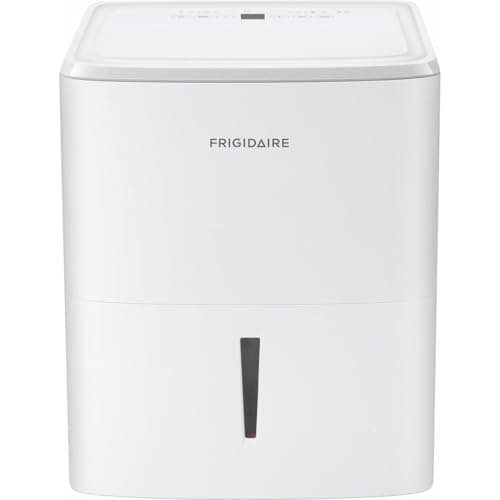 The dehumidifier case Frigidaire Dehumidifier, 35 pints/day 35.85 pints a day at a certified IEF of 2.01 L/kWh, which converts to about 9 cents per liter of water removed. The capacity that suits one bad room rather than a whole floor. | A reading above about 55 percent, damp smells, mold in cold corners, or windows that stream in a room that does not feel dry | |
| 2 | 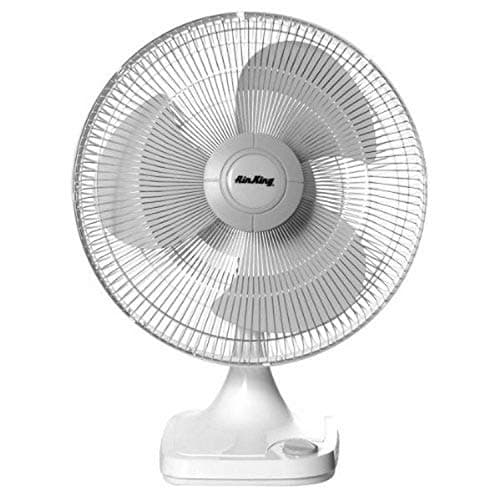 The case for neither machine Air King 9106 16" Commercial Grade Oscillating Table Fan 1,710 CFM on 77 W, published, at 22.2 CFM per watt. Moving air across a cold surface raises its temperature above the dew point, which neither machine does. | A reading already inside the 30 to 50 band, where the glass or a cold corner is still wet — the surface is the problem, not the air |
A humidifier adds water to the air. A dehumidifier takes it out. Run both at once and they fight; run the wrong one and you drive the problem further in the direction it was already going.
We should say plainly what we sell and what we do not. This site stocks and reviews dehumidifiers, and does not stock humidifiers. So if the answer below is a humidifier, the useful thing we can do is tell you that clearly and get out of the way.
The test
One reading, one published band
The EPA publishes the same figures in two separate documents: “Indoor relative humidity (RH) should be kept below 60 percent — ideally between 30 percent and 50 percent, if possible.”
That band is the whole decision procedure.
| Reading | What it means | Machine |
|---|---|---|
| Above 60% | Outside the EPA band; mold risk | Dehumidifier |
| 50 - 60% | Inside the published maximum, above the ideal | Dehumidifier, on a humidistat |
| 30 - 50% | The published target band | Neither |
| Below 30% | Below the published band | Humidifier |
Band from the EPA’s mold and moisture guidance. The machine column is ours. Take the reading in the room with the problem, not in the hallway — a heated living room and an unheated spare room in the same house routinely differ by twenty points.
Everything else — how the air feels, whether your throat is dry, whether the window is wet — is a proxy for that reading, and the proxies disagree with each other in winter. Which is the next section.
The winter trap
A dry house with wet windows
This is the single most common confusion in the category, and it is genuinely confusing rather than a failure of attention. In winter the same house can be:
- Too dry by the reading. Cold outdoor air holds very little water. Heat it to 68 F and the relative humidity falls, because warm air can hold far more than it is carrying. Hence static, cracked furniture and January humidifier sales.
- Too wet for its own glass. The pane sits close to outdoor temperature. The EPA: “When warm, humid air contacts a cold surface, condensation may form.” A surface at 40 F needs far drier air to stay clear than a wall at 68 F does.
Both statements can be true in one room on one night. The resolution is that relative humidity is relative to a temperature, so a single house has as many effective humidities as it has surface temperatures.
The practical consequence: do not buy a humidifier because the air feels dry while a window is streaming. Adding water will make the glass worse and the mold risk in the cold corners worse, for a comfort gain you could get more cheaply by stopping the draft that is drying the room. What to do about the glass.
Head to head
What each machine does, and what is published about it
| Dehumidifier | Humidifier | |
|---|---|---|
| Moves water | Out of the air | Into the air |
| Federal efficiency rating | IEF, L/kWh, certified | No program exists |
| Certified range | 1.70 - 3.26 L/kWh | Not applicable |
| Effect on room temperature | Warms it | Cools it slightly (evaporative types) |
| Consumable | None | Water, and filters or wicks on most types |
| Maintenance risk if neglected | Mold in the tank | Mold and minerals dispersed into the room |
| Helps window condensation | Yes | Makes it worse |
| Helps static and dry throats | No; makes it worse | Yes |
The efficiency rows are checkable: the ENERGY STAR open-data catalogue publishes two dehumidifier datasets — Certified and Most Efficient — and no humidifier dataset of any kind. The energystar.gov product page for humidifiers returns a 404.
That asymmetry is worth dwelling on, because it changes how you have to shop. A dehumidifier can be compared against every other dehumidifier on a common federal test: 9.1¢ per liter removed at IEF 2.01, 11¢ at the bottom of the field, 8.2¢ at the top. For a humidifier there is no equivalent figure at all, so every comparison is between manufacturers’ own claims.
This one is not a DIY job
The cheapest useful purchase in this whole category is a hygrometer, not either machine. Both machines cost two to three figures and do opposite things, and the reading that tells them apart costs about the same as lunch. Every dehumidifier page on this site ends up pointing at the same place: take a reading in the room with the problem, at the time of day the problem is worst, and buy against the number rather than the sensation. The meters, ranked on published accuracy.
Both
Can you need both? Yes, but not at once
Seasonally, plenty of houses do: a dehumidifier in a damp basement through the summer, a humidifier upstairs through the heating season. That is two machines solving two problems at two times of year, which is ordinary.
Simultaneously, in one space, is always a mistake. They will cycle against each other indefinitely, each one giving the other something to do, and the electricity bill is the sum of both. If you find yourself wanting both in one room, the reading is telling you something about air movement or a cold surface rather than about humidity.
There is one genuine exception worth naming, and it is not a humidifier: in a cold space a desiccant dehumidifier returns its heat to the room while drying it, which is why it is the machine that works where a compressor unit frosts. The winter case, in full.
Which one
How to choose between them
- Reading above 60 percent: dehumidifier, and look for a source as well — the EPA says to “act quickly” on visible condensation.
- Reading 50 to 60: dehumidifier on a humidistat, set inside the band. Lower settings cost more and achieve less.
- Reading 30 to 50 and a wet window: neither. Warm the glass, move air across it, and stop insulating it with tight curtains.
- Reading below 30 and static everywhere: humidifier — and we will not pretend to have picks for you.
- Reading below 30 and a wet window: check the hygrometer against a second one. These two findings in one room are usually a bad sensor or a reading taken in the wrong place.
Say the unwelcome thing
Do not run a humidifier in a room with condensation on the windows.
It is the one combination that is unambiguously wrong. Condensation means a surface in that room is already below the dew point of the air; adding water raises the dew point further and extends the wet area from the glass to the frame, the sill and the cold corners behind furniture — which the EPA names as where mold is frequently found.
If the room feels dry and the window is wet, treat them as two separate facts about two different temperatures. The fix for the feeling is usually draft-proofing and heat, not moisture.
In full
Every pick, and what is wrong with it
Published specifications only, each linked to the page it came from. Where a manufacturer publishes nothing, the row says so — we do not fill blanks in.
1. The dehumidifier case
Frigidaire Dehumidifier, 35 pints/day
Frigidaire · model FHDD3534Y1
35.85 pints a day at a certified IEF of 2.01 L/kWh, which converts to about 9 cents per liter of water removed. The capacity that suits one bad room rather than a whole floor.
35.85 pints a day on DOE Appendix X1 at IEF 2.01 L/kWh, 379 kWh a year certified — about $70 at 18.34¢/kWh if it ran constantly, which against a humidistat it will not.
The useful thing about IEF is that it is literally liters of water per kilowatt-hour, so it converts straight into the price of fixing the problem: 9.1¢ a liter here. That is a figure you can hold against the cost of not fixing it.
2.01 is the industry ceiling, not a compromise. Across the certified portable field 47 separate brands have a best figure of exactly 2.01, so this is the normal good machine. Only one household name clears it.
Pick capacity for the room, not the house. A 35-pint unit against a single cold bedroom or a small utility room is right; a 50-pint unit is right for a floor. Sizing, properly.
What’s wrong with it
No dehumidifier publishes a noise figure — the certified dataset has no acoustic field for any of its 559 models — and it warms the room it dries, which is welcome in January and unwelcome in July.
Running cost — FHDD3534Y1
| Annual energy use | 379 kWh | ENERGY STAR certified figure |
|---|---|---|
| Annual cost | $70 | 379 × 18.34¢/kWh |
| Per cooling month | $17 | spread over a four-month season |
The annual figure is the certified value from the ENERGY STAR Certified Dehumidifiers dataset, which models a standard cooling season rather than your actual summer. It is more useful than a nameplate wattage here, because a variable-speed compressor spends most of its life well below nameplate.
Rate: 18.34¢/kWh, the US average residential price for June 2026 (EIA Electric Power Monthly, Table 5.3). Yours will differ — swap it in: (watts ÷ 1000) × hours × your rate.
| Water removal | 35.85 pints/day (DOE Appendix X1) |
|---|---|
| Efficiency (IEF) | 2.01 L/kWh |
| Annual energy use | 379 kWh/yr |
| Refrigerant | R-32 (GWP 675) |
| Connected | No |
| Noise | Not published in the certified dataset |
| ENERGY STAR | Certified |
Every figure above is from ENERGY STAR Certified Dehumidifiers dataset. Blanks are shown as “not published” rather than filled in.
2. The case for neither machine
Air King 9106 16" Commercial Grade Oscillating Table Fan
Air King · model 9106 (sold at retail as 3151G)
1,710 CFM on 77 W, published, at 22.2 CFM per watt. Moving air across a cold surface raises its temperature above the dew point, which neither machine does.
1,710 / 1,500 / 1,330 CFM on 77 / 65 / 57 W, with blade speeds published at every setting. Our arithmetic on those figures gives 22.2 CFM per watt on high, and an eight-hour night on low costs 8.4¢ at 18.34¢/kWh.
Here is why a fan belongs on this page at all. The EPA’s own list of actions that reduce moisture problems includes “Increase ventilation or air movement by opening doors and/or windows, when practical. Use fans as needed” and “Increase air temperature” — alongside, not instead of, dehumidifying.
Condensation needs a surface below the dew point of the air touching it. Air moving across that surface warms it and keeps the boundary layer from saturating. That is a different intervention from changing the humidity of the room, and in a house already inside the published band it is the correct one.
This is the cheap experiment to run first. A fan aimed along a cold external wall for a few nights tells you whether you have an air problem or a surface problem — before you commit to either machine. Circulators, which are built for exactly this.
What’s wrong with it
It does nothing to the amount of water in the house, so it is the wrong answer if the reading is genuinely high. It is also a commercial-grade object with no published noise figure, in a white steel housing nobody chose for a bedroom.
Running cost — 9106 (sold at retail as 3151G)
| Nameplate power | 57 W – 77 W | manufacturer's published figure |
|---|---|---|
| Energy, 8-hour night | 0.62 kWh | 77 ÷ 1000 × 8 |
| Cost per hour | 1.4¢ | at 18.34¢/kWh |
| Cost per 8-hour night | 11¢ | on the highest speed |
| Cost per 30 nights | $3.39 | 18.5 kWh |
| Same month, lowest speed | $2.51 | at 57 W |
Rate: 18.34¢/kWh, the US average residential price for June 2026 (EIA Electric Power Monthly, Table 5.3). Yours will differ — swap it in: (watts ÷ 1000) × hours × your rate.
| Air delivery | 1,710 / 1,500 / 1,330 CFM (high / medium / low) |
|---|---|
| Power | 77 / 65 / 57 W (0.71 / 0.54 / 0.48 A) |
| Efficiency | 22.2 CFM per watt on high, 23.3 on low (our arithmetic) |
| Blade speed | 1,545 / 1,394 / 1,244 RPM |
| Blade | 16 in |
| Speeds | 3 |
| Oscillation | Yes |
| Dimensions | 18 W x 10.75 D x 24.38 H in |
| Weight | 9.2 lb |
| Noise | Not published |
Every figure above is from Air King commercial grade table fan product page, model 9106. Blanks are shown as “not published” rather than filled in.
Questions people actually ask
Frequently asked
Do I need a humidifier or a dehumidifier?
Take a relative humidity reading in the room with the problem. The EPA publishes a target of below 60 percent and ideally 30 to 50 percent: above the band you want a dehumidifier, below it a humidifier, inside it neither. Do not decide from how the air feels — in winter a house can feel dry and still be too wet for its own windows.
Can you use a humidifier and a dehumidifier in the same room?
Not at the same time. They do opposite things, so they will cycle against each other indefinitely and you pay for both. Seasonally is different and common: a dehumidifier in a damp basement in summer and a humidifier upstairs during the heating season are two problems at two times of year.
Why are my windows wet if my house feels dry in winter?
Because relative humidity depends on temperature. Heated air at 68 F can hold a lot of water, so the room reads as dry; the window pane sits close to the outdoor temperature and needs far drier air to stay clear. Both facts are true at once — the glass reports on the coldest surface in the room, not on the room. Stopping the condensation.
Is there an efficiency rating for humidifiers?
No federal one. The ENERGY STAR open-data catalogue publishes two dehumidifier datasets — Certified and Most Efficient — and no humidifier dataset at all, and the energystar.gov humidifier product page returns a 404. Dehumidifiers are rated on IEF, liters removed per kilowatt-hour, with the certified field running 1.70 to 3.26. Dehumidifiers on certified IEF.
Does a dehumidifier make a room colder?
No, warmer. It condenses water on a cold coil and rejects that heat, plus the motor's own waste heat, back into the room — all of the electricity it uses ends up as heat in the space. That is a nuisance in July and a small bonus in a cold utility room in January.
What humidity is too low?
The EPA's published band starts at 30 percent, so a reading below that is outside it. Note that the guidance is written against mold and moisture damage, which is a high-humidity problem — the 30 percent floor is the bottom of the recommended range rather than a measured harm threshold.
Will a dehumidifier help with dust or allergies?
Indirectly, by holding humidity where dust mites and mold do not thrive — which reduces what an air purifier would otherwise be catching. It does not filter air. A humidifier does not filter air either, and a neglected one disperses tank mold and mineral dust into the room. Dehumidifier or air purifier.
Sources
Where these numbers came from
- EPA, A Brief Guide to Mold, Moisture and Your Home — below 60 percent, ideally 30 to 50 percent; act quickly on condensation; use fans and increase air temperature
- EPA Mold Course, Chapter 2 — warm humid air on a cold surface forms condensation; mold in cold corners behind furniture
- ENERGY STAR Certified Dehumidifiers dataset — certified IEF and capacity; the catalogue contains dehumidifier datasets and no humidifier program
- Air King commercial grade table fan product page, model 9106 — 1,710/1,500/1,330 CFM on 77/65/57 W
- EIA Electric Power Monthly, Table 5.3 — electricity rate
Read next
Where to go from here
Back to Dehumidifiers, or read how we pick.