Guide and picks
Cooling a greenhouse
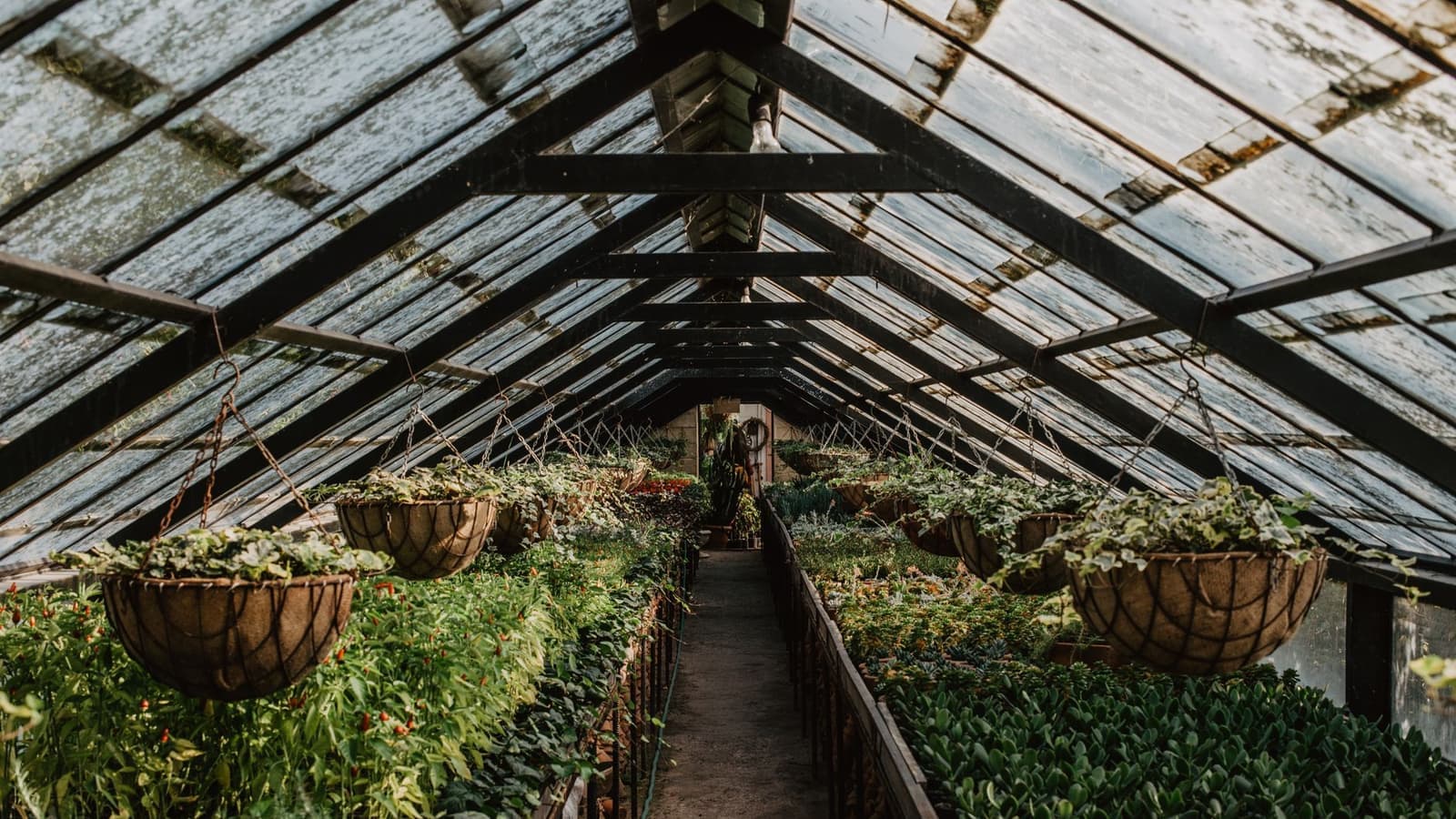
Every other page here treats added humidity as the enemy. A greenhouse is the exception, and it is worth understanding why.
By Sawyer V. · Published
The short answer
Shade first — blocking sun before it enters is the only lever that costs nothing to run. Then ventilate at a high rate, because a glass structure accumulates heat faster than any small fan can shift it. Then, uniquely on this site, evaporative cooling is the right technology: 3,100 CFM on 250 W, and the humidity it adds is a benefit here rather than a cost.
Fan & Frost earns a commission when you buy through our links, at no cost to you. It never changes a ranking, and we say so when the right answer is the cheaper unit or nothing at all. Full disclosure · How we pick.
At a glance
The picks, ranked
Tap any row to jump to the full reasoning. Prices are live from Amazon where we have them, and read “check price” where we don’t — never a number we cannot verify today.
| # | Product | Best for | Price |
|---|---|---|---|
| 1 | 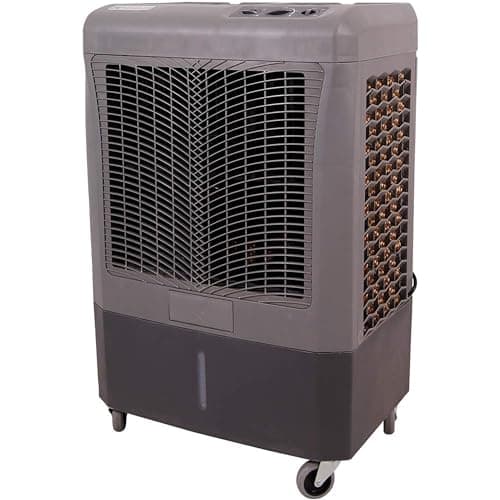 Best overall Hessaire MC37M Mobile Evaporative Cooler 3,100 CFM on 250 W with a continuous water hookup — the one structure where added humidity is a feature. | A greenhouse with power and a hose within reach | |
| 2 | Best extraction Fantech FG 12XL EC In-Line Fan 750 CFM at 4.6 CFM per watt — the highest certified in-line airflow we hold data for. | Pulling heat out at a rate a glass structure demands | |
| 3 | Cheapest useful thing Lasko Power Plus 20" Box Fan 73 to 102 W with a weather-resistant motor — the box fan built for damp air. | Moving air inside the structure, not out of it | |
| — | The wrong tool here Midea U-Shaped Window Air Conditioner, 6,000 BTU An excellent 298 kWh a year air conditioner, aimed at a structure with no insulation to hold what it makes. | A bedroom — see the room pages |
A greenhouse is the one structure on this site where the usual advice inverts, and it is worth being precise about why.
The inversion
Why humidity stops being the enemy
Everywhere else on this site, added humidity is a cost. It is why humid heat feels worse than dry heat, why a laundry room feels awful, and why an evaporative cooler is the wrong machine in most homes.
The reason is that people cool themselves by evaporating sweat. Humid air has less spare capacity to absorb that moisture, so raising humidity directly degrades your own cooling mechanism.
Plants do not have that problem. A greenhouse is not being cooled for a human’s comfort, and moderate humidity is generally something growers manage toward rather than away from.
So the trade that makes evaporative cooling a bad deal indoors — cooler air in exchange for wetter air — is not a trade here. You get the temperature drop without paying the usual price. That is why evaporative cooling is standard in commercial glasshouses and rare in homes.
The numbers that follow from that: an evaporative cooler moving 3,100 CFM on 250 W, extraction at up to 750 CFM from the highest-airflow certified in-line fan we hold data for, and shading — the only lever in the whole exercise with no running cost at all.
First
Shade before anything with a plug
Solar gain that never enters the structure costs nothing to remove. Every watt you block outside the glass is a watt no fan has to shift.
- External shading beats internal. Once light is through the glass its energy is inside, whatever you hang under it. Shade cloth or paint on the outside stops it arriving.
- Shade the roof, not just the sides. Summer sun is high, and the roof is the largest aperture facing it.
- Shading is a growing decision, not just a cooling one. How much light you can block depends entirely on what you are growing. That belongs to a horticultural source, not this site.
- Do the shading before sizing anything. The ventilation rate you need after shading is much lower than the rate you need without it.
The same principle applies indoors, where it is the cheapest cooling intervention there is.
Then
Ventilate at a serious rate
A greenhouse has essentially no thermal mass and no insulation. Heat arrives continuously while the sun is up, and the only practical way out is with the air.
That makes this a high-airflow problem rather than a high-efficiency one. It is the opposite of the calculation on most of this site, where a certified bathroom fan wins on 16.7 CFM per watt and airflow is secondary.
- Roof vents work without power. Hot air rises and leaves; cooler air enters low. Automatic openers are common and need no electricity at all.
- Give the intake as much area as the extract. An extract fan with no low intake path pulls a vacuum and moves a fraction of its rating.
- Extract high, intake low. The same rule as a closet full of equipment, for the same reason.
- Circulate internally as well. Ventilation moves air through the structure; circulation stops it stratifying inside.
This one is not a DIY job
Everything about what your plants need is outside this site’s scope. Target temperatures, humidity ranges, light levels and ventilation rates are species-specific horticultural questions, and we do not hold data on them.
What we can tell you is what the machines do. Match that to a horticultural source for your crop.
Electrical equipment in a wet, earthed structure is a safety matter. Outdoor-rated circuits, RCD or GFCI protection, and weather-rated equipment are not optional here, and the installation belongs to a qualified electrician.
Running it
Practical notes
- Plumb the cooler in. A 10.3 gallon tank at 3,100 CFM does not last a hot day, and hand-refilling is why these get abandoned.
- Budget for pads. They are a consumable, and a degraded pad quietly costs you most of the cooling.
- Drain and clean on a schedule. Standing water in a warm structure is a maintenance problem before it is anything else — the symptoms and the fixes.
- Check the climate question honestly. Evaporative cooling delivers very little where the air is already humid, and a greenhouse in a humid region is no exception.
- Winterise it. Water left in a cooler through a freeze is how they die — the shutdown routine.
Say the unwelcome thing
Do not try to air-condition a greenhouse.
An air conditioner produces a fixed quantity of cooling and delivers it into a space, on the assumption that the space holds it.
A greenhouse is engineered to do the opposite. Single glazing, no insulation, and a large glazed area pointed at the sun means solar gain arrives continuously and cooling leaks out just as fast.
There is also no sensible place to install one, and a window unit rejects its heat a couple of feet from where it collected it.
Shade first, then ventilate hard, then use the technology that actually suits a glass structure: 3,100 CFM on 250 W — the one place on this site where the humidity it adds is not a cost.
In full
Every pick, and what is wrong with it
Published specifications only, each linked to the page it came from. Where a manufacturer publishes nothing, the row says so — we do not fill blanks in.
1. Best overall
Hessaire MC37M Mobile Evaporative Cooler
Hessaire · model MC37M
3,100 CFM on 250 W with a continuous water hookup — the one structure where added humidity is a feature.
The technology this site spends most of its time warning people about, recommended without reservation for exactly one place.
3,100 CFM on 250 W — roughly 37¢ for an eight-hour day — which is a very large volume of air for the power. That combination is only possible because evaporation does the cooling, not a compressor.
Continuous hookup capable is the specification that matters. A 10.3 gallon tank will not last a hot day at this airflow, and refilling by hand is how these end up unused in a corner.
Its usual objection — performance collapses in humid air — still applies. In a humid climate this is the wrong machine here too.
What’s wrong with it
It needs water and power at the greenhouse, and pads need replacing.
Running cost — MC37M
| Nameplate power | 250 W | manufacturer's published figure |
|---|---|---|
| Energy, 8-hour night | 2.00 kWh | 250 ÷ 1000 × 8 |
| Cost per hour | 4.6¢ | at 18.34¢/kWh |
| Cost per 8-hour night | 37¢ | on the highest speed |
| Cost per 30 nights | $11 | 60.0 kWh |
Rate: 18.34¢/kWh, the US average residential price for June 2026 (EIA Electric Power Monthly, Table 5.3). Yours will differ — swap it in: (watts ÷ 1000) × hours × your rate.
| Air delivery | 3,100 CFM |
|---|---|
| Power | 250 W / 2.4 A |
| Water tank | 10.3 gallons, continuous hookup capable |
| Dimensions | 24 L x 16 W x 38 H in |
| Weight | 40 lb |
| Pads | Industrial-grade cooling pads |
| Coverage claim | Not published on the product page |
Every figure above is from Hessaire product page, MC37M. Blanks are shown as “not published” rather than filled in.
2. Best extraction
Fantech FG 12XL EC In-Line Fan
Fantech · model FG 12XL EC
750 CFM at 4.6 CFM per watt — the highest certified in-line airflow we hold data for.
Ventilation rate is the whole game in a glass structure, because solar gain arrives continuously and the only way out is with the air.
750 CFM at 0.25 inches of water gauge is the largest certified in-line airflow on this site, and a greenhouse is one of the few home structures that genuinely wants it.
4.6 CFM per watt is typical of the in-line category, where 4.0 is the norm. Judge these on delivered airflow rather than efficacy — a ceiling fan does 16.7 CFM per watt and cannot do this job at all.
The EC motor lets you run it well below full output in spring and autumn, which is most of the year.
What’s wrong with it
12-inch duct, and it is an installation rather than a purchase.
Running cost
Fantech does not publish a wattage for the FG 12XL EC, so we cannot calculate what it costs to run. We are not going to estimate one. If Fantech publishes a nameplate figure, this block will show the arithmetic.
| Air delivery | 750 CFM at 0.25 in w.g. |
|---|---|
| Efficacy | 4.6 CFM per watt |
| Duct size | 12 in diameter |
| Unit type | In-line (single-port), mounted in the duct run |
| Motor | EC (electronically commutated) |
| Noise (sones) | Not published for in-line units |
| ENERGY STAR | Certified |
Every figure above is from ENERGY STAR Certified Ventilating Fans dataset. Blanks are shown as “not published” rather than filled in.
3. Cheapest useful thing
Lasko Power Plus 20" Box Fan
Lasko · model B20801
73 to 102 W with a weather-resistant motor — the box fan built for damp air.
Internal air movement is a separate job from ventilation, and a greenhouse needs both. Still air lets hot layers stratify near the roof while the growing level stays stagnant.
The weather-resistant motor is the reason to choose this one specifically. A greenhouse is a damp environment, and an ordinary indoor box fan is not built for it.
73 to 102 W across three speeds, and it stands or hangs anywhere.
Lasko does not publish a CFM figure for it, which we note rather than fill in. Almost nobody in the box fan category does.
What’s wrong with it
Its airflow is not published, and it does nothing about heat that has already arrived.
Running cost — B20801
| Nameplate power | 73 W – 102 W | manufacturer's published figure |
|---|---|---|
| Energy, 8-hour night | 0.82 kWh | 102 ÷ 1000 × 8 |
| Cost per hour | 1.9¢ | at 18.34¢/kWh |
| Cost per 8-hour night | 15¢ | on the highest speed |
| Cost per 30 nights | $4.49 | 24.5 kWh |
| Same month, lowest speed | $3.21 | at 73 W |
Rate: 18.34¢/kWh, the US average residential price for June 2026 (EIA Electric Power Monthly, Table 5.3). Yours will differ — swap it in: (watts ÷ 1000) × hours × your rate.
| Power | 73 W - 102 W (0.6-0.9 A at 120 V) |
|---|---|
| Speeds | 3 |
| Dimensions | 21.25 H x 22.5 x 4.75 in |
| Weight | 10.1 lb |
| Motor | Weather-resistant |
| Air delivery (CFM) | Not published |
| Warranty | 2 years |
Every figure above is from Lasko product page, B20801. Blanks are shown as “not published” rather than filled in.
Skip this one
Midea U-Shaped Window Air Conditioner, 6,000 BTU
Midea · model MAW06V1QWT
An excellent 298 kWh a year air conditioner, aimed at a structure with no insulation to hold what it makes.
One of the best window units certified, and completely mismatched to this structure.
An air conditioner makes a fixed quantity of cooling and puts it into a space. That works when the space holds the cooling. A greenhouse is designed to do the opposite — single glazing, no insulation, and a large glazed area facing the sun.
There is also nowhere to install it. A window unit needs a sash and a wall, and it rejects its heat a couple of feet from where it took it from.
It belongs in a room with walls, where 298 kWh a year buys real comfort.
What’s wrong with it
Refrigerated cooling in a glass box fights continuous solar gain through an uninsulated envelope.
Running cost — MAW06V1QWT
| Annual energy use | 298 kWh | ENERGY STAR certified figure |
|---|---|---|
| Annual cost | $55 | 298 × 18.34¢/kWh |
| Per cooling month | $14 | spread over a four-month season |
The annual figure is the certified value from the ENERGY STAR Certified Room Air Conditioners dataset, which models a standard cooling season rather than your actual summer. It is more useful than a nameplate wattage here, because a variable-speed compressor spends most of its life well below nameplate.
Rate: 18.34¢/kWh, the US average residential price for June 2026 (EIA Electric Power Monthly, Table 5.3). Yours will differ — swap it in: (watts ÷ 1000) × hours × your rate.
| Cooling capacity | 6,000 BTU/h |
|---|---|
| CEER | 15.1 |
| Annual energy use | 298 kWh/yr |
| vs federal standard | 37% less energy |
| Dimensions | 13.5 H x 19.2 W x 22.0 D in |
| Weight | 53.1 lb |
| Refrigerant | R-32 |
| Installation | U-shape; sash closes through the middle of the unit |
| Compressor | Variable speed |
| ENERGY STAR | Certified, and on the Most Efficient list |
Every figure above is from ENERGY STAR Certified Room Air Conditioners dataset. Blanks are shown as “not published” rather than filled in.
We are not linking a buy button for this one. If you want to look at it anyway, it is easy enough to find — but we would rather send you to something that fits your room.
Questions people actually ask
Frequently asked
Why does evaporative cooling work in a greenhouse when it is bad indoors?
Because indoors the cost of evaporative cooling is added humidity, which degrades your own sweat-based cooling. A greenhouse is not being cooled for human comfort, so you get the temperature drop without paying that price — which is why it is standard in commercial glasshouses. The full comparison.
What is the first thing to do about greenhouse heat?
Shade. Solar gain that never enters the structure costs nothing to remove, and external shading beats internal — once light is through the glass its energy is inside whatever you hang under it. How much light you can block is a horticultural question for your crop.
How much ventilation does a greenhouse need?
More than any room on this site, because a greenhouse has essentially no insulation or thermal mass — heat arrives continuously and the only way out is with the air. This is a high-airflow problem, not a high-efficiency one.
Can I use an air conditioner in a greenhouse?
It is the wrong tool. Refrigerated cooling assumes the space holds what it makes, and a greenhouse is built to do the opposite. There is also nowhere to install a window unit and no wall to reject the heat through.
Do I still need a fan inside if I have vents?
Yes, they are different jobs. Ventilation moves air through the structure; internal circulation stops hot air stratifying near the roof while the growing level stays stagnant. Use a fan with a weather-resistant motor — a greenhouse is a damp environment.
Does an evaporative cooler still fail in a humid climate here?
Yes. The physics does not change with the structure — if the air is already close to saturated, there is little capacity left to evaporate into and you get very little cooling. Where the limit is.
Sources
Where these numbers came from
- Hessaire MC37M product page — 3,100 CFM, 250 W, 10.3 gal continuous hookup
- ENERGY STAR Certified Ventilating Fans dataset — in-line fan CFM, CFM per watt and duct size
- Lasko B20801 product page — 73-102 W, weather-resistant motor
- ENERGY STAR Certified Room Air Conditioners dataset — CEER and annual kWh
- EIA Electric Power Monthly, Table 5.3 — electricity rate
Read next
Where to go from here
Back to Room Cooling, or read how we pick.