Guide and picks
How to clean a dehumidifier
This machine pulls a large volume of dusty air across a wet coil all day. The maintenance is not optional and it is mostly free.
By Sawyer V. · Published
The short answer
Filter first, every few weeks. It is the highest-value job and the one that directly affects performance — less airflow across the coil means less water condensed per kilowatt-hour. Then the coil, the tank and float, and the drain path. Unplug first, follow your manual, and leave the sealed refrigerant circuit alone entirely.
Fan & Frost earns a commission when you buy through our links, at no cost to you. It never changes a ranking, and we say so when the right answer is the cheaper unit or nothing at all. Full disclosure · How we pick.
At a glance
The picks, ranked
Tap any row to jump to the full reasoning. Prices are live from Amazon where we have them, and read “check price” where we don’t — never a number we cannot verify today.
| # | Product | Best for | Price |
|---|---|---|---|
| 1 | Worth keeping clean Vellgoo Taurus Pro Dehumidifier, 45 pints/day 2.24 L/kWh at 444 kWh a year — the best certified efficiency, which a blocked filter quietly gives back. | A basement unit where efficiency compounds over months | |
| 2 | The one with an extra part to clean Midea Cube Dehumidifier with Built-in Pump, 50 pints/day 49.95 pints a day at 520 kWh with a built-in pump — and the pump reservoir is the part that clogs. | A pumped installation somewhere you rarely visit | |
| 3 | 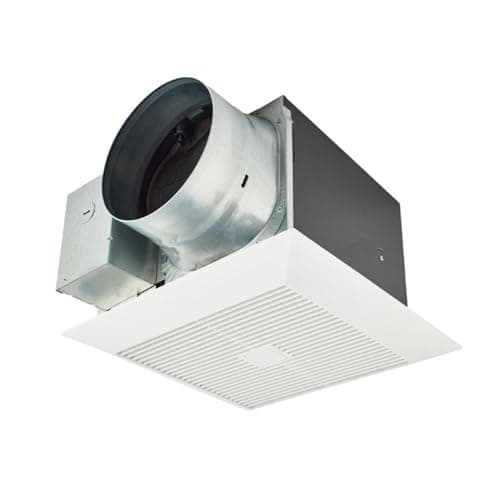 The machine that reduces the load Panasonic WhisperGreen Select FV-0511VK3 Ventilation Fan 110 CFM at 0.1 sones and 16.7 CFM per watt — it takes the water out of the building. | Removing moisture at source instead of condensing it back |
A dehumidifier draws a large volume of air across a cold, wet coil for months at a time, frequently in the dustiest room in the house. It accumulates more than most appliances.
Why it matters
A blocked filter costs water, not just airflow
The efficiency figure these machines are rated on — IEF, liters of water per kilowatt-hour — is measured with clean airflow. Restrict that airflow and the number you actually get falls.
The chain is direct:
- Less air reaches the coil. The filter is upstream of everything.
- Less moisture passes the cold surface, so less condenses per minute of compressor running.
- The compressor runs longer to reach the same humidity setpoint.
- In a cold space it can ice up. Reduced airflow drops the coil temperature further, and a frosted coil removes no water at all while still drawing power.
So filter cleaning is not housekeeping. It is the difference between the $81 a year you were quoted and something higher for less water.
The routine
In order of payoff
Unplug the unit before any of this, and follow your own manual where it differs — filter type and access vary by model.
- The filter, every two to four weeks. Most are a washable mesh in a slide-out frame. Rinse, let it dry completely, and refit. A damp filter refitted is a mold problem you just installed.
- The tank and float, monthly. Standing water at room temperature grows things. Wash it, and check the float moves freely — a stuck float is a common cause of a unit that will not restart.
- The coil, once or twice a season. With the filter out, vacuum gently with a soft brush attachment along the fin direction. Do not bend the fins, and do not poke anything between them.
- The drain path, once a season. Flush the hose, check for kinks and low spots, and confirm the port is not blocked with sediment.
- The pump reservoir, if fitted. This is what clogs. Clean it on the same schedule as the tank.
- The grilles and the cabinet. Cosmetic, but a restricted outlet grille is the same problem as a blocked filter.
Do not
Three things to leave alone
- The sealed refrigerant circuit. Coils, lines, compressor. There is nothing serviceable there, refrigerant handling is regulated, and puncturing a coil ends the machine.
- Bleach or harsh chemicals inside the airflow. Warm soapy water is the standard advice for tanks and filters. Anything stronger risks both the plastics and the air you then breathe.
- A pressure washer, or the coil with water. Vacuum and brush only. Water forced into fins carries dust deeper and can reach electrics.
Storage
Putting it away
A dehumidifier stored wet is the same mistake as an evaporative cooler stored wet, and it produces the same result the following spring.
- Empty and dry the tank completely, then leave it out of the machine or the lid open.
- Run it dry for a while first if the manual allows, so the coil and pan are not damp when it goes into a cupboard.
- Clean the filter before storage, not after. Dust plus residual moisture for six months is worse than either alone.
- Store upright. Refrigerant systems do not like being laid on their side, and oil can migrate.
- Let it stand upright for hours before restarting if it has been tipped, exactly as with an air conditioner — the same rule.
This one is not a DIY job
Unplug before opening anything, and follow your own manual. Access, filter type and permitted cleaning agents vary by model, and the manual overrides any general guide including this one.
Anything involving the sealed refrigerant circuit is licensed work. Refrigerant handling is regulated and a punctured coil is not a repair, it is a replacement.
Visible mold growth over a large area is an assessment matter rather than a cleaning one, and health effects of damp and mold are a question for a medical professional. We can tell you how to keep the machine working.
If the unit smells strongly even after the tank and filter are clean, stop and have it looked at rather than persisting.
Say the unwelcome thing
Do not refit a filter that is still damp.
It is the most common self-inflicted problem in this category, and it turns a clean into a contamination.
A washed filter holds water in the mesh. Refitted immediately, it goes straight into a warm, dark, constantly humid airstream — which is close to ideal conditions for growth. The smell that follows gets blamed on the tank.
Let it dry completely, away from the machine. If you need the dehumidifier running in the meantime, most units will run without the filter briefly — check your manual, and do not make a habit of it, because the coil then collects what the filter would have.
Then keep the schedule: filter every two to four weeks, tank monthly, coil and drain once a season. On a 2.24 L/kWh machine that is what protects the efficiency you paid for.
In full
Every pick, and what is wrong with it
Published specifications only, each linked to the page it came from. Where a manufacturer publishes nothing, the row says so — we do not fill blanks in.
1. Worth keeping clean
Vellgoo Taurus Pro Dehumidifier, 45 pints/day
Vellgoo · model TAURUS PRO-RCS50(Y)-N4-3-25
2.24 L/kWh at 444 kWh a year — the best certified efficiency, which a blocked filter quietly gives back.
The reason maintenance matters most on the efficient machines: you paid for the airflow.
2.24 L/kWh against a category median of 2.01 is about 11% more water per kilowatt-hour. A loaded filter erodes exactly that advantage, because IEF is measured with clean airflow.
444 kWh a year, about $81 at 18.34¢/kWh, at 45 pints a day and Most Efficient certified.
In a basement running months at a time, a filter checked every few weeks is the difference between the figure you bought and the figure you get.
What’s wrong with it
Efficiency only holds while airflow does, and a basement is a dusty place.
Running cost — TAURUS PRO-RCS50(Y)-N4-3-25
| Annual energy use | 444 kWh | ENERGY STAR certified figure |
|---|---|---|
| Annual cost | $81 | 444 × 18.34¢/kWh |
| Per cooling month | $20 | spread over a four-month season |
The annual figure is the certified value from the ENERGY STAR Certified Dehumidifiers dataset, which models a standard cooling season rather than your actual summer. It is more useful than a nameplate wattage here, because a variable-speed compressor spends most of its life well below nameplate.
Rate: 18.34¢/kWh, the US average residential price for June 2026 (EIA Electric Power Monthly, Table 5.3). Yours will differ — swap it in: (watts ÷ 1000) × hours × your rate.
| Water removal | 45.00 pints/day (DOE Appendix X1) |
|---|---|
| Efficiency (IEF) | 2.24 L/kWh |
| Annual energy use | 444 kWh/yr |
| Refrigerant | HFC-32 (GWP 675) |
| Connected | No |
| Noise | Not published in the certified dataset |
| ENERGY STAR | Certified, and on the Most Efficient list |
Every figure above is from ENERGY STAR Certified Dehumidifiers dataset. Blanks are shown as “not published” rather than filled in.
2. The one with an extra part to clean
Midea Cube Dehumidifier with Built-in Pump, 50 pints/day
Midea · model MAD50PS1BWT-C
49.95 pints a day at 520 kWh with a built-in pump — and the pump reservoir is the part that clogs.
Pump-equipped units have one more thing to keep clean, and it is the thing that strands them.
Pumps clog. Dust and biological growth accumulate in the small reservoir and around the impeller. A clogged pump means the machine reverts to its tank, fills, and stops.
520 kWh a year, about $95 at 18.34¢/kWh, at 2.01 L/kWh.
Connected capable is genuinely useful here — it tells you the unit has stopped instead of leaving you to find out. What pumps add.
What’s wrong with it
A pump adds a maintenance point that a gravity-drained unit does not have.
Running cost — MAD50PS1BWT-C
| Annual energy use | 520 kWh | ENERGY STAR certified figure |
|---|---|---|
| Annual cost | $95 | 520 × 18.34¢/kWh |
| Per cooling month | $24 | spread over a four-month season |
The annual figure is the certified value from the ENERGY STAR Certified Dehumidifiers dataset, which models a standard cooling season rather than your actual summer. It is more useful than a nameplate wattage here, because a variable-speed compressor spends most of its life well below nameplate.
Rate: 18.34¢/kWh, the US average residential price for June 2026 (EIA Electric Power Monthly, Table 5.3). Yours will differ — swap it in: (watts ÷ 1000) × hours × your rate.
| Water removal | 49.95 pints/day (DOE Appendix X1) |
|---|---|
| Efficiency (IEF) | 2.01 L/kWh |
| Annual energy use | 520 kWh/yr |
| Drainage | Built-in pump, plus gravity hose and tank |
| Refrigerant | HFC-32 (GWP 675) |
| Connected | Yes |
| Noise | Not published in the certified dataset |
| ENERGY STAR | Certified |
Every figure above is from ENERGY STAR Certified Dehumidifiers dataset. Blanks are shown as “not published” rather than filled in.
3. The machine that reduces the load
Panasonic WhisperGreen Select FV-0511VK3 Ventilation Fan
Panasonic · model FV-0511VK3
110 CFM at 0.1 sones and 16.7 CFM per watt — it takes the water out of the building.
Included because the cheapest dehumidifier maintenance is the moisture that never arrives.
A bathroom or laundry extract fan removes water vapor from the building rather than condensing it into a tank. At 16.7 CFM per watt that is a fraction of a cent an hour.
0.1 sones and Most Efficient certified — a designation only 80 of 912 certified fans reach.
It needs cleaning too, and for the same reason: a loaded blower wheel quietly loses airflow. That routine.
What’s wrong with it
It is a ducted installation, and it needs its own cleaning routine.
Running cost
Panasonic does not publish a wattage for the FV-0511VK3, so we cannot calculate what it costs to run. We are not going to estimate one. If Panasonic publishes a nameplate figure, this block will show the arithmetic.
| Noise | 0.1 sones |
|---|---|
| Air delivery, high | 110 CFM at 0.25 in w.g. |
| Air delivery, medium | 80 CFM |
| Air delivery, low | 50 CFM |
| Efficacy, high | 16.7 CFM per watt |
| Efficacy, medium | 18.4 CFM per watt |
| Efficacy, low | 14.7 CFM per watt |
| Duct size | 6 in diameter |
| Speeds | 3 or more |
| Lighting | None |
| Power | Not published in the certified dataset |
| ENERGY STAR | Certified, and on the Most Efficient list |
Every figure above is from ENERGY STAR Certified Ventilating Fans dataset. Blanks are shown as “not published” rather than filled in.
Questions people actually ask
Frequently asked
How often should I clean a dehumidifier filter?
Every two to four weeks while it is running, and check your manual since filter types vary. It is the highest-value maintenance on the machine — a blocked filter means less air across the coil, less water condensed per kilowatt-hour, and longer compressor runs.
Does a dirty filter make a dehumidifier less effective?
Directly. The IEF efficiency figure is measured with clean airflow. Restrict it and less moisture passes the cold coil, so the machine runs longer for the same result — and in a cold space reduced airflow can drop the coil below freezing and ice it up.
How do I clean a dehumidifier coil?
With the unit unplugged and the filter out, vacuum gently with a soft brush along the fin direction. Once or twice a season. Do not bend the fins, do not poke between them, and do not use water or a pressure washer.
What should I not clean on a dehumidifier?
The sealed refrigerant circuit — coils, lines and compressor — which is licensed work and not serviceable. Also avoid bleach and harsh chemicals inside the airflow; warm soapy water is the standard for tanks and filters.
How do I store a dehumidifier for winter?
Empty and dry the tank completely, clean the filter before storage rather than after, and store it upright. Dust plus residual moisture for six months is worse than either alone, and refrigerant systems do not like being laid on their side.
My dehumidifier smells. What do I clean?
Tank and float first, then the filter — and make sure the filter is completely dry before refitting, because a damp filter in a warm humid airstream is the usual cause. If it still smells with both clean, have it looked at rather than persisting.
Sources
Where these numbers came from
Read next
Where to go from here
Back to Dehumidifiers, or read how we pick.