Guide and picks
Cooling a basement
Most basements do not have a temperature problem. They have a humidity problem that feels like a temperature problem, and the usual fix makes it worse.
By Sawyer V. · Published
The short answer
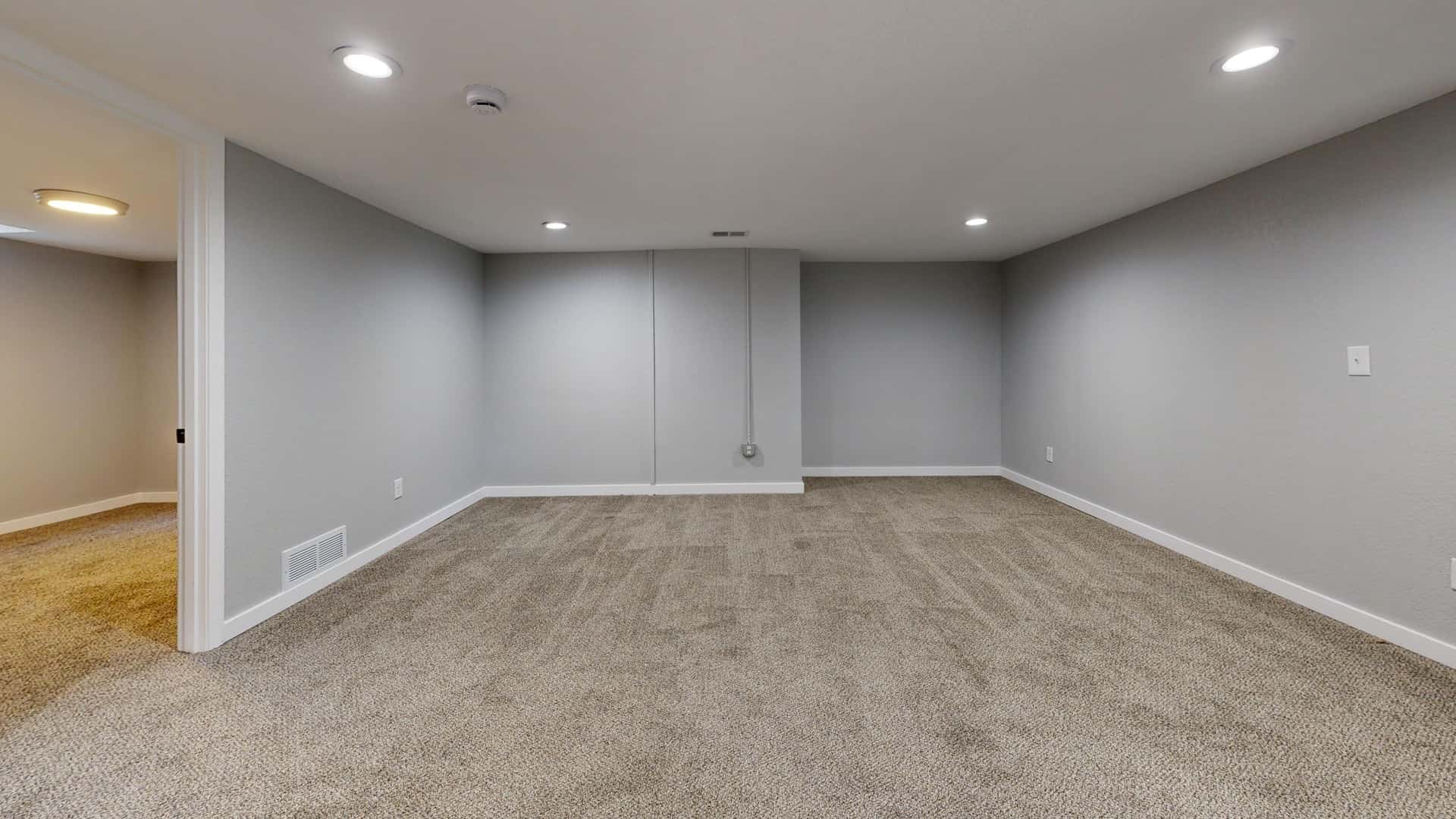
A basement is usually the coolest room in the house and the most humid, because warm air meets cold below-grade walls and gives up its moisture there. Fix the humidity and the air movement before you add cooling capacity. If you do need an air conditioner, undersize rather than oversize — an oversized unit satisfies the thermostat in minutes, shuts off before it has removed any moisture, and leaves the room cold and clammy.
Fan & Frost earns a commission when you buy through our links, at no cost to you. It never changes a ranking, and we say so when the right answer is the cheaper unit or nothing at all. Full disclosure · How we pick.
At a glance
The picks, ranked
Tap any row to jump to the full reasoning. Prices are live from Amazon where we have them, and read “check price” where we don’t — never a number we cannot verify today.
| # | Product | Best for | Price |
|---|---|---|---|
| 1 | 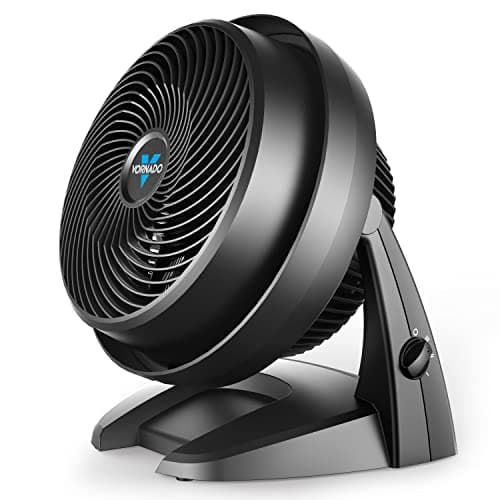 Best for moving stagnant air Vornado 630 Medium Air Circulator Vornado states it moves air up to 70 feet — the point is throw, not local breeze, and throw is what a basement needs. | Breaking up the dead air that makes a basement feel damp | |
| 2 |  Most published airflow Lasko Wind Curve 42" Tower Fan 720 CFM published, which is the highest figure of any pedestal or tower fan we hold data for. | A large finished basement that needs volume, not reach | |
| 3 | If you genuinely need cooling, undersize it Midea U-Shaped Window Air Conditioner, 6,000 BTU 6,000 BTU, CEER 15.1, 298 kWh a year — deliberately the smallest certified unit here, because small is the point. | A basement bedroom or office that really is too warm | |
| — | 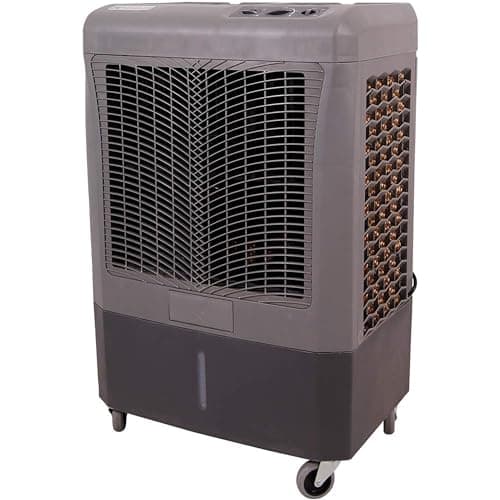 The exactly wrong machine for a basement Hessaire MC37M Mobile Evaporative Cooler 3,100 CFM on 250 W and a 10.3 gallon tank, and every one of those numbers is a reason to keep it out of a basement. | A dry garage or an open patio — the opposite conditions |
Start with the diagnosis, because for most basements the standard cooling advice is aimed at the wrong problem.
Diagnosis
It is probably not too hot
A basement is surrounded by earth. Ground temperature at depth is stable and, in summer, well below air temperature — which is why basements are reliably the coolest part of a house in August without anyone doing anything.
So when a basement feels unpleasant in summer, the cause is usually humidity rather than temperature. Three things combine:
- Warm humid air meets cold surfaces. Air holds less moisture as it cools. Warm summer air coming down the stairs hits below-grade walls and a slab that are considerably colder, and it gives up moisture onto them. That is condensation, and it happens whether or not the basement has a leak.
- Nothing moves. Cool air is denser, so it sits. Without deliberate circulation the room stratifies and the corners never exchange air with anywhere.
- There is usually a moisture source. A laundry, uninsulated cold water pipes sweating, a slab without a vapor barrier, or ground water. Any of these adds to the load continuously.
The felt result is a room that is genuinely cool and genuinely unpleasant: clammy air, a smell, condensation on the pipes. Adding cooling capacity to that makes the surfaces colder and the condensation worse.
This one is not a DIY job
Test which problem you have before you buy anything. A cheap thermometer-hygrometer left in the basement for a day settles it.
If the temperature reads comfortable and the relative humidity is high, you have a moisture problem and an air conditioner is the wrong purchase. A dehumidifier and circulation are the right ones.
If the temperature genuinely is too high — a basement bedroom under a hot floor, or one with a lot of glazing at the walk-out end — then cooling is warranted, and the sizing advice below applies.
Standing water, staining, or a smell that returns after cleaning is a building problem, not an appliance problem. No fan or air conditioner addresses water coming through a wall, and running one will not stop it getting worse.
The trap
Why a bigger air conditioner makes a basement worse
Oversizing hurts in every room. In a basement it is close to self-defeating, and the mechanism is worth understanding.
An air conditioner removes moisture as a side effect of cooling. Humid room air passes over a cold evaporator coil, water condenses on the coil, and it drains away. That only happens while the compressor is running.
Now put an oversized unit in a room that was already cool. It reaches the thermostat setpoint in a few minutes, shuts off, and the coil warms up. Not enough run time has passed to remove meaningful moisture. Twenty minutes later it starts again, runs briefly, stops.
The room ends up cold and still damp — which is precisely the complaint people had before they bought it, plus a cooler room to condense in. That is why the pick above is the smallest certified unit we list rather than the largest.
ENERGY STAR’s sizing guidance also directs you to reduce capacity for a shaded or cool room — a basement is the strongest version of that case.
What to do
In order
- Measure temperature and relative humidity. Everything after this depends on which number is the problem.
- Deal with the moisture sources. Insulate sweating cold water pipes, vent the dryer outside properly, and fix any actual water ingress before spending on appliances.
- Dehumidify if the humidity is high. This is the appliance most basements actually need, and it is worth saying plainly that it is not a product we cover on this site.
- Circulate. Set the air moving so the corners and the wall surfaces are not sitting still. A circulator with real throw aimed along the long axis, or 720 CFM of pedestal fan in a large finished space.
- Only then, cool — and undersize deliberately so the unit runs long and steadily rather than cycling.
Stairs
The basement door does more than you think
There is a chimney effect in most houses: warm air rises and leaves at the top, drawing replacement air in at the bottom. A basement sits at the bottom of that.
An open basement door in summer lets warm humid air from the house descend the stairs onto cold basement surfaces, which is exactly the condensation mechanism described above. In a basement with a humidity problem, closing the door is genuinely worth trying.
In winter the calculation reverses — a warm dry house and a cold basement is a much less problematic pairing, and circulation between them can help.
If the basement is a bedroom or an office it will need its own air supply either way, which is where the no-usable-window problem often turns up.
Say the unwelcome thing
Do not put an evaporative cooler in a basement.
It is worth repeating outside the picks list, because it is the single most damaging mismatch in home cooling.
Evaporative coolers work by adding water vapor to air. Their entire cooling effect is proportional to how much moisture the air can still absorb. A basement has the highest relative humidity in the house, so you get a negligible temperature drop and a substantially worse room.
They also hold gallons of standing water and run a permanently damp pad — a continuous moisture source, in the room least equipped to deal with one.
The comparison against an air conditioner explains where the crossover is. A basement is nowhere near it.
In full
Every pick, and what is wrong with it
Published specifications only, each linked to the page it came from. Where a manufacturer publishes nothing, the row says so — we do not fill blanks in.
1. Best for moving stagnant air
Vornado 630 Medium Air Circulator
Vornado · model 630
Vornado states it moves air up to 70 feet — the point is throw, not local breeze, and throw is what a basement needs.
A basement’s core problem is stagnation. Cool dense air sits, nothing circulates, and moisture accumulates in the corners and against the walls where the air never moves.
What fixes that is not a fan aimed at you. It is a fan that throws air far enough to set the whole room in motion. Vornado states 70 feet for this one — a circulator design that produces a coherent column rather than a diffuse breeze.
Aim it along the longest axis of the room, or into the corner that smells. A five-year warranty is unusually long in this category.
We will be straight about the gap: Vornado publishes no wattage and no CFM, so we cannot give you a running cost or compare it numerically with anything. The 70-foot figure is the manufacturer’s own claim.
What’s wrong with it
Vornado publishes no CFM, no wattage and no dimensions for it, which is a real gap when the rest of this site runs on numbers.
Running cost
Vornado does not publish a wattage for the 630, so we cannot calculate what it costs to run. We are not going to estimate one. If Vornado publishes a nameplate figure, this block will show the arithmetic.
| Power | Not published |
|---|---|
| Airflow reach | Moves air up to 70 ft |
| Speeds | 3 |
| Air delivery (CFM) | Not published |
| Dimensions | Not published |
| Weight | Not published |
| Warranty | 5 years |
Every figure above is from Vornado product page, 630. Blanks are shown as “not published” rather than filled in.
2. Most published airflow
Lasko Wind Curve 42" Tower Fan
Lasko · model 2554
720 CFM published, which is the highest figure of any pedestal or tower fan we hold data for.
Where the Vornado throws air a long way, this moves a lot of it. 720 CFM is the highest published airflow figure among the fans on this site.
For a large finished basement — a family room, a converted space with several distinct areas — volume matters more than reach. You are trying to keep a big cool room mixed so that no corner sits still long enough to accumulate moisture.
Elevated on a pedestal, it also works with the physics rather than against it. Cold air pools at floor level in a basement; a fan at head height mixes the stratified layers instead of pushing cold air around at ankle level.
No published noise rating, which is worth knowing if the basement is a bedroom. The fans with published dBA figures are here.
What’s wrong with it
Lasko does not publish a noise rating for it, and a pedestal fan takes up floor space a basement may not have spare.
Running cost — 2554
| Nameplate power | 37 W – 49 W | manufacturer's published figure |
|---|---|---|
| Energy, 8-hour night | 0.39 kWh | 49 ÷ 1000 × 8 |
| Cost per hour | 0.9¢ | at 18.34¢/kWh |
| Cost per 8-hour night | 7.2¢ | on the highest speed |
| Cost per 30 nights | $2.16 | 11.8 kWh |
| Same month, lowest speed | $1.63 | at 37 W |
Rate: 18.34¢/kWh, the US average residential price for June 2026 (EIA Electric Power Monthly, Table 5.3). Yours will differ — swap it in: (watts ÷ 1000) × hours × your rate.
| Power | 37 W - 49 W (0.4 A at 120 V) |
|---|---|
| Air delivery | 720 CFM |
| Speeds | 3 |
| Height | 42.5 in |
| Footprint | 13 x 13 in |
| Weight | 10.62 lb |
| Timer | 7.5-hour auto-off |
| Noise | Not published |
| Warranty | 1 year |
Every figure above is from Lasko product page, 2554. Blanks are shown as “not published” rather than filled in.
3. If you genuinely need cooling, undersize it
Midea U-Shaped Window Air Conditioner, 6,000 BTU
Midea · model MAW06V1QWT
6,000 BTU, CEER 15.1, 298 kWh a year — deliberately the smallest certified unit here, because small is the point.
This is the smallest window unit on the site and it is here because it is the smallest.
In most rooms, undersizing means the unit runs constantly and never quite gets there. In a basement, running constantly is precisely what you want — because the coil only pulls moisture out of the air while it is actually running.
298 kWh a year, about $55 for a season, CEER 15.1, and on the ENERGY STAR Most Efficient list. The variable-speed compressor matters even more here: it can run at low output for long periods rather than cycling, which is the ideal behavior for dehumidification.
Check the window before anything else. Basement windows are frequently too small, too high, or hopper-style, and none of those take a 22-inch-deep U-shaped unit. If the window will not work, this covers the alternatives.
What’s wrong with it
53.1 lb and 22 inches deep into a basement window, which is often small, high and awkward. Check the opening first.
Running cost — MAW06V1QWT
| Annual energy use | 298 kWh | ENERGY STAR certified figure |
|---|---|---|
| Annual cost | $55 | 298 × 18.34¢/kWh |
| Per cooling month | $14 | spread over a four-month season |
The annual figure is the certified value from the ENERGY STAR Certified Room Air Conditioners dataset, which models a standard cooling season rather than your actual summer. It is more useful than a nameplate wattage here, because a variable-speed compressor spends most of its life well below nameplate.
Rate: 18.34¢/kWh, the US average residential price for June 2026 (EIA Electric Power Monthly, Table 5.3). Yours will differ — swap it in: (watts ÷ 1000) × hours × your rate.
| Cooling capacity | 6,000 BTU/h |
|---|---|
| CEER | 15.1 |
| Annual energy use | 298 kWh/yr |
| vs federal standard | 37% less energy |
| Dimensions | 13.5 H x 19.2 W x 22.0 D in |
| Weight | 53.1 lb |
| Refrigerant | R-32 |
| Installation | U-shape; sash closes through the middle of the unit |
| Compressor | Variable speed |
| ENERGY STAR | Certified, and on the Most Efficient list |
Every figure above is from ENERGY STAR Certified Room Air Conditioners dataset. Blanks are shown as “not published” rather than filled in.
Skip this one
Hessaire MC37M Mobile Evaporative Cooler
Hessaire · model MC37M
3,100 CFM on 250 W and a 10.3 gallon tank, and every one of those numbers is a reason to keep it out of a basement.
Evaporative coolers are excellent machines and this is a good one. Putting it in a basement is the clearest mistake in this entire category.
It cools by adding water vapor to the air. That works brilliantly in dry air, which is why it belongs in a desert garage. A basement already has the highest relative humidity in the house — adding more gives you almost no temperature drop and substantially worse comfort.
There is a second problem beyond comfort. A basement is where damp already causes trouble, and this is a machine that holds 10.3 gallons of standing water and runs a permanently wet pad. You would be introducing a moisture source into the room least able to tolerate one.
The humidity limits are covered properly here, and this is where it should go instead.
What’s wrong with it
It cools by evaporating water into the air. A basement's problem is already too much water in the air. This is the single worst pairing on the site.
Running cost — MC37M
| Nameplate power | 250 W | manufacturer's published figure |
|---|---|---|
| Energy, 8-hour night | 2.00 kWh | 250 ÷ 1000 × 8 |
| Cost per hour | 4.6¢ | at 18.34¢/kWh |
| Cost per 8-hour night | 37¢ | on the highest speed |
| Cost per 30 nights | $11 | 60.0 kWh |
Rate: 18.34¢/kWh, the US average residential price for June 2026 (EIA Electric Power Monthly, Table 5.3). Yours will differ — swap it in: (watts ÷ 1000) × hours × your rate.
| Air delivery | 3,100 CFM |
|---|---|
| Power | 250 W / 2.4 A |
| Water tank | 10.3 gallons, continuous hookup capable |
| Dimensions | 24 L x 16 W x 38 H in |
| Weight | 40 lb |
| Pads | Industrial-grade cooling pads |
| Coverage claim | Not published on the product page |
Every figure above is from Hessaire product page, MC37M. Blanks are shown as “not published” rather than filled in.
We are not linking a buy button for this one. If you want to look at it anyway, it is easy enough to find — but we would rather send you to something that fits your room.
Questions people actually ask
Frequently asked
Why does my basement feel damp but not hot?
Because that is usually exactly what is happening. Below-grade walls and the slab stay cold, so warm humid air coming down the stairs gives up its moisture onto those surfaces. The room is genuinely cool and genuinely humid, and humidity is what you feel.
Should I put an air conditioner in a basement?
Only if you have measured the temperature and it really is too high. If the temperature is fine and the humidity is high, an air conditioner makes the surfaces colder and the condensation worse — a dehumidifier and circulation are the right purchases.
What size air conditioner for a basement?
Smaller than you would use for the same square footage upstairs. An oversized unit in an already-cool room reaches the setpoint in minutes and shuts off before the coil has removed any moisture, leaving the room cold and still clammy. Sizing guide.
Can you use an evaporative cooler in a basement?
No — it is the worst possible pairing. An evaporative cooler cools by adding water vapor to the air, and a basement already has the highest relative humidity in the house. You get almost no temperature drop and a much worse room, plus gallons of standing water in the space least able to tolerate it.
Should the basement door be open or closed in summer?
Closed is usually better if the basement is humid. An open door lets warm humid house air descend onto cold basement surfaces, which is precisely the condensation mechanism causing the problem. In winter the reverse is often true.
What kind of fan is best for a basement?
One with throw rather than a local breeze. The goal is to stop air sitting still in corners and against walls, so a circulator that projects a coherent column across the room does more than a fan aimed at a chair — and elevating it mixes the stratified cold layer at floor level.
Sources
Where these numbers came from
Read next
Where to go from here
Back to Room Cooling, or read how we pick.