Guide and picks
The cheapest cooling to run
Every wattage we have verified, put on one scale. The range is not two or three times. It is over a thousand.
By Sawyer V. · Published
The short answer
A certified ceiling fan on low draws 1.1 to 6.0 watts — a fraction of a cent for a whole night. A tower fan runs at 2.9 to 52 W, an evaporative cooler at 220 to 250 W, and a portable air conditioner at 1,300 W. That is a range of over 1,000× between the cheapest and the most expensive thing on this site — but they do not do the same job, and cost per hour is the wrong metric on its own.
Fan & Frost earns a commission when you buy through our links, at no cost to you. It never changes a ranking, and we say so when the right answer is the cheaper unit or nothing at all. Full disclosure · How we pick.
At a glance
The picks, ranked
Tap any row to jump to the full reasoning. Prices are live from Amazon where we have them, and read “check price” where we don’t — never a number we cannot verify today.
| # | Product | Best for | Price |
|---|---|---|---|
| 1 | 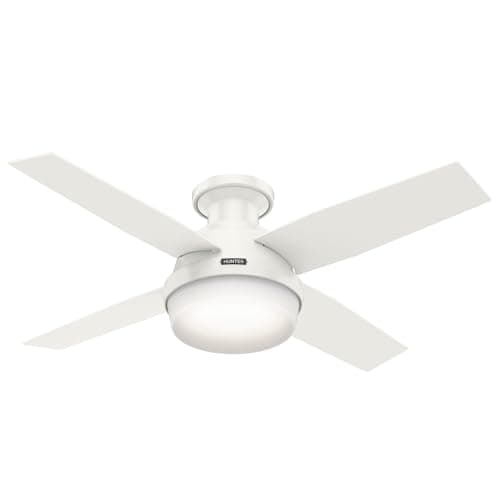 Cheapest thing on the site to run Hunter Martindale 44" Ceiling Fan 1.1 W on low and 10.1 W on high — the lowest certified wattage of any product we hold data for. | A room you own, running continuously for nothing | |
| 2 | 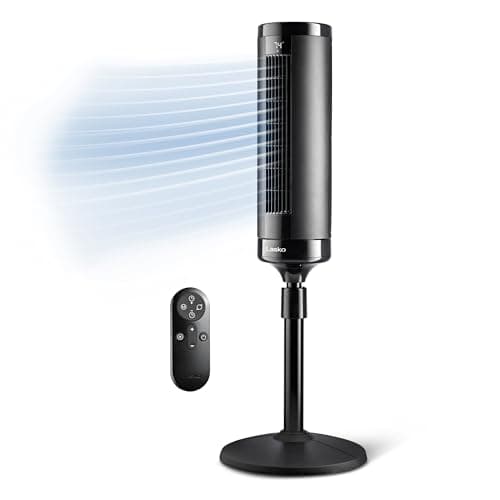 Cheapest thing you can plug in Lasko EcoQuiet 42" DC Tower Fan 2.9 W on low with a DC motor and 12 speeds — the cheapest plug-in cooling we have a figure for. | A rental, or a room where an installation is not possible | |
| 3 | Cheapest actual air conditioning Midea U-Shaped Window Air Conditioner, 6,000 BTU 298 kWh a year — the lowest certified annual energy figure of any air conditioner we track. | A small room that genuinely needs the temperature lowered | |
| — | The most expensive way to cool a room Whynter ARC-14S Dual Hose Portable Air Conditioner 1,300 W. Running it eight hours a day for a season costs several times what the most efficient window unit costs for the same period. | A room where no window unit will fit — and nothing else |
Every product on this site has a verified wattage or a certified annual energy figure, and this page puts all of them on one scale at 18.34¢/kWh.
The result is worth seeing before you shop, because the gap between the top and the bottom is not the modest difference most comparisons imply.
The league table
Everything, ranked by watts
| Product | Watts | 8 hours | What it does |
|---|---|---|---|
| Hunter Martindale 44 in ceiling fan, low | 1.1 W | 0.2¢ | Moves air |
| Hunter Georgetown 52 in ceiling fan, low | 1.5 W | 0.2¢ | Moves air |
| Hunter Anisten 44 in hugger, low | 1.6 W | 0.2¢ | Moves air |
| Hunter Vespucci 52 in ceiling fan, low | 1.8 W | 0.3¢ | Moves air |
| Hunter Lakeway 72 in ceiling fan, low | 2.3 W | 0.3¢ | Moves air |
| Lasko EcoQuiet T42710 tower, low | 2.9 W | 0.4¢ | Moves air |
| Harbor Breeze Cando 84 in, low | 6 W | 0.9¢ | Moves air |
| Air King 9145 clip-on, high | 12 W | 1.8¢ | Moves air |
| Hunter Vespucci 52 in ceiling fan, high | 13.9 W | 2.0¢ | Moves air |
| Lasko EcoQuiet T42710 tower, high | 19 W | 2.8¢ | Moves air |
| Hunter Georgetown 52 in ceiling fan, high | 20.6 W | 3.0¢ | Moves air |
| Harbor Breeze Cando 84 in, high | 30.6 W | 4.5¢ | Moves air |
| Lasko Whirlwind A12107 table fan, high | 32 W | 4.7¢ | Moves air |
| Lasko Aria T40733 tower, high | 52 W | 7.6¢ | Moves air |
| Lasko Misto YF300 misting tower, high | 86 W | 13¢ | Moves air |
| Lasko Power Plus B20801 box fan, high | 102 W | 15¢ | Moves air |
| Lasko U15720 air mover, high | 178 W | 26¢ | Moves air |
| Honeywell CO60PM evaporative cooler | 220 W | 32¢ | Lowers air temperature, in dry air |
| Honeywell CL25AE evaporative cooler | 235 W | 34¢ | Lowers air temperature, in dry air |
| Hessaire MC37M evaporative cooler | 250 W | 37¢ | Lowers air temperature, in dry air |
| Whynter ARC-14S portable air conditioner | 1300 W | $1.91 | Lowers air temperature |
Ceiling fan wattages from the ENERGY STAR Certified Ceiling Fans dataset; all others from manufacturer product pages. Cost at 18.34¢/kWh. Air conditioners are excluded from this table because they are rated in annual kWh rather than watts — see below.
1.1 watts to 1,300 watts. The most expensive thing on this list draws roughly 1,180 times the power of the cheapest.
Air conditioners
Rated differently, so compared separately
Certified room air conditioners publish annual energy consumption rather than instantaneous wattage, because how much they draw depends on how hard they are working. The certified annual figure already accounts for a typical season.
| Unit | Capacity | kWh/yr | Season cost |
|---|---|---|---|
| Midea MAW06V1QWT | 6,000 BTU | 298 | $55 |
| GE Profile PWJV08W | 8,000 BTU | 375 | $69 |
| Midea MAW08V1QWT | 8,000 BTU | 400 | $73 |
| Midea MAT10R1FWTK (wall) | 10,000 BTU | 531.9 | $98 |
| Friedrich WCVT10B10B (wall) | 10,100 BTU | 533.5 | $98 |
| Midea MAW12V1QWT | 12,000 BTU | 600 | $110 |
| Friedrich KCVM14B10B | 14,100 BTU | 652.8 | $120 |
| Midea MAW14V1KYWT | 14,000 BTU | 656.3 | $120 |
| Brothers 102387 | 18,000 BTU | 843.8 | $155 |
ENERGY STAR Certified Room Air Conditioners dataset. Season cost is the certified annual kWh at 18.34¢/kWh.
Note how tightly capacity and consumption track each other. From 6,000 to 18,000 BTU — a threefold capacity increase — annual energy rises from 298 to 843.8 kWh, which is 2.8×. Efficiency barely varies across the class, so the biggest lever on your air conditioning bill is buying the right capacity, not the highest CEER.
Which is why sizing comes first.
This one is not a DIY job
These are not equivalent products, and cost per hour hides that.
A fan does not lower the air temperature at all. It moves air across your skin, which accelerates evaporative and convective heat loss so that you feel cooler. The thermometer does not move.
An evaporative cooler genuinely lowers air temperature, but only in dry air, because the cooling comes from water evaporating into it.
An air conditioner lowers air temperature in any conditions, because it moves heat out of the room rather than relying on evaporation.
So the correct question is not “what is cheapest”. It is “what is the cheapest thing that solves my actual problem” — and for a great many rooms, that is a fan.
The real lesson
Try the cheap thing first
The table exists to make one point. Before spending $1.91 a day on a portable air conditioner, it is worth finding out whether 0.2¢ a day of ceiling fan solves your problem.
Often it does, because a large share of summer discomfort is stagnant air rather than genuinely excessive temperature. Air movement across skin produces a substantial felt-temperature improvement at essentially no cost.
Practical order:
- Free things first. Shade the glass, close up during the day, ventilate when outdoor air is cooler, and turn off heat sources. The no-cost approaches.
- Then a fan. One to six watts on low, and it addresses the most common complaint.
- Then evaporative, if your air is dry. 220 to 250 W buys a genuine temperature drop where the climate allows it.
- Then a correctly sized window unit. 298 to 844 kWh a year, certified, and the only option that works in any humidity.
- A portable last, and only when the window rules everything else out.
Say the unwelcome thing
Do not buy an air conditioner because a fan 'is not working'.
Check what the fan was asked to do first. A fan that is pointed at a wall, running behind furniture, or sized for a much smaller room is not failing — it is not being used.
Two things to verify before escalating. Is the air actually reaching you? Felt cooling requires airflow over skin; a fan circulating the room from a corner does very little for the person in the chair. And is the room genuinely too hot, or just stagnant and humid? A thermometer settles that in a day.
The step from a fan to an air conditioner is roughly a hundredfold increase in running cost. It is worth ten minutes of checking.
In full
Every pick, and what is wrong with it
Published specifications only, each linked to the page it came from. Where a manufacturer publishes nothing, the row says so — we do not fill blanks in.
1. Cheapest thing on the site to run
Hunter Martindale 44" Ceiling Fan
Hunter · model 44in Martindale
1.1 W on low and 10.1 W on high — the lowest certified wattage of any product we hold data for.
1.1 watts. Running this for a twelve-hour night costs 0.2¢ at 18.34¢/kWh. Running it for the whole of a 90-day cooling season, twelve hours a night, costs 22¢.
At that level the economics stop mattering, which is the actual benefit: there is no decision to make about whether to leave it on.
10.1 W on high is still the lowest high-speed draw of any certified fan here, and 304.5 CFM per watt is the best small fan efficiency in our data.
What’s wrong with it
It is an electrical installation, so it is not an option in most rentals, and it cannot be aimed at you.
Running cost — 44in Martindale
| Nameplate power | 1.1 W – 10.1 W | manufacturer's published figure |
|---|---|---|
| Energy, 8-hour night | 0.08 kWh | 10.1 ÷ 1000 × 8 |
| Cost per hour | 0.2¢ | at 18.34¢/kWh |
| Cost per 8-hour night | 1.5¢ | on the highest speed |
| Cost per 30 nights | 44¢ | 2.4 kWh |
| Same month, lowest speed | 4.8¢ | at 1.1 W |
Rate: 18.34¢/kWh, the US average residential price for June 2026 (EIA Electric Power Monthly, Table 5.3). Yours will differ — swap it in: (watts ÷ 1000) × hours × your rate.
| Blade span | 44 in |
|---|---|
| Efficiency | 304.5 CFM per watt |
| Power, high speed | 10.1 W |
| Power, low speed | 1.1 W |
| Standby power | 0.4 W |
| Type | Indoor, fan only |
| Warranty | 3 years, components |
| ENERGY STAR | Certified |
Every figure above is from ENERGY STAR Certified Ceiling Fans dataset. Blanks are shown as “not published” rather than filled in.
2. Cheapest thing you can plug in
Lasko EcoQuiet 42" DC Tower Fan
Lasko · model T42710
2.9 W on low with a DC motor and 12 speeds — the cheapest plug-in cooling we have a figure for.
2.9 W on low — 0.6¢ for a twelve-hour night. That is within a rounding error of a hard-wired ceiling fan, from something you plug into a socket and take with you when you move.
The DC motor is what makes that possible. AC motors do not run efficiently at low speed; DC motors do, which is why the low-speed figures on DC fans are so much better.
23 dBA on low is also the quietest published figure on the site, so the cheapest setting is the quietest setting too.
The honest caveat: 19 W on high. Twelve speeds mean the running cost is entirely a function of which one you use.
What’s wrong with it
19 W on high is nearly seven times its low setting, so the cheap figure depends on you actually running it low.
Running cost — T42710
| Nameplate power | 2.9 W – 19 W | manufacturer's published figure |
|---|---|---|
| Energy, 8-hour night | 0.15 kWh | 19 ÷ 1000 × 8 |
| Cost per hour | 0.3¢ | at 18.34¢/kWh |
| Cost per 8-hour night | 2.8¢ | on the highest speed |
| Cost per 30 nights | 84¢ | 4.6 kWh |
| Same month, lowest speed | 13¢ | at 2.9 W |
Rate: 18.34¢/kWh, the US average residential price for June 2026 (EIA Electric Power Monthly, Table 5.3). Yours will differ — swap it in: (watts ÷ 1000) × hours × your rate.
| Power | 2.9 W - 19 W (0.06-0.303 A at 120 V) |
|---|---|
| Noise | 23 dBA low, 46 dBA high |
| Speeds | 12 |
| Height | 41.6 in |
| Footprint | 12.8 x 12.8 in |
| Weight | 7.8 lb |
| Timer | 8 hours |
| Air delivery (CFM) | Not published |
| Warranty | 2 years |
Every figure above is from Lasko product page, T42710. Blanks are shown as “not published” rather than filled in.
3. Cheapest actual air conditioning
Midea U-Shaped Window Air Conditioner, 6,000 BTU
Midea · model MAW06V1QWT
298 kWh a year — the lowest certified annual energy figure of any air conditioner we track.
298 kWh a year, about $55 for a full cooling season. CEER 15.1 and on the ENERGY STAR Most Efficient list.
Set that against the ceiling fan above at 22¢ for the same season and the scale of the gap is clear. It is not a fair comparison — one lowers the air temperature and one does not — but it is the number people are actually choosing between.
Within air conditioning, this is the cheapest option we have certified data for, and by a meaningful margin: the largest certified unit on this site uses 843.8 kWh a year, or $155.
What’s wrong with it
Roughly a hundred times the seasonal cost of running a ceiling fan. That is what changing the air temperature costs.
Running cost — MAW06V1QWT
| Annual energy use | 298 kWh | ENERGY STAR certified figure |
|---|---|---|
| Annual cost | $55 | 298 × 18.34¢/kWh |
| Per cooling month | $14 | spread over a four-month season |
The annual figure is the certified value from the ENERGY STAR Certified Room Air Conditioners dataset, which models a standard cooling season rather than your actual summer. It is more useful than a nameplate wattage here, because a variable-speed compressor spends most of its life well below nameplate.
Rate: 18.34¢/kWh, the US average residential price for June 2026 (EIA Electric Power Monthly, Table 5.3). Yours will differ — swap it in: (watts ÷ 1000) × hours × your rate.
| Cooling capacity | 6,000 BTU/h |
|---|---|
| CEER | 15.1 |
| Annual energy use | 298 kWh/yr |
| vs federal standard | 37% less energy |
| Dimensions | 13.5 H x 19.2 W x 22.0 D in |
| Weight | 53.1 lb |
| Refrigerant | R-32 |
| Installation | U-shape; sash closes through the middle of the unit |
| Compressor | Variable speed |
| ENERGY STAR | Certified, and on the Most Efficient list |
Every figure above is from ENERGY STAR Certified Room Air Conditioners dataset. Blanks are shown as “not published” rather than filled in.
Skip this one
Whynter ARC-14S Dual Hose Portable Air Conditioner
Whynter · model ARC-14S
1,300 W. Running it eight hours a day for a season costs several times what the most efficient window unit costs for the same period.
1,300 W — $1.91 for an eight-hour day, or $172 across a 90-day season at eight hours a day.
Compare that with 298 kWh a year for a certified window unit, which is $55 for a whole season. The portable is not slightly worse. It is a different order of magnitude.
And the capacity is smaller than the box says: 14,000 BTU marketing against 9,500 BTU SACC, a 32.1 percent haircut once duct heat and infiltration are counted.
Portables have a legitimate use — when the window genuinely will not take a unit. As a cost decision they are the worst option available.
What’s wrong with it
It is also the least verifiable — no certification program covers portable air conditioners, so nothing about it is independently tested.
Running cost — ARC-14S
| Nameplate power | 1300 W | manufacturer's published figure |
|---|---|---|
| Energy, 8-hour night | 10.40 kWh | 1300 ÷ 1000 × 8 |
| Cost per hour | 24¢ | at 18.34¢/kWh |
| Cost per 8-hour night | $1.91 | on the highest speed |
| Cost per 30 nights | $57 | 312.0 kWh |
Rate: 18.34¢/kWh, the US average residential price for June 2026 (EIA Electric Power Monthly, Table 5.3). Yours will differ — swap it in: (watts ÷ 1000) × hours × your rate.
| Marketing capacity | 14,000 BTU (ASHRAE-128) |
|---|---|
| DOE-rated capacity | 9,500 BTU SACC |
| Hoses | Dual |
| Power | 1,300 W / 11.6 A at 115 V |
| Noise | Under 51 dBA low, under 56 dBA high |
| Dehumidification | 71 pints/day |
| Refrigerant | R-32 |
| Dimensions | 16 W x 19 D x 35.5 H in |
| Weight | 73 lb |
| Manufacturer coverage claim | 500 sq ft |
| Warranty | 1 year unit, 3 years compressor |
Every figure above is from Whynter product page, ARC-14S. Blanks are shown as “not published” rather than filled in.
We are not linking a buy button for this one. If you want to look at it anyway, it is easy enough to find — but we would rather send you to something that fits your room.
Questions people actually ask
Frequently asked
What is the cheapest way to cool a room?
A ceiling fan on low, at 1.1 to 6.0 certified watts — a fraction of a cent for a full night. It does not lower the air temperature, but it makes you feel several degrees cooler by moving air across your skin, which is enough for a large share of summer discomfort.
How much does a fan cost to run compared with an air conditioner?
A certified ceiling fan on low draws 1.1 W. A portable air conditioner draws 1,300 W — roughly 1,180 times as much. Even the most efficient certified window unit uses 298 kWh a year, around a hundred times a ceiling fan's seasonal consumption.
Which air conditioner is cheapest to run?
Of the certified units we track, the 6,000 BTU Midea MAW06V1QWT at 298 kWh a year. Consumption tracks capacity closely across the class, so buying the right capacity matters far more to your bill than chasing the highest CEER rating. Sizing guide.
Are evaporative coolers cheap to run?
Relative to air conditioning, yes — 220 to 250 W against 1,300 W for a portable. But they only lower air temperature where the air is dry enough to absorb water, so in a humid climate you are paying 250 W for airflow you could have had for 20.
Why is a portable air conditioner so expensive to run?
It exhausts room air outdoors, so hot outdoor air infiltrates to replace it, and the hot exhaust duct radiates heat back into the room. That is why DOE-rated SACC capacity falls so far below the marketing BTU figure — 9,500 against 14,000 on the unit here.
Does running a fan on low actually save much?
On a DC motor fan, a great deal. The Lasko EcoQuiet draws 2.9 W on low against 19 W on high — nearly seven times. AC motors do not run efficiently at low speed, which is why DC fans show such wide spreads between their settings. DC vs AC motor fans.
Sources
Where these numbers came from
Read next
Where to go from here
Back to Guides & Calculators, or read how we pick.