The picks
Low-wattage box fans, by published watts
A box fan is not an efficient object, and it is a very cheap one. Those two facts pull in opposite directions, and the published numbers settle it.
By Sawyer V. · Published
The short answer
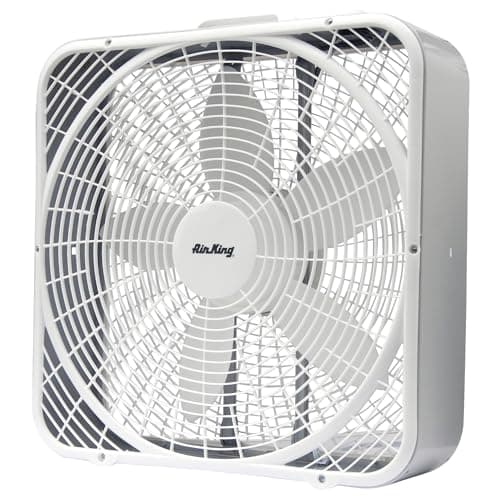
The Air King 9723 draws 65 W on low — the lowest published figure for a 20-inch box fan — and still moves 1,463 CFM at that setting, which works out at 22.5 CFM per watt, the best efficiency any box fan maker publishes. That is 9.5¢ a night at 18.34¢/kWh. If what you actually want is a fan that sips power, a DC tower fan runs on 2.9 W — a twenty-second of the draw.
Fan & Frost earns a commission when you buy through our links, at no cost to you. It never changes a ranking, and we say so when the right answer is the cheaper unit or nothing at all. Full disclosure · How we pick.
At a glance
The picks, ranked
Tap any row to jump to the full reasoning. Prices are live from Amazon where we have them, and read “check price” where we don’t — never a number we cannot verify today.
| # | Product | Best for | Price |
|---|---|---|---|
| 1 | Best overall Air King 9723 20" Commercial Grade Box Fan 65 W on low for 1,463 CFM — 22.5 CFM per watt, the only box fan efficiency figure that can be calculated from published numbers rather than guessed. | Anyone who wants the lowest draw without giving up the air a box fan is for | |
| 2 | 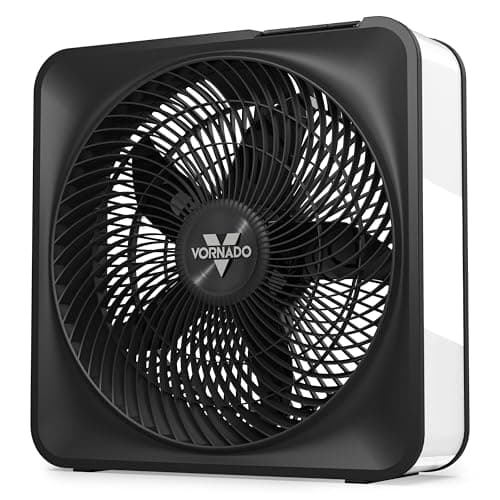 Lowest setting you can actually reach Vornado Model 80 High-Velocity Box Fan 70 W published at the lowest of its stated settings, and five speeds rather than three, so there is somewhere below 'low' to go. | A room where you want to run a fan continuously at the smallest useful output | |
| 3 | The reference figure Lasko Power Plus 20" Box Fan 73 W to 102 W, 0.6 to 0.9 A — the most widely published box fan wattage, and the number most people mean when they ask what a box fan draws. | A window, where a weather-resistant motor matters more than 8 W either way | |
| 4 | 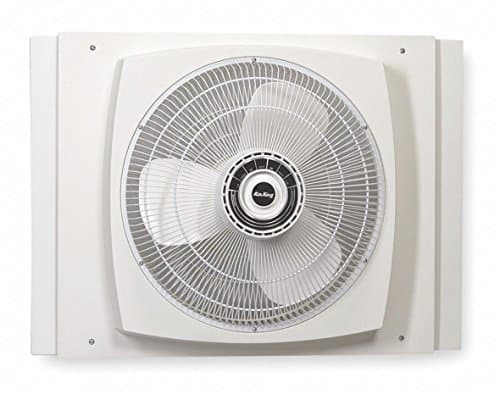 Most air per watt of anything in this shape Air King 16" Whole House Window Fan 1,360 CFM on 52 W on low — 26.2 CFM per watt, the highest published efficiency of any fan on this site, and 13 W less than the most efficient box fan. | A window you intend to leave a fan in, where efficiency is the actual goal | |
| — | 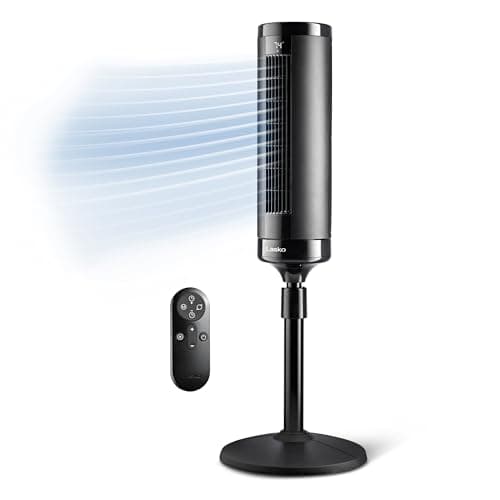 The one to buy if watts are the real question Lasko EcoQuiet 42" DC Tower Fan 2.9 W on low against 65 W. A DC motor is not a better box fan, it is a different machine, and no box fan will ever come close. | A bedroom, a desk, solar, a battery, or anywhere 65 W is 65 W too many |
A 20-inch box fan is one of the least efficient fans you can buy per unit of air moved, and one of the cheapest things in your house to run. Both are true, and holding them at once is the whole of this page.
The published floor for a box fan is 65 W. The ceiling is about 120 W. The entire range costs between 9.5¢ and 18¢ for an eight-hour night.
The numbers
Every published box fan wattage, and what it costs
| Fan | Watts, low | CFM per watt | 8-hr night | 30 nights |
|---|---|---|---|---|
| Air King 9155 window fan | 52 W | 26.2 | 7.6¢ | $2.29 |
| Air King 9723 box fan | 65 W | 22.5 | 9.5¢ | $2.86 |
| Vornado Model 80 box fan | 70 W | Not calculable | 10¢ | $3.08 |
| Lasko B20801 box fan | 73 W | Not calculable | 11¢ | $3.21 |
| Lasko U15720 air mover | 160 W | Not calculable | 23¢ | $7.04 |
| Lasko EcoQuiet DC tower | 2.9 W | Not calculable | 0.4¢ | 13¢ |
Wattages are each manufacturer’s published low-speed figure. CFM per watt is our arithmetic, shown only where the maker publishes both airflow and power. Costs at 18.34¢/kWh.
Why
Why box fans are stuck around 20 CFM per watt
Almost every box fan uses a shaded-pole or PSC AC motor. They are cheap, they tolerate being left in a window in the damp, and they are poor at part load: dropping the speed does not drop the power draw proportionally, which is why a box fan’s low setting saves far less than you would expect.
On the Air King, going from high to low cuts airflow by 32 per cent and power by 38 per cent. On a DC fan, the same proportional reduction in output cuts power by far more, because a DC motor’s losses scale down with the work it is doing. That is the entire difference, and it is a motor difference, not a blade difference.
This one is not a DIY job
A fan in a window at 65 W can be better than a fan in a room at 2.9 W. A fan in a room makes you feel cooler; a fan in a window, once the outdoor air is genuinely cooler than the indoor air, lowers the temperature. Check with a thermometer, not by feel, before you open anything.
Buying
What to look for in a low-wattage box fan
- A published wattage at all. Two of the four box fans here publish one. A fan whose maker will not state its draw cannot be compared with anything, and “less than 2¢ an hour” is a claim rather than a specification.
- Published airflow next to it. Watts alone tell you cost, not value. Only the published pairs let you work out CFM per watt, and that is the number that decides which fan is actually efficient.
- More than three speeds, if you intend to run the fan continuously. The lowest useful setting is where a fan spends its life.
- Amps, if it is going on a generator or an inverter. 0.56 A at 120 V is about 67 VA, which almost any portable supply will carry.
Say the unwelcome thing
Do not buy a low-wattage box fan to cut an air conditioning bill.
The arithmetic does not reach. A 1,300 W portable air conditioner costs $57 across a month of eight-hour nights; the difference between the thirstiest and the thriftiest box fan on this page is about 92¢ over the same period.
A fan reduces a cooling bill by letting you set the thermostat higher, not by drawing fewer watts than another fan. The changes that actually move the bill are here.
In full
Every pick, and what is wrong with it
Published specifications only, each linked to the page it came from. Where a manufacturer publishes nothing, the row says so — we do not fill blanks in.
1. Best overall
Air King 9723 20" Commercial Grade Box Fan
Air King · model 9723
65 W on low for 1,463 CFM — 22.5 CFM per watt, the only box fan efficiency figure that can be calculated from published numbers rather than guessed.
Efficiency is airflow divided by power, and you cannot calculate it unless a manufacturer publishes both. Exactly one box fan maker does.
1,463 CFM on 65 W on low is 22.5 CFM per watt. On high it is 2,163 CFM on 105 W, or 20.6 CFM per watt. Our arithmetic on Air King’s published figures, and the reason low is the setting to use: you lose 32 per cent of the air and 38 per cent of the power.
0.56 A at 120 V on low, which matters if you are running the fan off a generator, an inverter or a shared circuit. What that means for a circuit.
9.5¢ for an eight-hour night and $2.86 for thirty of them. Running this fan every night of a hot month costs less than a takeaway coffee.
The thing to be clear about: 65 W is low for a box fan. It is twenty times what a DC tower fan draws, and no amount of efficiency arithmetic closes that gap.
What’s wrong with it
It is a commercial steel fan: heavier, pricier and louder-looking than a plastic box fan, and Air King publishes no noise figure for it.
Running cost — 9723
| Nameplate power | 65 W – 105 W | manufacturer's published figure |
|---|---|---|
| Energy, 8-hour night | 0.84 kWh | 105 ÷ 1000 × 8 |
| Cost per hour | 1.9¢ | at 18.34¢/kWh |
| Cost per 8-hour night | 15¢ | on the highest speed |
| Cost per 30 nights | $4.62 | 25.2 kWh |
| Same month, lowest speed | $2.86 | at 65 W |
Rate: 18.34¢/kWh, the US average residential price for June 2026 (EIA Electric Power Monthly, Table 5.3). Yours will differ — swap it in: (watts ÷ 1000) × hours × your rate.
| Air delivery | 2,163 / 1,900 / 1,463 CFM (high / medium / low) |
|---|---|
| Power | 105 / 87 / 65 W (0.94 / 0.72 / 0.56 A) |
| Efficiency | 20.6 CFM per watt on high, 22.5 on low (our arithmetic) |
| Blade speed | 1,220 / 1,075 / 855 RPM |
| Blade | 20 in |
| Speeds | 3 |
| Motor | 1/25 HP, 120 V, 1 phase |
| Dimensions | 21.38 W x 6.38 D x 22.5 H in |
| Weight | 11.4 lb |
| Oscillation | No |
| Noise | Not published |
Every figure above is from Air King commercial box fan product page, model 9723. Blanks are shown as “not published” rather than filled in.
2. Lowest setting you can actually reach
Vornado Model 80 High-Velocity Box Fan
Vornado · model 80
70 W published at the lowest of its stated settings, and five speeds rather than three, so there is somewhere below 'low' to go.
120 / 90 / 70 W across three of five speeds. The 70 W figure is the lowest published setting of any box fan here apart from the Air King, and the five-speed control is why it matters: a three-speed fan’s low is a fixed point, and if it is more fan than you want you are stuck with it.
10¢ a night at the published low, or $3.08 across a month.
The 16.15-inch blade in a 20-inch frame is relevant to efficiency even without a CFM figure: a smaller blade in a deeper shroud converts more of its shaft power into directed air and less into spill, which is why Vornado can column air across a room on wattages a wider blade would waste.
Five years of warranty against two from Lasko. If efficiency is the frame, a fan that lasts longer is the quietly efficient choice.
What’s wrong with it
Only three of the five settings have published wattages and none have published airflow, so efficiency cannot be calculated. On high it draws the most power here.
Running cost — 80
| Nameplate power | 70 W – 120 W | manufacturer's published figure |
|---|---|---|
| Energy, 8-hour night | 0.96 kWh | 120 ÷ 1000 × 8 |
| Cost per hour | 2.2¢ | at 18.34¢/kWh |
| Cost per 8-hour night | 18¢ | on the highest speed |
| Cost per 30 nights | $5.28 | 28.8 kWh |
| Same month, lowest speed | $3.08 | at 70 W |
Rate: 18.34¢/kWh, the US average residential price for June 2026 (EIA Electric Power Monthly, Table 5.3). Yours will differ — swap it in: (watts ÷ 1000) × hours × your rate.
| Power | 120 / 90 / 70 W (three of the five settings published) |
|---|---|
| Speeds | 5 |
| Blade diameter | 16.15 in |
| Supply | 120 V, 60 Hz |
| Dimensions | 19.99 W x 6.41 D x 20.19 H in |
| Weight | 12.96 lb |
| Cord | 6 ft, 2-pin polarized |
| Grille | Removable, for cleaning |
| Air delivery (CFM) | Not published |
| Noise | Not published |
| Warranty | 5 years |
Every figure above is from Vornado product page, Model 80 High-Velocity Box Fan. Blanks are shown as “not published” rather than filled in.
3. The reference figure
Lasko Power Plus 20" Box Fan
Lasko · model B20801
73 W to 102 W, 0.6 to 0.9 A — the most widely published box fan wattage, and the number most people mean when they ask what a box fan draws.
73 W on low, 102 W on high, 0.6 to 0.9 A at 120 V. This is the figure the whole internet quotes for “how many watts does a box fan use”, and it comes from Lasko’s own specification page rather than from anywhere else.
11¢ on low per eight-hour night, 15¢ on high, and $4.49 for a month of high-speed nights.
The specification that earns its place here is the weather-resistant motor paired with a 4.75-inch depth. A box fan sitting in an open sash window is doing real cooling rather than just moving air, and that placement is worth far more than the 8 W between this and the Air King. Why the window changes what the fan is doing.
What’s wrong with it
73 W is the highest low-speed draw with a published figure, and Lasko publishes no CFM, so there is no way to tell whether those watts are buying air.
Running cost — B20801
| Nameplate power | 73 W – 102 W | manufacturer's published figure |
|---|---|---|
| Energy, 8-hour night | 0.82 kWh | 102 ÷ 1000 × 8 |
| Cost per hour | 1.9¢ | at 18.34¢/kWh |
| Cost per 8-hour night | 15¢ | on the highest speed |
| Cost per 30 nights | $4.49 | 24.5 kWh |
| Same month, lowest speed | $3.21 | at 73 W |
Rate: 18.34¢/kWh, the US average residential price for June 2026 (EIA Electric Power Monthly, Table 5.3). Yours will differ — swap it in: (watts ÷ 1000) × hours × your rate.
| Power | 73 W - 102 W (0.6-0.9 A at 120 V) |
|---|---|
| Speeds | 3 |
| Dimensions | 21.25 H x 22.5 x 4.75 in |
| Weight | 10.1 lb |
| Motor | Weather-resistant |
| Air delivery (CFM) | Not published |
| Warranty | 2 years |
Every figure above is from Lasko product page, B20801. Blanks are shown as “not published” rather than filled in.
4. Most air per watt of anything in this shape
Air King 16" Whole House Window Fan
Air King · model 9155
1,360 CFM on 52 W on low — 26.2 CFM per watt, the highest published efficiency of any fan on this site, and 13 W less than the most efficient box fan.
If the reason you are looking for a low-wattage box fan is that the fan will live in a window and run all night, this is the fan that job actually wants.
2,470 / 1,700 / 1,360 CFM on 90 / 65 / 52 W. Our arithmetic puts that at 27.4 CFM per watt on high and 26.2 on low — the best published figures anywhere in the portable fan category, and better than the most efficient box fan by about 17 per cent.
7.6¢ a night on low. Over a month that is $2.29, against $3.21 for the Lasko box fan.
15.0 lb and 8.25 inches deep, with Storm Guard so the window closes behind it rather than resting on it. The reason it beats a box fan on efficiency is structural: it is sealed into the opening, so none of its output recirculates back through the frame.
The constraint is fit. Measure the height of the opening first. If the window is the wrong shape, start here.
What’s wrong with it
It is a window fan, not a box fan: it needs an opening 26.5 to 34.5 inches wide and 22 inches high, and it cannot stand on a floor.
Running cost — 9155
| Nameplate power | 52 W – 90 W | manufacturer's published figure |
|---|---|---|
| Energy, 8-hour night | 0.72 kWh | 90 ÷ 1000 × 8 |
| Cost per hour | 1.7¢ | at 18.34¢/kWh |
| Cost per 8-hour night | 13¢ | on the highest speed |
| Cost per 30 nights | $3.96 | 21.6 kWh |
| Same month, lowest speed | $2.29 | at 52 W |
Rate: 18.34¢/kWh, the US average residential price for June 2026 (EIA Electric Power Monthly, Table 5.3). Yours will differ — swap it in: (watts ÷ 1000) × hours × your rate.
| Air delivery | 2,470 / 1,700 / 1,360 CFM (high / medium / low) |
|---|---|
| Power | 90 / 65 / 52 W (0.8 / 0.6 / 0.5 A) |
| Efficiency | 27.4 CFM per watt on high, 26.2 on low (our arithmetic) |
| Blade | 16 in |
| Speeds | 3 |
| Window required | 26.5 - 34.5 in wide x 22 in high |
| Dimensions | 26.5 W x 8.25 D x 22 H in |
| Weight | 15.0 lb |
| Storm Guard | Window can close behind the fan |
| Mounting | Hardware included |
| Noise | Not published |
| ENERGY STAR | No program exists for window fans |
Every figure above is from Air King whole house window fan product page, models 9155 and 9166F. Blanks are shown as “not published” rather than filled in.
Skip this one
Lasko EcoQuiet 42" DC Tower Fan
Lasko · model T42710
2.9 W on low against 65 W. A DC motor is not a better box fan, it is a different machine, and no box fan will ever come close.
A box fan uses an AC induction motor, which is cheap, robust and inefficient at low output. A DC motor is none of those things in the same order, and the published numbers are not in the same universe.
2.9 W to 19 W across twelve speeds, against 65 W to 105 W across three. Over a month of eight-hour nights that is 13¢ against $2.86.
It also publishes 23 dBA on low, which no box fan does.
Why this is a skip rather than the winner: it does not do the job. A box fan exists to move a large volume of air cheaply and to sit in a window exchanging indoor air for outdoor air. A DC tower fan sits beside a bed and makes a breeze. If you need the first thing, 65 W is the floor. The two formats compared properly.
What’s wrong with it
It moves a fraction of the air, it will not sit in a window, and it cannot do anything useful in a garage. Lasko publishes no CFM for it.
Running cost — T42710
| Nameplate power | 2.9 W – 19 W | manufacturer's published figure |
|---|---|---|
| Energy, 8-hour night | 0.15 kWh | 19 ÷ 1000 × 8 |
| Cost per hour | 0.3¢ | at 18.34¢/kWh |
| Cost per 8-hour night | 2.8¢ | on the highest speed |
| Cost per 30 nights | 84¢ | 4.6 kWh |
| Same month, lowest speed | 13¢ | at 2.9 W |
Rate: 18.34¢/kWh, the US average residential price for June 2026 (EIA Electric Power Monthly, Table 5.3). Yours will differ — swap it in: (watts ÷ 1000) × hours × your rate.
| Power | 2.9 W - 19 W (0.06-0.303 A at 120 V) |
|---|---|
| Noise | 23 dBA low, 46 dBA high |
| Speeds | 12 |
| Height | 41.6 in |
| Footprint | 12.8 x 12.8 in |
| Weight | 7.8 lb |
| Timer | 8 hours |
| Air delivery (CFM) | Not published |
| Warranty | 2 years |
Every figure above is from Lasko product page, T42710. Blanks are shown as “not published” rather than filled in.
We are not linking a buy button for this one. If you want to look at it anyway, it is easy enough to find — but we would rather send you to something that fits your room.
Questions people actually ask
Frequently asked
What is the lowest wattage box fan?
65 W, on the low setting of the Air King 9723 — the lowest draw any box fan manufacturer publishes. It still moves 1,463 CFM at that setting, which is 22.5 CFM per watt and the best published efficiency in the category.
How many watts does a box fan use?
Between about 65 W and 120 W for a 20-inch fan, depending on model and speed. Lasko publishes 73 W to 102 W for its Power Plus box fan, Air King publishes 65 to 105 W, and Vornado publishes 70 to 120 W. Several makers publish nothing at all. The full wattage table.
How much does it cost to run a box fan all night?
Between 9.5¢ and 18¢ for an eight-hour night at 18.34¢/kWh, depending on the fan and the speed. Over thirty nights that is $2.86 to $5.28.
Is there an energy-efficient box fan?
Relatively, yes: 22.5 CFM per watt is the best published box fan figure. Absolutely, no — a DC tower fan runs on 2.9 W against 65, and a window fan sealed into the opening publishes 26.2 CFM per watt. ENERGY STAR runs no certification programme for box fans, so there is no official efficiency label to look for.
Do box fans use a lot of electricity?
No. Even on high, a box fan is roughly a tenth of a portable air conditioner: $4.49 against $57 across a month of eight-hour nights. It is one of the cheapest appliances in a house to run.
Does running a box fan on low save much money?
Less than you would expect. On the one box fan that publishes both figures, low cuts airflow by 32 per cent and power by only 38 per cent, because AC induction motors are poor at part load. The saving is real but small — about 3 cents over an eight-hour night.
Sources
Where these numbers came from
- Air King commercial box fan specifications, model 9723 — 1,463 CFM on 65 W low, 2,163 CFM on 105 W high
- Air King whole house window fan, 9155 — 1,360 CFM on 52 W low
- Vornado Model 80 High-Velocity Box Fan — 120/90/70 W
- Lasko B20801 Power Plus box fan — 73-102 W, 0.6-0.9 A
- Lasko EcoQuiet T42710 DC tower fan — 2.9-19 W, 23 dBA
- EIA Electric Power Monthly, Table 5.3 — electricity rate
Read next
Where to go from here
Back to Fans, or read how we pick.