Guide and picks
Cooling and indoor air quality
Every cooling choice is also an air choice, and most of them are not the one people assume they are making.
By Sawyer V. · Published
The short answer
An air conditioner does not bring in fresh air. It recirculates the air already in the room, and its filter is a dust screen protecting the coil, not an air purifier. A single-hose portable is worse than neutral — it depressurizes the room and pulls unfiltered air in through every gap. The only category that genuinely exchanges air is a ventilating fan, at 16.7 CFM per watt.
Fan & Frost earns a commission when you buy through our links, at no cost to you. It never changes a ranking, and we say so when the right answer is the cheaper unit or nothing at all. Full disclosure · How we pick.

At a glance
The picks, ranked
Tap any row to jump to the full reasoning. Prices are live from Amazon where we have them, and read “check price” where we don’t — never a number we cannot verify today.
| # | Product | Best for | Price |
|---|---|---|---|
| 1 | 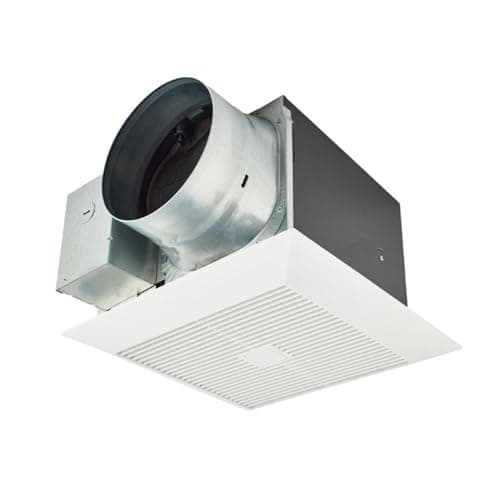 Best for actual ventilation Panasonic WhisperGreen Select FV-0511VK3 Ventilation Fan 110 CFM at 0.1 sones and 16.7 CFM per watt — the only category here that exchanges air rather than stirring it. | Replacing indoor air with outdoor air, deliberately | |
| 2 | 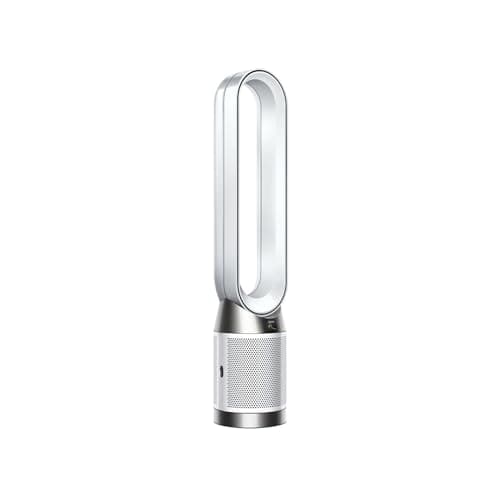 For filtration specifically Dyson Purifier Cool TP07 HEPA and activated carbon in a bladeless tower, at 40 W maximum input. | Removing particles from air you are recirculating anyway | |
| 3 | Cheapest real air exchange Lasko Twin Window Fan with Remote 22 to 31 W with independently reversible motors — intake, exhaust, or both at once. | Purging indoor air when outdoor air is worth having | |
| — | 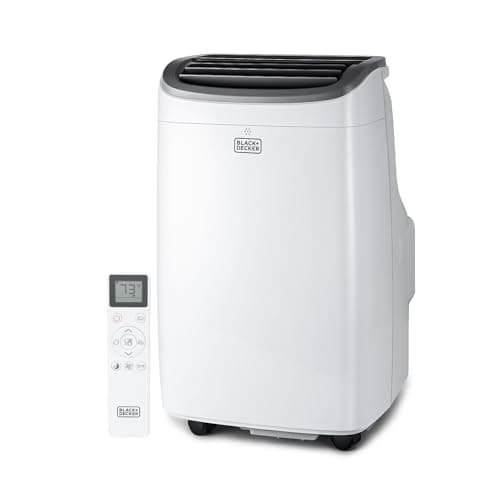 Ventilates without asking you BLACK+DECKER BPACT08WT Portable Air Conditioner Single hose — it depressurizes the room and pulls make-up air in through every gap, unfiltered. | A small sealed room where the trade-off is understood |
People buy cooling for temperature and inherit an air quality decision they did not know they were making.
The categories
What each one does to your air
| Category | Brings in outdoor air? | Effect on the air |
|---|---|---|
| Window air conditioner | No | Recirculates; removes moisture as a side effect |
| Through-the-wall unit | No | Same as a window unit |
| Dual-hose portable | No | Sealed loop; pressure-neutral |
| Single-hose portable | Yes, uncontrolled | Depressurizes; pulls unfiltered air through gaps |
| Ceiling and floor fans | No | Moves existing air; can stir settled dust |
| Window fan | Yes, deliberately | Real exchange, and you inherit outdoor conditions |
| Ventilating fan | Yes, deliberately | Removes indoor air, including moisture |
| Evaporative cooler | Requires it | Adds humidity; needs an open window to work |
The big one
Air conditioners do not ventilate
This is the most widely held misconception in the category, and it is worth being unambiguous: a room air conditioner takes air from the room, cools it, and returns it to the room. It does not introduce outdoor air.
The confusion comes from the outdoor half of the machine, which is genuinely outside — but that side is rejecting heat, not exchanging air. The two halves are separated.
Some units have a “vent” or “fresh air” lever, which typically opens a small damper. It is not comparable to real ventilation. What that control actually does.
The practical consequence: if a room needs fresh air, cooling it does not provide any. Ventilation is a separate job needing separate equipment.
Filters
What the filter in your air conditioner is for
Every room air conditioner has a washable mesh filter, and its purpose is misunderstood.
- It protects the coil. Dust and lint on an evaporator coil ruin heat transfer, so the mesh catches the coarse material before it gets there.
- It is not a HEPA filter and is not intended to be. The mesh is far too open to capture fine particles.
- Cleaning it is a performance job, not an air quality one. A blocked filter starves the coil, so capacity falls and run time rises — the maintenance that pays for itself.
- Real filtration is a separate device. If particles are the concern, buy something with HEPA media and treat it as an appliance in its own right.
Humidity
The two-way relationship with moisture
Moisture is where cooling and air quality overlap most, in both directions.
- Air conditioners remove moisture. Warm air hitting a cold coil condenses, and that water drains away. It is a genuine benefit and it is not free — dehumidifying is the most energy-intensive thing the machine does.
- Evaporative coolers add it. That is their entire cooling mechanism, which makes them the wrong choice anywhere humidity is already a problem — a laundry room, a basement, a sealed room.
- Standing water needs maintenance. Any machine with a tank or a wet pad is a maintenance commitment, and neglecting it has consequences beyond performance — what a neglected cooler smells like and why.
- Condensate has to drain somewhere. A blocked drain path is a water problem before it is anything else — how the drainage works.
This one is not a DIY job
Indoor air quality has health dimensions this site is not qualified to advise on. We can tell you what each machine does to the air mechanically. We cannot tell you what any of it means for a specific health condition.
Asthma, allergies and respiratory conditions are matters for a medical professional, and mold, combustion by-products and radon are matters for a qualified assessor.
Two hard rules regardless: never run anything that burns fuel in an unventilated space, and never block a mechanical ventilation path that was installed to serve a room.
If you suspect a combustion appliance is spilling, or a room has persistent damp or mold, that is an immediate professional matter rather than a cooling purchase.
Practical
Choosing with air in mind
- Separate the two goals. Decide what you want cooler and what you want cleaner, then buy for each. One machine rarely does both well.
- Prefer dual hose if it is a portable. A sealed loop is pressure-neutral; a single hose is uncontrolled infiltration.
- Do not open windows on a bad air day. Window fans and evaporative coolers both import outdoor air directly, and on a smoke or high-pollen day that is the wrong direction.
- Clean the filter for capacity, not for air. It is still the highest-value maintenance on the machine.
- Extract at the source. Kitchen and bathroom moisture and cooking by-products are best removed where they are produced — at 16.7 CFM per watt, that costs almost nothing.
- Vacuum before you run fans hard. Air movement redistributes settled dust, which is the honest downside of a high-velocity fan in a dusty room — what fans can and cannot do about allergens.
Say the unwelcome thing
Do not buy an air conditioner expecting it to freshen the air.
It cools the air that is already in the room and puts it back. The outdoor half of the machine rejects heat; it does not exchange air.
The filter reinforces the misunderstanding, because people assume it is cleaning the air. It is a coarse mesh protecting the coil from dust, and it is not close to a HEPA filter.
A single-hose portable does bring in outdoor air — but by depressurising the room and pulling it through whatever gaps exist, which is the worst version of ventilation available.
If you want air exchange, buy air exchange: 16.7 CFM per watt at 0.1 sones or 22 W of reversible window fan. If you want filtration, buy filtration.
In full
Every pick, and what is wrong with it
Published specifications only, each linked to the page it came from. Where a manufacturer publishes nothing, the row says so — we do not fill blanks in.
1. Best for actual ventilation
Panasonic WhisperGreen Select FV-0511VK3 Ventilation Fan
Panasonic · model FV-0511VK3
110 CFM at 0.1 sones and 16.7 CFM per watt — the only category here that exchanges air rather than stirring it.
The distinction this page is built on. This machine removes air from the building and pulls replacement air in. Everything else in home cooling moves the same air around.
16.7 CFM per watt against a 4.7 category median, and 0.1 sones — the floor of the measurement scale, which is what makes continuous running practical.
Its middle speed is the most efficient: 18.4 CFM per watt at 80 CFM. Low continuous ventilation is exactly the use case, and this fan is tuned for it.
On the Most Efficient list, which 80 of 912 certified fans reach. The full field.
What’s wrong with it
It is a ducted installation, and it brings in whatever the outdoor air is.
Running cost
Panasonic does not publish a wattage for the FV-0511VK3, so we cannot calculate what it costs to run. We are not going to estimate one. If Panasonic publishes a nameplate figure, this block will show the arithmetic.
| Noise | 0.1 sones |
|---|---|
| Air delivery, high | 110 CFM at 0.25 in w.g. |
| Air delivery, medium | 80 CFM |
| Air delivery, low | 50 CFM |
| Efficacy, high | 16.7 CFM per watt |
| Efficacy, medium | 18.4 CFM per watt |
| Efficacy, low | 14.7 CFM per watt |
| Duct size | 6 in diameter |
| Speeds | 3 or more |
| Lighting | None |
| Power | Not published in the certified dataset |
| ENERGY STAR | Certified, and on the Most Efficient list |
Every figure above is from ENERGY STAR Certified Ventilating Fans dataset. Blanks are shown as “not published” rather than filled in.
2. For filtration specifically
Dyson Purifier Cool TP07
Dyson · model TP07
HEPA and activated carbon in a bladeless tower, at 40 W maximum input.
If the goal is fewer particles rather than fresher air, filtration is the right tool — and it is a separate function from cooling entirely.
HEPA and activated carbon media, which is a real filtration specification rather than a marketing claim about “ionising” or “purifying”.
40 W maximum and under 0.5 W standby. About 5.9¢ for an eight-hour day at full input.
The gap we will not fill in: Dyson states airflow in gallons per second, which is not comparable to a CFM figure, and publishes no noise rating. Judge it on filtration, not air movement.
What’s wrong with it
Dyson publishes no CFM and no dBA, so it cannot be compared with any other fan on this site.
Running cost — TP07
| Nameplate power | 40 W | manufacturer's published figure |
|---|---|---|
| Energy, 8-hour night | 0.32 kWh | 40 ÷ 1000 × 8 |
| Cost per hour | 0.7¢ | at 18.34¢/kWh |
| Cost per 8-hour night | 5.9¢ | on the highest speed |
| Cost per 30 nights | $1.76 | 9.6 kWh |
Rate: 18.34¢/kWh, the US average residential price for June 2026 (EIA Electric Power Monthly, Table 5.3). Yours will differ — swap it in: (watts ÷ 1000) × hours × your rate.
| Maximum input power | 40 W |
|---|---|
| Standby power | Under 0.5 W |
| Air delivery (CFM) | Not published — Dyson states airflow in gallons per second, which is not comparable to a CFM figure |
| Noise (dBA) | Not published |
| Dimensions | Not published on the accessible spec sheet |
| Weight | Not published on the accessible spec sheet |
| Filter | HEPA and activated carbon (purifier function) |
Every figure above is from Dyson Purifier Cool TP07 technical specification (dyson.com). Blanks are shown as “not published” rather than filled in.
3. Cheapest real air exchange
Lasko Twin Window Fan with Remote
Lasko · model W09550
22 to 31 W with independently reversible motors — intake, exhaust, or both at once.
The only other product here that genuinely replaces indoor air, and it costs a fraction of a ducted installation.
Independent motors that reverse electrically, so you can run one in and one out. That is a real exchange, not just air pushed at an opening.
22 W on low — 3.2¢ for eight hours — with an adjustable thermostat so it works the overnight crossover on its own.
The caveat is the honest one: you inherit the outdoor air exactly as it is. On a high-pollen or wildfire-smoke day, that is the wrong tool and it should stay off.
What’s wrong with it
It brings in exactly what is outside, including pollen, smoke and humidity.
Running cost — W09550
| Nameplate power | 22 W – 31 W | manufacturer's published figure |
|---|---|---|
| Energy, 8-hour night | 0.25 kWh | 31 ÷ 1000 × 8 |
| Cost per hour | 0.6¢ | at 18.34¢/kWh |
| Cost per 8-hour night | 4.5¢ | on the highest speed |
| Cost per 30 nights | $1.36 | 7.4 kWh |
| Same month, lowest speed | 97¢ | at 22 W |
Rate: 18.34¢/kWh, the US average residential price for June 2026 (EIA Electric Power Monthly, Table 5.3). Yours will differ — swap it in: (watts ÷ 1000) × hours × your rate.
| Power | 22 W - 31 W at 120 V |
|---|---|
| Air delivery | Up to 560 CFM |
| Window fit | 24 - 32 in wide |
| Modes | Intake, exhaust or exchange (independent motors) |
| Thermostat | Adjustable |
| Speeds | 3 |
| Dimensions | 12.9 H x 24.0 W x 4.9 D in |
| Weight | 8.0 lb |
| Warranty | 1 year |
Every figure above is from Lasko product page, W09550. Blanks are shown as “not published” rather than filled in.
Skip this one
BLACK+DECKER BPACT08WT Portable Air Conditioner
BLACK+DECKER · model BPACT08WT
Single hose — it depressurizes the room and pulls make-up air in through every gap, unfiltered.
The air quality objection to single-hose portables is separate from the efficiency one, and it gets discussed far less.
A single-hose unit exhausts room air outdoors, which lowers the pressure indoors. Something has to replace that air, and it enters through gaps rather than through anything filtered.
Where those gaps lead is the problem. A loft, a crawl space, a garage, a chimney — none of which contain air you would choose.
4,000 BTU DOE-rated against 8,000 ASHRAE on the box. The hose count decides this.
What’s wrong with it
You get uncontrolled infiltration from wherever the leaks lead, which is rarely somewhere clean.
Running cost
BLACK+DECKER does not publish a wattage for the BPACT08WT, so we cannot calculate what it costs to run. We are not going to estimate one. If BLACK+DECKER publishes a nameplate figure, this block will show the arithmetic.
| Manufacturer capacity | 4,000 BTU (8,000 BTU ASHRAE) |
|---|---|
| Hoses | Single |
| Refrigerant | R-410A |
| Dimensions | 15.3 W x 14.0 D x 25.0 H in |
| Weight | 52.9 lb |
| Power | Not published by the manufacturer |
| Noise | Not published |
| Coverage claim | Not published by the manufacturer |
| Warranty | 1 year parts and labor, 5 years compressor |
Every figure above is from BLACK+DECKER product page, BPACT08WT. Blanks are shown as “not published” rather than filled in.
We are not linking a buy button for this one. If you want to look at it anyway, it is easy enough to find — but we would rather send you to something that fits your room.
Questions people actually ask
Frequently asked
Does an air conditioner bring in fresh air?
No. It takes air from the room, cools it, and returns it. The outdoor half rejects heat rather than exchanging air. Some units have a small vent damper, but it is not comparable to real ventilation. What the vent lever does.
Is the filter in a window air conditioner an air purifier?
No. It is a coarse washable mesh whose job is protecting the evaporator coil from dust and lint. It is far too open to capture fine particles, and cleaning it is a performance job rather than an air quality one.
Do single-hose portables affect indoor air quality?
Yes, and negatively. Exhausting room air outdoors lowers indoor pressure, so make-up air enters through gaps — from a loft, a crawl space, a garage or a chimney. It is uncontrolled, unfiltered infiltration. Single vs dual hose.
What is the only cooling equipment that actually ventilates?
Ventilating fans and window fans. A certified ventilating fan removes indoor air at 16.7 CFM per watt; a reversible window fan exchanges it at 22 W. Everything else in home cooling moves the same air around.
Should I open windows to improve air quality while cooling?
It depends entirely on what is outside. Window fans and evaporative coolers import outdoor air directly, which is excellent on a clear night and the wrong choice on a high-pollen or wildfire-smoke day.
Do air conditioners help with humidity?
Yes — warm air hitting a cold coil condenses, and the water drains away. It is a real benefit, and it is the most energy-intensive part of what the machine does. Evaporative coolers do the opposite by design. Why humidity matters.
Sources
Where these numbers came from
- ENERGY STAR Certified Ventilating Fans dataset — CFM at 0.25 in w.g., CFM per watt by speed, sones, Most Efficient flag
- Dyson Purifier Cool TP07 technical specification — 40 W max input, HEPA and carbon media
- Lasko W09550 product page — 22-31 W, independently reversible twin motors
- BLACK+DECKER BPACT08WT product page — single hose, DOE and ASHRAE capacity
- EIA Electric Power Monthly, Table 5.3 — average residential electricity price
Read next
Where to go from here
Back to Guides & Calculators, or read how we pick.