Guide and picks
Cooling a finished attic
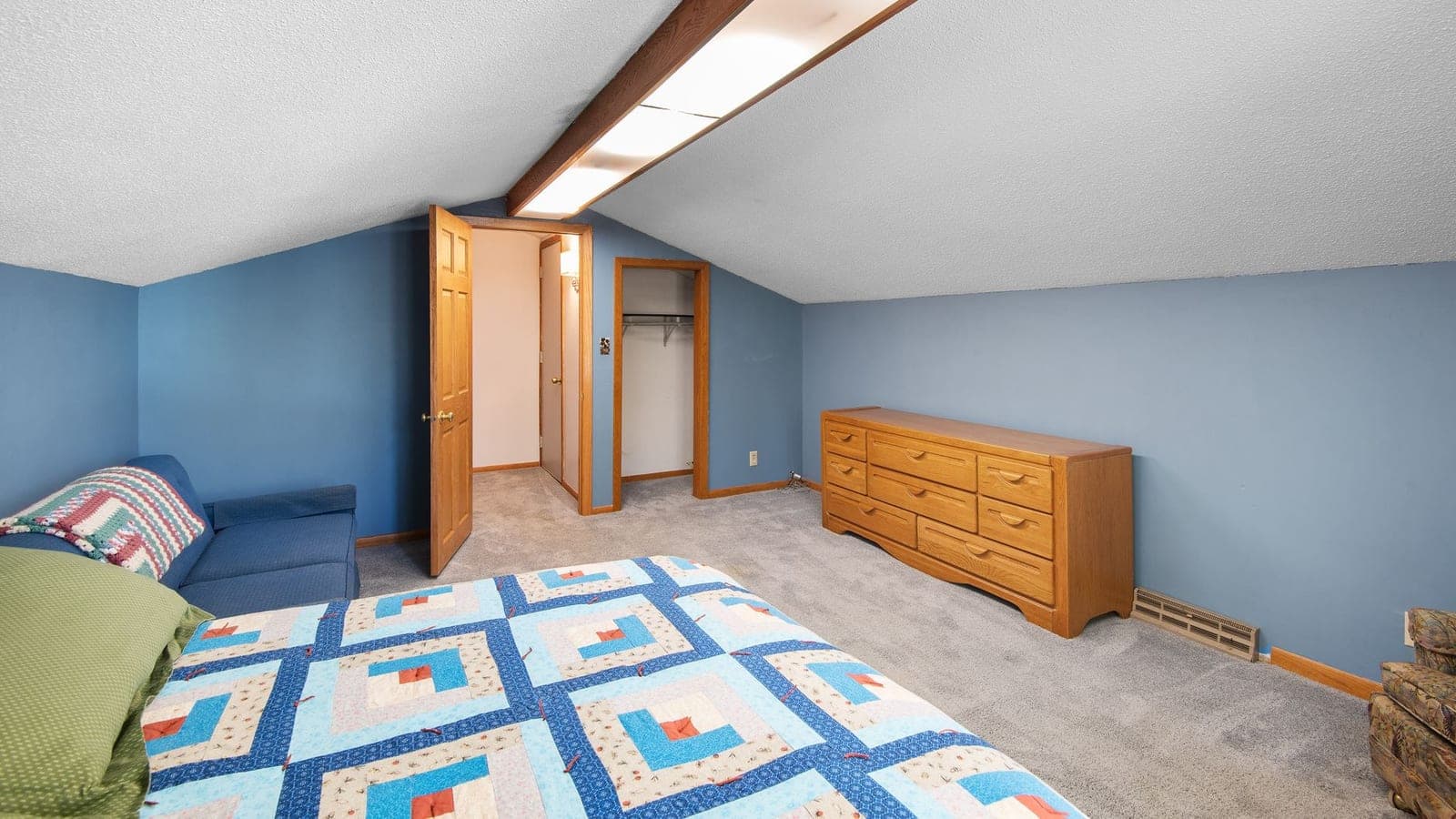
Converting an attic turns the house's thermal buffer into a bedroom, and the roof becomes your ceiling.
By Sawyer V. · Published
The short answer
A finished attic is hard because the conversion removed the buffer. An unfinished attic absorbs roof heat so the floor below does not; once it is a bedroom, the roof deck is your ceiling. Apply the ENERGY STAR top-floor and sunny-room adjustments together, and check the knee-wall voids — they are still unconditioned attic, and they are usually the leak.
Fan & Frost earns a commission when you buy through our links, at no cost to you. It never changes a ranking, and we say so when the right answer is the cheaper unit or nothing at all. Full disclosure · How we pick.
At a glance
The picks, ranked
Tap any row to jump to the full reasoning. Prices are live from Amazon where we have them, and read “check price” where we don’t — never a number we cannot verify today.
| # | Product | Best for | Price |
|---|---|---|---|
| 1 | Best overall Midea Window Heat Pump Air Conditioner, 9,500 BTU 9,500 BTU with reverse-cycle heating at CEER 17.6 and 404.8 kWh a year — it solves both seasons. | A conversion the ducted system was never extended to | |
| 2 | 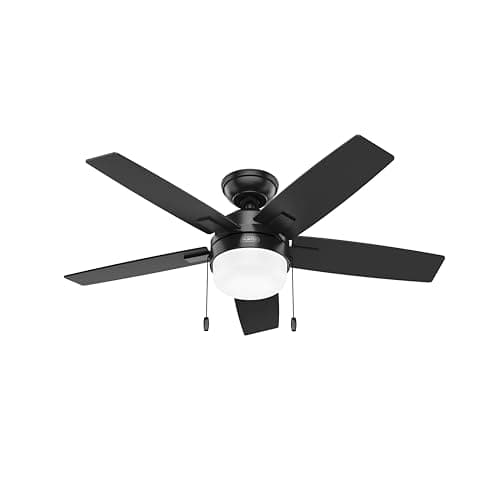 Best for a sloped ceiling Hunter Anisten 44" Hugger Ceiling Fan A 44-inch flush-mount at 295.9 CFM per watt — 12.5 W high, 1.6 W low. | Adding air movement where headroom is the constraint | |
| 3 | 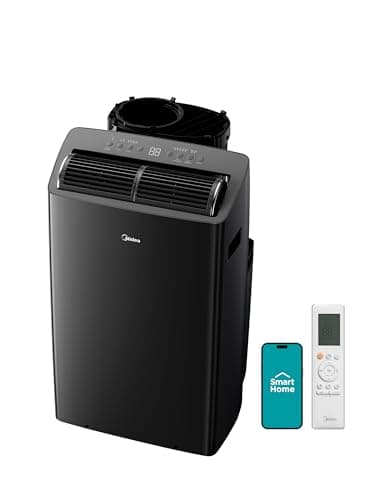 When the window will not take a unit Midea Duo Smart Inverter Portable Air Conditioner 12,000 BTU SACC, dual hose, 43 dBA — the fallback when the opening rules out a window unit. | Skylights, casements and dormers a window unit cannot sit in | |
| — | 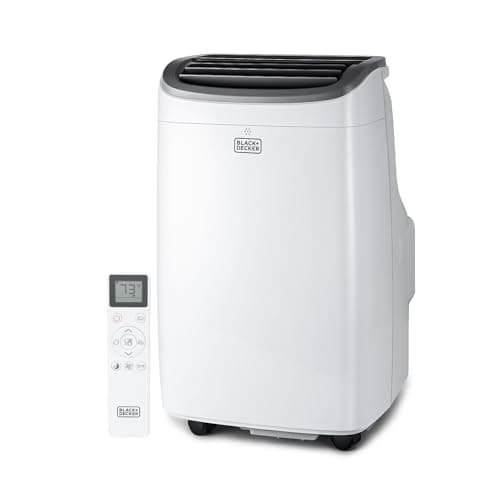 The one to avoid here BLACK+DECKER BPACT08WT Portable Air Conditioner 4,000 BTU DOE-rated, single hose, in the room least able to tolerate a single hose. | A small sealed room, not a loft |
Every other hot room on this site has something above it. A finished attic has roof.
Why it is hard
The conversion removed your buffer
An unfinished attic works as a thermal buffer. Roof deck heat collects in it, the insulation at the joists holds most of it there, and the rooms below stay tolerable. That buffer is doing real work.
Converting the attic spends it. Insulation moves from the attic floor up to the rafters, and living space now occupies the volume that used to absorb the heat. The roof deck — which on a sunny afternoon is the hottest surface on the building — is separated from your bedroom by whatever depth of insulation fits between the rafters.
That depth is usually thin, because rafters are not deep and the conversion was fighting for headroom. Which is why a loft room can be markedly hotter than the floor below it, even with the same equipment serving both.
Sizing
The adjustments stack
ENERGY STAR’s room air conditioner sizing guidance lists adjustments to the base square-footage figure. A finished attic legitimately triggers more than one, and they apply together.
| If | Then |
|---|---|
| The room is heavily shaded | reduce capacity by 10 percent |
| The room is very sunny | increase capacity by 10 percent |
| More than two people regularly occupy the room | add 600 BTUs for each additional person |
| The unit is used in a kitchen | increase capacity by 4,000 BTUs |
All four quoted from ENERGY STAR.
A conversion is a top-floor room, it is frequently very sunny through dormers or skylights, and it may well be a bedroom. Apply all the adjustments that genuinely apply — and only those.
Do the shading first, then size. Sizing up for solar gain you could have blocked buys a bigger machine to fight a problem that has a cheaper fix. What the shading options actually do.
The full sizing method and the base chart.
The thing nobody checks
Knee-wall voids are still attic
Most conversions leave triangular voids behind the low side walls, where the rafters meet the floor. Those voids are usually still unconditioned attic — the same roof-heated space the rest of the loft used to be.
Which means the wall between your room and that void is an exterior wall in every sense that matters, and it is frequently built and insulated like an interior one. Small access hatches into those voids often have no insulation and no seal at all.
- Find the access hatches. There is usually at least one, often in a cupboard.
- Check whether they are insulated and sealed. An uninsulated hatch is a hole between your bedroom and a roof void.
- Feel the low walls on a hot afternoon. If they are warm to the hand, the void behind them is winning.
- This is where single-hose portables get their make-up air. Which is why they behave so badly up here.
This one is not a DIY job
Roof ventilation and insulation in a converted attic are a building matter, not a shopping one. Insulating between and under rafters changes how the roof structure dries, and the details vary with roof construction and climate.
Do not block soffit vents or roof ventilation paths while insulating a knee-wall void. That is a moisture and structure question and belongs to a qualified contractor working to local code.
If your conversion predates current code, or was not done under permit, get the insulation and ventilation assessed before spending on equipment. It changes what size you need.
Practical
What to do in what order
- Shade the glass. Skylights and dormers admit sun at the angle a roof is worst at. External shading beats internal, and both beat nothing.
- Seal and insulate the knee-wall hatches. Cheap, and it closes the path between a roof void and your bedroom.
- Add air movement. A flush-mount fan at 1.6 W on low makes a warm room sleepable for essentially nothing.
- Then size cooling. With shading and sealing done, the capacity you need is smaller and the machine cycles less.
- Prefer a variable-speed unit. Attic load swings harder between afternoon and night than any other room, and fixed-speed compressors handle that badly.
Say the unwelcome thing
Do not put a single-hose portable in a loft conversion.
This is the one room where the single-hose objection stops being theoretical.
A single-hose unit exhausts room air outdoors and creates a slight vacuum, which pulls replacement air in through whatever gaps exist. In a normal room that is hallway air. In a conversion it is usually knee-wall void air — unconditioned attic at roof temperature.
The machine ends up feeding itself the hottest air in the house, and the harder it works the more of it arrives.
If a portable is the only option, make it dual hose: 12,000 BTU SACC, sealed loop. Otherwise a window heat pump does the job at 404.8 kWh a year and heats in winter too.
In full
Every pick, and what is wrong with it
Published specifications only, each linked to the page it came from. Where a manufacturer publishes nothing, the row says so — we do not fill blanks in.
1. Best overall
Midea Window Heat Pump Air Conditioner, 9,500 BTU
Midea · model MAH09B1AGR
9,500 BTU with reverse-cycle heating at CEER 17.6 and 404.8 kWh a year — it solves both seasons.
Attic conversions are frequently done without extending the ducted system, which leaves the room with no cooling and no heating. A reverse-cycle window unit answers both with one installation.
CEER 17.6 and 404.8 kWh a year — about $74 a cooling season — on the Most Efficient list, and 80% below the federal standard.
No support bracket required. It straddles the sill, which puts the load onto the frame rather than hanging off it. Useful in a dormer where the wall below the window may be a knee wall rather than structure.
Variable-speed compressor and R-32. The variable speed matters in an attic, where load swings hard between afternoon and 3 a.m.
What’s wrong with it
129 lb over a saddle mount, and a dormer window has to be the right shape for it.
Running cost — MAH09B1AGR
| Annual energy use | 404.8 kWh | ENERGY STAR certified figure |
|---|---|---|
| Annual cost | $74 | 404.8 × 18.34¢/kWh |
| Per cooling month | $19 | spread over a four-month season |
The annual figure is the certified value from the ENERGY STAR Certified Room Air Conditioners dataset, which models a standard cooling season rather than your actual summer. It is more useful than a nameplate wattage here, because a variable-speed compressor spends most of its life well below nameplate.
Rate: 18.34¢/kWh, the US average residential price for June 2026 (EIA Electric Power Monthly, Table 5.3). Yours will differ — swap it in: (watts ÷ 1000) × hours × your rate.
| Cooling capacity | 9,500 BTU/h |
|---|---|
| Heating mode | Yes, reverse cycle |
| CEER | 17.6 |
| Annual energy use | 404.8 kWh/yr |
| vs federal standard | 80% less energy |
| Dimensions | 20.9 H x 25.0 W x 41.2 D in |
| Weight | 129.0 lb |
| Installation | Straddles the windowsill (saddle style) |
| Support bracket | Not required |
| Compressor | Variable speed |
| Refrigerant | R-32 |
| ENERGY STAR | Certified, and on the Most Efficient list |
Every figure above is from ENERGY STAR Certified Room Air Conditioners dataset. Blanks are shown as “not published” rather than filled in.
2. Best for a sloped ceiling
Hunter Anisten 44" Hugger Ceiling Fan
Hunter · model 44 Anisten
A 44-inch flush-mount at 295.9 CFM per watt — 12.5 W high, 1.6 W low.
Attic rooms lose to headroom before they lose to heat. A standard downrod fan is not going in a room whose ceiling meets the floor at the edges.
Flush mount, so it takes the minimum vertical space, and 44 inches suits the narrow flat section most conversions have along the ridge.
1.6 W on low is the number that matters for a bedroom — less than a phone charger, runnable all night. Certified at 295.9 CFM per watt.
It does not cool the room; it makes a warm one tolerable by moving air across you. The distinction is the whole basis of the category.
What’s wrong with it
A hugger mount needs a flat section of ceiling, and many attic rooms only have one down the ridge.
Running cost — 44 Anisten
| Nameplate power | 1.6 W – 12.5 W | manufacturer's published figure |
|---|---|---|
| Energy, 8-hour night | 0.10 kWh | 12.5 ÷ 1000 × 8 |
| Cost per hour | 0.2¢ | at 18.34¢/kWh |
| Cost per 8-hour night | 1.8¢ | on the highest speed |
| Cost per 30 nights | 55¢ | 3.0 kWh |
| Same month, lowest speed | 7.0¢ | at 1.6 W |
Rate: 18.34¢/kWh, the US average residential price for June 2026 (EIA Electric Power Monthly, Table 5.3). Yours will differ — swap it in: (watts ÷ 1000) × hours × your rate.
| Blade span | 44 in |
|---|---|
| Efficiency | 295.9 CFM per watt |
| Power, high speed | 12.5 W |
| Power, low speed | 1.6 W |
| Standby power | 0.3 W |
| Type | Indoor hugger (flush mount), fan only |
| Warranty | 3 years, components |
| ENERGY STAR | Certified |
Every figure above is from ENERGY STAR Certified Ceiling Fans dataset. Blanks are shown as “not published” rather than filled in.
3. When the window will not take a unit
Midea Duo Smart Inverter Portable Air Conditioner
Midea · model MAP14S1TBL
12,000 BTU SACC, dual hose, 43 dBA — the fallback when the opening rules out a window unit.
Many conversions have skylights or narrow casements rather than a sash window, and neither will hold a window unit.
Dual hose is the specification to insist on here. A single-hose unit exhausts room air outside and pulls replacement air in through every gap — in an attic those gaps lead to the roof void, which is the hottest air in the building.
12,000 BTU SACC is the honest DOE-rated figure, against the 14,000 BTU on the box. The two numbers measure different things.
43 dBA and R-32. Power draw is not published, which is a real gap on a machine you will run for hours.
What’s wrong with it
It takes floor area a low-ceilinged room cannot spare, and it still needs a venting route.
Running cost
Midea does not publish a wattage for the MAP14S1TBL, so we cannot calculate what it costs to run. We are not going to estimate one. If Midea publishes a nameplate figure, this block will show the arithmetic.
| Marketing capacity | 14,000 BTU |
|---|---|
| DOE-rated capacity | 12,000 BTU SACC |
| Hoses | Dual |
| Noise | 43 dBA |
| Speeds | 3 |
| Refrigerant | R-32 |
| Dimensions | 19.52 W x 16.73 D x 32.48 H in |
| Weight | 74.96 lb |
| Manufacturer coverage claim | 550 sq ft |
| Power | Not published (115 V stated, no wattage) |
| Warranty | 1 year |
Every figure above is from Midea product page, MAP14S1TBL. Blanks are shown as “not published” rather than filled in.
Skip this one
BLACK+DECKER BPACT08WT Portable Air Conditioner
BLACK+DECKER · model BPACT08WT
4,000 BTU DOE-rated, single hose, in the room least able to tolerate a single hose.
Not a bad machine in the right room. An attic is the worst possible room for it, for a specific reason.
A single-hose unit blows room air out of the building and something has to replace it. In a conversion, the path of least resistance is usually the knee-wall void — which is unconditioned attic at roof temperature.
So it pulls the hottest air in the house into the room it is cooling, continuously, for as long as it runs.
4,000 BTU DOE-rated against 8,000 ASHRAE on the box, and no published wattage. Small sealed rooms are where it belongs.
What’s wrong with it
Single-hose venting depressurizes the room, and in an attic the make-up air comes from the roof void.
Running cost
BLACK+DECKER does not publish a wattage for the BPACT08WT, so we cannot calculate what it costs to run. We are not going to estimate one. If BLACK+DECKER publishes a nameplate figure, this block will show the arithmetic.
| Manufacturer capacity | 4,000 BTU (8,000 BTU ASHRAE) |
|---|---|
| Hoses | Single |
| Refrigerant | R-410A |
| Dimensions | 15.3 W x 14.0 D x 25.0 H in |
| Weight | 52.9 lb |
| Power | Not published by the manufacturer |
| Noise | Not published |
| Coverage claim | Not published by the manufacturer |
| Warranty | 1 year parts and labor, 5 years compressor |
Every figure above is from BLACK+DECKER product page, BPACT08WT. Blanks are shown as “not published” rather than filled in.
We are not linking a buy button for this one. If you want to look at it anyway, it is easy enough to find — but we would rather send you to something that fits your room.
Questions people actually ask
Frequently asked
Why is my converted attic so much hotter than the rest of the house?
Because the conversion removed the buffer. An unfinished attic absorbs roof heat so the floor below stays tolerable. Once it is living space, the roof deck is separated from you by whatever insulation fits between the rafters — usually not much, because the conversion was fighting for headroom.
How do I size an air conditioner for a finished attic?
Start from the base square-footage figure, then apply the ENERGY STAR adjustments that genuinely apply — top floor, very sunny room, and bedroom occupancy can all be true at once and they stack. Do the shading first, so you are not sizing up to fight a problem with a cheaper fix. The sizing method.
What is a knee-wall void and why does it matter?
The triangular space behind the low side walls where rafters meet the floor. It is usually still unconditioned attic at roof temperature, so the wall between it and your room is effectively an exterior wall — and the access hatches into it are often uninsulated and unsealed.
Can I use a portable air conditioner in a loft?
Only a dual-hose one. A single-hose unit depressurizes the room and draws make-up air through the nearest gaps, which in a conversion is usually the knee-wall void — the hottest air in the building. Single vs dual hose.
What kind of ceiling fan fits an attic room?
A flush-mount, or hugger, fan. Attic rooms lose to headroom before they lose to heat, and a downrod fan will not fit under a sloped ceiling. A 44-inch hugger suits the narrow flat section most conversions have along the ridge.
Should I get a heat pump version?
Often yes. Conversions are frequently done without extending the ducted system, which leaves the room with no cooling and no heating. A reverse-cycle window unit answers both in one installation, and the certified one here runs at CEER 17.6.
Sources
Where these numbers came from
- ENERGY STAR Certified Room Air Conditioners dataset — capacity, CEER, annual kWh, bracket requirement
- ENERGY STAR Certified Ceiling Fans dataset — CFM per watt, high and low wattage, standby
- Midea Duo MAP14S1TBL product page — SACC, dual hose, 43 dBA
- BLACK+DECKER BPACT08WT product page — DOE and ASHRAE capacity
- EIA Electric Power Monthly, Table 5.3 — electricity rate
Read next
Where to go from here
Back to Room Cooling, or read how we pick.