Guide and picks
How to cool a dorm room
Two constraints decide everything here, and neither is about cooling. What housing permits, and how little current that circuit can actually supply.
By Sawyer V. · Published
The short answer
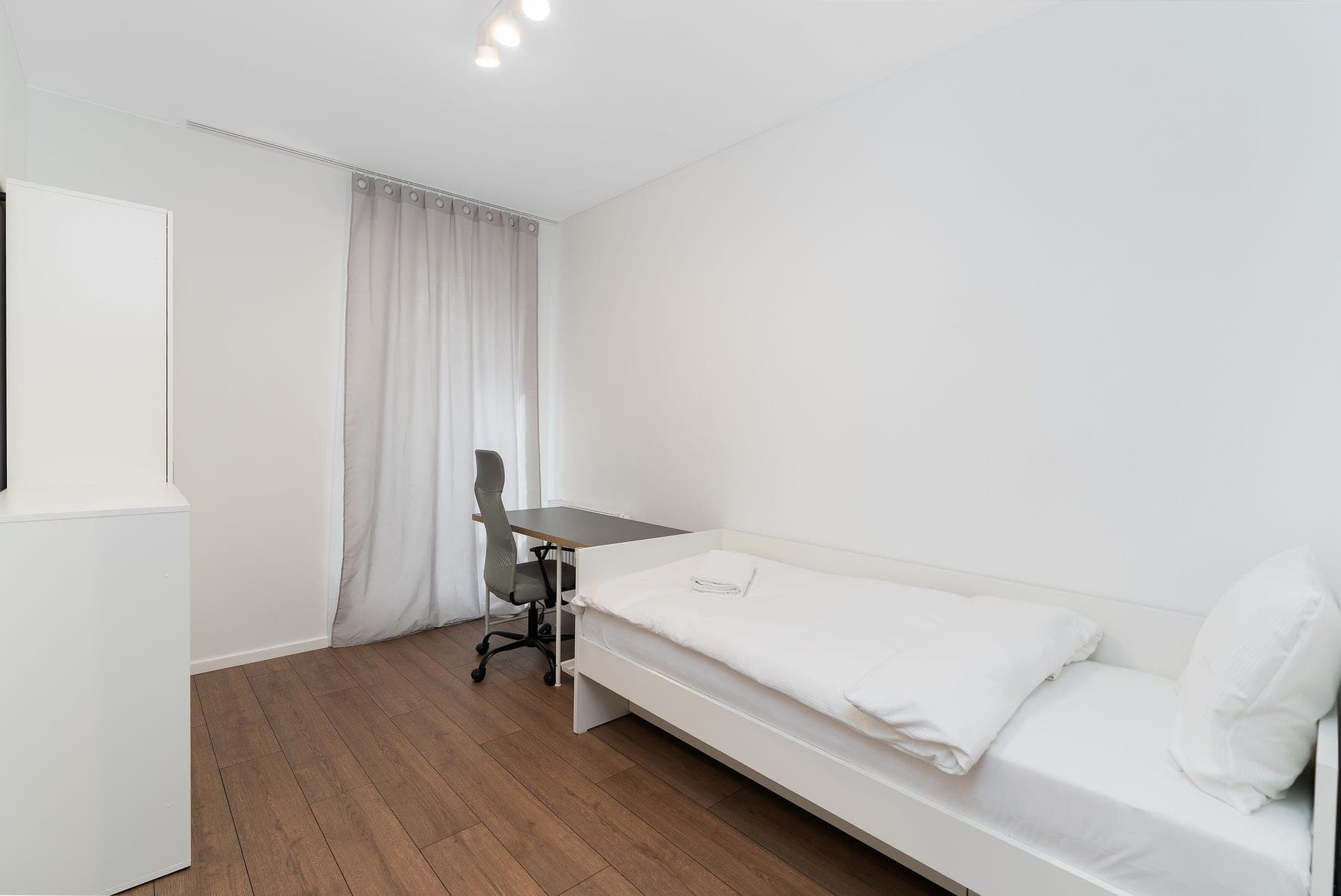
Check the housing rules and the circuit before anything else — most dorms ban air conditioners and many ban anything over a set wattage. That points to fans, and a dorm is small enough that they genuinely work: a window fan to exhaust (31 W) plus a quiet fan aimed at the bed (2.9 W on low).
Fan & Frost earns a commission when you buy through our links, at no cost to you. It never changes a ranking, and we say so when the right answer is the cheaper unit or nothing at all. Full disclosure · How we pick.
At a glance
The picks, ranked
Tap any row to jump to the full reasoning. Prices are live from Amazon where we have them, and read “check price” where we don’t — never a number we cannot verify today.
| # | Product | Best for | Price |
|---|---|---|---|
| 1 | The one that actually lowers the temperature Lasko Twin Window Fan with Remote 31 W, no rule against it anywhere, and it exchanges the room's air rather than stirring it. | A dorm window that will take it, 24-32 inches wide | |
| 2 | 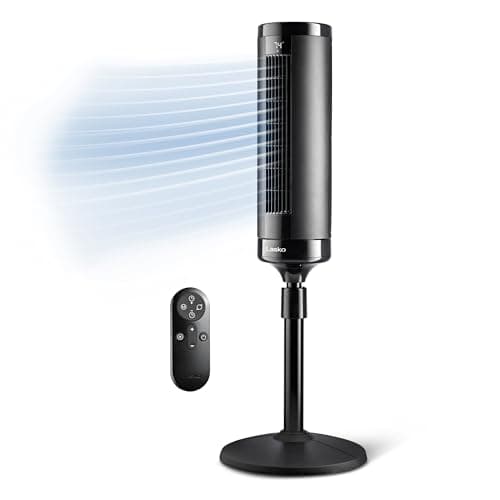 Best for sleeping and studying Lasko EcoQuiet 42" DC Tower Fan 23 dBA on low at 2.9 W, with twelve speeds — the specification that matters when someone else is asleep four feet away. | Any dorm room, alongside a roommate | |
| 3 | 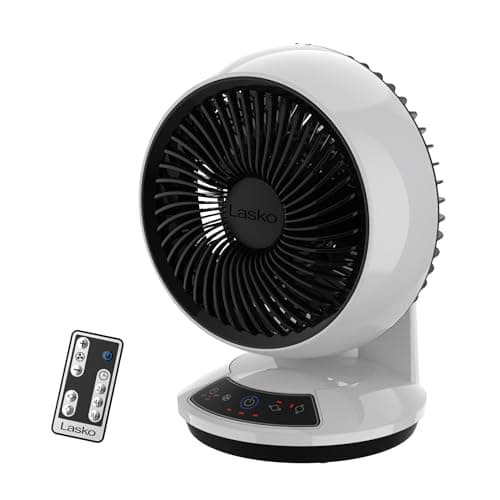 Best where there is no floor space Lasko Whirlwind Tilt 12" Table Fan 2.78 lb and 11 inches tall, at 18 W — and it clamps the problem by wall-mounting entirely. | A desk or a lofted bed frame, in a genuinely full room | |
| — | The one to skip Whynter ARC-14S Dual Hose Portable Air Conditioner 1,300 W and 11.6 A, which most dorms prohibit outright and most dorm circuits cannot supply. | Not a dorm, under any circumstances |
Dorm cooling is unusual in that the equipment question is almost entirely settled by two constraints that have nothing to do with cooling. Resolve them first and the shortlist is short.
Constraint one
What housing actually permits
Read the housing agreement before you buy anything. Typical clauses:
- Air conditioners banned outright. Very common, usually on electrical-capacity grounds. Some schools permit them with documented medical need — a conversation with housing, not a purchase.
- A wattage cap on appliances. Some agreements set an explicit limit per room. A 1,300 W portable exceeds essentially all of them; a 31 W fan exceeds none.
- Nothing in or protruding from windows. Common on upper floors for safety, and it rules out window units and sometimes window fans.
- No adhesives or fixings on walls. Relevant if you were planning to wall-mount a fan — use a non-permanent solution.
Fans are permitted essentially everywhere, which is convenient because a dorm is small enough that they genuinely work.
Constraint two
The circuit, which is the real limit
This is the constraint people discover the hard way, usually at 11pm during finals.
Dorm rooms are frequently wired with one 15-amp circuit shared between two rooms, and buildings are often decades older than the load now placed on them. Fifteen amps at 120 V is about 1,800 watts, for everything.
| Device | Watts | Approx. amps |
|---|---|---|
| DC tower fan, low | 2.9 W | 0.0 A |
| DC tower fan, high | 19 W | 0.2 A |
| Window fan | 31 W | 0.3 A |
| Mini fridge (running) | 100 W | 0.8 A |
| Microwave | 1000 W | 8.3 A |
| Portable air conditioner | 1300 W | 10.8 A |
Fan and AC wattages are manufacturer-published; the fridge and microwave figures are typical values for context. Amps are our arithmetic at 120 V.
A portable air conditioner alone is roughly two-thirds of a 15-amp circuit. Add a microwave and it trips. Add a roommate’s hairdryer and it trips. A fan at 19 W is 0.16 amps — a rounding error.
Never use an extension cord or a power strip for anything high-draw. Both are common in dorms and both are genuine fire risks with continuous high current.
The advantage
A dorm is small, and that helps
The upside of the constraint is real. A dorm room is typically 120–180 sq ft, which is the size at which fans are most effective: you are always within a few feet of the fan, the airflow reaches the whole room, and exchanging the entire air volume through one window takes minutes rather than hours.
The sequence that works, in order of effect:
- Close the blinds during the day. Free, and the biggest single lever. Dorm rooms often have one large window and little thermal mass, so they heat fast in sun and hold it.
- Exhaust once the evening air is genuinely cooler. Check a thermometer — evening air feels cool long before it is. A window fan blowing out with the door open to a cooler corridor moves a lot of air in a small room.
- Turn off what is heating the room. A gaming laptop under load, a desk lamp with an incandescent bulb, a games console left on. In 150 sq ft with no ventilation, these matter more than people expect.
- A quiet fan aimed at the bed, on its lowest setting.
The full no-AC method is here, ranked by how much each step actually does.
Say the unwelcome thing
Do not buy a 'personal air conditioner' or 'ventless AC' for a dorm.
These are marketed at students harder than at anyone else, and the category does not do what its name says. A refrigeration cycle has to reject its waste heat somewhere, and with no duct that somewhere is your room — so the net effect is slightly warmer air.
What they actually are is either small evaporative coolers, which need dry air and an open window to work at all, or fans with a water tank. In a humid climate they add moisture to a small closed room, which is worse than doing nothing.
Buy a fan and know what you are buying. The full explanation of why ventless AC cannot work is here.
Practical
Five dorm-specific notes
- Measure the window before ordering a window fan. Dorm windows are often narrow, sometimes casement, and frequently restricted to a few inches of opening on upper floors.
- Agree fan settings with your roommate early. Noise and airflow at 2am is a genuinely common source of friction, and a twelve-speed fan is what makes the compromise possible.
- Lofted beds are hotter. Warm air rises, so a lofted bed sits in the warmest part of the room. Aim the fan upward, or clamp a small fan to the frame.
- Prop the door if the corridor is cooler. Corridors are often air conditioned when rooms are not. Where policy permits, a fan in the doorway pulling corridor air in is very effective.
- Think about storage and transport. Whatever you buy, you will move it twice a year and store it over summer. 7.8 lb is easy; 73 lb is not.
In full
Every pick, and what is wrong with it
Published specifications only, each linked to the page it came from. Where a manufacturer publishes nothing, the row says so — we do not fill blanks in.
1. The one that actually lowers the temperature
Lasko Twin Window Fan with Remote
Lasko · model W09550
31 W, no rule against it anywhere, and it exchanges the room's air rather than stirring it.
A dorm room is small, which is the one advantage you have: the entire air volume can be exchanged quickly. This is the only fan here that does that rather than moving air around.
Two independently controlled motors matters particularly in a dorm, where you usually have exactly one window. Run one motor out and one in and you get a genuine exchange through a single opening.
22–31 W, up to 560 CFM — about $1.36 for a month of nights at 18.34¢/kWh. No housing policy anywhere restricts a fan, and it draws so little current that no circuit will notice.
Measure the window first. Dorm windows are often narrow, sometimes casement, and frequently restricted to a few inches of opening for safety. If yours will not take this, the tower fan below is the fallback.
What’s wrong with it
Fits windows 24-32 inches wide, and many dorm windows are narrower, awkwardly shaped or open only a few inches for safety. Measure before ordering.
Running cost — W09550
| Nameplate power | 22 W – 31 W | manufacturer's published figure |
|---|---|---|
| Energy, 8-hour night | 0.25 kWh | 31 ÷ 1000 × 8 |
| Cost per hour | 0.6¢ | at 18.34¢/kWh |
| Cost per 8-hour night | 4.5¢ | on the highest speed |
| Cost per 30 nights | $1.36 | 7.4 kWh |
| Same month, lowest speed | 97¢ | at 22 W |
Rate: 18.34¢/kWh, the US average residential price for June 2026 (EIA Electric Power Monthly, Table 5.3). Yours will differ — swap it in: (watts ÷ 1000) × hours × your rate.
| Power | 22 W - 31 W at 120 V |
|---|---|
| Air delivery | Up to 560 CFM |
| Window fit | 24 - 32 in wide |
| Modes | Intake, exhaust or exchange (independent motors) |
| Thermostat | Adjustable |
| Speeds | 3 |
| Dimensions | 12.9 H x 24.0 W x 4.9 D in |
| Weight | 8.0 lb |
| Warranty | 1 year |
Every figure above is from Lasko product page, W09550. Blanks are shown as “not published” rather than filled in.
2. Best for sleeping and studying
Lasko EcoQuiet 42" DC Tower Fan
Lasko · model T42710
23 dBA on low at 2.9 W, with twelve speeds — the specification that matters when someone else is asleep four feet away.
The constraint nobody mentions about dorm cooling is the roommate. You are two people in a small room with different schedules, and a fan that is fine for you at 2am may not be fine for them.
23 dBA on low, published, with twelve speeds. That combination is what makes it work in a shared room — you can find a setting that gives you airflow without generating an argument. A three-speed fan usually cannot.
2.9 to 19 W, about 13¢ for a month of nights on low. Nothing on any dorm circuit will notice that, and no housing policy restricts it.
7.8 lb, so it comes home at the end of the year in a car boot without difficulty. More quiet fan detail here.
What’s wrong with it
41.6 inches tall takes floor space a dorm does not have much of, and it does not lower the room temperature at all.
Running cost — T42710
| Nameplate power | 2.9 W – 19 W | manufacturer's published figure |
|---|---|---|
| Energy, 8-hour night | 0.15 kWh | 19 ÷ 1000 × 8 |
| Cost per hour | 0.3¢ | at 18.34¢/kWh |
| Cost per 8-hour night | 2.8¢ | on the highest speed |
| Cost per 30 nights | 84¢ | 4.6 kWh |
| Same month, lowest speed | 13¢ | at 2.9 W |
Rate: 18.34¢/kWh, the US average residential price for June 2026 (EIA Electric Power Monthly, Table 5.3). Yours will differ — swap it in: (watts ÷ 1000) × hours × your rate.
| Power | 2.9 W - 19 W (0.06-0.303 A at 120 V) |
|---|---|
| Noise | 23 dBA low, 46 dBA high |
| Speeds | 12 |
| Height | 41.6 in |
| Footprint | 12.8 x 12.8 in |
| Weight | 7.8 lb |
| Timer | 8 hours |
| Air delivery (CFM) | Not published |
| Warranty | 2 years |
Every figure above is from Lasko product page, T42710. Blanks are shown as “not published” rather than filled in.
3. Best where there is no floor space
Lasko Whirlwind Tilt 12" Table Fan
Lasko · model A12107
2.78 lb and 11 inches tall, at 18 W — and it clamps the problem by wall-mounting entirely.
Dorm rooms run out of floor before they run out of anything else. At 2.78 lb and 11 inches, this sits on a desk, on a shelf, or clipped to a lofted bed frame.
The wall-mount option is the genuinely useful part in a small room: mounted above the desk or beside the bed, it aims at you and takes up no surface at all. Hardware is not included, and in a dorm you will want a non-permanent mounting solution anyway.
18–32 W, 39–55 dBA, both published. About 79¢ for a month of eight-hour periods on low.
Proximity is the argument: two feet from your face on the lowest speed does more than a bigger fan across the room, for fewer watts and less noise. More on that here.
What’s wrong with it
39 dBA on low is well above the tower fan's 23, and small fans are inherently louder than large ones at comparable airflow. Wall-mount hardware is not included.
Running cost — A12107
| Nameplate power | 18 W – 32 W | manufacturer's published figure |
|---|---|---|
| Energy, 8-hour night | 0.26 kWh | 32 ÷ 1000 × 8 |
| Cost per hour | 0.6¢ | at 18.34¢/kWh |
| Cost per 8-hour night | 4.7¢ | on the highest speed |
| Cost per 30 nights | $1.41 | 7.7 kWh |
| Same month, lowest speed | 79¢ | at 18 W |
Rate: 18.34¢/kWh, the US average residential price for June 2026 (EIA Electric Power Monthly, Table 5.3). Yours will differ — swap it in: (watts ÷ 1000) × hours × your rate.
| Power | 18 W - 32 W (0.24-0.5 A at 120 V) |
|---|---|
| Noise | 39 dBA low, 55 dBA high |
| Air distance | 50 ft |
| Speeds | 3 |
| Dimensions | 11.19 H x 11.4 W x 6.2 D in |
| Weight | 2.78 lb |
| Mounting | Wall-mountable (hardware not included) |
| Air delivery (CFM) | Not published |
| Warranty | 1 year |
Every figure above is from Lasko product page, A12107. Blanks are shown as “not published” rather than filled in.
Skip this one
Whynter ARC-14S Dual Hose Portable Air Conditioner
Whynter · model ARC-14S
1,300 W and 11.6 A, which most dorms prohibit outright and most dorm circuits cannot supply.
Portable air conditioners are marketed to students every August, and they are close to unusable in a dorm for three separate reasons.
The circuit. 1,300 W is 11.6 amps. Dorm rooms commonly share a single 15-amp circuit between two rooms, along with a fridge, laptops, lights and a microwave. Adding 11.6 amps trips it, repeatedly, and that becomes a facilities complaint quickly.
The policy. Most housing agreements prohibit air conditioners outright, usually on exactly this electrical basis. Some permit them only with documented medical need.
The practicalities. 73 lb, 35.5 inches tall, needing a window kit that fits a window you do not control, and somewhere to store it for eight months of the year.
$57 a month of nights, on a bill somebody is paying. If heat is a genuine medical issue, that is a housing conversation with documentation, not an online purchase.
What’s wrong with it
11.6 amps on a shared circuit will trip a breaker, most housing policies ban air conditioners entirely, and at 73 lb it is not going up three flights of stairs in September.
Running cost — ARC-14S
| Nameplate power | 1300 W | manufacturer's published figure |
|---|---|---|
| Energy, 8-hour night | 10.40 kWh | 1300 ÷ 1000 × 8 |
| Cost per hour | 24¢ | at 18.34¢/kWh |
| Cost per 8-hour night | $1.91 | on the highest speed |
| Cost per 30 nights | $57 | 312.0 kWh |
Rate: 18.34¢/kWh, the US average residential price for June 2026 (EIA Electric Power Monthly, Table 5.3). Yours will differ — swap it in: (watts ÷ 1000) × hours × your rate.
| Marketing capacity | 14,000 BTU (ASHRAE-128) |
|---|---|
| DOE-rated capacity | 9,500 BTU SACC |
| Hoses | Dual |
| Power | 1,300 W / 11.6 A at 115 V |
| Noise | Under 51 dBA low, under 56 dBA high |
| Dehumidification | 71 pints/day |
| Refrigerant | R-32 |
| Dimensions | 16 W x 19 D x 35.5 H in |
| Weight | 73 lb |
| Manufacturer coverage claim | 500 sq ft |
| Warranty | 1 year unit, 3 years compressor |
Every figure above is from Whynter product page, ARC-14S. Blanks are shown as “not published” rather than filled in.
We are not linking a buy button for this one. If you want to look at it anyway, it is easy enough to find — but we would rather send you to something that fits your room.
Questions people actually ask
Frequently asked
Can I have an air conditioner in my dorm room?
Usually not. Most housing agreements prohibit them outright, generally on electrical grounds, and some permit them only with documented medical need. Check your specific housing agreement before buying anything — and check the circuit too.
Why do dorms ban air conditioners?
Electrical capacity, mostly. A 1,300 W portable draws about 11.6 amps, and dorm rooms are often on a 15-amp circuit shared between two rooms alongside a fridge, laptops and a microwave. The building wiring frequently predates that load by decades.
What is the best fan for a dorm room?
A DC tower fan for sleeping — 23 dBA on low with twelve speeds means you can find a setting that works alongside a roommate. Add a window fan if your window will take one, since that is the only thing that actually lowers the room's temperature.
Do personal or ventless air conditioners work in a dorm?
No. A refrigeration cycle must reject its waste heat somewhere, and with no duct that somewhere is your room — the net effect is slightly warmer air. These products are small evaporative coolers, which need dry air and an open window, or they are fans.
How can I cool a dorm room cheaply?
Close the blinds during the day, exhaust hot air once the outside is genuinely cooler, turn off heat sources like a gaming laptop or a desk lamp, and run a quiet fan on low. A DC tower fan on low costs about 13¢ for a month of nights.
Will a fan trip a dorm circuit breaker?
No. A DC tower fan on high draws 19 W, about 0.16 amps, and a window fan 31 W. Both are negligible on a 15-amp circuit. A portable air conditioner at 11.6 amps is roughly two-thirds of that circuit on its own, which is why it trips.
Sources
Where these numbers came from
- Lasko EcoQuiet T42710 specifications — 2.9-19 W, 23/46 dBA, 12 speeds
- Lasko W09550 twin window fan specifications — 22-31 W, 560 CFM
- Lasko A12107 specifications — 18-32 W, 39/55 dBA, wall-mountable
- Whynter ARC-14S specifications — 1,300 W / 11.6 A
- EIA Electric Power Monthly, Table 5.3 — electricity rate
Read next
Where to go from here
Back to Room Cooling, or read how we pick.