Head to head
Desiccant vs compressor dehumidifiers
One of these is measured by the government and one is not. The unmeasured one is still the right answer for a cold room.
By Sawyer V. · Published
The short answer
Temperature decides it. A compressor unit condenses water on a cold coil, so it loses capacity as the room cools and frosts up in the cold. A desiccant unit adsorbs moisture onto a rotor and publishes operation down to 33 F. Heated basements and living spaces: compressor, every time — it is certified and far more efficient. Unheated garage, crawl space or cabin in winter: desiccant.
Fan & Frost earns a commission when you buy through our links, at no cost to you. It never changes a ranking, and we say so when the right answer is the cheaper unit or nothing at all. Full disclosure · How we pick.

At a glance
The picks, ranked
Tap any row to jump to the full reasoning. Prices are live from Amazon where we have them, and read “check price” where we don’t — never a number we cannot verify today.
| # | Product | Best for | Price |
|---|---|---|---|
| 1 | 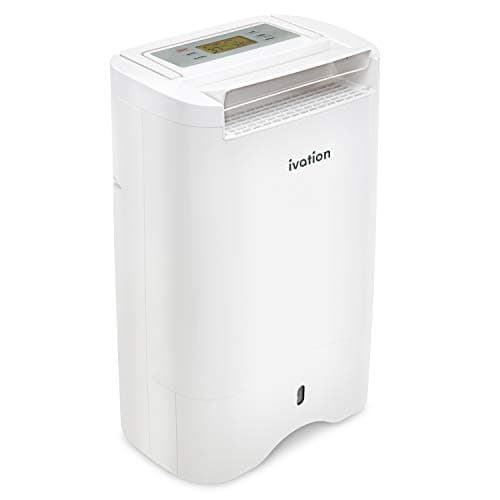 The desiccant case Ivation 19-Pint Desiccant Dehumidifier 19 pints a day at 68 F and 60% RH, with published operation down to 33 F and no compressor to frost up. | An unheated garage, crawl space, boat or cabin in winter | |
| 2 | 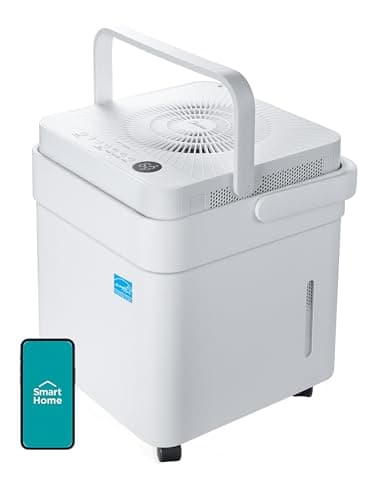 The compressor case Midea Dehumidifier, 20 pints/day 20.16 pints a day on the federal Appendix X1 test at 1.70 L/kWh and 249 certified kWh a year — numbers a desiccant unit cannot show you. | A basement, bedroom or any space that stays above about 60 F |
The dataset
Only one of these two is certified
The ENERGY STAR certified dehumidifier dataset holds 550 records, and every one of them is a compressor machine — 526 portables and 24 whole-home units. There is no desiccant category in it, because no federal test procedure covers desiccant dehumidifiers.
That asymmetry is the practical difference when you go shopping:
- Compressor units publish water removal per DOE Appendix X1, an integrated energy factor, annual kWh, refrigerant and charge. Across the 526 certified portables, IEF runs from 1.70 to 2.24 L/kWh with a median of 2.01.
- Desiccant units publish whatever the manufacturer chooses. In practice that is a pint figure at their own test condition, a coverage area and an operating temperature range.
So a straight efficiency comparison between the two is not available, and anyone presenting one has built it themselves. What can be said with confidence is that a desiccant machine spends energy running a heater, and a compressor machine does not.
This one is not a DIY job
The decision
Which one your space needs
| Space | Typical winter temperature | Buy |
|---|---|---|
| Heated basement | 60 to 70 F | Compressor |
| Living space, bedroom | 65 to 75 F | Compressor |
| Sealed crawl space | 50 to 65 F | Compressor, sized generously |
| Attached garage | 35 to 55 F | Desiccant |
| Detached garage or workshop | Near outdoor | Desiccant |
| Boat, RV or cabin, unoccupied | Near outdoor | Desiccant |
| Closet or small storage room | Room temperature | Compressor, or neither |
The crawl space row is the one people get wrong in both directions. A sealed and insulated crawl space stays warm enough for a compressor unit and should have one, sized for the volume — the options are in crawl space dehumidifiers. A vented crawl space tracking outdoor temperature is a desiccant space, and sealing it first is a better investment than either machine.
Noise and heat
Two side effects worth planning for
Both types add heat to the room. A compressor unit returns the heat it removed plus the energy its motor used, so a basement with one running is a degree or two warmer. A desiccant unit adds more, because its heater is part of the process. In winter that is a small bonus; in a July bedroom it is the reason a dehumidifier is not an air conditioner.
Neither publishes noise reliably. The certified dataset has no noise field, and manufacturers state figures inconsistently. The structural difference is that a desiccant machine has no compressor to start and stop, so it produces a steadier sound; a compressor unit cycles. Which one bothers you is personal, and the quieter certified options are in quiet dehumidifiers.
Running cost
What you can and cannot know
On the compressor side the answer is published: the certified annual kWh for portables in this class runs from roughly 249 to 512 kWh a year across our catalog, which at 18.34¢/kWh is $46 to $94 a year. The method behind those figures is in what a dehumidifier costs to run.
On the desiccant side there is no published wattage to compute from, so the honest answer is that you will find out by measuring. A plug-in energy meter for a week settles it, and given that these machines include a heater, expect the number to be higher per pint than a certified compressor unit in warm air — and lower than a compressor unit that is frosting up and defrosting all day in cold air.
Say the unwelcome thing
Do not buy a compressor dehumidifier for an unheated garage.
It is the most common mistake in this category, and the machine will appear to be broken. The tank stays dry, the unit runs constantly, and the display cycles through defrost while the concrete stays damp. Nothing is wrong with it: the coil cannot stay above freezing in a 40-degree room.
If the space drops below about 60 F for part of the year, buy the desiccant machine and accept the missing paperwork. A rotor rated to 33 F will keep collecting water in weather that stops a compressor entirely. If the space stays warm, a certified compressor unit does the same job for measurably less electricity.
In full
Every pick, and what is wrong with it
Published specifications only, each linked to the page it came from. Where a manufacturer publishes nothing, the row says so — we do not fill blanks in.
1. The desiccant case
Ivation 19-Pint Desiccant Dehumidifier
Ivation · model IVADDH09
19 pints a day at 68 F and 60% RH, with published operation down to 33 F and no compressor to frost up.
A desiccant machine passes air over a rotor coated in a moisture-adsorbing material, then drives the collected water off with a heater and condenses it into the tank. Nothing in that sequence depends on the room being warm, which is the whole reason the category exists.
Ivation publishes an operating range of 33 F to 104 F and 19 pints a day at 68 F and 60% relative humidity. Note the condition attached to that capacity: it is the manufacturer’s own test point, not the federal one, so it cannot be compared directly with the pint ratings on a compressor unit.
The trade is efficiency and running cost. Desiccant units use a heater as part of the process, and no federal program certifies them, so there is no IEF figure, no annual kWh, and no published wattage to compute one from. You are buying capability in cold air, and paying for it in electricity you cannot quantify in advance.
One genuine bonus: the process adds a little heat to the room rather than removing it, which in a 40-degree garage is not the drawback it would be in July.
What’s wrong with it
No certified efficiency figure, no published wattage, and a capacity quoted at the manufacturer's own test condition rather than the federal one.
Running cost
Ivation does not publish a wattage for the IVADDH09, so we cannot calculate what it costs to run. We are not going to estimate one. If Ivation publishes a nameplate figure, this block will show the arithmetic.
| Water removal | 19 pints/day at 68 F and 60% RH (manufacturer condition, not DOE Appendix X1) |
|---|---|
| Coverage | Up to 410 sq ft |
| Operating range | 33 F to 104 F |
| Drying element | Desiccant rotor, no compressor |
| Drain | Removable reservoir plus continuous drain hose |
| Speeds | 2 |
| Controls | LCD, timer, sleep mode, outlet swing |
| ENERGY STAR | No program covers desiccant dehumidifiers |
| Efficiency (IEF) | Not published |
| Power | Not published |
Every figure above is from Ivation product page, 19-pint small-area desiccant dehumidifier. Blanks are shown as “not published” rather than filled in.
2. The compressor case
Midea Dehumidifier, 20 pints/day
Midea · model MAD20S1QWT
20.16 pints a day on the federal Appendix X1 test at 1.70 L/kWh and 249 certified kWh a year — numbers a desiccant unit cannot show you.
A compressor dehumidifier is a small refrigeration system: it chills a coil below the dew point, water condenses on it and drains away. In a warm, humid room it is the more efficient machine by a distance, and unlike the desiccant category it is measured by somebody other than the manufacturer.
Every certified unit publishes water removal on the DOE Appendix X1 test, an integrated energy factor in liters per kilowatt-hour, and an annual kWh figure. This one is 20.16 pints a day, 1.70 L/kWh, 249 kWh a year — about $46 of electricity a year at 18.34¢/kWh.
The limitation is physical rather than commercial. As the room gets colder the coil runs colder, and below roughly 60 degrees water starts freezing onto it instead of draining off. Units manage that with defrost cycles, which means spending part of every hour not dehumidifying at all. In a 40-degree garage a compressor unit can run all day and collect very little.
What’s wrong with it
Capacity falls as the room cools, and in an unheated space in winter the defrost cycle takes over and the machine effectively stops working.
Running cost — MAD20S1QWT
| Annual energy use | 249 kWh | ENERGY STAR certified figure |
|---|---|---|
| Annual cost | $46 | 249 × 18.34¢/kWh |
| Per cooling month | $11 | spread over a four-month season |
The annual figure is the certified value from the ENERGY STAR Certified Dehumidifiers dataset, which models a standard cooling season rather than your actual summer. It is more useful than a nameplate wattage here, because a variable-speed compressor spends most of its life well below nameplate.
Rate: 18.34¢/kWh, the US average residential price for June 2026 (EIA Electric Power Monthly, Table 5.3). Yours will differ — swap it in: (watts ÷ 1000) × hours × your rate.
| Water removal | 20.16 pints/day (DOE Appendix X1) |
|---|---|
| Efficiency (IEF) | 1.70 L/kWh |
| Annual energy use | 249 kWh/yr |
| Refrigerant | HFC-32 (GWP 675) |
| Connected | No |
| Noise | Not published in the certified dataset |
| ENERGY STAR | Certified |
Every figure above is from ENERGY STAR Certified Dehumidifiers dataset. Blanks are shown as “not published” rather than filled in.
Questions people actually ask
Frequently asked
What is the difference between a desiccant and a compressor dehumidifier?
A compressor unit condenses water on a chilled coil, like a small refrigerator. A desiccant unit adsorbs moisture onto a rotating wheel and drives it off with a heater. The compressor is more efficient in warm air; the desiccant keeps working in the cold.
Do desiccant dehumidifiers work in a cold garage?
Yes, which is the reason to buy one. Ivation publishes an operating range of 33 to 104 F for its 19-pint model. A compressor unit in the same garage spends its time frosting up and defrosting, and collects very little water.
Are desiccant dehumidifiers more expensive to run?
In warm air, almost certainly, because a heater is part of the process. Nobody can tell you by how much: no federal program certifies desiccant dehumidifiers, so there is no efficiency figure and often no published wattage. Measure yours with a plug-in meter.
Which dehumidifier is best for a crawl space?
A sealed, insulated crawl space stays warm enough for a certified compressor unit, and that is the efficient choice. A vented crawl space that tracks outdoor temperature needs a desiccant machine, or better, sealing before either. Crawl space units.
Do dehumidifiers heat the room?
Both types do. A compressor unit returns the heat it removed from the air plus its own motor's energy. A desiccant unit adds more still, because it uses a heater to regenerate the rotor. In winter that is useful; in summer it is why a dehumidifier cannot cool a room. Dehumidifier vs air conditioner.
Sources
Where these numbers came from
- ENERGY STAR Certified Dehumidifiers dataset — 550 records, all compressor: 526 portable and 24 whole-home, with IEF from 1.70 to 2.24 L/kWh across portables; no desiccant category exists
- Ivation product page, 19-pint small-area desiccant dehumidifier — 19 pints/day at 68 F and 60% RH, 410 sq ft, 33 to 104 F operating range, desiccant rotor, continuous drain
- EIA Electric Power Monthly, Table 5.3 — average residential electricity price
Read next
Where to go from here
Back to Dehumidifiers, or read how we pick.