Guide and picks
Are whole house fans worth it?
One number decides this, and it is not the price. If your summer nights drop into the 60s, a whole-house fan can replace air conditioning for much of the season. If they don't, it can't.
By Sawyer V. · Published
The short answer
Only if your overnight low drops below about 70°F, and ideally into the 60s. A whole-house fan pulls outdoor air in through open windows and exhausts it through the attic, so it can never cool your house below the outdoor temperature. Where nights are cool it can replace air conditioning for much of the season; where they are not, it cannot.
Fan & Frost earns a commission when you buy through our links, at no cost to you. It never changes a ranking, and we say so when the right answer is the cheaper unit or nothing at all. Full disclosure · How we pick.
At a glance
The picks, ranked
Tap any row to jump to the full reasoning. Prices are live from Amazon where we have them, and read “check price” where we don’t — never a number we cannot verify today.
| # | Product | Best for | Price |
|---|---|---|---|
| 1 | Run the test first Lasko Twin Window Fan with Remote 31 W to find out whether the idea works on your house, before spending hundreds on an installation. | Anyone deciding whether a whole-house fan is worth installing | |
| 2 | 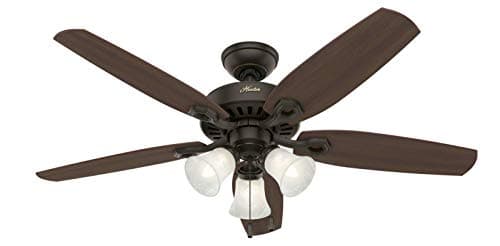 If your nights stay warm Hunter Vespucci 52" Ceiling Fan 1.8 W on low at 366.7 CFM per watt — the sensible permanent purchase when a whole-house fan cannot work. | A house where the overnight low never drops enough | |
| 3 | Cheapest way to run the test Lasko Power Plus 20" Box Fan A weather-resistant motor and a 4.75-inch depth mean it will sit in almost any window for the experiment. | A window a purpose-built fan will not fit |
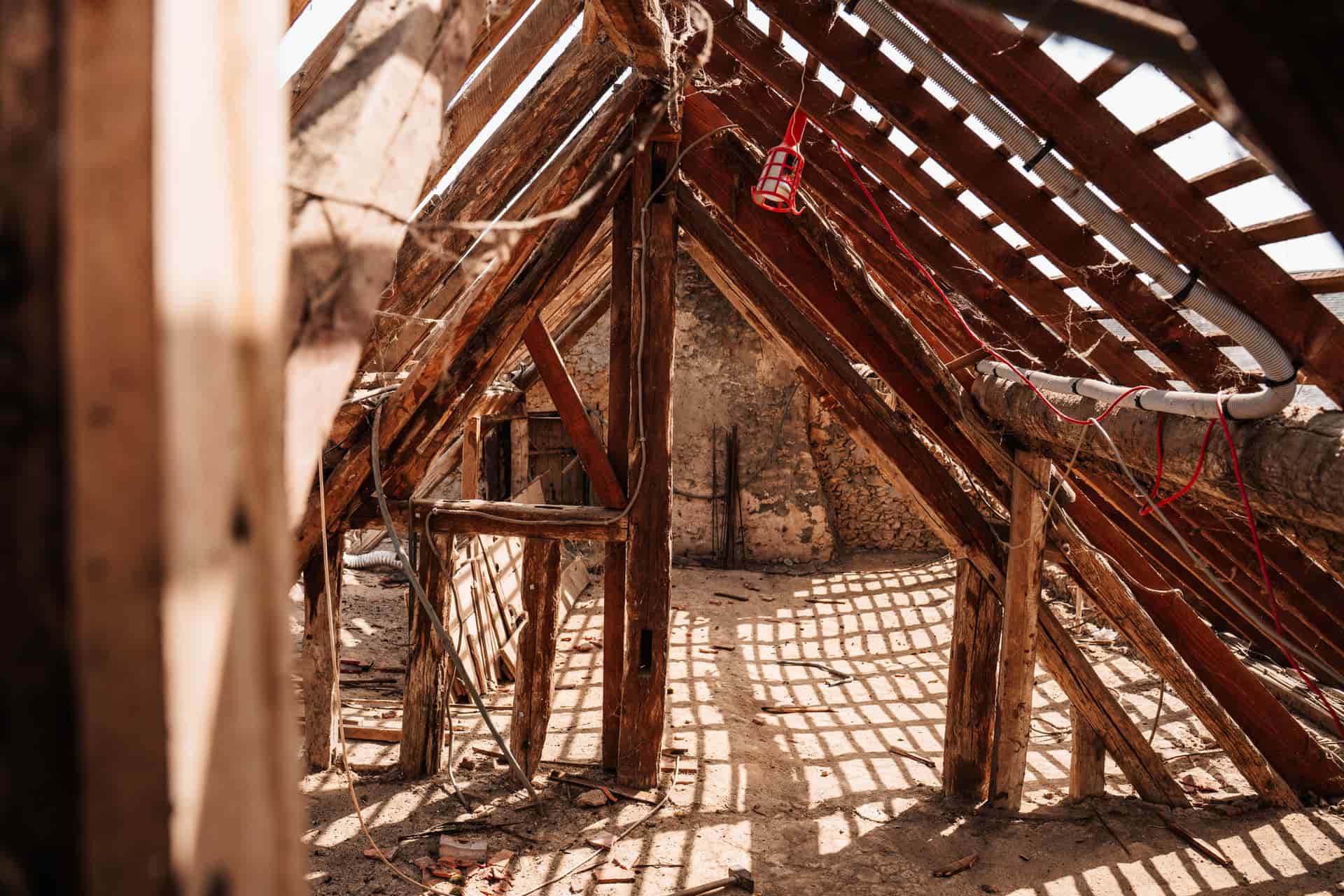
A whole-house fan is a large fan mounted in the ceiling between your living space and your attic. Open some windows, switch it on, and it pulls outdoor air in through those windows, through the house, up through the fan, and out through the attic vents.
In the right climate it is one of the most effective and cheapest things you can do to a house. In the wrong climate it is an expensive hole in your ceiling. The variable that decides which is your overnight low, and nothing else comes close in importance.
The test
The two-minute temperature test
A whole-house fan is an air exchanger, not a cooler. There is no refrigeration cycle anywhere in it. The best it can ever do is bring your indoor temperature down toward the outdoor temperature, quickly.
So look up your average overnight low in July and August:
| Summer overnight low | What you get | Verdict |
|---|---|---|
| Below 60°F | Cools the whole house within an hour, most nights | Excellent |
| 60–65°F | Genuinely comfortable; can replace AC most nights | Very good |
| 65–70°F | Useful for dumping the day's heat; AC still needed on hot nights | Worthwhile |
| 70–75°F | Marginal — it moves a lot of warm air | Probably not |
| Above 75°F | It is an expensive attic fan | No |
Practical bands based on the mechanism, not a manufacturer specification. The physical limit — it cannot cool below outdoor temperature — is not in dispute.
Roughly: much of the interior West, the Mountain states, inland California, the Pacific Northwest and parts of the Northeast have the nights for this. The Southeast, the Gulf Coast and Florida largely do not — a Houston August night sitting at 79°F gives a whole-house fan nothing to work with.
Humidity is the second check. Even where nights are cool, pulling in air at 90% relative humidity brings that moisture into the house, and it lands on your walls and furnishings. In a humid climate with cool nights this is a real trade-off rather than a free win.
Why it works so well
What it actually does
Two separate things, and the second is the one people underestimate.
One: it dumps the day’s heat fast. A house that has been baking all day holds heat in its structure — drywall, furniture, floors. Opening windows alone relies on whatever breeze exists, which is often nothing. A whole-house fan can exchange the entire air volume of a house every two to three minutes, so the house reaches outdoor temperature in an hour rather than overnight.
Two: it flushes the attic. An attic in summer sun can reach 140°F, and that heat radiates down through your ceilings all evening. A whole-house fan pushes house air up through the attic and out the vents, and in doing so it drags the attic temperature down toward outdoor temperature. That alone changes how an upstairs feels — which is often the actual complaint that led people here.
Running cost
What it costs to run
Whole-house fans generally draw between 100 W and 600 W depending on size and speed. At 18.34¢/kWh:
| Draw | Per hour | 8-hr night | 30 nights |
|---|---|---|---|
| 100 W | 1.8¢ | 15¢ | $4.40 |
| 200 W | 3.7¢ | 29¢ | $8.80 |
| 400 W | 7.3¢ | 59¢ | $18 |
| 600 W | 11¢ | 88¢ | $26 |
Our arithmetic at 18.34¢/kWh. Wattage varies by model and speed — check the specific unit’s nameplate, and note that most are run for an hour or two rather than all night.
Against central air conditioning drawing several thousand watts, the saving on a night when the fan can do the job instead is substantial. And in practice most people run a whole-house fan for an hour or two in the evening to flush the house, not all night, which makes the real cost lower still.
Test it first
The $30 way to test the idea before spending hundreds
You can approximate the effect before committing to an installation, and we would suggest doing so for a couple of weeks.
- Wait until the outdoor temperature drops below your indoor temperature. Usually mid to late evening. Check with a thermometer rather than by feel — this is the whole premise and it is easy to get wrong.
- Put a window fan in an upstairs window blowing out. That exhausts the hottest air in the house.
- Open windows downstairs on the opposite side to let cool air in.
- Watch what happens over an hour or two.
If the house cools noticeably, a whole-house fan will do the same thing far faster and across the whole building, and it is very likely worth installing. If two hours of exhaust fan makes almost no difference, a whole-house fan will not either — and you have learned that for the price of a fan you can keep using.
A Lasko twin window fan draws 22–31 W and moves up to 560 CFM, which costs about $1.36 for a month of nights. That is a cheap experiment.
This one is not a DIY job
Installation is not a DIY job. A whole-house fan means cutting an opening through a ceiling, framing it, and wiring the unit — structural work plus electrical work. Get a licensed contractor.
The single most important thing to ask them about is attic exhaust venting. The fan has to push a very large volume of air out of the attic, and most attics are not vented for that. Undersized venting means the fan cannot move its rated airflow, pressurizes the attic, and can push air back into the house. A common rule is roughly one square foot of net free vent area per 750 CFM of fan capacity, so a 4,500 CFM fan wants about 6 sq ft of net free venting. Confirm the figure for your specific unit against its manual.
Also ask about the winter seal. An uninsulated fan opening is a large hole between your conditioned space and a cold attic, and it will cost you in heating what you saved in cooling. Insulated motorized doors are worth the extra.
Say the unwelcome thing
Do not confuse a whole-house fan with an attic fan. They do different jobs.
A whole-house fan is mounted in the ceiling of your living space and moves air from inside the house out through the attic. It cools the house.
An attic fan is mounted in the roof or gable and exhausts air from the attic only. It reduces the attic temperature so less heat radiates down through your ceilings, but it does not move air through your living space at all.
They are complementary rather than alternatives, and an attic fan is far cheaper and simpler to install. If your problem is specifically that upstairs rooms are hot, an attic fan may be the better first move — and it works regardless of what your overnight lows do.
Verdict
So: worth it or not?
Yes, if your summer nights drop below about 65°F and your air is not very humid. In that case it is one of the highest-value cooling investments available to a homeowner: it can displace air conditioning for a large part of the season, it costs a fraction of a compressor to run, and it fixes the attic heat problem as a side effect.
No, if your nights stay above about 75°F. The physics does not care how good the unit is. It can only move outdoor air, and if that air is 79°F you are running a large fan to fill your house with 79°F air.
In between, test it first with the window fan experiment above. Two weeks of evidence about your own house beats any general recommendation, including this one.
And if the answer is no, the alternatives are a correctly sized window unit for the rooms that matter, or ceiling fans at 14 W for the rooms that only need air moving.
In full
Every pick, and what is wrong with it
Published specifications only, each linked to the page it came from. Where a manufacturer publishes nothing, the row says so — we do not fill blanks in.
1. Run the test first
Lasko Twin Window Fan with Remote
Lasko · model W09550
31 W to find out whether the idea works on your house, before spending hundreds on an installation.
This is the cheap proxy for the whole idea. Once the outdoor temperature is genuinely below indoor, run this in an upstairs window blowing out with windows open downstairs on the opposite side.
22–31 W and up to 560 CFM, about $1.36 for a month of nights at 18.34¢/kWh. If the house cools noticeably over an hour or two, a whole-house fan will do the same far faster and across the whole building. If two hours of this makes almost no difference, neither will the installation — and you have learned that for the price of a fan you keep using.
What’s wrong with it
It only tests the principle — one window's worth of airflow against a whole-house fan's, so a weak result is informative and a strong one is an understatement. Fits windows 24-32 inches wide.
Running cost — W09550
| Nameplate power | 22 W – 31 W | manufacturer's published figure |
|---|---|---|
| Energy, 8-hour night | 0.25 kWh | 31 ÷ 1000 × 8 |
| Cost per hour | 0.6¢ | at 18.34¢/kWh |
| Cost per 8-hour night | 4.5¢ | on the highest speed |
| Cost per 30 nights | $1.36 | 7.4 kWh |
| Same month, lowest speed | 97¢ | at 22 W |
Rate: 18.34¢/kWh, the US average residential price for June 2026 (EIA Electric Power Monthly, Table 5.3). Yours will differ — swap it in: (watts ÷ 1000) × hours × your rate.
| Power | 22 W - 31 W at 120 V |
|---|---|
| Air delivery | Up to 560 CFM |
| Window fit | 24 - 32 in wide |
| Modes | Intake, exhaust or exchange (independent motors) |
| Thermostat | Adjustable |
| Speeds | 3 |
| Dimensions | 12.9 H x 24.0 W x 4.9 D in |
| Weight | 8.0 lb |
| Warranty | 1 year |
Every figure above is from Lasko product page, W09550. Blanks are shown as “not published” rather than filled in.
2. If your nights stay warm
Hunter Vespucci 52" Ceiling Fan
Hunter · model Vespucci
1.8 W on low at 366.7 CFM per watt — the sensible permanent purchase when a whole-house fan cannot work.
If your summer overnight lows sit above 75°F, a whole-house fan has nothing to work with. Ceiling fans are the permanent installation that still makes sense, and the certified data is decisive: 7.9¢ for a month of eight-hour nights on low.
What’s wrong with it
It moves air within a room and exchanges nothing with outside, so it does not lower the house temperature the way a whole-house fan would in the right climate.
Running cost — Vespucci
| Nameplate power | 1.8 W – 13.9 W | manufacturer's published figure |
|---|---|---|
| Energy, 8-hour night | 0.11 kWh | 13.9 ÷ 1000 × 8 |
| Cost per hour | 0.3¢ | at 18.34¢/kWh |
| Cost per 8-hour night | 2.0¢ | on the highest speed |
| Cost per 30 nights | 61¢ | 3.3 kWh |
| Same month, lowest speed | 7.9¢ | at 1.8 W |
Rate: 18.34¢/kWh, the US average residential price for June 2026 (EIA Electric Power Monthly, Table 5.3). Yours will differ — swap it in: (watts ÷ 1000) × hours × your rate.
| Blade span | 52 in |
|---|---|
| Efficiency | 366.7 CFM per watt |
| Power, high speed | 13.9 W |
| Power, low speed | 1.8 W |
| Standby power | 0.8 W |
| Type | Indoor, fan only (no light kit) |
| Warranty | 3 years, components |
| ENERGY STAR | Certified |
Every figure above is from ENERGY STAR Certified Ceiling Fans dataset. Blanks are shown as “not published” rather than filled in.
3. Cheapest way to run the test
Lasko Power Plus 20" Box Fan
Lasko · model B20801
A weather-resistant motor and a 4.75-inch depth mean it will sit in almost any window for the experiment.
If your upstairs window is 20 inches or 40, the twin window fan will not fit and this will. $4.49 for a month of nights, and the weather-resistant motor survives sitting in an open window through a season.
Cut foam board to fill the gaps around it and the test is much more representative of what a properly sealed whole-house fan would do.
What’s wrong with it
73-102 W against the twin fan's 22-31, and it does not seal the opening — so a good part of your exhaust loops back in unless you block the gaps.
Running cost — B20801
| Nameplate power | 73 W – 102 W | manufacturer's published figure |
|---|---|---|
| Energy, 8-hour night | 0.82 kWh | 102 ÷ 1000 × 8 |
| Cost per hour | 1.9¢ | at 18.34¢/kWh |
| Cost per 8-hour night | 15¢ | on the highest speed |
| Cost per 30 nights | $4.49 | 24.5 kWh |
| Same month, lowest speed | $3.21 | at 73 W |
Rate: 18.34¢/kWh, the US average residential price for June 2026 (EIA Electric Power Monthly, Table 5.3). Yours will differ — swap it in: (watts ÷ 1000) × hours × your rate.
| Power | 73 W - 102 W (0.6-0.9 A at 120 V) |
|---|---|
| Speeds | 3 |
| Dimensions | 21.25 H x 22.5 x 4.75 in |
| Weight | 10.1 lb |
| Motor | Weather-resistant |
| Air delivery (CFM) | Not published |
| Warranty | 2 years |
Every figure above is from Lasko product page, B20801. Blanks are shown as “not published” rather than filled in.
Questions people actually ask
Frequently asked
Are whole house fans worth it?
Only if your summer overnight lows drop below about 70°F, and ideally into the 60s. A whole-house fan exchanges indoor air for outdoor air, so it can never cool below the outdoor temperature. Where nights are cool it can replace air conditioning for much of the season.
How much does it cost to run a whole house fan?
Typical units draw 100 to 600 W. At 18.34¢/kWh that is roughly 1.8¢ to 11¢ an hour. Most people run one for an hour or two in the evening to flush the house rather than all night, so the real cost is usually lower than the table suggests.
What is the difference between a whole house fan and an attic fan?
A whole-house fan sits in the ceiling of your living space and pulls air through the house and out via the attic, cooling the house. An attic fan exhausts the attic only, reducing heat radiating down through your ceilings. They are complementary, and the attic fan is far cheaper to install.
Do whole house fans work in humid climates?
They move air regardless, but they bring outdoor humidity into the house with it. Even where nights are cool, pulling in air at 90 percent relative humidity puts that moisture into your walls and furnishings. In a humid climate it is a genuine trade-off rather than a free win.
How can I test whether a whole house fan would help?
Once the outdoor temperature drops below your indoor temperature, put a window fan in an upstairs window blowing outward and open windows downstairs on the opposite side. If the house cools noticeably over an hour or two, a whole-house fan will do the same far faster. If it does not, neither will it. Window fans for the test.
Do I need extra attic venting for a whole house fan?
Almost certainly, and it is the most common installation mistake. The fan has to push a large volume of air out of the attic, and undersized venting means it cannot reach its rated airflow and may pressurize the attic. A common rule is about one square foot of net free vent area per 750 CFM — confirm against your unit's manual.
Sources
Where these numbers came from
Read next
Where to go from here
Back to Whole-House Airflow, or read how we pick.