The picks
The best clip-on fans, for when there is no surface left
You do not buy a clip-on fan for airflow. You buy it because there is no floor and no desk left, and it can grip a bed frame, a shelf edge or a stroller bar.
By Sawyer V. · Published
The short answer
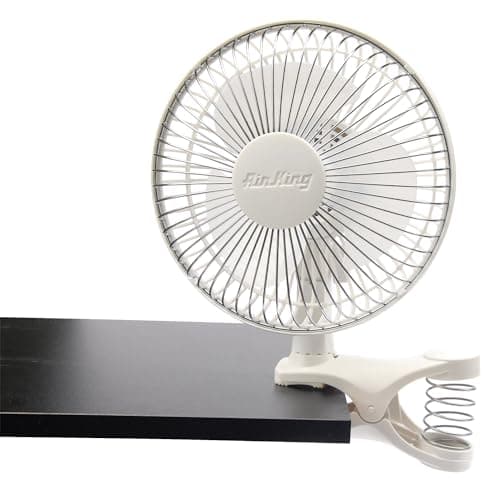
The Air King 9145: 190 CFM on 9–12 W, 34 dBA on low, a spring-loaded non-marking clip and a 6-foot cord, at 2.22 lb. About 53¢ for a month of eight-hour nights. Its whole argument is that it grips a bed frame, shelf edge or bench where nothing else fits.
Fan & Frost earns a commission when you buy through our links, at no cost to you. It never changes a ranking, and we say so when the right answer is the cheaper unit or nothing at all. Full disclosure · How we pick.
At a glance
The picks, ranked
Tap any row to jump to the full reasoning. Prices are live from Amazon where we have them, and read “check price” where we don’t — never a number we cannot verify today.
| # | Product | Best for | Price |
|---|---|---|---|
| 1 | Best overall Air King 6" Commercial Grade Clip-On Fan 190 CFM on 12 W with 34 dBA published — the only clip-on we found that publishes airflow, wattage and noise together. | A bunk bed, a shelf edge, a workbench or a dorm loft | |
| 2 | 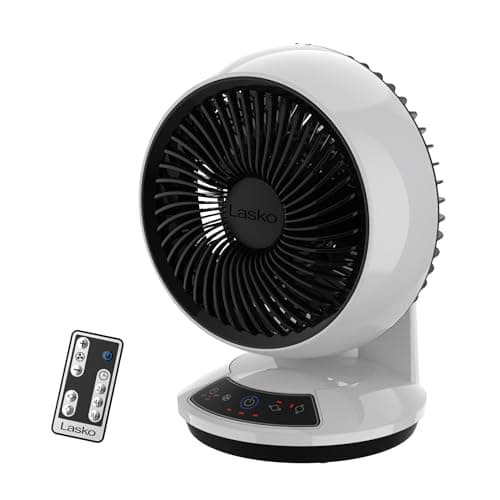 If you have a surface after all Lasko Whirlwind Tilt 12" Table Fan More air and a wall-mount option, at 18-32 W — the sensible choice whenever a base will actually fit. | A desk or nightstand with room for a base | |
| 3 | 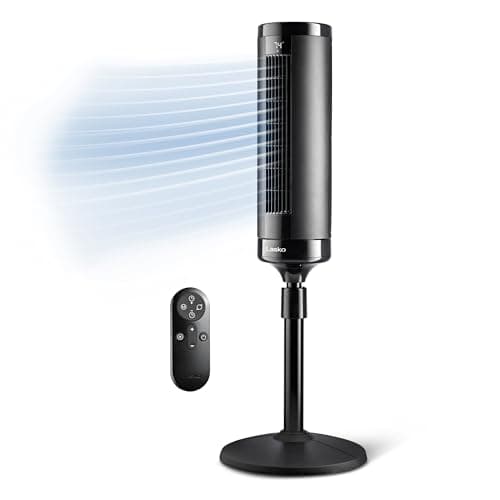 If it is for sleeping and there is floor space Lasko EcoQuiet 42" DC Tower Fan 23 dBA and 2.9 W on low with twelve speeds — quieter and cheaper than any clip-on, if the floor is free. | A bedroom where a small fan is not really the constraint | |
| — | 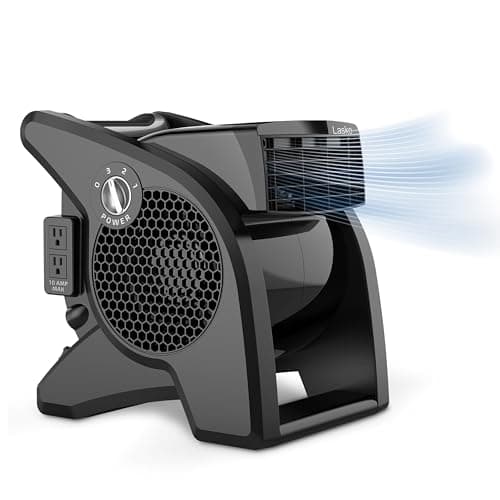 The one to skip Lasko Max Performance 15" Air Mover 178 W of directed blast that no clip will safely hold, and fifteen times the power for a personal cooling job. | A workshop floor, not clamped to anything |
Clip-on fans are the answer to a mounting problem, not an airflow problem. Nobody chooses a 6-inch blade for its performance — they choose it because a bunk rail, a stroller bar, a shelf edge or a crowded workbench has no room for anything with a base.
Why it works
A small fan close beats a big fan far
The reason a 12 W fan is enough is the same reason a desk fan works: cooling happens at your skin, and airflow spreads and slows as it travels. A fan two feet from your face on its lowest setting delivers more air velocity where it matters than a much larger fan across the room.
A clip-on takes that further, because clipping puts it closer still and aims it precisely. Which is why the wattage looks implausible until you try it.
| Approach | Watts | Noise | 30 × 8 hrs |
|---|---|---|---|
| Clip-on at 1–2 ft, low | 9 W | 34 dBA | 40¢ |
| Clip-on at 1–2 ft, high | 12 W | 37 dBA | 53¢ |
| 12-inch table fan, low | 18 W | 39 dBA | 79¢ |
| DC tower across the room, high | 19 W | 46 dBA | 84¢ |
| 20-inch box fan, high | 102 W | Not published | $4.49 |
Wattages and dBA from manufacturer product pages; costs are our arithmetic at 18.34¢/kWh.
Where it wins
The five places a clip beats a base
- Bunk beds and loft beds. The upper bunk is the hottest place in the room and has no floor beside it. A clip on the rail is the only fan that reaches it.
- Dorm rooms. Lofted beds, no floor space, and a shared 15-amp circuit that a 12 W fan does not trouble. The dorm page covers the circuit constraint.
- Workbenches and garages. Clipped to a shelf above the bench, aimed down at the work, taking no bench space.
- Kitchens. Clipped high and aimed at the cook. An oven is a substantial heat source — ENERGY STAR adds 4,000 BTU for a kitchen — and the person standing at it is the one who needs air.
- Anywhere a base gets knocked over. A clamped fan cannot be tipped by a pet or a passing elbow.
Say the unwelcome thing
Do not clip a fan to a crib, a bassinet or anything a child can reach.
This is the one genuinely unsafe use of a clip-on fan and it is heavily marketed — stroller fans and crib fans are a whole product category.
A clipped fan is a weight on a rail with a cord attached, and both the fan and the cord are within reach. Spring clips loosen, rails are not designed for the load, and a 6-foot cord near a crib is a strangulation hazard regardless of how the fan performs.
If a baby’s room is too warm, move air in the room rather than at the child: a fan across the room on a low setting, or a ceiling fan. The nursery page works through it properly, including why aiming any fan directly at an infant is the wrong approach.
Buying
What to check
- Clip opening and grip. The specification nobody publishes properly. A clip that opens 1.5 inches will not hold a 2-inch bunk rail. Measure what you are clamping to.
- Non-marking pads. The Air King specifies its clip “grips tightly without marking surfaces”, which matters on a painted rail or a rented headboard.
- A published dBA figure. Rare, and worth prioritizing — a fan this close to your head is one where a real number beats “whisper quiet”.
- Cord length and route. Six feet sounds like plenty until the fan is clipped to a loft rail and the outlet is at floor level. Never solve that with an extension lead across a walkway.
- Tilt. More useful than oscillation at close range. You want to aim it once and leave it, because a moving airstream is harder to sleep through than a steady one.
And if it turns out you do have a surface, the 12-inch table fan moves more air for a couple of dollars more a month, and wall-mounts if you want the surface back.
In full
Every pick, and what is wrong with it
Published specifications only, each linked to the page it came from. Where a manufacturer publishes nothing, the row says so — we do not fill blanks in.
1. Best overall
Air King 6" Commercial Grade Clip-On Fan
Air King · model 9145
190 CFM on 12 W with 34 dBA published — the only clip-on we found that publishes airflow, wattage and noise together.
9–12 W across two speeds, and up to 190 CFM. That combination is about 16 CFM per watt, which is genuinely good for a small fan — small blades usually pay a heavy efficiency penalty for having to spin fast.
34 dBA on low, 37 on high, published. The narrow gap is the useful part: on most fans the jump from low to high is large and unpleasant, and here both settings are quiet enough to sleep beside. For comparison, a 12-inch table fan publishes 39 dBA on low and 55 on high.
The spring-loaded non-marking clip is the actual product. It grips a bunk rail, a shelf edge, a headboard or a bench, which means the fan occupies no surface at all — and in the places people buy these for, surface is exactly what has run out.
2.22 lb, a 6-foot 3-conductor cord, ETL listed and OSHA compliant. About 53¢ for a month of eight-hour nights at 18.34¢/kWh. 1-year warranty.
What’s wrong with it
Two speeds only, and Air King does not publish a blade size. A 6-inch blade also means it is a personal fan: aimed at one person from close range, and useless as a room fan.
Running cost — 9145
| Nameplate power | 9 W – 12 W | manufacturer's published figure |
|---|---|---|
| Energy, 8-hour night | 0.10 kWh | 12 ÷ 1000 × 8 |
| Cost per hour | 0.2¢ | at 18.34¢/kWh |
| Cost per 8-hour night | 1.8¢ | on the highest speed |
| Cost per 30 nights | 53¢ | 2.9 kWh |
| Same month, lowest speed | 40¢ | at 9 W |
Rate: 18.34¢/kWh, the US average residential price for June 2026 (EIA Electric Power Monthly, Table 5.3). Yours will differ — swap it in: (watts ÷ 1000) × hours × your rate.
| Power | 9 W - 12 W (0.1-0.2 A at 120 V) |
|---|---|
| Air delivery | Up to 190 CFM |
| Noise | 34 dBA low, 37 dBA high |
| Speeds | 2 |
| Mounting | Spring-loaded clip, non-marking |
| Dimensions | 10.38 H x 6.25 L x 8.13 W in |
| Weight | 2.22 lb |
| Cord | 6 ft, 3-conductor |
| Listing | ETL listed, OSHA compliant |
| Warranty | 1 year |
Every figure above is from Air King product page, 9145 (via Lasko). Blanks are shown as “not published” rather than filled in.
2. If you have a surface after all
Lasko Whirlwind Tilt 12" Table Fan
Lasko · model A12107
More air and a wall-mount option, at 18-32 W — the sensible choice whenever a base will actually fit.
18–32 W, 39–55 dBA, 50 ft air distance, and a tilting head. It moves more air than the clip-on and covers a wider arc.
The reason it is second here is the reason people search for clip-on fans at all: it needs a surface. At 11.4 inches wide it takes real estate a bunk rail or a crowded bench does not have.
It does wall-mount, which solves the same problem more permanently — worth considering if the fan is staying in one place. The desk fan comparison covers it fully.
What’s wrong with it
39 dBA on low against the clip-on's 34, and it needs somewhere to stand. The wall-mount hardware is not included, so mounting is a separate errand.
Running cost — A12107
| Nameplate power | 18 W – 32 W | manufacturer's published figure |
|---|---|---|
| Energy, 8-hour night | 0.26 kWh | 32 ÷ 1000 × 8 |
| Cost per hour | 0.6¢ | at 18.34¢/kWh |
| Cost per 8-hour night | 4.7¢ | on the highest speed |
| Cost per 30 nights | $1.41 | 7.7 kWh |
| Same month, lowest speed | 79¢ | at 18 W |
Rate: 18.34¢/kWh, the US average residential price for June 2026 (EIA Electric Power Monthly, Table 5.3). Yours will differ — swap it in: (watts ÷ 1000) × hours × your rate.
| Power | 18 W - 32 W (0.24-0.5 A at 120 V) |
|---|---|
| Noise | 39 dBA low, 55 dBA high |
| Air distance | 50 ft |
| Speeds | 3 |
| Dimensions | 11.19 H x 11.4 W x 6.2 D in |
| Weight | 2.78 lb |
| Mounting | Wall-mountable (hardware not included) |
| Air delivery (CFM) | Not published |
| Warranty | 1 year |
Every figure above is from Lasko product page, A12107. Blanks are shown as “not published” rather than filled in.
3. If it is for sleeping and there is floor space
Lasko EcoQuiet 42" DC Tower Fan
Lasko · model T42710
23 dBA and 2.9 W on low with twelve speeds — quieter and cheaper than any clip-on, if the floor is free.
Worth stating because a lot of clip-on searches are really “quiet fan for a small bedroom” searches.
23 dBA on low against the clip-on’s 34, and 2.9 W against 9 — 13¢ a month against 53¢. Twelve speeds rather than two means you can find the exact setting that is enough.
If the room has floor space, this wins on every measure. If the reason you are here is that it does not, the clip-on is the answer.
What’s wrong with it
41.6 inches tall and 7.8 lb, so it needs floor space and does not attach to anything. In a bunk or a loft bed it is simply not an option.
Running cost — T42710
| Nameplate power | 2.9 W – 19 W | manufacturer's published figure |
|---|---|---|
| Energy, 8-hour night | 0.15 kWh | 19 ÷ 1000 × 8 |
| Cost per hour | 0.3¢ | at 18.34¢/kWh |
| Cost per 8-hour night | 2.8¢ | on the highest speed |
| Cost per 30 nights | 84¢ | 4.6 kWh |
| Same month, lowest speed | 13¢ | at 2.9 W |
Rate: 18.34¢/kWh, the US average residential price for June 2026 (EIA Electric Power Monthly, Table 5.3). Yours will differ — swap it in: (watts ÷ 1000) × hours × your rate.
| Power | 2.9 W - 19 W (0.06-0.303 A at 120 V) |
|---|---|
| Noise | 23 dBA low, 46 dBA high |
| Speeds | 12 |
| Height | 41.6 in |
| Footprint | 12.8 x 12.8 in |
| Weight | 7.8 lb |
| Timer | 8 hours |
| Air delivery (CFM) | Not published |
| Warranty | 2 years |
Every figure above is from Lasko product page, T42710. Blanks are shown as “not published” rather than filled in.
Skip this one
Lasko Max Performance 15" Air Mover
Lasko · model U15720
178 W of directed blast that no clip will safely hold, and fifteen times the power for a personal cooling job.
Air movers get recommended for workbenches because they are powerful and they pivot. At close range that is the problem rather than the point.
160–178 W is roughly fifteen times the clip-on for cooling one person — $7.83 a month against 53¢. It is also loud by design and produces a narrow jet rather than a comfortable spread.
And 12.55 lb is far past what a spring clip should hold above anyone. Its two accessory outlets and 9.5 ft cord make it a good garage tool, standing on the floor.
What’s wrong with it
160-178 W and 12.55 lb. It has a pivoting head and gets suggested as a bench fan, but nothing about it is designed to clamp, and a narrow high-velocity jet is wrong at close range anyway.
Running cost — U15720
| Nameplate power | 160 W – 178 W | manufacturer's published figure |
|---|---|---|
| Energy, 8-hour night | 1.42 kWh | 178 ÷ 1000 × 8 |
| Cost per hour | 3.3¢ | at 18.34¢/kWh |
| Cost per 8-hour night | 26¢ | on the highest speed |
| Cost per 30 nights | $7.83 | 42.7 kWh |
| Same month, lowest speed | $7.04 | at 160 W |
Rate: 18.34¢/kWh, the US average residential price for June 2026 (EIA Electric Power Monthly, Table 5.3). Yours will differ — swap it in: (watts ÷ 1000) × hours × your rate.
| Power | 160 W - 178 W (1.35-1.53 A at 120 V) |
|---|---|
| Speeds | 3 |
| Dimensions | 14.5 H x 14.0 D x 11.5 W in |
| Weight | 12.55 lb |
| Extras | Two 120 V accessory outlets, 9.5 ft cord, pivoting head |
| Air delivery (CFM) | Not published |
| Warranty | 1 year |
Every figure above is from Lasko product page, U15720. Blanks are shown as “not published” rather than filled in.
We are not linking a buy button for this one. If you want to look at it anyway, it is easy enough to find — but we would rather send you to something that fits your room.
Questions people actually ask
Frequently asked
What is the best clip-on fan?
The Air King 9145 on published specifications: up to 190 CFM on 9 to 12 W, 34 dBA on low and 37 on high, a spring-loaded non-marking clip and a 6-foot cord at 2.22 lb. It is the only clip-on we found publishing airflow, wattage and noise together.
Are clip-on fans powerful enough?
For one person at close range, yes. Cooling happens at your skin and airflow slows as it travels, so a 190 CFM fan clipped a foot or two away delivers more velocity where it matters than a much larger fan across the room. As a room fan it is not enough.
How much electricity does a clip-on fan use?
Around 9 to 12 W. At 18.34¢/kWh that is roughly 1.8¢ for an eight-hour night, or 53¢ across thirty of them — about a tenth of a 20-inch box fan.
Can I clip a fan to a crib?
No. A clipped fan is a weight on a rail with a cord attached, both within a child's reach; spring clips loosen and a 6-foot cord near a crib is a strangulation hazard. Move air in the room instead of aiming anything at the child. Cooling a nursery safely.
Are clip-on fans good for bunk beds?
It is their best use. The upper bunk is the warmest part of the room and has no floor space beside it, so a fan clamped to the rail is often the only one that reaches. Check the clip opening against your rail thickness before buying.
Clip-on fan or desk fan?
A desk fan if you have a surface — it moves more air for a few watts more, and many wall-mount. A clip-on when surface is exactly what has run out: bunk rails, shelf edges, crowded workbenches, lofted dorm beds. Desk fans compared.
Sources
Where these numbers came from
Read next
Where to go from here
Back to Fans, or read how we pick.