Head to head
Midea vs TCL 5,000 BTU window air conditioner
The two cheapest certified window units on this site, at the size most people actually need. The certified numbers are close but not tied.
By Sawyer V. · Published
The short answer
The Midea is the better unit and roughly pays back its price premium — CEER 14.4 and 260.4 kWh a year against CEER 13.7 and 273.7 kWh, at 30.2 lb against 41.9, and Midea states no support bracket is required. Buy the TCL if you want the lowest price today and the 11.7 lb and 13 kWh a year do not matter to you.
Fan & Frost earns a commission when you buy through our links, at no cost to you. It never changes a ranking, and we say so when the right answer is the cheaper unit or nothing at all. Full disclosure · How we pick.
At a glance
The picks, ranked
Tap any row to jump to the full reasoning. Prices are live from Amazon where we have them, and read “check price” where we don’t — never a number we cannot verify today.
| # | Product | Best for | Price |
|---|---|---|---|
| 1 | 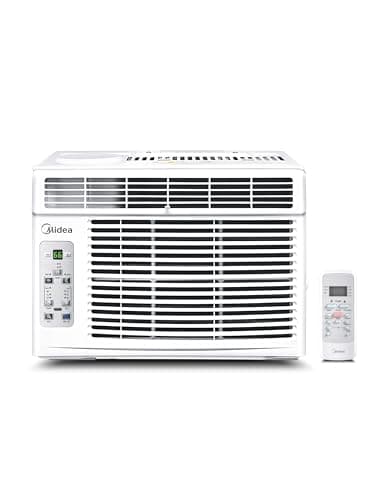 The Midea case Midea Window Air Conditioner, 5,000 BTU CEER 14.4 on 260.4 kWh a year, 30.2 lb, and Midea states no support bracket is required — the lightest certified 5,000 BTU unit we hold data for. | A bedroom or small office up to about 150 sq ft, especially on an upper floor | |
| 2 | 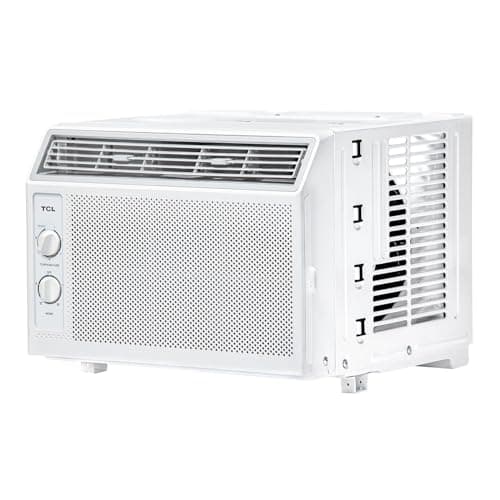 The TCL case TCL Window Air Conditioner, 5,000 BTU CEER 13.7 on 273.7 kWh a year, at the lowest price of any certified window unit here. The same 5,000 BTU, the same refrigerant, the same compressor type. | A ground-floor room where the lowest purchase price is the deciding factor |
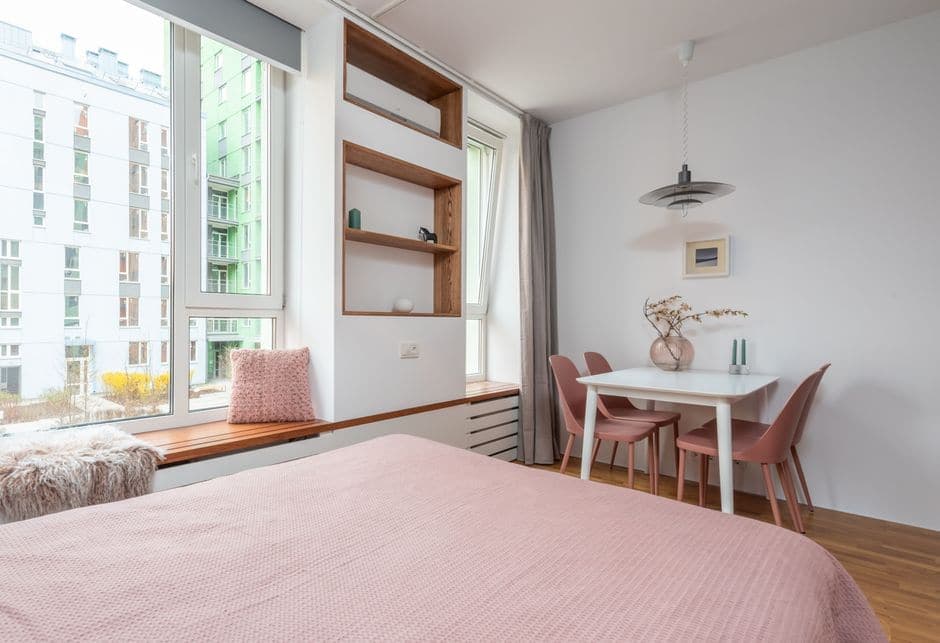
5,000 BTU is the size most small bedrooms actually need, and it is the capacity where the certified field is thinnest and least flattering. These are the two units at it that we hold certified data for.
Head to head
Certified figures, side by side
| Midea MAW05R1VWWT | TCL W5WC72 | |
|---|---|---|
| Cooling capacity | 5,000 BTU/h | 5,000 BTU/h |
| CEER | 14.4 | 13.7 |
| Annual energy use | 260.4 kWh/yr | 273.7 kWh/yr |
| Annual running cost | $48 | $50 |
| vs federal standard | 31% less | 25% less |
| Weight | 30.2 lb | 41.9 lb |
| Depth | 13.3 in | 15.5 in |
| Support bracket | Not required | Not stated |
| Compressor | Variable speed | Variable speed |
| Refrigerant | R-32 | R-32 |
| ENERGY STAR | Certified, not Most Efficient | Certified, not Most Efficient |
Capacity, CEER and annual kWh from the ENERGY STAR Certified Room Air Conditioners dataset; running cost is our arithmetic at 18.34¢/kWh. Prices checked 11 October 2026: the Midea was $157.99 and the TCL $139.70. The buttons above carry the live price and the date.
The decider
Weight, not efficiency, is the real difference
The efficiency gap is genuine but small: about $2.44 a year, or roughly the purchase difference back over a decade. Nobody should choose between these on electricity.
11.7 lb is the difference you will actually notice. 30.2 lb goes into a window sash with one person and no bracket, which Midea states explicitly. 41.9 lb is where a support bracket stops being optional in practice even when the manufacturer does not demand one, and brackets cost money and need drilling.
Our analysis of the certified field found that bracket requirement does not track weight the way you would expect — it tracks mounting design instead. So read what each maker states rather than assuming from the pounds. Support brackets, and when you need one.
This one is not a DIY job
Do not size up to get a better CEER. Certified efficiency does not improve with capacity in this field — it holds around 16.0 up to 14,000 BTU and then falls to 12.7 at 24,000. An oversized unit short-cycles, removes less humidity and costs more to buy and run. Size to the room. How to size it properly.
Which one
How to choose
- An upper-floor window, or you are installing alone: the Midea. 30.2 lb and a stated no-bracket requirement.
- Lowest price today: the TCL, by about $18 at the prices we checked.
- A shallow sill or a storm window: the Midea, at 13.3 inches deep against 15.5.
- Lowest lifetime cost: close enough to call a tie. The Midea’s energy saving roughly cancels its price premium over ten years.
Say the unwelcome thing
Do not expect a Most Efficient badge at this capacity.
Zero of the 13 certified sub-6,000 BTU room air conditioners carry the ENERGY STAR Most Efficient designation. The label is scored relative to capacity class and this class simply does not reach it, so its absence here is not a mark against either unit.
The other thing worth knowing about this end of the market: five 5,000 BTU records across three brands share identical certified specifications — the same chassis under different labels. Brand is a weak signal in room air conditioners. How weak, with the numbers.
In full
Every pick, and what is wrong with it
Published specifications only, each linked to the page it came from. Where a manufacturer publishes nothing, the row says so — we do not fill blanks in.
1. The Midea case
Midea Window Air Conditioner, 5,000 BTU
Midea · model MAW05R1VWWT-T
CEER 14.4 on 260.4 kWh a year, 30.2 lb, and Midea states no support bracket is required — the lightest certified 5,000 BTU unit we hold data for.
CEER 14.4 and 260.4 kWh a year, certified — about $48 a year of electricity at 18.34¢/kWh. Midea states that is 31 per cent less energy than the federal standard requires.
30.2 lb is the specification that matters more than people expect. An 11.7 lb difference is the gap between a unit one person can lift into a window and one that wants two, and Midea explicitly states a support bracket is not required. On a second-floor sash that is a real saving in both money and risk.
Variable-speed compressor and R-32 refrigerant. Both units share those, so neither is a differentiator here — and the whole certified room AC field is now variable-speed. Why that is no longer a selling point.
12.1 H x 16.0 W x 13.3 D inches. The 13.3-inch depth is 2.2 inches shallower than the TCL, which matters on a sill with a storm window or a deep trim.
The honest limit: it is certified but not on the Most Efficient list, and nothing at this capacity is. Zero of the 13 certified sub-6,000 BTU units carry that badge.
What’s wrong with it
Costs more than the TCL, and at CEER 14.4 it is still not on the ENERGY STAR Most Efficient list. No 5,000 BTU unit is.
Running cost — MAW05R1VWWT-T
| Annual energy use | 260.4 kWh | ENERGY STAR certified figure |
|---|---|---|
| Annual cost | $48 | 260.4 × 18.34¢/kWh |
| Per cooling month | $12 | spread over a four-month season |
The annual figure is the certified value from the ENERGY STAR Certified Room Air Conditioners dataset, which models a standard cooling season rather than your actual summer. It is more useful than a nameplate wattage here, because a variable-speed compressor spends most of its life well below nameplate.
Rate: 18.34¢/kWh, the US average residential price for June 2026 (EIA Electric Power Monthly, Table 5.3). Yours will differ — swap it in: (watts ÷ 1000) × hours × your rate.
| Cooling capacity | 5,000 BTU/h |
|---|---|
| CEER | 14.4 |
| Annual energy use | 260.4 kWh/yr |
| vs federal standard | 31% less energy |
| Dimensions | 12.1 H x 16.0 W x 13.3 D in |
| Weight | 30.2 lb |
| Installation | Does not straddle the windowsill |
| Support bracket | Not required |
| Compressor | Variable speed |
| Refrigerant | R-32 |
| ENERGY STAR | Certified (not on the Most Efficient list) |
Every figure above is from ENERGY STAR Certified Room Air Conditioners dataset. Blanks are shown as “not published” rather than filled in.
2. The TCL case
TCL Window Air Conditioner, 5,000 BTU
TCL · model W5WC72
CEER 13.7 on 273.7 kWh a year, at the lowest price of any certified window unit here. The same 5,000 BTU, the same refrigerant, the same compressor type.
CEER 13.7 on 273.7 kWh a year, certified, which is about $50 a year to run. TCL states that is 25 per cent less energy than the federal standard — a smaller margin than Midea claims, from the same test programme.
What you are buying is the price. The cooling is identical on paper: 5,000 BTU/h, variable-speed compressor, R-32 refrigerant. For a room that needs 5,000 BTU, this unit does the job the Midea does.
41.9 lb and 15.5 inches deep. This is the real cost. Nearly 42 lb in a window sash is at the point where most people want a second pair of hands and a bracket, and TCL does not state that one is unnecessary the way Midea does.
The efficiency gap in money: $50 against $48 a year, so about $2.44 a year. Over a ten-year life that is roughly $24 — which is close to the purchase difference, so the two are near enough a wash on lifetime cost.
What’s wrong with it
41.9 lb — 39 per cent heavier than the Midea — a 15.5-inch depth, and 13.3 kWh a year more electricity for the same cooling.
Running cost — W5WC72
| Annual energy use | 273.7 kWh | ENERGY STAR certified figure |
|---|---|---|
| Annual cost | $50 | 273.7 × 18.34¢/kWh |
| Per cooling month | $13 | spread over a four-month season |
The annual figure is the certified value from the ENERGY STAR Certified Room Air Conditioners dataset, which models a standard cooling season rather than your actual summer. It is more useful than a nameplate wattage here, because a variable-speed compressor spends most of its life well below nameplate.
Rate: 18.34¢/kWh, the US average residential price for June 2026 (EIA Electric Power Monthly, Table 5.3). Yours will differ — swap it in: (watts ÷ 1000) × hours × your rate.
| Cooling capacity | 5,000 BTU/h |
|---|---|
| CEER | 13.7 |
| Annual energy use | 273.7 kWh/yr |
| vs federal standard | 25% less energy |
| Dimensions | 12.5 H x 16.0 W x 15.5 D in |
| Weight | 41.9 lb |
| Compressor | Variable speed |
| Refrigerant | R-32 |
| ENERGY STAR | Certified (not on the Most Efficient list) |
Every figure above is from ENERGY STAR Certified Room Air Conditioners dataset. Blanks are shown as “not published” rather than filled in.
Questions people actually ask
Frequently asked
Is the Midea or the TCL 5,000 BTU air conditioner better?
The Midea, on the certified numbers: CEER 14.4 against 13.7 and 260.4 kWh a year against 273.7, at 30.2 lb against 41.9 lb with no support bracket required. The TCL is cheaper to buy and does the same 5,000 BTU of cooling.
How much does a 5,000 BTU window air conditioner cost to run?
About $48 to $50 a year at 18.34¢/kWh, based on the certified annual energy figures of 260.4 and 273.7 kWh. The gap between these two units is roughly $2.44 a year.
Do I need a support bracket for a 5,000 BTU air conditioner?
Midea states one is not required for its 30.2 lb unit. TCL does not make that statement for its 41.9 lb one. Our analysis of the certified field found bracket requirement tracks mounting design rather than weight, so read what the specific manufacturer states instead of judging by the pounds. Support brackets explained.
Why is neither of these ENERGY STAR Most Efficient?
Because nothing at this capacity is. Zero of the 13 certified sub-6,000 BTU room air conditioners carry the Most Efficient designation — the criteria are scored relative to capacity class and this class does not reach the threshold. Its absence is not a mark against either unit. What the Most Efficient list means.
Is a 5,000 BTU air conditioner big enough?
For roughly 100 to 150 sq ft — a small bedroom or office — yes. Oversizing is worse than undersizing: an oversized unit short-cycles, removes less humidity and costs more to buy and run. ENERGY STAR's own guidance is explicit that a bigger unit does not provide better cooling. Sizing an air conditioner.
Are these the same unit under different brands?
Not these two — their certified figures differ. But it happens constantly in this field: five 5,000 BTU records across three brands share every published specification, and 58 per cent of all certified room air conditioners share their complete spec set with a differently-branded unit. Why brand is a weak signal.
Sources
Where these numbers came from
Read next
Where to go from here
Back to Air Conditioners, or read how we pick.