The picks
The best budget window air conditioners
At this end of the market the purchase prices are within a few dollars of each other and the running costs are not.
By Sawyer V. · Published
The short answer
Buy on certified annual kWh, not on sticker price. Among 5,000 BTU units the certified figures run from 260.4 to 273.7 kWh a year — $48 against $50 at 18.34¢/kWh. Step up to a certified 8,000 BTU at CEER 15 and you get almost double the cooling for 400 kWh. Size the room first; the cheapest adequate unit is the right buy.
Fan & Frost earns a commission when you buy through our links, at no cost to you. It never changes a ranking, and we say so when the right answer is the cheaper unit or nothing at all. Full disclosure · How we pick.
At a glance
The picks, ranked
Tap any row to jump to the full reasoning. Prices are live from Amazon where we have them, and read “check price” where we don’t — never a number we cannot verify today.
| # | Product | Best for | Price |
|---|---|---|---|
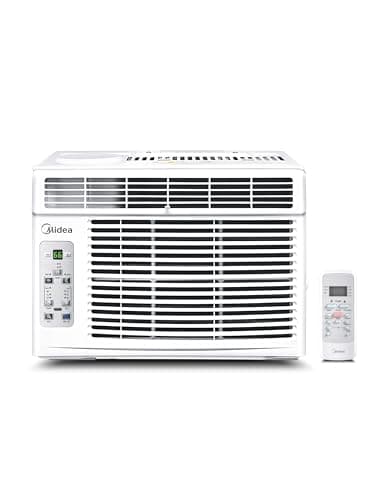
| 1 | Best overall on a budget Midea Window Air Conditioner, 5,000 BTU CEER 14.4 and 260.4 certified kWh a year — the lowest certified consumption of any unit we track, at the bottom of the market. | A bedroom or small room up to about 150 sq ft | |
| 2 | 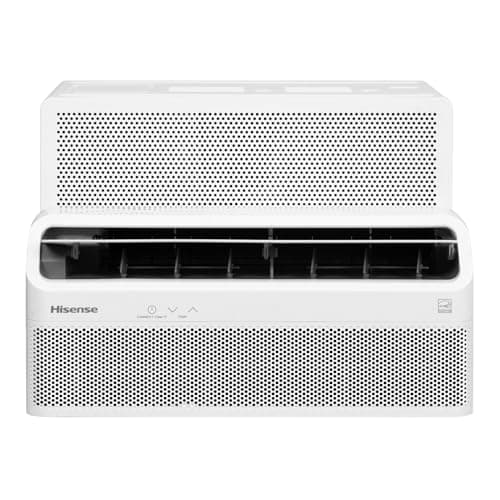 Best value if the room needs 8,000 BTU Hisense Window Air Conditioner, 8,000 BTU CEER 15 and 400 kWh a year — a 60% capacity increase for a 54% increase in certified consumption. | A living room or bedroom up to about 350 sq ft | |
| 3 | 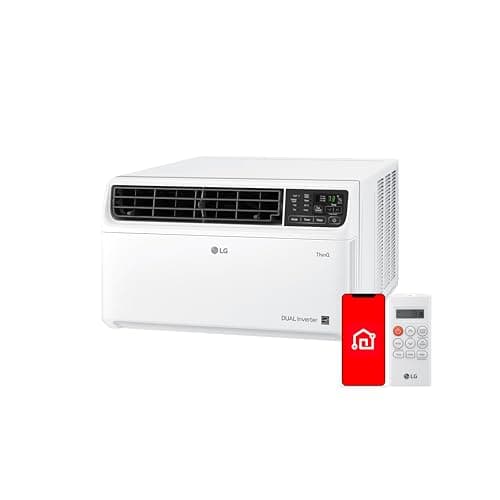 Cheapest inverter LG Dual Inverter Window Air Conditioner, 6,000 BTU Dual-inverter at 290.3 certified kWh a year for 6,000 BTU — variable speed, at the lowest price variable speed comes at. | A bedroom where the compressor cycling is what wakes you | |
| — | 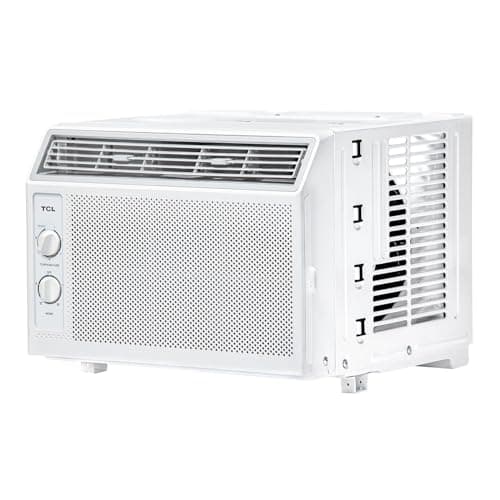 The one to skip TCL Window Air Conditioner, 5,000 BTU CEER 13.7 and 273.7 certified kWh a year — the same 5,000 BTU for measurably more electricity every season. | Nothing the Midea does not do for less electricity |
What to look for
Four things, in this order
- The right capacity. Undersizing means a unit that never reaches the set point and runs continuously; oversizing means short cycles that leave the room cold and damp. The published guidance is in the BTU chart by room size.
- Certified annual kWh. The one number that predicts what the unit costs you after purchase. It is published for every certified model.
- Whether it fits your window. Width, height and whether the sash closes properly on it. A unit that does not seal wastes more than the efficiency difference between any two models here.
- Circuit capacity. Everything at this size runs happily on a standard 15-amp circuit, but check what else is on it — the arithmetic is in will my circuit handle this air conditioner.
This one is not a DIY job
The numbers
Certified consumption across the budget end
| Unit | Capacity | CEER | Annual kWh | A season |
|---|---|---|---|---|
| Midea 5,000 BTU | 5,000 | 14.4 | 260.4 | $48 |
| TCL 5,000 BTU | 5,000 | 13.7 | 273.7 | $50 |
| LG 6,000 BTU inverter | 6,000 | — | 290.3 | $53 |
| Hisense 8,000 BTU | 8,000 | 15 | 400 | $73 |
Read the last column as the difference the purchase decision makes every year for as long as you own the unit. Over ten summers the gap between the most and least efficient 5,000 BTU unit here is $24 — modest, and free to avoid.
False economies
Three ways to spend more by spending less
- Buying too small. A unit that cannot reach the set point runs continuously, costs more than its certified figure implies and never makes the room comfortable.
- Buying a portable instead. Portables are cheaper than they look and cost far more to run; the mechanism is in portable versus window.
- Skipping the install hardware. Side panels that do not seal and a missing support bracket cost capacity every hour the unit runs, and brackets are cheap insurance against a much larger problem.
Say the unwelcome thing
Do not buy the cheapest unit without checking its certified kWh.
At the budget end, models sit within a few dollars of each other on the shelf and diverge on the certified figure that decides what they cost to own. CEER 13.7 and CEER 14.4 look identical in a listing and are not.
Check the annual kWh before the price, then buy the cheapest unit that is efficient and big enough. 260.4 kWh a year at 5,000 BTU is where that lands for a bedroom; CEER 15 at 8,000 BTU is where it lands for a living room.
In full
Every pick, and what is wrong with it
Published specifications only, each linked to the page it came from. Where a manufacturer publishes nothing, the row says so — we do not fill blanks in.
1. Best overall on a budget
Midea Window Air Conditioner, 5,000 BTU
Midea · model MAW05R1VWWT-T
CEER 14.4 and 260.4 certified kWh a year — the lowest certified consumption of any unit we track, at the bottom of the market.
The cheapest way to own real cooling. Certified at CEER 14.4 and 260.4 kWh a year, which is about $48 of electricity for a season at 18.34¢/kWh.
5,000 BTU covers roughly 150 square feet, which is a bedroom or a small study. It is the size most people should buy and the size most people talk themselves out of — the sizing logic is in what size air conditioner you need.
Mechanical simplicity is part of the value here: electronic controls, a washable filter, a remote, and no smart features to stop working in three years.
What’s wrong with it
5,000 BTU is genuinely small, there is no inverter, and it cycles on and off rather than modulating — which is what you hear at night.
Running cost — MAW05R1VWWT-T
| Annual energy use | 260.4 kWh | ENERGY STAR certified figure |
|---|---|---|
| Annual cost | $48 | 260.4 × 18.34¢/kWh |
| Per cooling month | $12 | spread over a four-month season |
The annual figure is the certified value from the ENERGY STAR Certified Room Air Conditioners dataset, which models a standard cooling season rather than your actual summer. It is more useful than a nameplate wattage here, because a variable-speed compressor spends most of its life well below nameplate.
Rate: 18.34¢/kWh, the US average residential price for June 2026 (EIA Electric Power Monthly, Table 5.3). Yours will differ — swap it in: (watts ÷ 1000) × hours × your rate.
| Cooling capacity | 5,000 BTU/h |
|---|---|
| CEER | 14.4 |
| Annual energy use | 260.4 kWh/yr |
| vs federal standard | 31% less energy |
| Dimensions | 12.1 H x 16.0 W x 13.3 D in |
| Weight | 30.2 lb |
| Installation | Does not straddle the windowsill |
| Support bracket | Not required |
| Compressor | Variable speed |
| Refrigerant | R-32 |
| ENERGY STAR | Certified (not on the Most Efficient list) |
Every figure above is from ENERGY STAR Certified Room Air Conditioners dataset. Blanks are shown as “not published” rather than filled in.
2. Best value if the room needs 8,000 BTU
Hisense Window Air Conditioner, 8,000 BTU
Hisense · model AHW0823TW1W
CEER 15 and 400 kWh a year — a 60% capacity increase for a 54% increase in certified consumption.
The step that is usually worth taking. Going from 5,000 to 8,000 BTU raises certified consumption from 260.4 to 400 kWh a year, about $73 — but it raises capacity by 60%, and a unit that can actually reach the set point cycles off instead of running flat out all evening.
CEER 15 is the higher efficiency of the two, which is the usual pattern: the slightly larger unit is often the more efficient one, because efficiency improvements arrive at the volume sizes first.
This is the size to buy if the room is a living room, has more than one exterior wall, or faces west. Undersizing to save on the sticker price is the most expensive mistake available here.
What’s wrong with it
Heavier and physically larger in the window, and overkill in a small bedroom where it will short-cycle.
Running cost — AHW0823TW1W
| Annual energy use | 400 kWh | ENERGY STAR certified figure |
|---|---|---|
| Annual cost | $73 | 400 × 18.34¢/kWh |
| Per cooling month | $18 | spread over a four-month season |
The annual figure is the certified value from the ENERGY STAR Certified Room Air Conditioners dataset, which models a standard cooling season rather than your actual summer. It is more useful than a nameplate wattage here, because a variable-speed compressor spends most of its life well below nameplate.
Rate: 18.34¢/kWh, the US average residential price for June 2026 (EIA Electric Power Monthly, Table 5.3). Yours will differ — swap it in: (watts ÷ 1000) × hours × your rate.
| Cooling capacity | 8,000 BTU/h |
|---|---|
| CEER | 15 |
| Annual energy use | 400 kWh/yr |
| vs federal standard | 38% less energy |
| Dimensions | 13.2 H x 18.5 W x 18.9 D in |
| Weight | 44.5 lb |
| Refrigerant | R-32 |
| Installation | Does not straddle the windowsill |
| Compressor | Variable speed |
| ENERGY STAR | Certified |
Every figure above is from ENERGY STAR Certified Room Air Conditioners dataset. Blanks are shown as “not published” rather than filled in.
3. Cheapest inverter
LG Dual Inverter Window Air Conditioner, 6,000 BTU
LG · model LW6023IVSM
Dual-inverter at 290.3 certified kWh a year for 6,000 BTU — variable speed, at the lowest price variable speed comes at.
An inverter compressor varies its speed rather than switching between off and full, which removes the start-stop pattern that wakes people. It also holds the room closer to the set point.
Certified at 290.3 kWh a year for 6,000 BTU, about $53 a season, with smart control and a washable filter.
It costs more than the fixed-speed units above and it is the one upgrade at this end of the market that changes the experience rather than the numbers — explained in inverter versus fixed speed.
What’s wrong with it
More electronics to fail, a higher purchase price than the fixed-speed units, and 6,000 BTU is an awkward middle size for some rooms.
Running cost — LW6023IVSM
| Annual energy use | 290.3 kWh | ENERGY STAR certified figure |
|---|---|---|
| Annual cost | $53 | 290.3 × 18.34¢/kWh |
| Per cooling month | $13 | spread over a four-month season |
The annual figure is the certified value from the ENERGY STAR Certified Room Air Conditioners dataset, which models a standard cooling season rather than your actual summer. It is more useful than a nameplate wattage here, because a variable-speed compressor spends most of its life well below nameplate.
Rate: 18.34¢/kWh, the US average residential price for June 2026 (EIA Electric Power Monthly, Table 5.3). Yours will differ — swap it in: (watts ÷ 1000) × hours × your rate.
| Cooling capacity | 6,000 BTU/h |
|---|---|
| CEER | 15.5 |
| Annual energy use | 290.3 kWh/yr |
| Weight | 62.0 lb |
| Installation | Does not straddle the windowsill |
| Support bracket | Not required |
| Compressor | Variable speed |
| ENERGY STAR | Certified, and on the Most Efficient list |
Every figure above is from ENERGY STAR Certified Room Air Conditioners dataset. Blanks are shown as “not published” rather than filled in.
Skip this one
TCL Window Air Conditioner, 5,000 BTU
TCL · model W5WC72
CEER 13.7 and 273.7 certified kWh a year — the same 5,000 BTU for measurably more electricity every season.
There is nothing wrong with this unit, and that is the point: it is a perfectly ordinary 5,000 BTU window air conditioner that is certified less efficient than its direct competitor.
CEER 13.7 against 14.4, and 273.7 kWh a year against 260.4. That is $2.44 a season more for the same cooling — small in isolation, and entirely avoidable.
Buy it only if it is meaningfully cheaper on the day and you intend to keep it a season or two. Over a decade the efficiency gap costs more than the price difference usually saves.
What’s wrong with it
The lowest certified efficiency of the units here, with no feature the more efficient unit lacks.
Running cost — W5WC72
| Annual energy use | 273.7 kWh | ENERGY STAR certified figure |
|---|---|---|
| Annual cost | $50 | 273.7 × 18.34¢/kWh |
| Per cooling month | $13 | spread over a four-month season |
The annual figure is the certified value from the ENERGY STAR Certified Room Air Conditioners dataset, which models a standard cooling season rather than your actual summer. It is more useful than a nameplate wattage here, because a variable-speed compressor spends most of its life well below nameplate.
Rate: 18.34¢/kWh, the US average residential price for June 2026 (EIA Electric Power Monthly, Table 5.3). Yours will differ — swap it in: (watts ÷ 1000) × hours × your rate.
| Cooling capacity | 5,000 BTU/h |
|---|---|
| CEER | 13.7 |
| Annual energy use | 273.7 kWh/yr |
| vs federal standard | 25% less energy |
| Dimensions | 12.5 H x 16.0 W x 15.5 D in |
| Weight | 41.9 lb |
| Compressor | Variable speed |
| Refrigerant | R-32 |
| ENERGY STAR | Certified (not on the Most Efficient list) |
Every figure above is from ENERGY STAR Certified Room Air Conditioners dataset. Blanks are shown as “not published” rather than filled in.
We are not linking a buy button for this one. If you want to look at it anyway, it is easy enough to find — but we would rather send you to something that fits your room.
Questions people actually ask
Frequently asked
What is the cheapest window air conditioner to run?
Among the units we track, a certified 5,000 BTU model at 260.4 kWh a year — about $48 of electricity for a season at the national average rate. Cheapest to run and cheapest to buy are not always the same model.
Is a 5,000 BTU air conditioner enough?
For a room up to roughly 150 square feet, yes. Beyond that it will run continuously without reaching the set point, which costs more than buying the larger unit would have. Check the room area before the price. BTU by room size.
Are budget window air conditioners noisy?
Fixed-speed units cycle between off and full output, and the start is what people notice at night. An inverter model varies compressor speed instead, which is the one upgrade at this end of the market that changes the experience. Why they are loud.
Does CEER really matter on a small unit?
It matters in proportion to use. The gap between CEER 13.7 and 14.4 on a 5,000 BTU unit is about $2.50 a season — small, but free to avoid, and it compounds over the eight to ten years you are likely to own it.
Should I buy a cheap portable instead?
No, if a window is available. Portables lose capacity to duct heat gain and infiltration, which is why federal SACC ratings are so much lower than the box figure, and they cost substantially more to run for the same cooling. Portable vs window.
Sources
Where these numbers came from
Read next
Where to go from here
Back to Air Conditioners, or read how we pick.