Guide and picks
What does it cost to run a portable air conditioner?
About 24 cents an hour for a big one. Here is the arithmetic behind that, worked through on a real unit with a published wattage — and why a window unit costs less than half as much.
By Sawyer V. · Published
The short answer
Take the nameplate wattage, divide by 1,000, multiply by hours, multiply by your rate. A 1,300 W portable at 18.34¢/kWh is 24¢ an hour, $1.91 for an eight-hour night, and about $57 over thirty nights. Running it 24/7 for a month is roughly $174.
Fan & Frost earns a commission when you buy through our links, at no cost to you. It never changes a ranking, and we say so when the right answer is the cheaper unit or nothing at all. Full disclosure · How we pick.
At a glance
The picks, ranked
Tap any row to jump to the full reasoning. Prices are live from Amazon where we have them, and read “check price” where we don’t — never a number we cannot verify today.
| # | Product | Best for | Price |
|---|---|---|---|
| 1 | The unit this page is calculated on Whynter ARC-14S Dual Hose Portable Air Conditioner The only portable here that publishes its power draw, which is why we can tell you what it costs at all. | A 400 sq ft room, where you want the wattage published | |
| 2 | 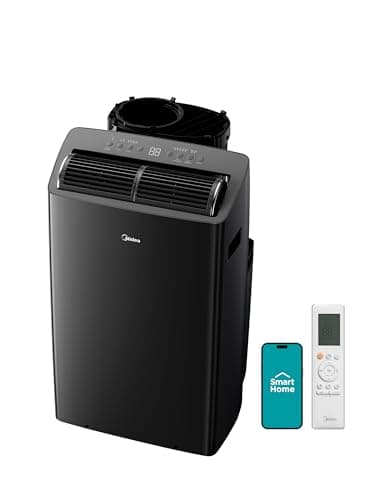 Better capacity, unknown cost Midea Duo Smart Inverter Portable Air Conditioner 12,000 BTU SACC and 43 dBA, from a manufacturer that will not tell you what it draws. | A larger room, if you can accept not knowing the running cost | |
| 3 | What costs a fraction as much GE Profile ClearView Window Air Conditioner, 8,000 BTU 375 kWh for an entire year, from a certified figure — roughly what the portable above uses in six weeks of nights. | Anyone with a vertical sash window | |
| — | 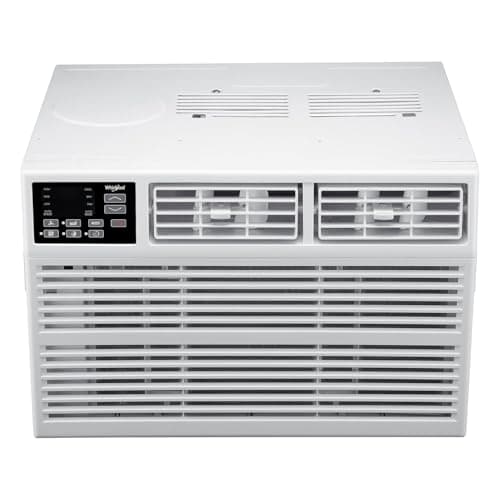 The one to skip on running cost Whirlpool Window Air Conditioner, 24,000 BTU 1,417.3 kWh a year is the highest annual consumption of anything we cover. | Nobody trying to reduce a bill |
Most pages answering this question give you a range — “$30 to $100 a month” — which is technically true and useless, because the range covers every decision you might make. Here is the actual calculation, on an actual unit, with the wattage the manufacturer publishes.
The formula
The arithmetic
(watts ÷ 1000) × hours × your rate per kWh
We use 18.34¢/kWh, the US average residential price for June 2026, from the EIA. Substitute your own — it is on your bill, and US residential rates vary by more than a factor of two, so your answer may be half or double ours.
Worked example
A real unit, start to finish
The Whynter ARC-14S publishes its power draw: 1,300 watts, 11.6 amps at 115 V. That is unusually forthcoming — plenty of portable AC manufacturers publish no wattage at all, including Midea for the Duo. So:
| Nameplate power | 1,300 W | manufacturer's published figure |
|---|---|---|
| Energy per hour | 1.30 kWh | 1300 ÷ 1000 × 1 |
| Cost per hour | 24¢ | at 18.34¢/kWh |
| An 8-hour night | $1.91 | 10.4 kWh |
| 30 × 8-hour nights | $57 | 312 kWh |
| A month running 24/7 | $174 | 949 kWh |
| A four-month season, nights only | $229 | 1,248 kWh |
So: roughly $57 for a summer month of overnight running, or about $174 if you leave it on permanently. Not catastrophic, but it is a real line on a bill, and it is substantially more than the alternatives below.
One important caveat in your favor: 1,300 W is the maximum draw, not the average. The compressor cycles off once the room reaches temperature, and on an inverter unit it modulates down rather than stopping. Real consumption over a night is usually somewhere between half and three-quarters of the figures above, depending on how hot it is outside and how well your room holds cold. We publish the nameplate arithmetic because it is the number we can source; treat it as the ceiling.
Any unit
The table, for whatever you own
Portable air conditioners generally land between 700 W (a small 8,000 BTU unit) and 1,500 W (a large 14,000 BTU one). Find yours on the nameplate and read across.
| Watts | Per hour | Per 8-hour night | 30 nights | Running 24/7, a month |
|---|---|---|---|---|
| 2 W | 0.0¢ | 0.3¢ | 8.8¢ | 27¢ |
| 5 W | 0.1¢ | 0.7¢ | 22¢ | 67¢ |
| 10 W | 0.2¢ | 1.5¢ | 44¢ | $1.34 |
| 15 W | 0.3¢ | 2.2¢ | 66¢ | $2.01 |
| 20 W | 0.4¢ | 2.9¢ | 88¢ | $2.68 |
| 30 W | 0.6¢ | 4.4¢ | $1.32 | $4.02 |
| 50 W | 0.9¢ | 7.3¢ | $2.20 | $6.69 |
| 75 W | 1.4¢ | 11¢ | $3.30 | $10 |
| 100 W | 1.8¢ | 15¢ | $4.40 | $13 |
| 150 W | 2.8¢ | 22¢ | $6.60 | $20 |
| 250 W | 4.6¢ | 37¢ | $11 | $33 |
| 500 W | 9.2¢ | 73¢ | $22 | $67 |
| 750 W | 14¢ | $1.10 | $33 | $100 |
| 1000 W | 18¢ | $1.47 | $44 | $134 |
| 1300 W | 24¢ | $1.91 | $57 | $174 |
| 1500 W | 28¢ | $2.20 | $66 | $201 |
At 18.34¢/kWh. Find your device’s wattage on its nameplate or in its manual, then read across.
The comparison
Where a window unit lands instead
This is the number that should change a purchase decision, and it comes from better data than a nameplate. ENERGY STAR certifies window air conditioners and publishes a modeled annual energy use in kWh for each one — a figure that already accounts for compressor cycling across a standard cooling season, so it is more honest than any nameplate multiplication.
| Unit | Capacity | Annual kWh | Annual cost |
|---|---|---|---|
| Midea U-shaped MAW06V1QWT | 6,000 BTU | 298 | $55 |
| GE Profile PWJV08W | 8,000 BTU | 375 | $69 |
| Midea U-shaped MAW12V1QWT | 12,000 BTU | 600 | $110 |
| GE Profile PWJV14W | 14,000 BTU | 656.3 | $120 |
| Whirlpool WHAW-241IN | 24,000 BTU | 1417.3 | $260 |
kWh figures from the ENERGY STAR Certified Room Air Conditioners dataset; costs are our arithmetic at 18.34¢/kWh.
Read those two blocks against each other. A 14,000 BTU window unit costs about $120 for an entire year. The 14,000 BTU portable above costs $57 for one month of nights at nameplate — and even at half that in practice, the window unit is dramatically cheaper to run.
There is a real physical reason, not just an efficiency-rating difference. A window unit sits in the wall with its hot side outside. A portable sits in the room, radiates duct heat back into the space, and — if it is single-hose — pulls hot outside air in to replace what it exhausted. You are paying to undo part of your own cooling. The full comparison is here.
Say the unwelcome thing
Do not buy a bigger portable to make it cost less.
The intuition is that a bigger unit will cool the room faster and therefore run for less time. In practice an oversized unit reaches the set temperature before it has removed any humidity, shuts off, and leaves the room cold and clammy — then short-cycles, which is both inefficient and hard on the compressor. ENERGY STAR states it directly: an oversized air conditioner “costs more to purchase, wastes energy and does not provide better cooling.”
Size it properly — and remember that for a portable you size from SACC, not the box BTU.
Cutting the number
Five things that actually reduce the bill
- Seal the window kit properly. The supplied foam panel is usually the weakest part of the installation. Every gap is hot air walking straight back in, and on a single-hose unit the negative pressure actively pulls it. Weatherstrip and tape it.
- Shorten and straighten the exhaust hose. The hose is hot and it is inside your room. A long coiled hose is a radiator you are paying to feed.
- Raise the set point. Every degree of set point is real money over a season, and 78°F with a fan running usually feels better than 72°F with still air — because moving air does most of the comfort work for about 19 watts.
- Close the blinds during the day. Free, and it reduces the heat load the unit has to remove at night.
- Use the timer. Cooling an empty room costs full price and delivers nothing.
And the one structural fix that beats all five: if a window unit will physically fit, install one instead. The running-cost gap over a single season is usually larger than the price difference between the two machines.
In full
Every pick, and what is wrong with it
Published specifications only, each linked to the page it came from. Where a manufacturer publishes nothing, the row says so — we do not fill blanks in.
1. The unit this page is calculated on
Whynter ARC-14S Dual Hose Portable Air Conditioner
Whynter · model ARC-14S
The only portable here that publishes its power draw, which is why we can tell you what it costs at all.
1,300 W, 11.6 A at 115 V, published. Every figure on this page derives from that number, and it is unusual — Midea publishes no wattage for the Duo, and most of this category publishes none either.
$1.91 an eight-hour night at nameplate draw, about $57 over thirty of them. Treat that as a ceiling, since the compressor cycles off once the room is at temperature.
What’s wrong with it
1,300 W is a real bill, and its 9,500 BTU SACC against a 14,000 headline means it serves a smaller room than the box implies.
Running cost — ARC-14S
| Nameplate power | 1300 W | manufacturer's published figure |
|---|---|---|
| Energy, 8-hour night | 10.40 kWh | 1300 ÷ 1000 × 8 |
| Cost per hour | 24¢ | at 18.34¢/kWh |
| Cost per 8-hour night | $1.91 | on the highest speed |
| Cost per 30 nights | $57 | 312.0 kWh |
Rate: 18.34¢/kWh, the US average residential price for June 2026 (EIA Electric Power Monthly, Table 5.3). Yours will differ — swap it in: (watts ÷ 1000) × hours × your rate.
| Marketing capacity | 14,000 BTU (ASHRAE-128) |
|---|---|
| DOE-rated capacity | 9,500 BTU SACC |
| Hoses | Dual |
| Power | 1,300 W / 11.6 A at 115 V |
| Noise | Under 51 dBA low, under 56 dBA high |
| Dehumidification | 71 pints/day |
| Refrigerant | R-32 |
| Dimensions | 16 W x 19 D x 35.5 H in |
| Weight | 73 lb |
| Manufacturer coverage claim | 500 sq ft |
| Warranty | 1 year unit, 3 years compressor |
Every figure above is from Whynter product page, ARC-14S. Blanks are shown as “not published” rather than filled in.
2. Better capacity, unknown cost
Midea Duo Smart Inverter Portable Air Conditioner
Midea · model MAP14S1TBL
12,000 BTU SACC and 43 dBA, from a manufacturer that will not tell you what it draws.
On capacity and noise this is the better machine: the smallest SACC haircut we found (14.3% against Whynter’s 32.1%) and 43 dBA published.
But the whole subject of this page is running cost, and Midea does not publish a wattage. We are not going to estimate one. If you want a portable whose cost you can calculate, the Whynter is the one that tells you.
What’s wrong with it
No published wattage at all. For an inverter unit sold on efficiency, that omission is conspicuous — and it means no honest running cost for it exists in public.
Running cost
Midea does not publish a wattage for the MAP14S1TBL, so we cannot calculate what it costs to run. We are not going to estimate one. If Midea publishes a nameplate figure, this block will show the arithmetic.
| Marketing capacity | 14,000 BTU |
|---|---|
| DOE-rated capacity | 12,000 BTU SACC |
| Hoses | Dual |
| Noise | 43 dBA |
| Speeds | 3 |
| Refrigerant | R-32 |
| Dimensions | 19.52 W x 16.73 D x 32.48 H in |
| Weight | 74.96 lb |
| Manufacturer coverage claim | 550 sq ft |
| Power | Not published (115 V stated, no wattage) |
| Warranty | 1 year |
Every figure above is from Midea product page, MAP14S1TBL. Blanks are shown as “not published” rather than filled in.
3. What costs a fraction as much
GE Profile ClearView Window Air Conditioner, 8,000 BTU
GE Profile · model PWJV08W
375 kWh for an entire year, from a certified figure — roughly what the portable above uses in six weeks of nights.
This is the comparison that should change a purchase decision. 375 kWh a year is about $69 at 18.34¢/kWh — and the 1,300 W portable above uses roughly 312 kWh in a single month of overnight running.
The gap is geometric rather than a difference in build quality: a window unit’s hot side is outside, while a portable’s duct radiates back into the room it is cooling.
What’s wrong with it
It occupies the window for the season and needs an opening it fits inside. If your window type or lease rules that out, it is not available to you.
Running cost — PWJV08W
| Annual energy use | 375 kWh | ENERGY STAR certified figure |
|---|---|---|
| Annual cost | $69 | 375 × 18.34¢/kWh |
| Per cooling month | $17 | spread over a four-month season |
The annual figure is the certified value from the ENERGY STAR Certified Room Air Conditioners dataset, which models a standard cooling season rather than your actual summer. It is more useful than a nameplate wattage here, because a variable-speed compressor spends most of its life well below nameplate.
Rate: 18.34¢/kWh, the US average residential price for June 2026 (EIA Electric Power Monthly, Table 5.3). Yours will differ — swap it in: (watts ÷ 1000) × hours × your rate.
| Cooling capacity | 8,000 BTU/h |
|---|---|
| CEER | 16 |
| Annual energy use | 375 kWh/yr |
| vs federal standard | 47% less energy |
| Dimensions | 12.6 H x 18.6 W x 15.3 D in |
| Weight | 46.2 lb |
| Refrigerant | R-32 |
| Installation | Does not straddle the windowsill |
| Support bracket | Required |
| Compressor | Variable speed |
| ENERGY STAR | Certified, and on the Most Efficient list |
Every figure above is from ENERGY STAR Certified Room Air Conditioners dataset. Blanks are shown as “not published” rather than filled in.
Skip this one
Whirlpool Window Air Conditioner, 24,000 BTU
Whirlpool · model WHAW-241IN
1,417.3 kWh a year is the highest annual consumption of anything we cover.
$260 a year, against $69 for the 8,000 BTU unit above. If you are on this page because the bill worried you, this is the shape of purchase that causes it.
The mistake is almost always sizing: 24,000 BTU serves 1,400–1,500 sq ft, so in one room it never runs long enough to dehumidify and cycles instead.
What’s wrong with it
CEER 12.7 — the worst efficiency in our data — at a capacity almost no single room needs, which means it is bought oversized and then short-cycles.
Running cost — WHAW-241IN
| Annual energy use | 1417.3 kWh | ENERGY STAR certified figure |
|---|---|---|
| Annual cost | $260 | 1417.3 × 18.34¢/kWh |
| Per cooling month | $65 | spread over a four-month season |
The annual figure is the certified value from the ENERGY STAR Certified Room Air Conditioners dataset, which models a standard cooling season rather than your actual summer. It is more useful than a nameplate wattage here, because a variable-speed compressor spends most of its life well below nameplate.
Rate: 18.34¢/kWh, the US average residential price for June 2026 (EIA Electric Power Monthly, Table 5.3). Yours will differ — swap it in: (watts ÷ 1000) × hours × your rate.
| Cooling capacity | 24,000 BTU/h |
|---|---|
| CEER | 12.7 |
| Annual energy use | 1,417.3 kWh/yr |
| vs federal standard | 35% less energy |
| Dimensions | 20.7 H x 30.0 W x 28.8 D in |
| Weight | 115.7 lb |
| Refrigerant | R-32 |
| Installation | Straddles the window; support bracket territory |
| ENERGY STAR | Certified |
Every figure above is from ENERGY STAR Certified Room Air Conditioners dataset. Blanks are shown as “not published” rather than filled in.
We are not linking a buy button for this one. If you want to look at it anyway, it is easy enough to find — but we would rather send you to something that fits your room.
Questions people actually ask
Frequently asked
How much does it cost to run a portable air conditioner per hour?
Divide its nameplate wattage by 1,000 and multiply by your electricity rate. A 1,300 W unit at 18.34¢/kWh costs about 24¢ an hour. Smaller 8,000 BTU portables draw nearer 700 to 900 W, so roughly 15¢ an hour.
How much does a portable AC cost per month?
At 8 hours a night for 30 nights, a 1,300 W unit costs about $57 at nameplate draw and 18.34¢/kWh. Running continuously for a month is around $174. Real consumption is usually lower, because the compressor cycles off once the room is at temperature.
Is a portable air conditioner expensive to run compared with a window unit?
Substantially, yes. A certified 14,000 BTU window unit uses 656 kWh for an entire year, about $120. A 14,000 BTU portable at nameplate draw uses more than that in two months of overnight running. The portable's duct sits inside the room and, if single-hose, it also pulls hot outside air in. The full comparison.
Does a portable AC use 1,300 watts constantly?
No. That is the maximum draw. The compressor cycles off once the room reaches the set temperature, and an inverter model modulates down instead of stopping. Actual consumption over a night is typically half to three-quarters of the nameplate figure, depending on outdoor temperature and how well the room holds cold.
Why do some portable air conditioners not publish a wattage?
There is no requirement to put it on the marketing page, and many do not — Midea publishes no wattage for the Duo, for instance. Where a manufacturer does not publish one, we do not compute a running cost and the page says so. The nameplate on the unit itself always carries it.
Is it cheaper to run a fan instead?
Dramatically. A good DC tower fan draws 19 W against 1,300 W, so it costs roughly 68 times less for the same hours. But a fan does not remove heat from the room — it moves air so you feel cooler. Use the fan first and the compressor only when the fan is genuinely not enough. Fan running costs.
Sources
Where these numbers came from
Read next
Where to go from here
Back to Guides & Calculators, or read how we pick.