Guide and picks
Cooling a patio
There is no room to cool. What you are doing outdoors is cooling people, and that changes which machine is right.
By Sawyer V. · Published
The short answer
Outdoors you cannot cool a volume of air, so you cool the people instead. In dry air, misting and evaporative cooling genuinely lower the temperature you feel — the Honeywell CO60PM moves 2,697 CFM on 220 W. In humid air, both stop working and you want airflow only — an outdoor ceiling fan at 422.2 CFM per watt is the most efficient option we have certified data for.
Fan & Frost earns a commission when you buy through our links, at no cost to you. It never changes a ranking, and we say so when the right answer is the cheaper unit or nothing at all. Full disclosure · How we pick.
At a glance
The picks, ranked
Tap any row to jump to the full reasoning. Prices are live from Amazon where we have them, and read “check price” where we don’t — never a number we cannot verify today.
| # | Product | Best for | Price |
|---|---|---|---|
| 1 | Most cooling capacity outdoors Honeywell CO60PM Indoor/Outdoor Evaporative Cooler 2,697 CFM on 220 W with a 30-foot throw and a 15.9 gallon tank — the most air, and real evaporative cooling with it. | A dry-climate patio where you want an actual temperature drop | |
| 2 | 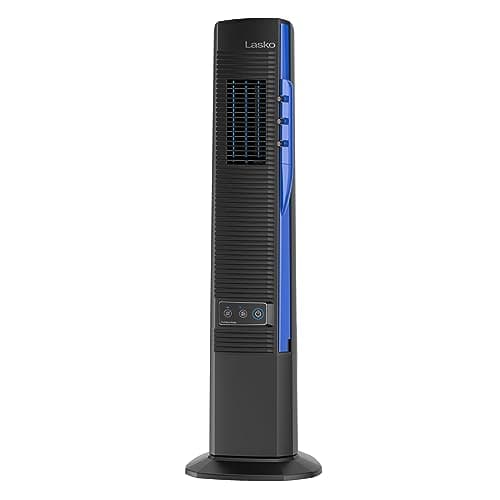 Best misting fan for a seating area Lasko Misto 42" Outdoor Misting Tower Fan 276 CFM on 55-86 W with a standard garden hose connection and an in-line GFCI on a 10-foot cord. | A dry patio where a full evaporative cooler is too much machine | |
| 3 | 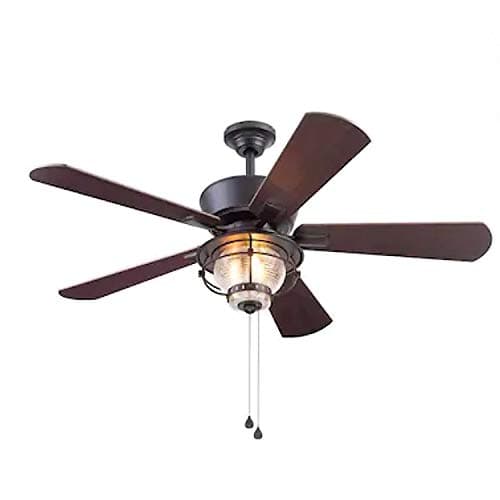 Best for a covered patio, and best in humidity Harbor Breeze Cando 84" Ceiling Fan 422.2 CFM per watt on 30.6 W — the most efficient certified fan at an 84-inch span, and it works regardless of humidity. | A covered patio anywhere, and the only sensible option in humid air | |
| — | 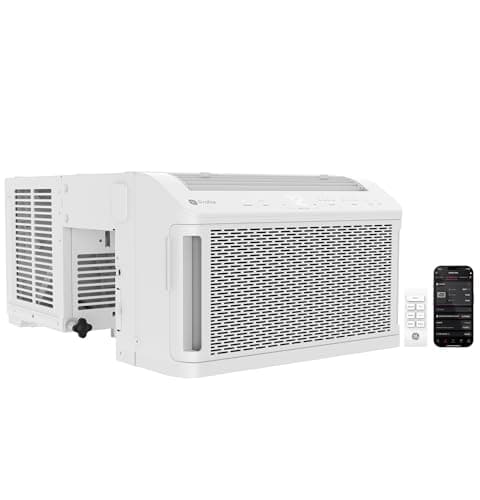 There is no outdoor air conditioner GE Profile ClearView Window Air Conditioner, 8,000 BTU CEER 16 and 375 kWh a year, and completely irrelevant outdoors. Included because people ask. | An enclosed room — which a patio is not |
Everything else on this site is about a room. A patio has no walls and no ceiling, and that single fact rules out an entire category of equipment and changes how you judge the rest.
The premise
You are cooling people, not air
Indoors, cooling means removing heat from a fixed volume of air until the whole room is cooler. Outdoors that volume is the atmosphere, and nothing you can buy will make a dent in it.
So outdoor cooling works by two different mechanisms.
- Evaporative cooling genuinely lowers the temperature of the air passing through the machine. Water absorbs a large amount of heat when it evaporates, and that heat comes out of the air. The effect is real, local, and completely dependent on how dry the air already is.
- Air movement does not change the air temperature at all. It accelerates evaporation of sweat from your skin and speeds convective heat loss from your body. The thermometer reads the same; you feel several degrees cooler.
Which of those to buy is decided almost entirely by your humidity.
The decision
Humidity picks the machine
Evaporative and misting cooling both depend on the air’s remaining capacity to absorb water. In dry air that capacity is large and the temperature drop is substantial. In humid air the capacity is small, so very little water evaporates, and you get almost no cooling — just damp furniture and damp people.
| Option | Airflow | Power | Works in humidity? |
|---|---|---|---|
| Honeywell CO60PM evaporative | 2,697 CFM | 220 W | No |
| Lasko Misto YF300 misting tower | 276 CFM | 55–86 W | No |
| Lasko Misto 7050 misting fan | up to 350 CFM | 72–90 W | No |
| Harbor Breeze Cando 84 in ceiling | 422.2 CFM/W | 30.6 W | Yes |
| Hunter Georgetown 52 in ceiling | 326.3 CFM/W | 20.6 W | Yes |
Manufacturer figures for the evaporative and misting units; ceiling fan figures from the ENERGY STAR Certified Ceiling Fans dataset. Ceiling fan efficiency is CFM per watt, not raw CFM — the two columns are not directly comparable.
Dry climate: take the evaporative or misting option. You get a genuine temperature drop that a fan cannot produce.
Humid climate: take the fan, and do not let anyone sell you a mister. In humid air a misting fan produces damp skin and damp cushions and very little else.
The humidity thresholds are covered properly here.
This one is not a DIY job
Everything outdoors needs a GFCI. You are running mains equipment outside, frequently in contact with water. Ground fault protection is not optional, and it is the reason to notice that both Lasko misting fans ship with an in-line GFCI on the cord.
If you are plugging into an outdoor receptacle, it should be a GFCI receptacle in a weather-rated in-use cover. If it is not, that is the job to do before buying a fan.
Extension leads outdoors should be rated for outdoor use and run where nobody walks. A misting fan on a hose and a cord is two trip hazards crossing a patio.
Shade
Do the shade first, because nothing else competes with it
Direct sun is by far the largest thermal load on a patio, and no machine on this page offsets it.
Standing in direct sun, you are absorbing radiant heat continuously. A fan moving air across you helps with the heat your body is shedding, but it does nothing about the heat arriving. Shade removes the arriving heat entirely, which is why a shaded patio with no equipment at all is more comfortable than a sunlit one with a fan.
Shade also compounds everything else: an evaporative cooler in shade has less radiant load to fight, and a ceiling fan needs something to hang from anyway.
Sequence: shade, then airflow, then evaporative if your climate supports it. Buying in the other order is the usual mistake.
Layout
Placement outdoors is different
Indoors, air recirculates — down through the fan, across the floor, up the walls, back. Outdoors nothing comes back. What you get is the column of air directly under or in front of the machine, spreading and weakening as it travels.
- Aim across the seating, not at one chair. Coverage is roughly the footprint the airflow reaches, and people sitting outside it feel nothing.
- Put floor units upwind. A crosswind will simply carry the air column away. Placing the machine on the windward side means the breeze works with it.
- Mist needs distance to evaporate. A misting fan too close to seating wets people instead of cooling them. The water is supposed to have evaporated before it arrives.
- Go larger than you would indoors. A slower, larger air column holds together against a breeze far better than a small fast one — which is also where the efficiency is.
Say the unwelcome thing
Do not buy a misting fan for a humid patio.
This is the most common outdoor cooling mistake, and it is entirely predictable from the physics.
A misting fan cools by evaporating water into the air. If the air is already near saturation, very little of that water evaporates — so you get almost no temperature drop, and the water that did not evaporate lands on you, the table, and the cushions.
In a humid climate the correct outdoor purchase is airflow alone. An outdoor ceiling fan at 422.2 CFM per watt, or a large floor fan if the patio is uncovered. You will feel cooler through evaporation from your skin, which works with the humidity you have rather than against it.
The patio evaporative cooler comparison covers where the crossover sits.
In short
The order
Shade first, every time. It removes heat that nothing else on this page can offset.
Covered patio, humid climate: an outdoor ceiling fan — the only mechanism that works when the air is already wet.
Dry climate, larger patio: an evaporative cooler at 2,697 CFM, accepting the noise.
Dry climate, seating area: a misting fan on a garden hose at a quarter of the power.
In full
Every pick, and what is wrong with it
Published specifications only, each linked to the page it came from. Where a manufacturer publishes nothing, the row says so — we do not fill blanks in.
1. Most cooling capacity outdoors
Honeywell CO60PM Indoor/Outdoor Evaporative Cooler
Honeywell · model CO60PM
2,697 CFM on 220 W with a 30-foot throw and a 15.9 gallon tank — the most air, and real evaporative cooling with it.
2,697 CFM on 220 W with a 30-foot air throw. That combination is what a patio needs: enough reach to cover a seating area from one corner, and enough volume to hold together against a light breeze.
The 15.9 gallon tank with continuous hookup is the practical detail. An evaporative cooler working hard in dry air gets through water quickly, and refilling a tank mid-evening is the reason these end up unused.
Triple-sided honeycomb media — rigid, rinsable, and three faces of intake rather than one. Why that matters.
Two honest caveats. 61 to 65 dBA is genuinely loud — you will raise your voice over it. And Honeywell’s 1,643 sq ft coverage claim is a calculated figure, not a measured one, which is a pattern we have documented across the category.
What’s wrong with it
61-65 dBA is loud enough to compete with conversation, and in humid air the temperature drop largely disappears.
Running cost — CO60PM
| Nameplate power | 220 W | manufacturer's published figure |
|---|---|---|
| Energy, 8-hour night | 1.76 kWh | 220 ÷ 1000 × 8 |
| Cost per hour | 4.0¢ | at 18.34¢/kWh |
| Cost per 8-hour night | 32¢ | on the highest speed |
| Cost per 30 nights | $9.68 | 52.8 kWh |
Rate: 18.34¢/kWh, the US average residential price for June 2026 (EIA Electric Power Monthly, Table 5.3). Yours will differ — swap it in: (watts ÷ 1000) × hours × your rate.
| Air delivery | 2,697 CFM |
|---|---|
| Power | 220 W |
| Water tank | 15.9 gallons, continuous hookup |
| Air throw | 30 ft |
| Noise | 61-65 dBA |
| Speeds | 3, with oscillation |
| Pads | Triple-sided honeycomb |
| Dimensions | 27.6 W x 18.3 D x 40 H in |
| Weight | 39.2 lb |
| Manufacturer coverage claim | 1,643 sq ft |
| Warranty | 1 year |
Every figure above is from Honeywell Air Comfort product page, CO60PM. Blanks are shown as “not published” rather than filled in.
2. Best misting fan for a seating area
Lasko Misto 42" Outdoor Misting Tower Fan
Lasko · model YF300
276 CFM on 55-86 W with a standard garden hose connection and an in-line GFCI on a 10-foot cord.
A misting fan is the same physics as an evaporative cooler, applied more directly: water is atomized into the air stream and evaporates, taking heat with it.
55 to 86 W — about 6.3¢ for a four-hour evening — against 220 W for the evaporative cooler. A quarter of the power, and it connects to a standard garden hose rather than needing a tank filled.
The in-line GFCI on a 10-foot cord is not a marketing feature. You are combining water and mains electricity outdoors, and ground fault protection is the thing that matters.
276 CFM is modest, and a 41.6-inch tower with a 12.8-inch footprint suits a seating area rather than a whole patio. The full misting fan comparison.
What’s wrong with it
276 CFM is a tenth of the evaporative cooler's airflow, and Lasko publishes no noise rating for it.
Running cost — YF300
| Nameplate power | 55 W – 86 W | manufacturer's published figure |
|---|---|---|
| Energy, 8-hour night | 0.69 kWh | 86 ÷ 1000 × 8 |
| Cost per hour | 1.6¢ | at 18.34¢/kWh |
| Cost per 8-hour night | 13¢ | on the highest speed |
| Cost per 30 nights | $3.79 | 20.6 kWh |
| Same month, lowest speed | $2.42 | at 55 W |
Rate: 18.34¢/kWh, the US average residential price for June 2026 (EIA Electric Power Monthly, Table 5.3). Yours will differ — swap it in: (watts ÷ 1000) × hours × your rate.
| Power | 55 W - 86 W (0.49-0.73 A at 120 V) |
|---|---|
| Air delivery | 276 CFM |
| Speeds | 4 |
| Height | 41.59 in |
| Footprint | 12.78 x 12.78 in |
| Weight | 15.11 lb |
| Water connection | Standard garden hose |
| Cord | 10 ft, in-line GFCI, 3-prong grounded |
| Noise | Not published |
| Warranty | 2 years |
Every figure above is from Lasko product page, YF300. Blanks are shown as “not published” rather than filled in.
3. Best for a covered patio, and best in humidity
Harbor Breeze Cando 84" Ceiling Fan
Harbor Breeze · model 84" Cando
422.2 CFM per watt on 30.6 W — the most efficient certified fan at an 84-inch span, and it works regardless of humidity.
422.2 CFM per watt. The highest efficiency figure in our certified ceiling fan data, and 30.6 W on high — about 2.2¢ for a four-hour evening. On low it draws 6.0 W.
The decisive advantage over everything else on this page: it works in any humidity. Air movement accelerates evaporation from your skin and convective heat loss, and neither mechanism cares what the dew point is. Misting and evaporative cooling both stop working when the air is already wet.
Outdoors, span does more work than indoors — there are no walls to set up a circulation pattern, so you get the column under the blades and nothing comes back. More on outdoor fan selection, including damp versus wet rating.
What’s wrong with it
It needs a covered patio with a fan-rated outdoor box and the height for an 84-inch span. Uncovered, it is not an option.
Running cost — 84" Cando
| Nameplate power | 6 W – 30.6 W | manufacturer's published figure |
|---|---|---|
| Energy, 8-hour night | 0.24 kWh | 30.6 ÷ 1000 × 8 |
| Cost per hour | 0.6¢ | at 18.34¢/kWh |
| Cost per 8-hour night | 4.5¢ | on the highest speed |
| Cost per 30 nights | $1.35 | 7.3 kWh |
| Same month, lowest speed | 26¢ | at 6 W |
Rate: 18.34¢/kWh, the US average residential price for June 2026 (EIA Electric Power Monthly, Table 5.3). Yours will differ — swap it in: (watts ÷ 1000) × hours × your rate.
| Blade span | 84 in |
|---|---|
| Efficiency | 422.2 CFM per watt |
| Power, high speed | 30.6 W |
| Power, low speed | 6.0 W |
| Type | Outdoor ceiling fan |
| ENERGY STAR | Certified |
Every figure above is from ENERGY STAR Certified Ceiling Fans dataset. Blanks are shown as “not published” rather than filled in.
Skip this one
GE Profile ClearView Window Air Conditioner, 8,000 BTU
GE Profile · model PWJV08W
CEER 16 and 375 kWh a year, and completely irrelevant outdoors. Included because people ask.
This comes up often enough to be worth answering directly. You cannot air-condition a patio.
An air conditioner is a heat pump. It takes heat from the air inside a sealed space and rejects it outside. The cooling you feel is not created — it is heat moved from one side of a wall to the other.
Remove the wall and the machine has nothing to work against. It would take heat from the patio air, add the energy of running the compressor, and reject all of it back into the same patio air. The net effect outdoors is warming.
That is why every option on this page is either evaporative — which genuinely lowers air temperature by using water’s latent heat — or a fan, which lowers the temperature you feel without changing the air at all.
What’s wrong with it
An air conditioner moves heat from inside a sealed space to outside it. On a patio there is no inside, so there is nothing to move heat out of.
Running cost — PWJV08W
| Annual energy use | 375 kWh | ENERGY STAR certified figure |
|---|---|---|
| Annual cost | $69 | 375 × 18.34¢/kWh |
| Per cooling month | $17 | spread over a four-month season |
The annual figure is the certified value from the ENERGY STAR Certified Room Air Conditioners dataset, which models a standard cooling season rather than your actual summer. It is more useful than a nameplate wattage here, because a variable-speed compressor spends most of its life well below nameplate.
Rate: 18.34¢/kWh, the US average residential price for June 2026 (EIA Electric Power Monthly, Table 5.3). Yours will differ — swap it in: (watts ÷ 1000) × hours × your rate.
| Cooling capacity | 8,000 BTU/h |
|---|---|
| CEER | 16 |
| Annual energy use | 375 kWh/yr |
| vs federal standard | 47% less energy |
| Dimensions | 12.6 H x 18.6 W x 15.3 D in |
| Weight | 46.2 lb |
| Refrigerant | R-32 |
| Installation | Does not straddle the windowsill |
| Compressor | Variable speed |
| ENERGY STAR | Certified, and on the Most Efficient list |
Every figure above is from ENERGY STAR Certified Room Air Conditioners dataset. Blanks are shown as “not published” rather than filled in.
We are not linking a buy button for this one. If you want to look at it anyway, it is easy enough to find — but we would rather send you to something that fits your room.
Questions people actually ask
Frequently asked
Can you air-condition a patio?
No. An air conditioner moves heat from inside a sealed space to outside it — remove the walls and it takes heat from the patio air, adds the compressor's own energy, and rejects all of it back into the same air. The net effect outdoors is warming.
What is the best way to cool a patio?
Shade first, because direct sun is the largest load and nothing else offsets it. Then airflow in humid climates, or evaporative and misting cooling in dry ones — those genuinely lower air temperature, but only where the air has capacity to absorb water.
Do misting fans work in humid weather?
Barely. The cooling comes from water evaporating into the air, and humid air has little remaining capacity to absorb it. You get almost no temperature drop and the unevaporated water lands on you and the furniture.
How much does an outdoor fan cost to run?
Very little. A certified 84-inch outdoor ceiling fan draws 30.6 W on high and 6.0 W on low, so a four-hour evening costs a fraction of a cent to a couple of cents at current average residential rates.
Misting fan or evaporative cooler for a patio?
Both use the same physics, so both need dry air. The misting fan is a quarter of the power and connects to a garden hose; the evaporative cooler moves roughly ten times the air with a 30-foot throw. Seating area versus whole patio is the deciding factor. Misting fans, ranked.
Do outdoor fans need special wiring?
Anything outdoors should be on a GFCI-protected circuit, in a weather-rated in-use cover if it is a receptacle. A hard-wired outdoor ceiling fan additionally needs a fan-rated box suitable for damp or wet locations — two separate requirements.
Sources
Where these numbers came from
- Honeywell CO60PM product page — 2,697 CFM, 220 W, 30 ft throw, 61-65 dBA, 15.9 gal tank
- Lasko Misto YF300 product page — 276 CFM, 55-86 W, garden hose connection, in-line GFCI
- ENERGY STAR Certified Ceiling Fans dataset — CFM per watt, wattage by speed
- EIA Electric Power Monthly, Table 5.3 — electricity rate
Read next
Where to go from here
Back to Room Cooling, or read how we pick.