Head to head
Is a mini-split worth it?
For cooling alone the efficiency gap is far smaller than the headline numbers suggest. For heating, it is the whole argument.
By Sawyer V. · Published
The short answer
For cooling alone, usually not — compared on the same basis, the best 9,000 BTU mini-split is EER2 19.1 against CEER 17.6 for the best window heat pump, about 9%, and a mini-split needs an installer. The case is heating: certified units hold a median 85% of their rated capacity down to 5°F. If you are replacing electric resistance heat too, it changes.
Fan & Frost earns a commission when you buy through our links, at no cost to you. It never changes a ranking, and we say so when the right answer is the cheaper unit or nothing at all. Full disclosure · How we pick.
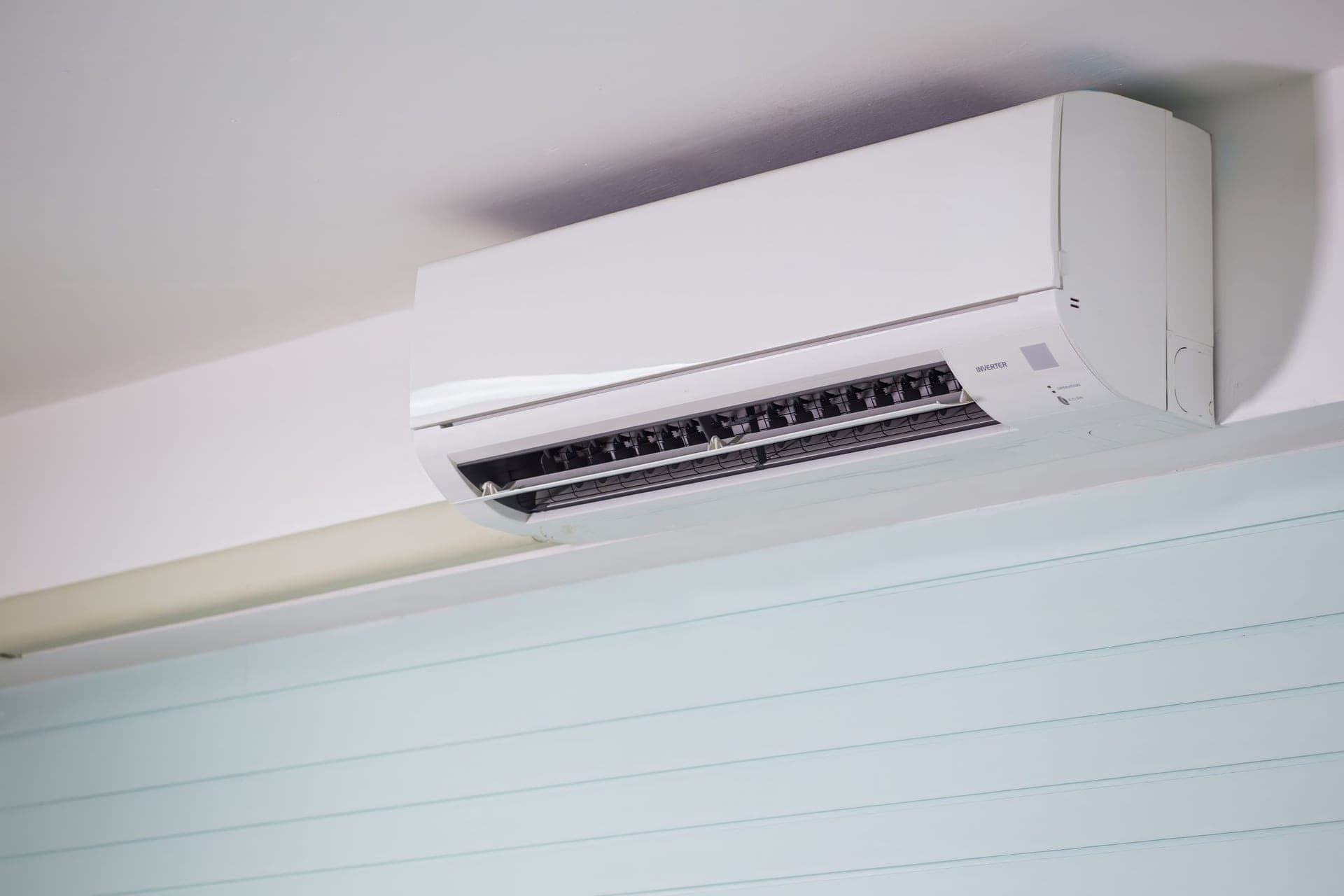
At a glance
The picks, ranked
Tap any row to jump to the full reasoning. Prices are live from Amazon where we have them, and read “check price” where we don’t — never a number we cannot verify today.
| # | Product | Best for | Price |
|---|---|---|---|
| 1 | The efficiency ceiling Fujitsu Mini-Split Heat Pump, 9,000 BTU EER2 19.10 and SEER2 33.50 with HSPF2 14.00 and a COP of 2.48 at 5°F — the top of the 9,000 BTU field on every rating at once. | Seeing what the best certified 9,000 BTU unit actually achieves | |
| 2 | Best cold-weather heating Carrier Mini-Split Heat Pump, 18,000 BTU A COP of 2.89 at 5°F, the strongest low-temperature figure among the units we hold data for, at 18,000 BTU of cooling. | A room where the winter matters more than the summer | |
| 3 | The alternative that needs no installer Midea Window Heat Pump Air Conditioner, 9,500 BTU CEER 17.6 and reverse-cycle heating in a window chassis — the most efficient certified room air conditioner in the dataset. | One room, both seasons, without touching the wall | |
| — | Where the badge stops helping Hisense Mini-Split Heat Pump, 9,000 BTU EER2 18.35 and Most Efficient certified — and so are 14,667 of the 16,792 US records, which makes the badge a floor rather than a shortlist. | Illustrating why Most Efficient does not narrow this field |
The mini-split question usually arrives framed as an efficiency argument, and the efficiency argument is usually made with the wrong pair of numbers.
You will see SEER2 33.5 held up against a window unit’s CEER 17.6 and concluded that a mini-split is nearly twice as efficient. It is not. Those two ratings are not measured the same way, and comparing them is the single most common error in this category.
The comparison
EER2 against CEER, not SEER2 against CEER
SEER2 is a seasonal figure. It averages performance across a modeled cooling season including long stretches of part-load running, where a variable-speed compressor is at its most efficient.
EER2 is the full-load figure at a single rating condition. CEER, the room air conditioner rating, is much closer to that in method — it is a combined figure at a rating point, with standby included.
| Comparison | Mini-split | Window unit | Gap |
|---|---|---|---|
| The one you see quoted | SEER2 33.5 | CEER 17.6 | 90% |
| The fair one | EER2 19.1 | CEER 17.6 | About 9% |
| Median unit, not best | EER2 12.5 | CEER 15.0 | Window ahead |
Read the third row carefully, because it is the one nobody prints. The median certified mini-split is EER2 12.50. The median certified room air conditioner is CEER 15.0. On the comparable basis, a typical mini-split is not more efficient at cooling than a typical window unit — the best ones are, by single digits.
None of that makes SEER2 a lie. Over a real season with long part-load hours, a mini-split does better than its EER2 suggests. But if someone is selling you a mini-split on a cooling-efficiency argument, ask for the EER2.
Heating
The heating case is much stronger than the cooling case
This is where the category earns its price, and it is barely about summer at all.
- Median COP of 2.00 at 5°F across 16,667 certified records that publish one. Two units of heat per unit of electricity, in genuinely cold weather. The best in the field is 3.28.
- Median 85% of rated capacity retained at 5°F against the 47°F rating. The old objection that heat pumps collapse in the cold is measurably out of date on certified equipment.
- 14,229 of 16,792 US records are cold-climate certified — about 85% of the field, not a niche.
Electric resistance heat is fixed at a COP of 1 and cannot be improved by any manufacturer. A COP of 2.0 halves the electricity for the same heat. If your room is currently heated by baseboards or a fan heater, that is the number that justifies an installer — how heat pumps and air conditioners actually differ.
Brand
Brand choice barely moves the number
The dataset holds 204 outdoor-unit brand names across the US market, of which 64 carry 100 or more certified models. Across all 64, the median EER2 runs from 11.85 at the bottom to 13.00 at the top.
That is a spread of under 10% between the least and most efficient brand, while the spread within a single brand — from its entry model to its flagship — is several times larger. Choosing a brand is not how you choose efficiency in this category. Choosing a model is.
The same machine also appears repeatedly under different labels. One 18,000 BTU unit on this page is certified under at least five separate badge records. Contract manufacturing is the norm here, not the exception.
This one is not a DIY job
Every one of the 16,792 US certified mini-split records uses a continuously variable compressor — there are no single-stage or two-stage units left in the certified field at all. The same has happened to room air conditioners, where all 505 certified units are now variable speed. Inverter is no longer a feature to shop for; it is the entry requirement — what that means for buyers.
Cost
What we can and cannot tell you about price
Plainly: we sell equipment, not installations, and we are not going to quote you an installed price we cannot stand behind. A mini-split is an installed system involving refrigerant lines, a wall penetration, a condensate route, an outdoor pad or bracket and usually a dedicated circuit. The equipment is a minority of the total on most jobs.
What we can tell you is the shape of the decision:
- Cooling only, one room, rented or temporary. A window or portable unit wins on nearly every axis, and the efficiency gap on a fair comparison is single digits.
- Cooling only, one room, owned and permanent. Closer. A mini-split is quieter, leaves the window free, and does not come out every autumn. That is a comfort argument, not an energy one.
- Cooling and heating, replacing resistance heat. This is where it makes sense. You are halving the electricity for winter heat, every winter, which is a far bigger annual number than the cooling difference.
- Multiple rooms. Multi-zone changes the arithmetic again, in the mini-split’s favor, because the install cost is shared — cooling a house against cooling a room.
Say the unwelcome thing
Do not buy a mini-split on the SEER2 number alone.
SEER2 33.5 against CEER 17.6 reads as a doubling and it is not one. Compared like for like, the best 9,000 BTU mini-split is EER2 19.1 against CEER 17.6 — about 9% — and the median certified mini-split at EER2 12.5 is behind the median room unit at CEER 15.0.
Nor does the Most Efficient badge help you here: 87.3% of certified US mini-splits carry it. A filter that removes one option in eight is not a filter.
Ask for EER2, ask for the COP at 5°F if heating matters, and ignore the brand name. If the answer is cooling-only for one room, a CEER 17.6 window heat pump does the same job with no installer at all.
In full
Every pick, and what is wrong with it
Published specifications only, each linked to the page it came from. Where a manufacturer publishes nothing, the row says so — we do not fill blanks in.
1. The efficiency ceiling
Fujitsu Mini-Split Heat Pump, 9,000 BTU
Fujitsu · model AOUH09KTAP1
EER2 19.10 and SEER2 33.50 with HSPF2 14.00 and a COP of 2.48 at 5°F — the top of the 9,000 BTU field on every rating at once.
Useful as a reference point rather than a shopping recommendation, because nothing on this page can be bought and plugged in.
EER2 19.10 is the figure to hold on to. It is the full-load cooling efficiency, measured the way a room air conditioner’s CEER is measured, and it is the only number here that compares fairly to a window unit.
SEER2 33.50 is the seasonal figure, and it is the one quoted in advertising. It is not wrong, it simply averages part-load operation across a season, which CEER does not.
HSPF2 14.00 and COP 2.48 at 5°F. That COP is the real argument for the category: it is still delivering nearly two and a half units of heat per unit of electricity when it is five degrees outside.
What’s wrong with it
It is an installed system, so the equipment price is a fraction of what it costs to have working.
Running cost
Fujitsu does not publish a wattage for the AOUH09KTAP1, so we cannot calculate what it costs to run. We are not going to estimate one. If Fujitsu publishes a nameplate figure, this block will show the arithmetic.
| Cooling capacity | 9,000 BTU/h |
|---|---|
| SEER2 | 33.5 |
| EER2 | 19.1 |
| HSPF2 | 14.00 |
| COP at 5 degrees F | 2.48 |
| Cold climate | Yes |
| Refrigerant | R-32 (GWP 675) |
| ENERGY STAR | Certified, and on the Most Efficient list |
| Noise | Not published in the certified dataset |
Every figure above is from ENERGY STAR Certified Mini-Split Heat Pumps dataset. Blanks are shown as “not published” rather than filled in.
2. Best cold-weather heating
Carrier Mini-Split Heat Pump, 18,000 BTU
Carrier · model 38MPRBQ18AA3
A COP of 2.89 at 5°F, the strongest low-temperature figure among the units we hold data for, at 18,000 BTU of cooling.
If you are weighing a mini-split against baseboard heaters rather than against a window air conditioner, this is the shape of the argument.
COP 2.89 at 5°F means it delivers nearly three times the heat that a resistance heater does from the same electricity, in genuinely cold weather. Resistance heat is fixed at a COP of 1 by physics and cannot improve.
SEER2 26.30, EER2 15.30, HSPF2 11.00 at 18,000 BTU of cooling capacity. The cooling efficiency is mid-field; you are buying the heating curve.
This same machine appears under at least five certified records in the dataset, under different brand and model-number combinations. That is normal in this category and it is why cross-shopping by brand name is close to meaningless — what the brand names actually tell you.
What’s wrong with it
EER2 15.30 is well short of the 9,000 BTU leaders, and this exact machine is certified under at least five badge records.
Running cost
Carrier does not publish a wattage for the 38MPRBQ18AA3, so we cannot calculate what it costs to run. We are not going to estimate one. If Carrier publishes a nameplate figure, this block will show the arithmetic.
| Cooling capacity | 18,000 BTU/h |
|---|---|
| SEER2 | 26.3 |
| EER2 | 15.3 |
| HSPF2 | 11.00 |
| COP at 5 degrees F | 2.89 |
| Cold climate | Yes |
| Refrigerant | R-410A (GWP 2,088) |
| ENERGY STAR | Certified, and on the Most Efficient list |
| Noise | Not published in the certified dataset |
Every figure above is from ENERGY STAR Certified Mini-Split Heat Pumps dataset. Blanks are shown as “not published” rather than filled in.
3. The alternative that needs no installer
Midea Window Heat Pump Air Conditioner, 9,500 BTU
Midea · model MAH09B1AGR
CEER 17.6 and reverse-cycle heating in a window chassis — the most efficient certified room air conditioner in the dataset.
The honest competitor to a single-zone mini-split, and the reason this page exists.
CEER 17.6 and 404.8 kWh a year — about $74 at 18.34¢/kWh. That CEER is the highest of all 505 certified room air conditioners, and it is 80% under the federal standard.
Reverse-cycle heating in the same box, so it covers both seasons in one purchase, with no refrigerant lines, no electrician and no wall penetration.
129 lb is the honest cost, and it is a lot for a window. It straddles the sill, so it needs no bracket, but getting it up there is a two-person job with a plan — window units that heat, compared.
What’s wrong with it
129 lb in a window, and it heats one room rather than a floor.
Running cost — MAH09B1AGR
| Annual energy use | 404.8 kWh | ENERGY STAR certified figure |
|---|---|---|
| Annual cost | $74 | 404.8 × 18.34¢/kWh |
| Per cooling month | $19 | spread over a four-month season |
The annual figure is the certified value from the ENERGY STAR Certified Room Air Conditioners dataset, which models a standard cooling season rather than your actual summer. It is more useful than a nameplate wattage here, because a variable-speed compressor spends most of its life well below nameplate.
Rate: 18.34¢/kWh, the US average residential price for June 2026 (EIA Electric Power Monthly, Table 5.3). Yours will differ — swap it in: (watts ÷ 1000) × hours × your rate.
| Cooling capacity | 9,500 BTU/h |
|---|---|
| Heating mode | Yes, reverse cycle |
| CEER | 17.6 |
| Annual energy use | 404.8 kWh/yr |
| vs federal standard | 80% less energy |
| Dimensions | 20.9 H x 25.0 W x 41.2 D in |
| Weight | 129.0 lb |
| Installation | Straddles the windowsill (saddle style) |
| Support bracket | Not required |
| Compressor | Variable speed |
| Refrigerant | R-32 |
| ENERGY STAR | Certified, and on the Most Efficient list |
Every figure above is from ENERGY STAR Certified Room Air Conditioners dataset. Blanks are shown as “not published” rather than filled in.
Skip this one
Hisense Mini-Split Heat Pump, 9,000 BTU
Hisense · model AO-09U3T25P
EER2 18.35 and Most Efficient certified — and so are 14,667 of the 16,792 US records, which makes the badge a floor rather than a shortlist.
Flagged not as a bad product but as a bad filter. This is a strong machine and it demonstrates the trap in shopping this category by badge.
SEER2 32.00, EER2 18.35, HSPF2 11.80, COP 2.25 at 5°F, cold-climate certified. Genuinely good numbers.
87.3% of certified US mini-splits are Most Efficient — 14,667 of 16,792 records. Filtering to Most Efficient removes about one unit in eight and leaves you with fourteen thousand options.
On a room air conditioner the same badge is carried by 195 of 505 units and genuinely narrows the field. Same program, opposite usefulness — why the badge means different things by category.
What’s wrong with it
There is nothing wrong with this unit; the problem is that the badge cannot distinguish it from thousands of others.
Running cost
Hisense does not publish a wattage for the AO-09U3T25P, so we cannot calculate what it costs to run. We are not going to estimate one. If Hisense publishes a nameplate figure, this block will show the arithmetic.
| Cooling capacity | 9,000 BTU/h |
|---|---|
| SEER2 | 32.0 |
| EER2 | 18.35 |
| HSPF2 | 11.80 |
| COP at 5 degrees F | 2.25 |
| Cold climate | Yes |
| Refrigerant | R-454B (GWP 470) |
| ENERGY STAR | Certified, and on the Most Efficient list |
| Noise | Not published in the certified dataset |
Every figure above is from ENERGY STAR Certified Mini-Split Heat Pumps dataset. Blanks are shown as “not published” rather than filled in.
We are not linking a buy button for this one. If you want to look at it anyway, it is easy enough to find — but we would rather send you to something that fits your room.
Questions people actually ask
Frequently asked
Is a mini-split more efficient than a window air conditioner?
At the top of each field, only slightly. The best 9,000 BTU mini-split is EER2 19.1 against CEER 17.6 for the best window heat pump — about 9%. Compared at the median, the room air conditioner is ahead: CEER 15.0 against EER2 12.5.
Why is SEER2 so much higher than CEER?
Because they measure different things. SEER2 is a seasonal average that includes long part-load stretches where a variable-speed compressor excels. CEER and EER2 are full-load figures at a rating point. Compare EER2 to CEER, never SEER2 to CEER. Reading a spec sheet.
Do mini-splits work in cold weather?
Yes, on certified equipment. The median unit holds 85% of its rated heating capacity down to 5°F and delivers a COP of 2.00 at that temperature — twice the heat per unit of electricity that a resistance heater can manage. About 85% of certified US models are cold-climate certified.
Which mini-split brand is most efficient?
Brand is close to irrelevant. Across the 64 brands with 100 or more certified models, median EER2 runs only from 11.85 to 13.00 — under 10%. The spread inside a single brand's own range is several times larger. Choose the model, not the badge. Brands compared.
Is Most Efficient certification worth looking for on a mini-split?
Not as a filter. 14,667 of 16,792 certified US mini-split records carry it — 87.3%. On room air conditioners the same badge is held by 195 of 505 and genuinely narrows the field. Same program, very different usefulness.
When is a mini-split definitely worth it?
When it replaces electric resistance heat as well as providing cooling. Resistance heat is fixed at a COP of 1; a mini-split delivers about 2.0 at 5°F, so you halve the winter electricity. That annual saving is far larger than any cooling difference.
Sources
Where these numbers came from
- ENERGY STAR Certified Mini-Split Heat Pumps dataset — 16,792 US-market records; SEER2, EER2, HSPF2, COP at 5°F, capacity retention, brand counts, compressor staging and Most Efficient status
- ENERGY STAR Certified Room Air Conditioners dataset — 505 US-market records; CEER and Most Efficient counts used for the comparison
- EIA Electric Power Monthly, Table 5.3 — average residential electricity price
Read next
Where to go from here
Back to Air Conditioners, or read how we pick.