Guide and picks
Why humidity makes heat worse
One mechanism explains why 85 degrees is pleasant in Arizona and unbearable in Florida — and it decides almost every purchase on this site.
By Sawyer V. · Published
The short answer
Your body sheds heat mainly by evaporating sweat, and evaporation only happens if the surrounding air has capacity to absorb more water. Humid air does not, so the mechanism stalls and you feel hotter at the same temperature. The same fact governs three purchases: a fan works by speeding evaporation, an evaporative cooler only works where air is dry, and an air conditioner removes moisture — but only while it is running.
Fan & Frost earns a commission when you buy through our links, at no cost to you. It never changes a ranking, and we say so when the right answer is the cheaper unit or nothing at all. Full disclosure · How we pick.

At a glance
The picks, ranked
Tap any row to jump to the full reasoning. Prices are live from Amazon where we have them, and read “check price” where we don’t — never a number we cannot verify today.
| # | Product | Best for | Price |
|---|---|---|---|
| 1 | The right size to actually dehumidify Midea Window Air Conditioner, 6,000 BTU 6,000 BTU at CEER 16 and 281.3 kWh a year — small enough to run long, which is what removes moisture. | A small humid room where the last unit ran short and left it clammy | |
| 2 | 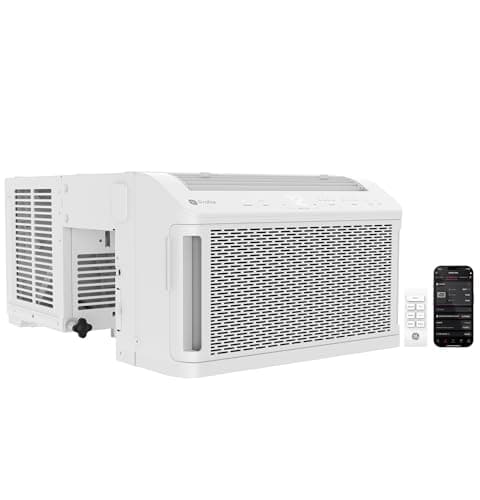 Best modulating compressor GE Profile ClearView Window Air Conditioner, 8,000 BTU CEER 16 and 375 kWh a year with a variable-speed compressor — it runs low and long rather than hard and briefly. | A humid room where you want long, steady, dehumidifying runs | |
| 3 | 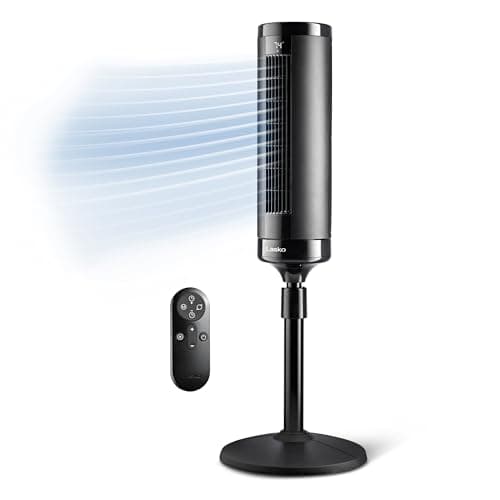 What a fan can and cannot do about humidity Lasko EcoQuiet 42" DC Tower Fan 2.9 W on low at 23 dBA — it accelerates the evaporation humidity is slowing, without changing the humidity. | Any humid room — as a supplement, not a solution | |
| — | 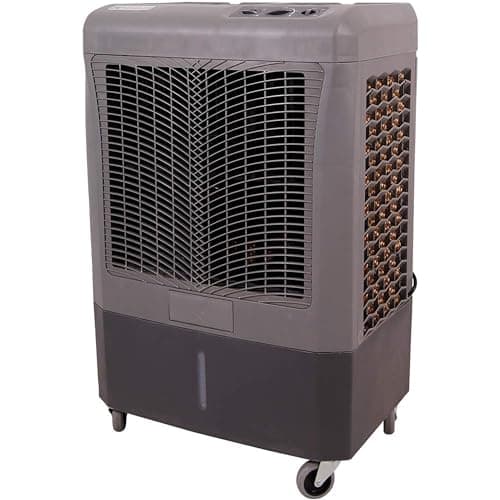 The machine humidity defeats entirely Hessaire MC37M Mobile Evaporative Cooler 3,100 CFM on 250 W, the most air per watt we hold data for, and useless in the conditions this page is about. | A dry climate — and nowhere humid, at any price |
85 degrees in Phoenix and 85 degrees in Miami are the same reading and not remotely the same experience. The reason is a single mechanism, and once you have it, most of this site follows from it.
The mechanism
You cool by evaporating water
Your body sheds heat several ways — radiation, conduction, convection — but once the air approaches skin temperature, those largely stop working. There is no longer a meaningful gradient to move heat down.
What is left is evaporation. Sweat on the skin absorbs heat as it changes from liquid to vapor, and carries that heat away with it. This is why you sweat, and it is the dominant cooling mechanism available to you in hot conditions.
Evaporation requires the surrounding air to accept the water vapor. Air can only hold so much at a given temperature, and relative humidity is a measure of how much of that capacity is already used.
- Low humidity: lots of spare capacity. Sweat evaporates readily, heat leaves quickly, and you feel cooler than the thermometer says.
- High humidity: little spare capacity. Sweat sits on the skin instead of evaporating, heat does not leave, and you feel hotter than the thermometer says.
That is the whole explanation. Humidity does not make the air hotter; it disables the mechanism you use to cope with the heat.
Consequence one
Why a fan helps, and where it stops
A layer of air sits against your skin, and it becomes locally saturated as you sweat into it. Once saturated, evaporation into it stops even if the room as a whole is dry.
A fan strips that layer away and replaces it with room air that still has capacity. Evaporation resumes, and you feel dramatically cooler — without the air temperature changing at all.
Two things follow, and both are useful.
A fan in an empty room does nothing. There is no saturated boundary layer to disturb, so there is nothing to improve. Turn it off.
A fan loses effectiveness as humidity rises. If the room air is near saturation, the replacement air has no more capacity than the layer it displaced. You feel the movement, and little cooling. This is why fans feel magical in Denver and inadequate in New Orleans.
Consequence two
Why evaporative coolers have a climate map
An evaporative cooler runs the same process as your skin, deliberately and at scale: water evaporates into an air stream and the heat comes out of that air.
So it inherits exactly the same constraint. In dry air the temperature drop is real and substantial. In humid air, almost nothing evaporates, so there is almost no cooling — and the small amount of moisture it does add makes your own evaporation harder.
It is the one appliance on this site that can make a room feel worse than doing nothing. The humidity thresholds, and the comparison against an air conditioner.
Consequence three
Why air conditioner sizing is a humidity question
An air conditioner does something a fan and an evaporative cooler cannot: it removes moisture. Humid air passes over a cold coil, water condenses on it and drains away, and the air returns cooler and drier.
The critical detail is that this only happens while the compressor is running. A coil that is not cold is not condensing anything.
Which produces the most consequential sizing rule on this site:
| Correctly sized | Oversized | |
|---|---|---|
| Run length | Long and steady | A few minutes, then off |
| Coil cold for | Most of the time | Briefly |
| Moisture removed | A lot | Very little |
| Room feels | Cool and dry | Cold and clammy |
| Typical response | None needed | Turn the thermostat down, making it worse |
An oversized air conditioner makes a humid room worse than a correctly sized one, despite having more capacity. This is why ENERGY STAR’s own guidance says an oversized unit costs more, wastes energy and does not cool better.
It is also why a variable-speed compressor matters so much in a humid climate: it modulates down instead of shutting off, so the coil stays cold and keeps condensing.
This one is not a DIY job
Measure it before you diagnose it. A cheap thermometer-hygrometer settles the question of whether you have a heat problem or a humidity problem, and they call for different purchases.
Temperature high, humidity moderate: a fan is likely enough, and it costs a fraction of a cent an hour.
Temperature moderate, humidity high: the room feels bad because evaporation is stalled. An air conditioner sized to run long, or a dehumidifier, is the answer — a fan will disappoint and an evaporative cooler will make it worse.
Both high: a correctly sized air conditioner, run steadily.
Temperature comfortable, humidity high: you probably do not want a cooling appliance at all. That is the basement pattern, and cooling the air further just condenses more onto cold surfaces.
Practical
Reducing indoor humidity without buying anything
- Use the extract fans you already have. A shower and a pan of boiling water put substantial moisture into a house. A bathroom fan and a ducted range hood remove it at source, for a fraction of a cent. The kitchen case in detail.
- Vent the dryer outdoors. A tumble dryer venting indoors is one of the largest moisture sources in a home.
- Ventilate at the right time. Bringing in outdoor air helps only if it is drier than the indoor air. On a muggy evening it is not, and you are importing the problem.
- Fix the water sources. Sweating cold water pipes, a slab without a vapor barrier, ground water. No appliance out-runs a continuous supply.
- Dry laundry outdoors where you can.
Say the unwelcome thing
Do not buy a bigger air conditioner for a humid room.
It is the most natural response to a room that feels bad and it makes the specific problem worse.
Humidity is removed only while the compressor runs. A larger unit reaches the setpoint faster and therefore runs less, so it removes less moisture. You end up with a colder, damper room — and the usual response is to lower the thermostat, which shortens the runs further.
The correct move is the opposite: size to the room honestly, prefer a unit that modulates, and accept longer run times as the mechanism working rather than as a fault.
In full
Every pick, and what is wrong with it
Published specifications only, each linked to the page it came from. Where a manufacturer publishes nothing, the row says so — we do not fill blanks in.
1. The right size to actually dehumidify
Midea Window Air Conditioner, 6,000 BTU
Midea · model MAW06S1KWT-A
6,000 BTU at CEER 16 and 281.3 kWh a year — small enough to run long, which is what removes moisture.
The counter-intuitive consequence of the humidity mechanism: a smaller air conditioner often leaves a room feeling better than a larger one.
Moisture only condenses out of the air while the compressor is running. A unit that satisfies the thermostat in five minutes and stops has cooled the air and dried almost nothing — giving you a cold, damp room, which feels worse than a warmer dry one.
281.3 kWh a year, about $52 for a season, at CEER 16 and 45% below the federal standard — the lowest annual figure in the certified dataset.
31.6 lb and a variable-speed compressor that modulates down rather than stopping. Size it from the room.
What’s wrong with it
6,000 BTU is genuinely small. In a large or sunny room it will run constantly and still lose.
Running cost — MAW06S1KWT-A
| Annual energy use | 281.3 kWh | ENERGY STAR certified figure |
|---|---|---|
| Annual cost | $52 | 281.3 × 18.34¢/kWh |
| Per cooling month | $13 | spread over a four-month season |
The annual figure is the certified value from the ENERGY STAR Certified Room Air Conditioners dataset, which models a standard cooling season rather than your actual summer. It is more useful than a nameplate wattage here, because a variable-speed compressor spends most of its life well below nameplate.
Rate: 18.34¢/kWh, the US average residential price for June 2026 (EIA Electric Power Monthly, Table 5.3). Yours will differ — swap it in: (watts ÷ 1000) × hours × your rate.
| Cooling capacity | 6,000 BTU/h |
|---|---|
| CEER | 16 |
| Annual energy use | 281.3 kWh/yr |
| vs federal standard | 45% less energy |
| Dimensions | 12.1 H x 16.0 W x 13.3 D in |
| Weight | 31.6 lb |
| Installation | Does not straddle the windowsill |
| Support bracket | Not required |
| Compressor | Variable speed |
| Refrigerant | R-32 |
| ENERGY STAR | Certified, and on the Most Efficient list |
Every figure above is from ENERGY STAR Certified Room Air Conditioners dataset. Blanks are shown as “not published” rather than filled in.
2. Best modulating compressor
GE Profile ClearView Window Air Conditioner, 8,000 BTU
GE Profile · model PWJV08W
CEER 16 and 375 kWh a year with a variable-speed compressor — it runs low and long rather than hard and briefly.
The variable-speed compressor is the humidity feature, and it is not marketed as one.
A single-speed unit is either on at full output or off. In a room whose cooling load is below that output, it cycles — short runs, poor moisture removal, and swings in temperature.
A modulating compressor turns itself down instead. The coil stays cold for far longer, so far more water condenses out of the air passing over it. Same machine, much drier room.
375 kWh a year, about $69 for a season, CEER 16, on the Most Efficient list, and 47% below the federal standard.
What’s wrong with it
46.2 lb and it occupies the window for the season, like any conventional unit.
Running cost — PWJV08W
| Annual energy use | 375 kWh | ENERGY STAR certified figure |
|---|---|---|
| Annual cost | $69 | 375 × 18.34¢/kWh |
| Per cooling month | $17 | spread over a four-month season |
The annual figure is the certified value from the ENERGY STAR Certified Room Air Conditioners dataset, which models a standard cooling season rather than your actual summer. It is more useful than a nameplate wattage here, because a variable-speed compressor spends most of its life well below nameplate.
Rate: 18.34¢/kWh, the US average residential price for June 2026 (EIA Electric Power Monthly, Table 5.3). Yours will differ — swap it in: (watts ÷ 1000) × hours × your rate.
| Cooling capacity | 8,000 BTU/h |
|---|---|
| CEER | 16 |
| Annual energy use | 375 kWh/yr |
| vs federal standard | 47% less energy |
| Dimensions | 12.6 H x 18.6 W x 15.3 D in |
| Weight | 46.2 lb |
| Refrigerant | R-32 |
| Installation | Does not straddle the windowsill |
| Compressor | Variable speed |
| ENERGY STAR | Certified, and on the Most Efficient list |
Every figure above is from ENERGY STAR Certified Room Air Conditioners dataset. Blanks are shown as “not published” rather than filled in.
3. What a fan can and cannot do about humidity
Lasko EcoQuiet 42" DC Tower Fan
Lasko · model T42710
2.9 W on low at 23 dBA — it accelerates the evaporation humidity is slowing, without changing the humidity.
A fan works with the evaporation mechanism: moving air sweeps away the saturated layer sitting against your skin and replaces it with drier room air, so evaporation continues.
That is genuinely effective in moderate humidity and it costs almost nothing — 2.9 W on low, and 23 dBA, the quietest published figure on this site.
Its limit is absolute, though. If the room air is already close to saturated, there is no drier air to bring in, and the fan is moving humid air past humid skin. You feel the movement and very little else.
Twelve speeds and a DC motor. Full tower fan comparison.
What’s wrong with it
It cannot remove moisture. Past a certain humidity the evaporation it is trying to accelerate simply is not available.
Running cost — T42710
| Nameplate power | 2.9 W – 19 W | manufacturer's published figure |
|---|---|---|
| Energy, 8-hour night | 0.15 kWh | 19 ÷ 1000 × 8 |
| Cost per hour | 0.3¢ | at 18.34¢/kWh |
| Cost per 8-hour night | 2.8¢ | on the highest speed |
| Cost per 30 nights | 84¢ | 4.6 kWh |
| Same month, lowest speed | 13¢ | at 2.9 W |
Rate: 18.34¢/kWh, the US average residential price for June 2026 (EIA Electric Power Monthly, Table 5.3). Yours will differ — swap it in: (watts ÷ 1000) × hours × your rate.
| Power | 2.9 W - 19 W (0.06-0.303 A at 120 V) |
|---|---|
| Noise | 23 dBA low, 46 dBA high |
| Speeds | 12 |
| Height | 41.6 in |
| Footprint | 12.8 x 12.8 in |
| Weight | 7.8 lb |
| Timer | 8 hours |
| Air delivery (CFM) | Not published |
| Warranty | 2 years |
Every figure above is from Lasko product page, T42710. Blanks are shown as “not published” rather than filled in.
Skip this one
Hessaire MC37M Mobile Evaporative Cooler
Hessaire · model MC37M
3,100 CFM on 250 W, the most air per watt we hold data for, and useless in the conditions this page is about.
The clearest demonstration that this one mechanism decides everything.
An evaporative cooler works by evaporating water into the air stream, and evaporation absorbs heat. That is the same process your skin uses — and it fails for the same reason in the same conditions.
In humid air almost nothing evaporates, so you get a negligible temperature drop and more humidity in a room that already had too much. Then the fan is moving damper air past your skin, which is worse than doing nothing.
3,100 CFM on 250 W and a 10.3 gallon tank. Superb machine, entirely wrong climate. Where it does belong.
What’s wrong with it
It cools by adding water vapor to the air. In humid air it delivers almost no temperature drop and makes the room damper.
Running cost — MC37M
| Nameplate power | 250 W | manufacturer's published figure |
|---|---|---|
| Energy, 8-hour night | 2.00 kWh | 250 ÷ 1000 × 8 |
| Cost per hour | 4.6¢ | at 18.34¢/kWh |
| Cost per 8-hour night | 37¢ | on the highest speed |
| Cost per 30 nights | $11 | 60.0 kWh |
Rate: 18.34¢/kWh, the US average residential price for June 2026 (EIA Electric Power Monthly, Table 5.3). Yours will differ — swap it in: (watts ÷ 1000) × hours × your rate.
| Air delivery | 3,100 CFM |
|---|---|
| Power | 250 W / 2.4 A |
| Water tank | 10.3 gallons, continuous hookup capable |
| Dimensions | 24 L x 16 W x 38 H in |
| Weight | 40 lb |
| Pads | Industrial-grade cooling pads |
| Coverage claim | Not published on the product page |
Every figure above is from Hessaire product page, MC37M. Blanks are shown as “not published” rather than filled in.
We are not linking a buy button for this one. If you want to look at it anyway, it is easy enough to find — but we would rather send you to something that fits your room.
Questions people actually ask
Frequently asked
Why does humid heat feel worse than dry heat?
Because your main cooling mechanism is evaporating sweat, and evaporation needs air with spare capacity to absorb water. Humid air has little, so sweat sits on the skin instead of evaporating and the heat does not leave — at the same thermometer reading.
Do fans work in high humidity?
Less well. A fan works by stripping away the saturated air layer against your skin and replacing it with drier room air. If the room air is already near saturation there is no drier air to bring in, so you feel the movement and very little cooling.
Why does an oversized air conditioner leave a room clammy?
Moisture only condenses out while the compressor is running. An oversized unit reaches the setpoint in a few minutes and shuts off, so the coil is cold only briefly and removes very little water — leaving a cold, damp room. Sizing method.
Why do evaporative coolers fail in humid climates?
They use the same process your skin does — evaporating water to absorb heat — so they hit the same wall. In humid air almost nothing evaporates, producing negligible cooling while adding moisture that makes your own evaporation harder.
Is a dehumidifier better than an air conditioner in a humid room?
If the temperature is comfortable and only the humidity is high, yes — cooling the air further mainly condenses moisture onto cold surfaces. If both are high, a correctly sized air conditioner run steadily does both jobs at once.
How do I reduce indoor humidity for free?
Use the extract fans you already have during showers and cooking, vent the tumble dryer outdoors, only ventilate when outdoor air is drier than indoor, and fix water sources like sweating cold pipes. No appliance out-runs a continuous supply.
Sources
Where these numbers came from
- ENERGY STAR room air conditioner sizing guidance — the oversizing warning and capacity adjustments
- ENERGY STAR Certified Room Air Conditioners dataset — CEER, annual kWh, variable-speed compressor data
- Hessaire MC37M product page — 3,100 CFM, 250 W, 10.3 gal tank
- EIA Electric Power Monthly, Table 5.3 — electricity rate
Read next
Where to go from here
Back to Guides & Calculators, or read how we pick.