The picks
The best energy and heat recovery ventilators
The one cooling-adjacent appliance with no federal efficiency program at all. There is a certified dataset, it is public, and almost nothing about how this category is sold survives reading it.
By Sawyer V. · Published
The short answer
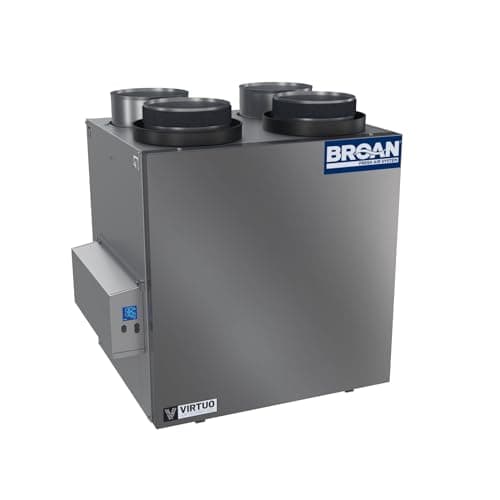
Buy the Broan B160E65RT — 142 CFM, 76 percent sensible recovery efficiency, 15 W, which is 2.53 CFM per watt against a field median of 1.81, and it is one of the few here whose maker publishes its own figures. Read every SRE number with its airflow attached: across the 546 certified units, SRE is measured at a median of 41 percent of the unit’s rated airflow, so the headline percentage describes a machine running well under half throttle.
Fan & Frost earns a commission when you buy through our links, at no cost to you. It never changes a ranking, and we say so when the right answer is the cheaper unit or nothing at all. Full disclosure · How we pick.
At a glance
The picks, ranked
Tap any row to jump to the full reasoning. Prices are live from Amazon where we have them, and read “check price” where we don’t — never a number we cannot verify today.
| # | Product | Best for | Price |
|---|---|---|---|
| 1 | Best overall Broan AI Series B160E65RT Energy Recovery Ventilator 142 CFM at 76 percent SRE on just 15 W — 2.53 CFM per watt, the 86th percentile of the whole certified field — with MERV 8 filtration and a maker who actually publishes a spec sheet. | A typical house that needs balanced ventilation — the best combination here of certified efficacy, published manufacturer data and a sane price | |
| 2 | 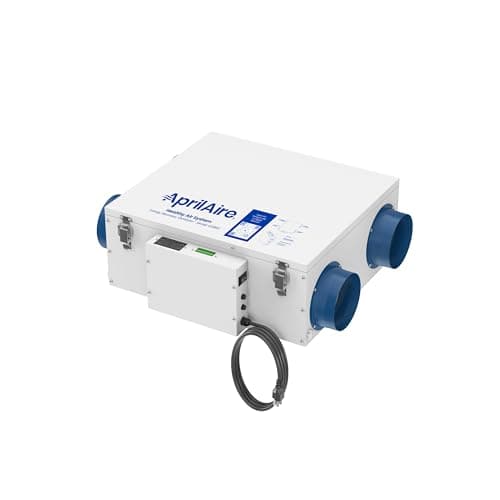 Most air per watt AprilAire V22BEC Energy Recovery Ventilator 114 CFM at 21 W — 2.81 CFM per watt, the best efficacy of any unit on this page and the 93rd percentile of the certified field. | A house where the ventilator will genuinely run around the clock and the electricity bill is the thing you are optimizing | |
| 3 | 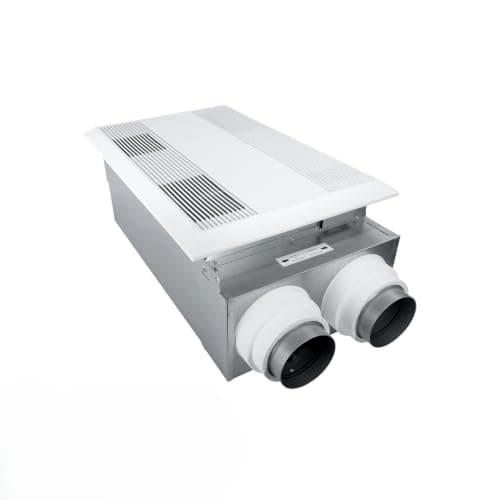 Best for one room Panasonic WhisperComfort FV-06VE1 Spot Energy Recovery Ventilator A spot ERV drawing just 9 watts — the lowest power figure of any unit on this page — that ventilates one room from a single ceiling unit with no distribution ductwork. | A single room that needs fresh air without a ducted system — an apartment, a tight bedroom, a converted office, a basement study | |
| 4 | 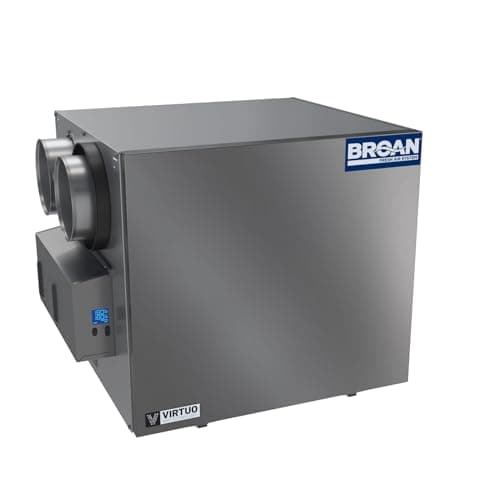 Best for a whole house Broan AI Series B210E75RS Energy Recovery Ventilator 206 CFM net supply at 81 percent SRE — the highest recovery figure on this page — for 28 watts and 2.29 CFM per watt. | A larger or tighter house where the ventilation rate the guidance asks for is beyond what a 140 CFM unit can deliver | |
| — | 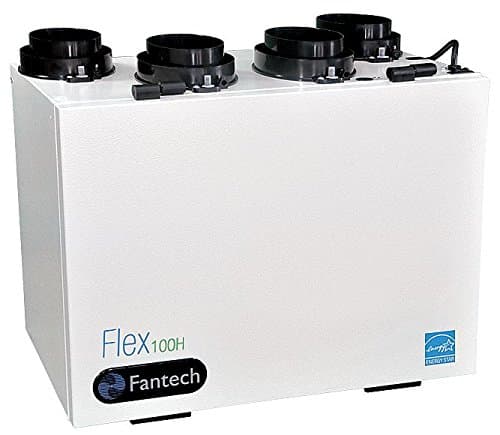 The one to skip Fantech FLEX 100H Heat Recovery Ventilator 61 percent SRE at 60 watts: the 1st percentile of the certified field on recovery and the 7th on efficacy, at 0.82 CFM per watt against a 1.81 median. | Nothing we can defend on the certified data — it costs about as much as units that beat it comprehensively on every measured axis |
A recovery ventilator is the machine that lets a tight house breathe without throwing away the heat it paid for. Two ducts to outside, two fans, and a core that hands heat from the air leaving the building to the air coming in.
It is also the one appliance in this whole subject with no federal efficiency program at all, which changes how you have to shop for it.
Criteria
How these are judged, in order
- Certified SRE, with the airflow it was measured at. Sensible recovery efficiency is the percentage of heat the core hands back. HVI certifies it at 0 C and records the airflow the test ran at. The airflow is half the claim and almost nobody quotes it.
- Watts at that same point. A recovery ventilator runs continuously, so fan power is the operating cost. HVI publishes it.
- Efficacy, which is our arithmetic. Net airflow at max rated SRE divided by the watts consumed there. HVI leaves this column blank on most records; we compute it and say so.
- ERV or HRV. Not an efficiency decision — see below — but a moisture decision, and the wrong one is wrong all winter.
- What the maker publishes at all. Three of the five units here have no readable manufacturer page. That is a mark against them and we show it on the card.
We have tested none of these and own no reference equipment. Every figure is HVI’s certified data or the manufacturer’s own page, with our arithmetic marked as ours. How we pick.
The gap
No ENERGY STAR program covers this category
This is checkable in about ten seconds. The ENERGY STAR Certified Ventilating Fans dataset — the one behind our bathroom fan rankings — contains exactly four unit types:
| Unit type in the dataset | Records |
|---|---|
| Bathroom / utility room | 972 |
| Range hood | 92 |
| In-line (single-port) | 74 |
| In-line (multi-port) | 2 |
| Heat or energy recovery ventilator | 0 |
Grouped from the ENERGY STAR Certified Ventilating Fans dataset. Broan’s own product pages confirm it from the other direction: they print “ENERGY STAR certified: No” beside “HVI Certified: Yes”.
So the only third-party certification this category has is HVI’s, a voluntary industry program. The good news is that it is genuinely public, genuinely detailed, and downloadable as a spreadsheet. We pulled the whole thing.
This is the second category on this site where the certification simply does not exist — attic and whole-house fans are the other. What that absence does to whole-house fan claims.
The field
All 546 certified units, in one place
The directory holds 554 records, of which 546 carry an SRE figure: 373 ERVs and 173 HRVs, from 44 brand owners trading under 52 brand names.
| Measure | Lowest | Median | Highest |
|---|---|---|---|
| Sensible recovery efficiency, all units | 59% | 77% | 94% |
| SRE, ERVs only | 61% | 77% | 90% |
| SRE, HRVs only | 59% | 78% | 94% |
| Power at max rated SRE | 9 W | 32 W | 146 W |
| Efficacy (our arithmetic) | 0.56 | 1.81 | 7.24 |
From the HVI Certified Products Directory, Section III, as published 21 October 2026. Efficacy is CFM per watt, our arithmetic on HVI’s airflow and power columns.
Read the two bottom rows against each other, because that contrast is the finding. The number everyone shops on — SRE — varies across the whole field by a factor of about 1.6. The number almost nobody quotes — watts, and therefore efficacy — varies by a factor of 13.
A footnote on that 7.24 ceiling: the efficacy leaders are trade-channel European units. Searching the retail channel we link to for the top-ranked model returns its replacement filters, not the machine. The practical ceiling for something you can actually buy and have delivered is a good deal lower, which is why the picks above top out near 2.8.
The caveat
That efficiency figure is measured at part throttle
HVI publishes two columns side by side: the maximum rated SRE, and the net airflow that SRE was measured at. Compare the second against the unit’s rated airflow and the category looks different.
- The median unit’s SRE is measured at 41 percent of its rated airflow.
- 401 of the 546 units are tested at under half their rated airflow.
- The range runs from 20 percent to 155 percent, so there is no fixed convention you can mentally correct for.
This is not an accusation of bad faith. Recovery rises as air slows down, because the air spends longer in contact with the core, and every maker is entitled to publish its best certified point. But it means a bare “81 percent efficient” on a product page is a figure from a specific operating point that is usually well under half speed, and two such figures from different units are frequently not comparable at all.
Our own picks show the spread: the Broan B160E65RT’s 76 percent is measured at 38 CFM of a rated 142 (27 percent), the AprilAire’s 72 percent at 59 CFM of 114 (52 percent). The AprilAire’s lower headline number was measured working nearly twice as hard.
This one is not a DIY job
This is also why a manufacturer figure and a certified figure can both be right and still disagree. Broan publishes 67 percent SRE at 32 F for the B160E65RT, measured at 64 CFM. HVI certifies the same model at 76 percent at 0 C — the same temperature — measured at 38 CFM. Nine points of difference, no contradiction, and nothing on either page tells you to check. When you compare two units, compare the certified rows.
The other finding
Seventy-two percent of the field shares a chassis
Group the certified records by their complete specification — same category, same rated airflow, same SRE, same test airflow, same watts — and then count how many of those groups appear under more than one brand name.
Ninety-two specification groups are shared across multiple brand names, covering 395 of the 546 certified records. That is 72 percent of the field. Some groups carry five badges at once: one 95 CFM ERV at 77 percent and 31 W is sold as Eco-Air, EXINDA, MAX AIR, PROAIR and X AI THERMAL; one 64 CFM ERV at 72 percent and 33 W appears as Epurair, Global Commander, Innovair, Ouellet and Stelpro.
This is the same pattern this site has documented in dehumidifiers and in room air conditioners, and it is more extreme here than in either. The practical consequence: look up the model number in the directory, because the badge on the cabinet frequently tells you nothing that the certification does not tell you better.
ERV or HRV
Not an efficiency choice. A moisture choice.
The marketing treats this as a performance tier. The certified data says it is not: ERVs median 77 percent SRE, HRVs median 78. One point apart, with wider ranges inside each group than between them.
The real difference is what happens to water vapor:
- An HRV transfers heat only. Moisture in the air you exhaust leaves the building. In a damp house, that is the point.
- An ERV transfers heat and moisture. It hands some of the humidity back, in whichever direction keeps the indoors closer to the outdoors. In a cold dry winter that stops the house drying out; in a humid summer it keeps some outdoor moisture from coming in.
So the choice follows your actual humidity problem, which is a reading rather than a guess. If your house runs above the EPA’s published 30 to 50 percent band in winter, an HRV dumping that moisture outdoors is working for you. If it runs below it and you are getting static and cracked furniture, an ERV is. Take the reading first.
Four of the five units on this page are ERVs, which reflects the field: 373 of the 546 certified records are ERVs. Whether your winter problem is moisture at all.
Sizing
How much ventilation the house asks for
The Home Ventilating Institute publishes the whole-house figure this site uses elsewhere: a recovery ventilator “should provide 0.35 air changes per hour”. That converts into CFM with one multiplication — floor area, times ceiling height, times 0.35, divided by 60.
| House, at an 8-foot ceiling | Volume | 0.35 ACH, in CFM |
|---|---|---|
| 1,000 sq ft | 8,000 cu ft | 47 |
| 1,500 sq ft | 12,000 cu ft | 70 |
| 2,000 sq ft | 16,000 cu ft | 93 |
| 2,500 sq ft | 20,000 cu ft | 117 |
| 3,000 sq ft | 24,000 cu ft | 140 |
Our arithmetic on HVI’s published 0.35 air changes per hour. Buy above the number rather than at it: a unit pinned at its ceiling all winter is both louder and, per the section above, operating a long way from the airflow its efficiency was certified at.
Say the unwelcome thing
Do not buy a recovery ventilator to fix a damp house.
It ventilates; it does not dehumidify. An HRV will carry some moisture out with the exhaust air, and in a mildly damp house run through a cold winter that genuinely helps. Against standing water, a failed damp course or a wet crawl space it does nothing at all, and an ERV is actively the wrong machine because handing moisture back is its job.
The other thing not to do is buy on a headline efficiency percentage without the airflow beside it. Across the certified field that figure is measured at a median of 41 percent of rated airflow, and the convention varies from 20 percent to 155 — so two bare percentages from two product pages are frequently not measuring the same thing.
In full
Every pick, and what is wrong with it
Published specifications only, each linked to the page it came from. Where a manufacturer publishes nothing, the row says so — we do not fill blanks in.
1. Best overall
Broan AI Series B160E65RT Energy Recovery Ventilator
Broan · model B160E65RT
142 CFM at 76 percent SRE on just 15 W — 2.53 CFM per watt, the 86th percentile of the whole certified field — with MERV 8 filtration and a maker who actually publishes a spec sheet.
142 CFM net supply at 0.4 inches water gauge, a certified 76 percent sensible recovery efficiency at 0 C, and 15 watts at the point that efficiency was measured. Our arithmetic on those last two gives 2.53 CFM per watt, which sits in the 86th percentile of all 546 certified units.
That watt figure is the one to dwell on. The certified field runs from 9 W to 146 W, and the median is 32 — so this unit does better-than-median recovery on under half the median power. A recovery ventilator runs continuously by design, so the difference between 15 W and 60 W is not a rounding error; it is the entire operating cost of the machine.
MERV 8 filtration, 6-inch round top ports, 35 to 160 CFM selectable. The adjustable range matters because ventilation rate is a commissioning decision rather than a product decision — you set it to the house, not to the box.
And the caveat that earns this pick its drawback. Broan’s own product page publishes 67 percent SRE at 32 F, measured at 64 CFM. HVI certifies the same model at 76 percent, measured at 38 CFM. Both figures are honest and they are not comparable, which is the single most important thing to understand about this category.
What’s wrong with it
Broan's own page and the certified directory disagree: Broan publishes 67 percent SRE at 64 CFM, HVI certifies 76 percent at 38 CFM. Both are at 32 F, and neither is wrong — they are different airflows. You have to read which. Core warranty is 5 years, not the lifetime figure Broan gives some other models.
Running cost
Broan does not publish a wattage for the B160E65RT, so we cannot calculate what it costs to run. We are not going to estimate one. If Broan publishes a nameplate figure, this block will show the arithmetic.
| Type | ERV (transfers moisture as well as heat) |
|---|---|
| Net supply airflow | 142 CFM at 0.4 in w.g. |
| Sensible recovery efficiency | 76% at 0 C, measured at 38 CFM |
| Power at that point | 15 W |
| Efficacy | 2.53 CFM per watt (our arithmetic) |
| Maker's own figures | Broan publishes 67% SRE at 32 F and 56% at -13 F, both at 64 CFM, and 72% apparent sensible efficiency at 32 F |
| Airflow range | 35 - 160 CFM selectable |
| Ports | 6 in round, top |
| Filtration | MERV 8 |
| Certification | HVI certified; ENERGY STAR: no program exists |
| Warranty | 5 years core, 5 years parts |
| Noise | Not published — HVI records no sound rating for this category |
Every figure above is from HVI Certified Products Directory, Section III (HRV/ERV listing). Blanks are shown as “not published” rather than filled in.
2. Most air per watt
AprilAire V22BEC Energy Recovery Ventilator
AprilAire · model V22BEC
114 CFM at 21 W — 2.81 CFM per watt, the best efficacy of any unit on this page and the 93rd percentile of the certified field.
114 CFM net supply, 72 percent SRE at 0 C measured at 59 CFM, 21 watts. Our arithmetic: 2.81 CFM per watt, which beats every other unit on this page and lands in the 93rd percentile of the whole certified field.
Note what that does and does not say. Efficacy is air moved per watt of fan power. SRE is heat recovered from the air you throw away. A unit can be excellent at one and middling at the other, and this one is: 93rd percentile on efficacy, 25th on SRE.
Which you should weight depends on your climate, and the honest answer is less exciting than it sounds. In a mild winter the fan power dominates, because there is not much heat to recover. In a cold one the recovery dominates. We have no basis for telling you where your house sits on that line, and neither does anyone quoting a single number at you.
The data gap is real and we will not paper over it. AprilAire’s product page for the V22BEC returned 404 when we checked on 22 October 2026, so unlike the Broan there is no manufacturer sheet to read alongside the certification. Everything above is HVI’s.
What’s wrong with it
Its 72 percent SRE is only the 25th percentile — it is efficient at moving air, not at recovering heat, and those are different things. AprilAire's own product page for this model returns a 404, so every figure here is HVI's rather than the maker's.
Running cost
AprilAire does not publish a wattage for the V22BEC, so we cannot calculate what it costs to run. We are not going to estimate one. If AprilAire publishes a nameplate figure, this block will show the arithmetic.
| Type | ERV (transfers moisture as well as heat) |
|---|---|
| Net supply airflow | 114 CFM at 0.4 in w.g. |
| Sensible recovery efficiency | 72% at 0 C, measured at 59 CFM |
| Power at that point | 21 W |
| Efficacy | 2.81 CFM per watt (our arithmetic) — the best figure on this page |
| Certification | HVI certified; ENERGY STAR: no program exists |
| Maker's own figures | Not published — the AprilAire product page for this model returned 404 when checked on 2026-10-22, so every figure here is HVI's |
| Noise | Not published — HVI records no sound rating for this category |
Every figure above is from HVI Certified Products Directory, Section III (HRV/ERV listing). Blanks are shown as “not published” rather than filled in.
3. Best for one room
Panasonic WhisperComfort FV-06VE1 Spot Energy Recovery Ventilator
Panasonic · model FV-06VE1
A spot ERV drawing just 9 watts — the lowest power figure of any unit on this page — that ventilates one room from a single ceiling unit with no distribution ductwork.
47 CFM net supply, 70 percent SRE at 0 C measured at 19 CFM, and 9 watts. That wattage is not a typo and it is the reason this pick exists — it is the lowest in this group by a factor of nearly two, and close to the floor of the entire certified field, which bottoms out at 9 W.
The format is the real differentiator. A spot ERV is one unit in one ceiling with a single pair of ports to outside. There is no supply trunk, no return trunk, no balancing of a distribution network across a house. For a flat, a single room, or a retrofit where running ductwork is not happening, that is the difference between a project and a purchase.
Be clear-eyed about the capacity. At 47 CFM this ventilates the room it is in. The published whole-house guidance this site uses elsewhere — 0.35 air changes an hour for an HRV or ERV — would put a 2,000 sq ft house with 8-foot ceilings at roughly 93 CFM, which is double what this moves.
Same data caveat as the AprilAire, and worse. Panasonic’s ERV pages returned no product data at all when we checked on 22 October 2026, so the HVI certification is the only published source we have for this unit.
What’s wrong with it
47 CFM net supply is a room, not a house: it is roughly a third of the Broan and a quarter of the big one. Its 70 percent SRE is the 18th percentile, and Panasonic's ERV product pages returned no data when we checked, so every figure here is HVI's.
Running cost
Panasonic does not publish a wattage for the FV-06VE1, so we cannot calculate what it costs to run. We are not going to estimate one. If Panasonic publishes a nameplate figure, this block will show the arithmetic.
| Type | ERV (transfers moisture as well as heat) |
|---|---|
| Net supply airflow | 47 CFM at 0.4 in w.g. |
| Sensible recovery efficiency | 70% at 0 C, measured at 19 CFM |
| Power at that point | 9 W — the lowest of any unit on this page |
| Efficacy | 2.11 CFM per watt (our arithmetic) |
| Format | Spot ERV — one ceiling unit, no distribution ductwork |
| Certification | HVI certified; ENERGY STAR: no program exists |
| Maker's own figures | Not published — Panasonic's ERV product pages returned no data when checked on 2026-10-22, so every figure here is HVI's |
| Noise | Not published — HVI records no sound rating for this category |
Every figure above is from HVI Certified Products Directory, Section III (HRV/ERV listing). Blanks are shown as “not published” rather than filled in.
4. Best for a whole house
Broan AI Series B210E75RS Energy Recovery Ventilator
Broan · model B210E75RS
206 CFM net supply at 81 percent SRE — the highest recovery figure on this page — for 28 watts and 2.29 CFM per watt.
206 CFM net supply, 81 percent SRE at 0 C, 28 watts, giving 2.29 CFM per watt — the 76th percentile on efficacy and the 70th on SRE. It is the only pick here comfortably above median on both axes at once.
Size is the reason to pay for it. Running the published 0.35 air changes an hour against a 3,000 sq ft house with 8-foot ceilings gives roughly 140 CFM of continuous ventilation, and you want headroom above the number rather than a unit pinned at its ceiling all winter.
Wall or ceiling mounted, side ports, per Broan’s own listing. The side-port variant exists for the same reason the top-port one does: which way the ducts leave the cabinet decides whether it fits your mechanical space.
The honest flag is the test point. 81 percent is measured at 64 CFM on a unit rated 206, which is 31 percent of its capacity. That is not unusual — as the next section shows, it is the norm across the field — but it is the widest gap on this page, and it means the headline figure describes this machine at idle rather than at work.
What’s wrong with it
The most expensive pick here, and its 81 percent SRE is measured at 64 CFM, under a third of its rated airflow — the widest gap between headline and test condition on this page. We have not been able to read Broan's own page for this model, only the certification.
Running cost
Broan does not publish a wattage for the B210E75RS, so we cannot calculate what it costs to run. We are not going to estimate one. If Broan publishes a nameplate figure, this block will show the arithmetic.
| Type | ERV (transfers moisture as well as heat) |
|---|---|
| Net supply airflow | 206 CFM at 0.4 in w.g. |
| Sensible recovery efficiency | 81% at 0 C, measured at 64 CFM |
| Power at that point | 28 W |
| Efficacy | 2.29 CFM per watt (our arithmetic) |
| Mounting | Wall or ceiling, side ports (Broan's own listing) |
| Certification | HVI certified; ENERGY STAR: no program exists |
| Noise | Not published — HVI records no sound rating for this category |
Every figure above is from HVI Certified Products Directory, Section III (HRV/ERV listing). Blanks are shown as “not published” rather than filled in.
Skip this one
Fantech FLEX 100H Heat Recovery Ventilator
Fantech · model FLEX100H
61 percent SRE at 60 watts: the 1st percentile of the certified field on recovery and the 7th on efficacy, at 0.82 CFM per watt against a 1.81 median.
The numbers are not close, and they are all HVI’s own: 106 CFM net supply, 61 percent SRE at 0 C measured at 49 CFM, and 60 watts at that point. Our arithmetic gives 0.82 CFM per watt.
Put that against the field. SRE across the 546 certified units runs 59 to 94 percent with a median of 77; 61 percent is the 1st percentile. Efficacy runs 0.56 to 7.24 CFM per watt with a median of 1.81; 0.82 is the 7th percentile.
Now put it against the top pick on this page, which costs less: 15 watts against 60, and 76 percent recovery against 61. Four times the power for less heat recovered, in an appliance whose entire premise is running every hour of the year.
This is a competent, certified, HVI-listed machine and we are not calling it broken. It is simply the wrong buy when its direct competitors are on the same page at the same money. Fantech’s FLEX series page returned 404 when we checked, so there is also no manufacturer sheet to weigh against the certification.
What’s wrong with it
It consumes four times the power of the top pick to move a comparable amount of air, and recovers less heat while doing it. Over a machine that runs continuously for years, that gap is the dominant cost of ownership.
Running cost
Fantech does not publish a wattage for the FLEX100H, so we cannot calculate what it costs to run. We are not going to estimate one. If Fantech publishes a nameplate figure, this block will show the arithmetic.
| Type | HRV (transfers heat only, not moisture) |
|---|---|
| Net supply airflow | 106 CFM at 0.4 in w.g. |
| Sensible recovery efficiency | 61% at 0 C, measured at 49 CFM — near the floor of the certified field |
| Power at that point | 60 W |
| Efficacy | 0.82 CFM per watt (our arithmetic) — against a 1.81 field median |
| Certification | HVI certified; ENERGY STAR: no program exists |
| Maker's own figures | Not published — the Fantech FLEX series page returned 404 when checked on 2026-10-22, so every figure here is HVI's |
| Noise | Not published — HVI records no sound rating for this category |
Every figure above is from HVI Certified Products Directory, Section III (HRV/ERV listing). Blanks are shown as “not published” rather than filled in.
We are not linking a buy button for this one. If you want to look at it anyway, it is easy enough to find — but we would rather send you to something that fits your room.
Questions people actually ask
Frequently asked
What is the best energy recovery ventilator?
The Broan B160E65RT for most houses: 142 CFM at a certified 76 percent sensible recovery efficiency on 15 watts, which is 2.53 CFM per watt and the 86th percentile of the whole HVI certified field. It is also one of the few units in this category whose manufacturer publishes a readable spec sheet alongside the certification.
Is there an ENERGY STAR rating for ERVs and HRVs?
No. The ENERGY STAR Certified Ventilating Fans dataset contains only bathroom and utility fans, range hoods and in-line fans — there is no recovery ventilator category at all, and Broan's own product pages print 'ENERGY STAR certified: No' beside 'HVI Certified: Yes'. The HVI Certified Products Directory is the only third-party certification this category has.
What does SRE mean on an ERV?
Sensible recovery efficiency — the share of heat the core hands back from the air being exhausted. HVI certifies it at 0 C and, crucially, publishes the airflow it was measured at. Across the 546 certified units that test airflow is a median of 41 percent of the unit's rated airflow, so a headline SRE describes the machine running well under half throttle.
ERV or HRV — which should I buy?
It is not an efficiency decision: certified ERVs median 77 percent SRE and HRVs median 78. It is a moisture decision. An HRV moves heat only, so exhaust humidity leaves the building, which suits a damp house. An ERV also transfers moisture, which suits a house that gets too dry in winter. Take a humidity reading before choosing. Measuring it properly.
What size recovery ventilator do I need?
HVI publishes 0.35 air changes per hour for a whole-house HRV or ERV. Multiply floor area by ceiling height, then by 0.35, then divide by 60 to get CFM: a 2,000 sq ft house with 8-foot ceilings works out at about 93 CFM, and a 3,000 sq ft house at about 140. Buy above the figure rather than at it.
Why does the manufacturer's efficiency figure differ from the certified one?
Almost always because they are measured at different airflows. Broan publishes 67 percent SRE for the B160E65RT measured at 64 CFM; HVI certifies the same model at 76 percent — same 0 C test temperature — measured at 38 CFM. Recovery rises as airflow falls, so both numbers are honest and neither is comparable with the other.
Do recovery ventilators cost much to run?
The fans are the whole operating cost, and the spread is enormous. Across the certified field power at the rated efficiency point runs from 9 to 146 watts with a median of 32. Since these machines run continuously by design, the difference between a 15-watt unit and a 60-watt one is the dominant cost of owning it. Watts to dollars.
Sources
Where these numbers came from
- HVI Certified Products Directory, Section III (HRV/ERV listing) — all 554 certified records, with SRE at 0 C, the airflow each SRE was measured at, and power consumed at that point. Data generated 21 October 2026
- Broan AI Series B160E65RT product page — 67% SRE at 32 F and 56% at -13 F both at 64 CFM, 72% apparent sensible efficiency, MERV 8, 6 in top ports, 35-160 CFM, HVI certified, ENERGY STAR not certified, 5-year core warranty
- ENERGY STAR Certified Ventilating Fans dataset — grouped by unit type, confirming no recovery ventilator category exists
- Home Ventilating Institute, How much ventilation do I need? — the 0.35 air changes per hour figure for whole-house HRV and ERV units
- EPA, A Brief Guide to Mold, Moisture and Your Home — the 30 to 50 percent indoor humidity band referenced in the ERV-versus-HRV decision
Read next
Where to go from here
- Which categories ventilate and which only recirculate
- In-line fans, for moving air a long way
- Whether your winter problem is moisture
- Taking the reading that decides ERV or HRV
- Spot ventilation, where certification does exist
- The other category with no certification
- Attic ventilation, which is a different job
Back to Whole-House Airflow, or read how we pick.