Best dehumidifier
The best dehumidifiers, ranked on certified efficiency
Certified IEF and annual kWh for every tier, the 2.01 ceiling most brands hit, and honest cons on all five picks.
Top pick
Vellgoo Taurus Pro Dehumidifier, 45 pints/day
Dehumidifiers
Half of what people call heat is humidity. This is the equipment that removes it, ranked on a federal efficiency figure rather than on the pint number printed on the box.
The short answer
Buy on IEF (integrated energy factor, in liters per kilowatt-hour), not on the pint rating. The best certified portable manages 2.24 L/kWh; the median is 2.01, and almost every household-name brand tops out at exactly 2.01. Size it to the space, expect 283 to 526 kWh a year — $52 to $96 at 18.34¢/kWh — and know that no dehumidifier publishes a noise rating in the certified data.
Fan & Frost earns a commission when you buy through our links, at no cost to you. It never changes a ranking, and we say so when the right answer is the cheaper unit or nothing at all. Full disclosure · How we pick.
Start here
This site spends most of its time on machines that move heat. A dehumidifier is here because, for a large part of the year, the thing making a room unbearable is not its temperature.
Why it belongs here
Your body sheds heat mainly by evaporating sweat, and evaporation only continues while the surrounding air has spare capacity to absorb water. Humid air has less of that capacity, so the same air temperature feels markedly worse and a fan does markedly less. The mechanism in full is the single idea that connects every category on this site.
Which means there are two ways to make a damp room comfortable. You can cool the air, which also condenses moisture out of it as a side effect — that is what an air conditioner does, and dehumidifying is the most energy-intensive part of its job. Or you can remove the moisture directly and leave the temperature alone.
In a basement, a laundry room or a shut-up house in a humid climate, the second is frequently the cheaper answer, because you are not paying to cool air you did not need cooler.
The number that matters
Dehumidifiers are sold on pints per day — how much water the unit pulls out in 24 hours under test conditions. That is a capacity figure, and capacity tells you whether a unit is big enough, not whether it is good.
The efficiency figure is IEF, the integrated energy factor, measured in liters of water removed per kilowatt-hour consumed. It is tested under a federal procedure and published for every certified model, which makes it the one number a manufacturer cannot write itself.
Across the 502 certified portable units we hold data for, IEF runs from 1.70 to 2.24 L/kWh with a median of 2.01. That is a narrow band, and the narrowness is the story: most of this market is built on a handful of shared platforms, and a large majority of household-name brands land on exactly 2.01.
Annual energy use is the figure to compare in dollars. Certified portables run from about 283 kWh a year for a 27-pint unit to 526 kWh for a 50-pint one — $52 to $96 at 18.34¢/kWh. That is real money for an appliance many households run continuously for months.
What the label misses
We say this on every category page on this site where it applies, and it applies twice here.
No dehumidifier publishes a noise rating. The certification program records capacity, efficiency, annual energy, refrigerant and connectivity, and has no acoustic field at all. Bathroom fans are rated in sones and room air conditioners are not; dehumidifiers are in the second group. Any decibel figure you see on a listing is the manufacturer’s own, tested however they chose.
The Most Efficient list skews small. Of the 111 certified portables carrying the ENERGY STAR Most Efficient designation, 89 are under 25 pints per day. In the 35 to 45 pint band, 2 of 68 units qualify. If you need real capacity, the label will barely narrow the field for you and IEF has to do the work instead.
Portable or whole-home
Portable units are the 500-odd models most people shop: a box with a tank, a filter and a drain port, sized in pints per day and moved between rooms. They top out at 2.24 L/kWh.
Whole-home units are a much smaller field — 24 certified models — and they are installation projects rather than purchases, ducted into a system or plumbed into a drain in a basement. They are also substantially more efficient: a median of 2.30 L/kWh against 2.01, and a maximum of 3.26 against 2.24. If the whole house is damp, the larger machine is not just bigger, it is better per unit of water removed.
Before you buy
A dehumidifier treats a symptom. It is very good at that and it is not a substitute for finding out where the moisture is arriving from, because a source that keeps replenishing will keep the machine running indefinitely.
Fix what is fixable, then size the machine for what is left. How to size it.
Everything in Dehumidifiers
Prices are live from Amazon where we hold them and read “check price” where we don’t. Nothing here shows a number we cannot verify today.
Best dehumidifier
Certified IEF and annual kWh for every tier, the 2.01 ceiling most brands hit, and honest cons on all five picks.
Top pick
Vellgoo Taurus Pro Dehumidifier, 45 pints/day
The picks
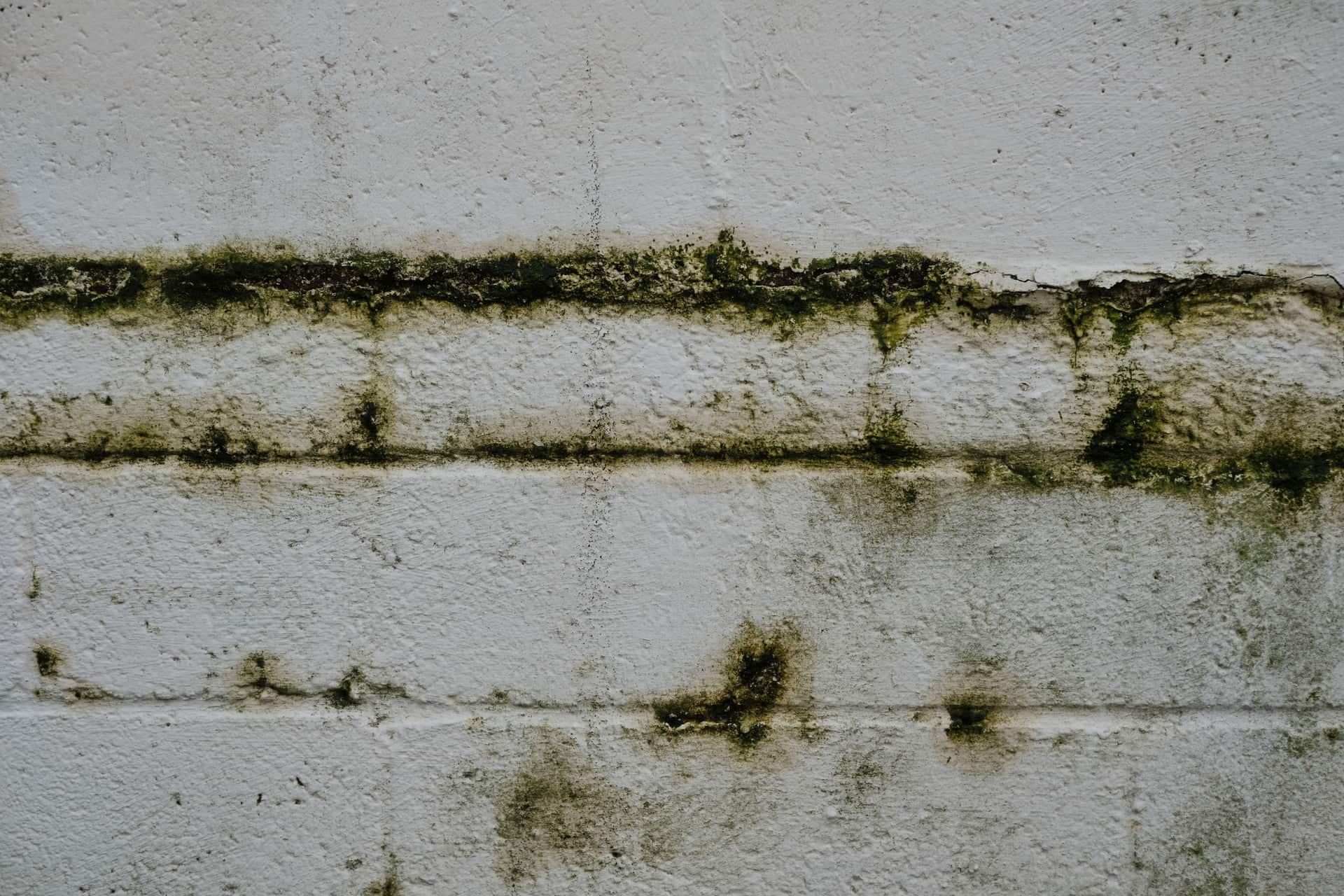
Certified efficiency for basement-sized units, why continuous drainage matters more than capacity, and when to go whole-home.

The picks
Why no dehumidifier carries a certified noise figure, what to buy instead, and the placement changes that beat the spec.
The picks
Certified figures for bedroom-sized units, the real moisture load, and why a fan may solve it for a fraction of a cent an hour.

The picks
Whole-home versus portable on certified efficiency, the crossover point, and honest cons on the installation.
Top pick
Santa Fe Whole-Home Dehumidifier, 128 pints/day

Guide
What pints per day actually measures, why oversizing is safe here, and how to pick a size from the certified capacity bands.
The picks
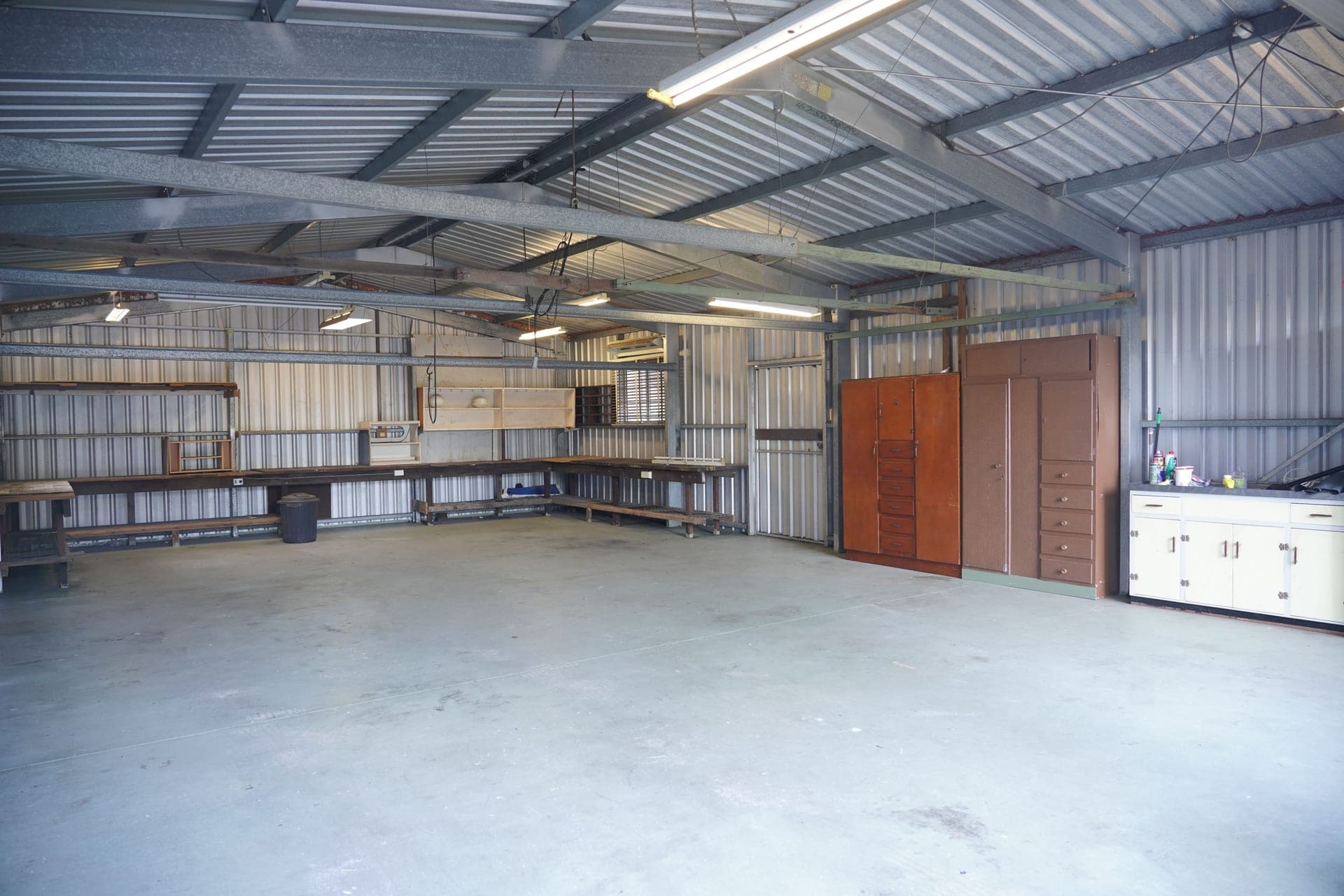
Certified capacity and efficiency for garage-sized units, the cold-weather failure mode, and what the data does not record.

The picks
Certified IEF and annual kWh for apartment-sized units, the tank-emptying reality, and why small wins here.
The picks
Certified IEF for the sub-25-pint class, why the Most Efficient label concentrates here, and honest cons on every pick.
Top pick
AeroNova Dehumidifier, 24.5 pints/day
The picks
Certified figures for pump-equipped units, gravity versus pump versus tank, and the failure mode pumps add.
Top pick
Vissani Dehumidifier with Built-in Pump, 50 pints/day
The picks
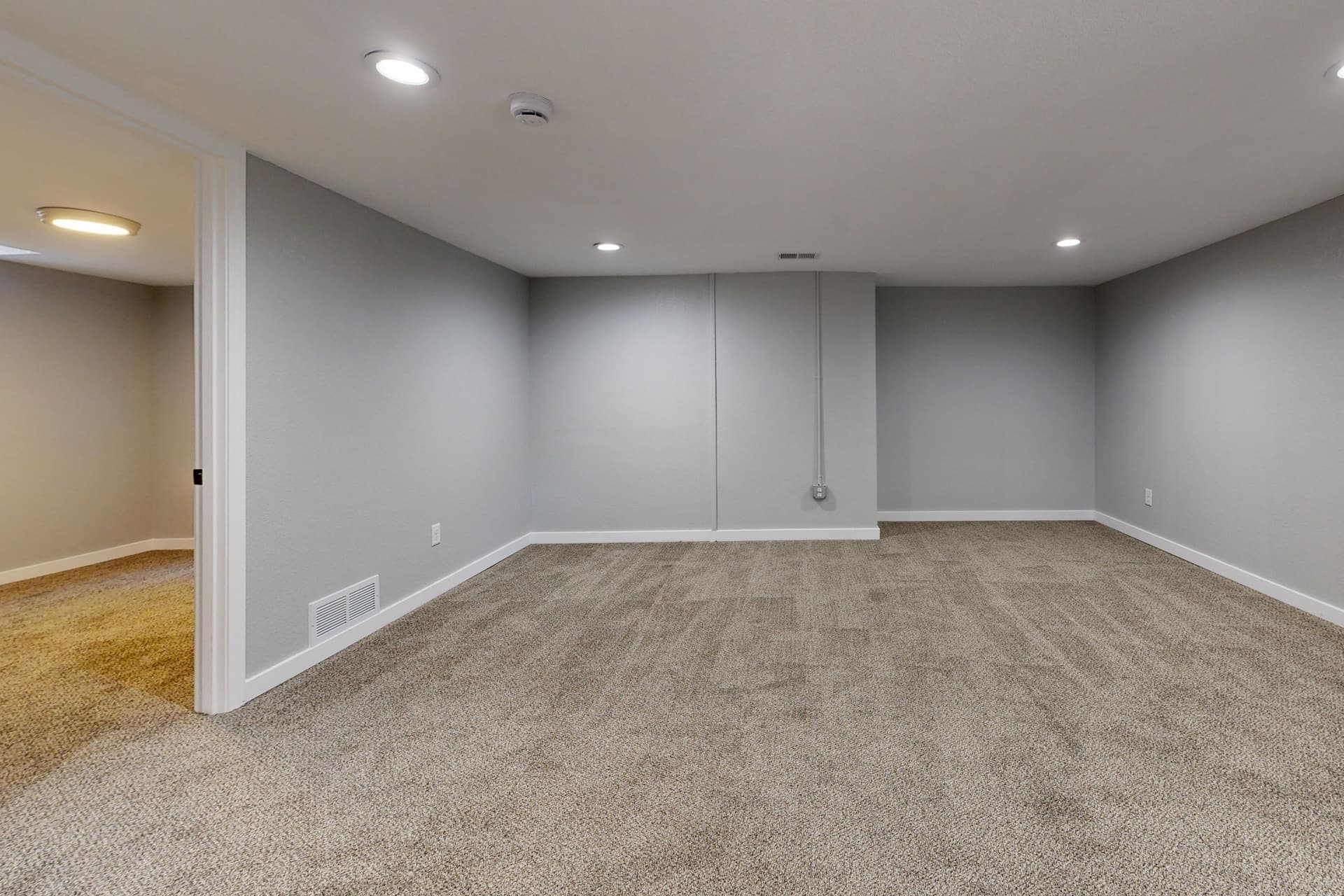
Why a vented crawl space defeats any dehumidifier, what encapsulation changes, and certified capacity once it is sealed.

Head to head
How both machines work, certified annual energy for each, and the test that tells you which one you need.
Top pick
Midea Window Air Conditioner, 6,000 BTU
Guide
Certified annual kWh for sixteen dehumidifiers, costed at the current rate, plus what the figure assumes.
Top pick
Vellgoo Taurus Pro Dehumidifier, 45 pints/day
Guide
The cleaning routine in order of payoff, why a blocked filter costs water removal, and the parts to leave alone.
Top pick
Vellgoo Taurus Pro Dehumidifier, 45 pints/day

Guide
Six causes ranked by likelihood, the temperature threshold nobody publishes, and when it is genuinely a fault.
Guide
Why a moderate humidity target beats a low one, what continuous mode really does, and how the setting drives running cost.
Top pick
Honeywell Smart Dehumidifier, 32 pints/day

Head to head
Certified efficiency against cold-weather capability, using the ENERGY STAR dataset for one side and published operating ranges for the other.
Top pick
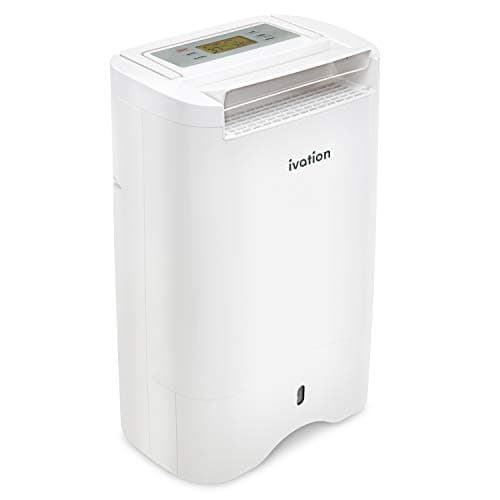
Ivation 19-Pint Desiccant Dehumidifier
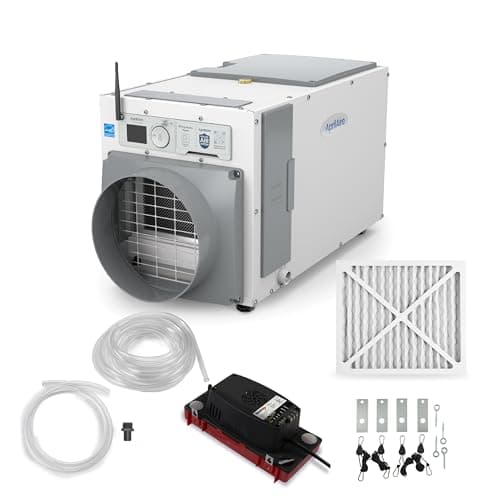
Best whole-house dehumidifier
The certified whole-home field, what ducting buys you, and the honest case for a portable with a pump instead.
Top pick
AprilAire E080W Wi-Fi Whole-House Dehumidifier
Guide
Clearances, which room, which floor, and the four placements that quietly halve what the machine collects.
Read the guide →
Guide
What the federal annual-kWh figures imply about run hours, when continuous running is correct, and when it means something is wrong.
Read the guide →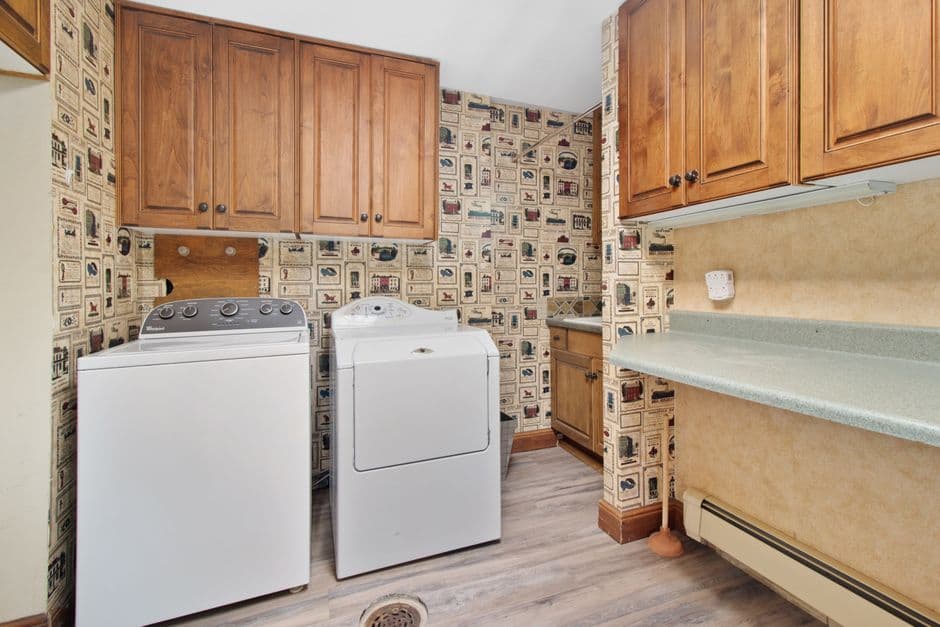
Guide
Gravity versus pumped drainage, the slope and freeze rules, and how to tell which your space allows.
Read the guide →
Head to head
What each machine removes, the certified figures behind both, and how to tell which problem your room has.
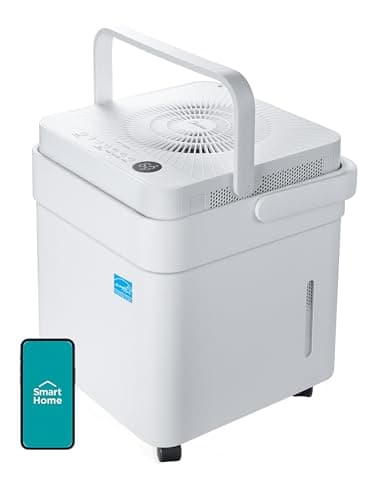
Top pick
Midea Dehumidifier, 20 pints/day
Questions people actually ask
Integrated energy factor — liters of water removed per kilowatt-hour of electricity. It is tested under a federal procedure and published for every certified model, which makes it the efficiency figure a manufacturer cannot write itself. Certified portables run 1.70 to 2.24 L/kWh, median 2.01.
Not usually. Unlike air conditioners, larger dehumidifiers tend to be more efficient per unit of water removed — whole-home units reach 3.26 L/kWh against 2.24 for the best portable. What a bigger unit costs you is purchase price and, in the whole-home case, an installation.
Certified portables run about 283 kWh a year for a 27-pint unit to 526 kWh for a 50-pint one, which is $52 to $96 at 18.34¢/kWh. That assumes the standard test usage; a unit running continuously in a wet basement will use more.
The certified data cannot tell you — the program records no noise figure at all for this category. Any decibel number on a listing is the manufacturer's own, measured however they chose, and is not comparable between brands. What to do instead.
No — slightly the opposite. It removes moisture, which makes a room feel cooler because your sweat can evaporate again, but the machine's own motor and compressor put heat into the space. The comfort gain is real; the temperature does not fall.
If the air temperature is genuinely too high, an air conditioner — it removes moisture too, as a side effect. If the temperature is tolerable and the room simply feels clammy, a dehumidifier does the job for far less, because you are not paying to cool air that did not need cooling. Every category compared.
Sources