Guide and picks
Cooling a garden room or backyard office
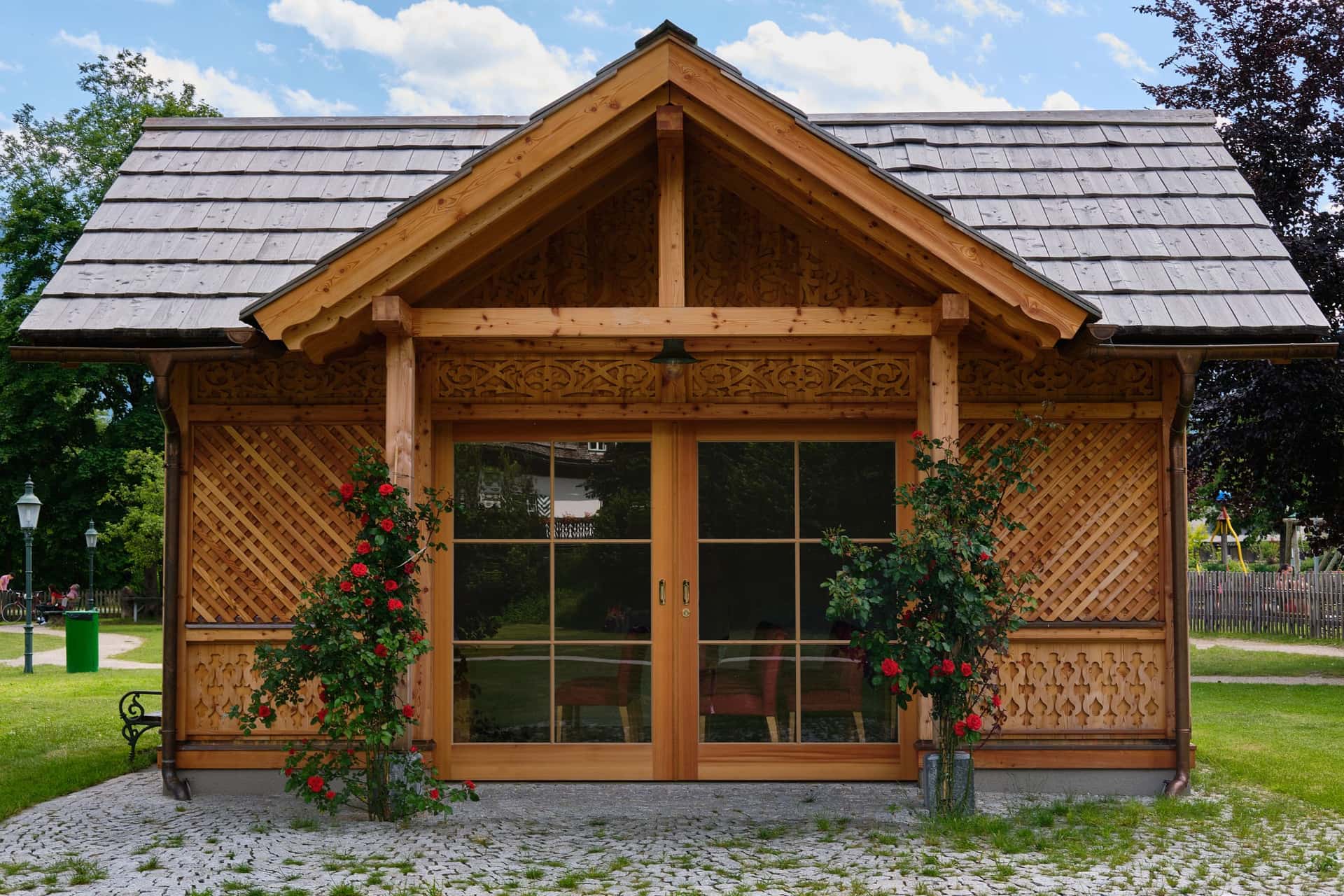
It is the only room in the house where every single surface faces the weather, and that is both the whole problem and the whole opportunity.
By Sawyer V. · Published
The short answer
A garden room is exposed on all six surfaces, including a roof with no attic above it, so it heats faster than any room in the main house. Check the circuit rating before choosing anything: a 10,000 BTU unit at 115 V is fine on a dedicated circuit and not fine sharing one with a computer and a heater. Shade the roof, then cool the space.
Fan & Frost earns a commission when you buy through our links, at no cost to you. It never changes a ranking, and we say so when the right answer is the cheaper unit or nothing at all. Full disclosure · How we pick.
At a glance
The picks, ranked
Tap any row to jump to the full reasoning. Prices are live from Amazon where we have them, and read “check price” where we don’t — never a number we cannot verify today.
| # | Product | Best for | Price |
|---|---|---|---|
| 1 | 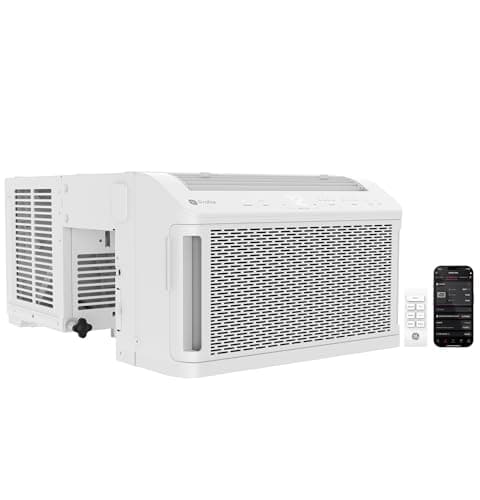 Best overall GE Profile ClearView Window Air Conditioner, 8,000 BTU CEER 16 and 375 kWh a year at 46.2 lb, in an 18.6-inch body that fits the small windows these buildings usually have. | A typical one-person garden office with a standard window | |
| 2 | Best for year-round use Midea Window Heat Pump Air Conditioner, 9,500 BTU CEER 17.6 with reverse-cycle heating — one machine for both seasons in a building that has neither. | A room you intend to work in through the winter too | |
| 3 | 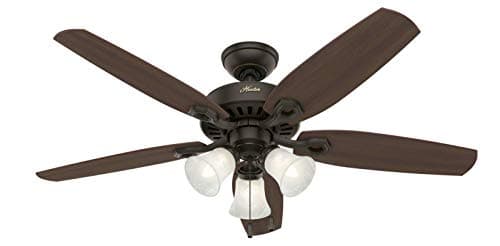 Cheapest useful addition Hunter Vespucci 52" Ceiling Fan 366.7 CFM per watt at 1.8 W on low — air movement that costs nothing to run and lets you hold a higher setpoint. | Any garden room with enough headroom for a ceiling fan | |
| — | The circuit problem Whynter ARC-14S Dual Hose Portable Air Conditioner 1,300 W and 11.6 A — which on a shared 15 A circuit leaves very little for the computer, monitors and everything else in the room. | A building with a dedicated circuit and no other option |
Garden offices, studios, she-sheds and converted outbuildings all share a set of problems that no room inside the house has, and they are worth naming before choosing equipment.
The envelope
Six exposed surfaces, and the roof is the worst
A bedroom has one or two exterior walls. The rest of it is bounded by other rooms at roughly the same temperature, which do most of the insulating for free.
A detached garden room has four walls, a roof and a floor, all facing the weather. Every one of them is a route for heat to arrive, and the roof is the largest and the most exposed because there is no attic above it to absorb and delay the gain.
Two consequences follow:
- It heats up much faster than its floor area suggests. The standard square-footage sizing rule understates what a fully exposed building needs — the adjustments for exposure.
- It also cools down fast once the sun is off it. Low mass works both ways, which makes early-morning and evening ventilation unusually effective.
Glazing
The glass that sold you the building is the problem
Garden rooms are bought for the view, which means a large glazed elevation, usually facing the garden rather than facing north.
Solar gain through glass is the single largest heat input in most buildings, and a small room with a large south or west-facing glazed wall is close to a worst case. On a summer afternoon that glass is delivering more heat than a small air conditioner can remove.
The order to address it in:
- External shading — an awning, a brise soleil, a pergola or a well-placed tree. Stopping the sun before it reaches the glass is several times more effective than stopping it after — shading and film compared.
- Solar-control film on the glass itself, which helps and does not stop the heat arriving at the glass.
- Internal blinds, which are the least effective option because the energy is already inside by then — but they are cheap, immediate and better than nothing.
This is the same problem a sunroom has, and the same one a west-facing room has, in a smaller box.
Power
Find out what the circuit is rated at
This is the constraint people discover last and should discover first.
Outbuildings are usually fed by a single submain from the house consumer unit, sized for lighting, a few sockets and perhaps a small heater. It is often considerably less capacity than a room inside the house has.
| Load | Draw |
|---|---|
| Portable air conditioner, 14,000 BTU | 1,300 W / 11.6 A |
| Window unit, 8,000 BTU, CEER 16 | 375 kWh/yr |
| Utility air mover on high | 178 W |
| Tower fan on low | 2.9 W |
| Ceiling fan on low | 1.8 W |
A standard 15 A circuit should not carry a continuous load above about 12 A. A portable air conditioner at 11.6 A effectively takes the whole circuit, before a computer, two monitors, a printer and a kettle.
If you do not know what feeds your building, find out before buying anything — and if the answer is a long run of undersized cable, a low-power approach is not a compromise, it is the only safe option.
This one is not a DIY job
Extension leads are not a solution to a capacity problem. A coiled extension lead carrying 11 A continuously gets hot, and the cable rating on a domestic lead is frequently below what an air conditioner draws. If a unit needs its own circuit, it needs its own circuit.
Ventilation
Use the fact that it empties every evening
A garden office has an advantage over a bedroom: nobody is in it for sixteen hours a day, and you control exactly when it is occupied.
- Open it up first thing. Purging overnight-cool air through the building before the sun gets on it starts the day several degrees lower, for free — the night purge principle.
- Pre-cool before you go out there, using a timer or an app. Fifteen minutes of compressor before you sit down beats an hour of it while you work.
- Close it up once the outside is hotter than the inside. The rule is the same as for a house and it is easier to follow in a building you leave.
- Leave it ventilated when empty in humid weather, or it will smell of damp by Monday. A sealed, unheated, unoccupied timber building is a good place for condensation — a small dehumidifier on a humidistat solves that better than leaving a window ajar.
Equipment heat
A one-person office generates real heat
In a room this small, internal gains stop being negligible. A desktop computer under load, two monitors, a laser printer and a person add up to a continuous load in a volume that has nowhere to put it.
In a house that heat disperses into the rest of the building. In a detached 100-square-foot room it stays where it is. This is the same problem, at a smaller scale, as cooling a server closet, and the same fixes help — get the equipment out of a closed cabinet, and move air across it.
Say the unwelcome thing
Do not size it from floor area alone.
The standard BTU-per-square-foot chart assumes a room inside a building, insulated on most sides by other rooms. A detached garden office breaks that assumption on every surface at once.
Take the chart figure and add for the things that apply: a heavily glazed elevation, a roof with no attic above it, a floor over ventilated void, and the equipment and person inside it. The honest answer for a 100-square-foot garden office is frequently the same capacity as a much larger interior bedroom.
Then check that the circuit can carry it, and shade the glass before you switch anything on. CEER 16 in an 18.6-inch body is the usual right answer — the chart and the adjustments.
In full
Every pick, and what is wrong with it
Published specifications only, each linked to the page it came from. Where a manufacturer publishes nothing, the row says so — we do not fill blanks in.
1. Best overall
GE Profile ClearView Window Air Conditioner, 8,000 BTU
GE Profile · model PWJV08W
CEER 16 and 375 kWh a year at 46.2 lb, in an 18.6-inch body that fits the small windows these buildings usually have.
The sensible default: enough capacity for a small well-glazed building, at an efficiency that keeps the running cost proportionate to the hours you actually work.
CEER 16 and 375 kWh a year — about $69 at 18.34¢/kWh, Most Efficient certified and 47% under the federal standard.
18.6 inches wide and 12.6 high, the smallest certified body in our set. Garden rooms often have narrow opening lights beside a large fixed pane, and the fixed pane is no use to you.
46.2 lb with a bracket required. On a timber-framed outbuilding, confirm what the wall section under the window can actually carry before ordering — brackets explained.
What’s wrong with it
It needs a support bracket, which on a lightweight timber wall needs checking.
Running cost — PWJV08W
| Annual energy use | 375 kWh | ENERGY STAR certified figure |
|---|---|---|
| Annual cost | $69 | 375 × 18.34¢/kWh |
| Per cooling month | $17 | spread over a four-month season |
The annual figure is the certified value from the ENERGY STAR Certified Room Air Conditioners dataset, which models a standard cooling season rather than your actual summer. It is more useful than a nameplate wattage here, because a variable-speed compressor spends most of its life well below nameplate.
Rate: 18.34¢/kWh, the US average residential price for June 2026 (EIA Electric Power Monthly, Table 5.3). Yours will differ — swap it in: (watts ÷ 1000) × hours × your rate.
| Cooling capacity | 8,000 BTU/h |
|---|---|
| CEER | 16 |
| Annual energy use | 375 kWh/yr |
| vs federal standard | 47% less energy |
| Dimensions | 12.6 H x 18.6 W x 15.3 D in |
| Weight | 46.2 lb |
| Refrigerant | R-32 |
| Installation | Does not straddle the windowsill |
| Compressor | Variable speed |
| ENERGY STAR | Certified, and on the Most Efficient list |
Every figure above is from ENERGY STAR Certified Room Air Conditioners dataset. Blanks are shown as “not published” rather than filled in.
2. Best for year-round use
Midea Window Heat Pump Air Conditioner, 9,500 BTU
Midea · model MAH09B1AGR
CEER 17.6 with reverse-cycle heating — one machine for both seasons in a building that has neither.
Garden offices are almost always built with no heating and no cooling, and a machine that does both is a materially better purchase than one that does half.
Reverse-cycle heating means winter heat at a coefficient of performance well above 1, rather than the resistance heater most garden rooms end up with at exactly 1.
CEER 17.6 and 404.8 kWh a year, about $74 at 18.34¢/kWh — the highest certified efficiency of all 505 certified room units, and 80% under the federal standard.
129 lb is the serious caveat here. It straddles the sill so it needs no bracket, but a lightweight outbuilding window is not a masonry opening. Check the structure, and plan a two-person lift — window units that heat.
What’s wrong with it
129 lb, on a structure that may not have been built to carry it in a window.
Running cost — MAH09B1AGR
| Annual energy use | 404.8 kWh | ENERGY STAR certified figure |
|---|---|---|
| Annual cost | $74 | 404.8 × 18.34¢/kWh |
| Per cooling month | $19 | spread over a four-month season |
The annual figure is the certified value from the ENERGY STAR Certified Room Air Conditioners dataset, which models a standard cooling season rather than your actual summer. It is more useful than a nameplate wattage here, because a variable-speed compressor spends most of its life well below nameplate.
Rate: 18.34¢/kWh, the US average residential price for June 2026 (EIA Electric Power Monthly, Table 5.3). Yours will differ — swap it in: (watts ÷ 1000) × hours × your rate.
| Cooling capacity | 9,500 BTU/h |
|---|---|
| Heating mode | Yes, reverse cycle |
| CEER | 17.6 |
| Annual energy use | 404.8 kWh/yr |
| vs federal standard | 80% less energy |
| Dimensions | 20.9 H x 25.0 W x 41.2 D in |
| Weight | 129.0 lb |
| Installation | Straddles the windowsill (saddle style) |
| Support bracket | Not required |
| Compressor | Variable speed |
| Refrigerant | R-32 |
| ENERGY STAR | Certified, and on the Most Efficient list |
Every figure above is from ENERGY STAR Certified Room Air Conditioners dataset. Blanks are shown as “not published” rather than filled in.
3. Cheapest useful addition
Hunter Vespucci 52" Ceiling Fan
Hunter · model Vespucci
366.7 CFM per watt at 1.8 W on low — air movement that costs nothing to run and lets you hold a higher setpoint.
The thing to add before, or instead of, a compressor. In a small room with one person in it, air movement covers a surprising amount of ground.
366.7 CFM per watt, certified, against a median of 189.2 across the 42 to 56 inch band. That efficiency means it does useful work on its lowest setting.
1.8 W on low is 0.3¢ for an eight-hour working day at 18.34¢/kWh. On a building fed by one modest circuit, a 1.8 W load is free in every practical sense.
The honest limit is headroom. Many garden rooms have 7 ft ceilings or a sloped roof, and a ceiling fan needs clearance — flush-mount fans for low ceilings.
What’s wrong with it
Garden rooms often have low or sloped ceilings, which rules a downrod fan out.
Running cost — Vespucci
| Nameplate power | 1.8 W – 13.9 W | manufacturer's published figure |
|---|---|---|
| Energy, 8-hour night | 0.11 kWh | 13.9 ÷ 1000 × 8 |
| Cost per hour | 0.3¢ | at 18.34¢/kWh |
| Cost per 8-hour night | 2.0¢ | on the highest speed |
| Cost per 30 nights | 61¢ | 3.3 kWh |
| Same month, lowest speed | 7.9¢ | at 1.8 W |
Rate: 18.34¢/kWh, the US average residential price for June 2026 (EIA Electric Power Monthly, Table 5.3). Yours will differ — swap it in: (watts ÷ 1000) × hours × your rate.
| Blade span | 52 in |
|---|---|
| Efficiency | 366.7 CFM per watt |
| Power, high speed | 13.9 W |
| Power, low speed | 1.8 W |
| Standby power | 0.8 W |
| Type | Indoor, fan only (no light kit) |
| Warranty | 3 years, components |
| ENERGY STAR | Certified |
Every figure above is from ENERGY STAR Certified Ceiling Fans dataset. Blanks are shown as “not published” rather than filled in.
Skip this one
Whynter ARC-14S Dual Hose Portable Air Conditioner
Whynter · model ARC-14S
1,300 W and 11.6 A — which on a shared 15 A circuit leaves very little for the computer, monitors and everything else in the room.
Flagged for a reason specific to outbuildings rather than a general objection to portables.
11.6 A at 115 V. A standard 15 A circuit should not be loaded continuously above about 12 A, so this unit alone effectively occupies the circuit. Add a workstation, two monitors and a kettle and you are tripping the breaker.
Garden rooms are frequently fed by a single modest submain from the house, which makes this a real constraint rather than a theoretical one. Find out what yours is rated at before choosing anything.
1,300 W is also about $1.91 for an eight-hour working day at 18.34¢/kWh, and no portable holds ENERGY STAR certification — when a portable is genuinely right.
What’s wrong with it
It is also uncertified, and single-hose versions defeat the sealing you paid for.
Running cost — ARC-14S
| Nameplate power | 1300 W | manufacturer's published figure |
|---|---|---|
| Energy, 8-hour night | 10.40 kWh | 1300 ÷ 1000 × 8 |
| Cost per hour | 24¢ | at 18.34¢/kWh |
| Cost per 8-hour night | $1.91 | on the highest speed |
| Cost per 30 nights | $57 | 312.0 kWh |
Rate: 18.34¢/kWh, the US average residential price for June 2026 (EIA Electric Power Monthly, Table 5.3). Yours will differ — swap it in: (watts ÷ 1000) × hours × your rate.
| Marketing capacity | 14,000 BTU (ASHRAE-128) |
|---|---|
| DOE-rated capacity | 9,500 BTU SACC |
| Hoses | Dual |
| Power | 1,300 W / 11.6 A at 115 V |
| Noise | Under 51 dBA low, under 56 dBA high |
| Dehumidification | 71 pints/day |
| Refrigerant | R-32 |
| Dimensions | 16 W x 19 D x 35.5 H in |
| Weight | 73 lb |
| Manufacturer coverage claim | 500 sq ft |
| Warranty | 1 year unit, 3 years compressor |
Every figure above is from Whynter product page, ARC-14S. Blanks are shown as “not published” rather than filled in.
We are not linking a buy button for this one. If you want to look at it anyway, it is easy enough to find — but we would rather send you to something that fits your room.
Questions people actually ask
Frequently asked
How do you cool a garden office?
Shade the glazing from outside first, purge the building with cool air early, then add cooling sized for a fully exposed structure rather than for its floor area. Check what the electrical circuit is rated at before choosing anything — it is usually the binding constraint.
Why does my garden room get so hot?
Because all six surfaces face the weather, including a roof with no attic above it to absorb and delay the gain. Add a large glazed elevation facing the garden rather than north, and a small volume heats far faster than its floor area suggests.
What size air conditioner does a garden room need?
More than the square-footage chart implies. That chart assumes a room bounded by other rooms; a detached building is exposed on every side. Add for the glazed elevation, the uninsulated roof, the floor over a void, and the equipment and person inside. Sizing, properly.
Can I run an air conditioner in an outbuilding on a normal circuit?
Check the rating first. A 15 A circuit should not carry a continuous load above about 12 A, and a portable air conditioner at 11.6 A effectively occupies the whole circuit before any computers. Outbuildings are often fed by a modest submain.
Should I use a portable or a window unit in a garden office?
A window unit if a window will take one. It is certified, roughly a quarter of the draw, and does not depressurize a small sealed building. A portable at 11.6 A is also a circuit problem in a building that usually has limited capacity. When a portable is right.
Why does my garden room smell damp on Monday?
Because it sat sealed, unheated and unoccupied all weekend, which is ideal conditions for condensation in a lightweight timber building. Leave it ventilated when empty in humid weather, or run a small dehumidifier on a humidistat.
Sources
Where these numbers came from
- ENERGY STAR Certified Room Air Conditioners dataset — CEER, annual kWh, dimensions and bracket requirement for every unit cited
- ENERGY STAR Certified Ceiling Fans dataset — CFM per watt and low-speed wattage for the fan cited
- Whynter ARC-14S product page — 1,300 W / 11.6 A at 115 V
- Lasko product page, U15720 — 160 to 178 W across three speeds
- EIA Electric Power Monthly, Table 5.3 — average residential electricity price
Read next
Where to go from here
Back to Room Cooling, or read how we pick.