Guide and picks
Do you need a dehumidifier in winter?
The heated part of the house usually needs less dehumidification in January than in July. The unheated part needs more, and the machine you already own is the wrong one for it.
By Sawyer V. · Published
The short answer
In a heated room, usually not. Winter air holds very little moisture, so heating it drives relative humidity down — a warm house in January is typically drier than the same house in July. Where you do need one is anywhere cold: a crawl space, a basement, an unheated garage or spare room. And that is the catch, because a compressor dehumidifier frosts rather than drains in a cold room, so the winter answer is usually a desiccant or a purpose-built crawl-space unit rather than the portable in the cupboard.
Fan & Frost earns a commission when you buy through our links, at no cost to you. It never changes a ranking, and we say so when the right answer is the cheaper unit or nothing at all. Full disclosure · How we pick.
At a glance
The picks, ranked
Tap any row to jump to the full reasoning. Prices are live from Amazon where we have them, and read “check price” where we don’t — never a number we cannot verify today.
| # | Product | Best for | Price |
|---|---|---|---|
| 1 | 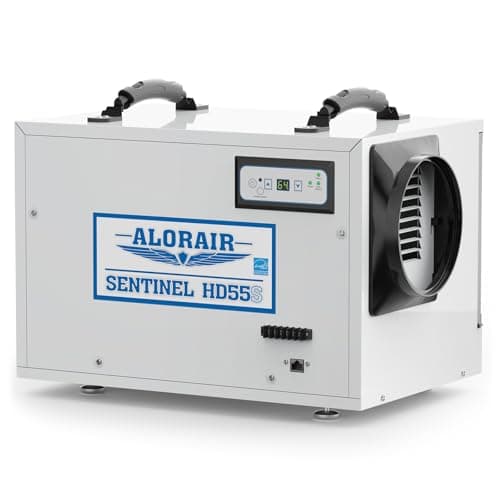 Best for a crawl space AlorAir Sentinel HD55S Crawl Space Dehumidifier 120 pints a day at saturation, ductable both ends, gravity drain, 6-year warranty, covering up to 1,300 sq ft. Built to be installed once and left in a place nobody visits. | A crawl space, a sealed under-floor void or a cold basement that needs drying through the winter and forgetting about | |
| 2 | 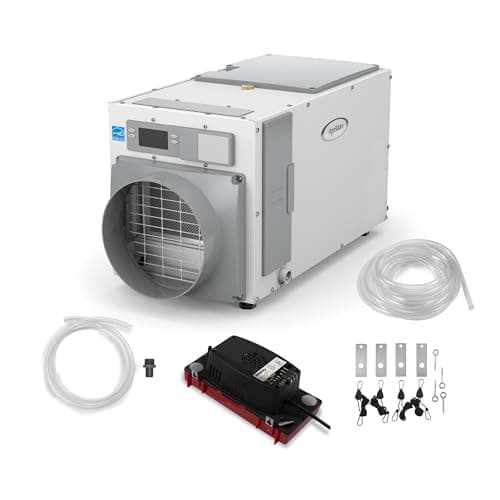 Best if it is the whole house Aprilaire E080 Whole-Home Dehumidifier, 65 pints/day IEF 2.35 L/kWh and on the Most Efficient list, which beats every one of the certified portables. 65 pints a day on the federal test. | A house that is damp in winter everywhere rather than in one cold corner — and one with ductwork or a mechanical room to put a unit in | |
| 3 | 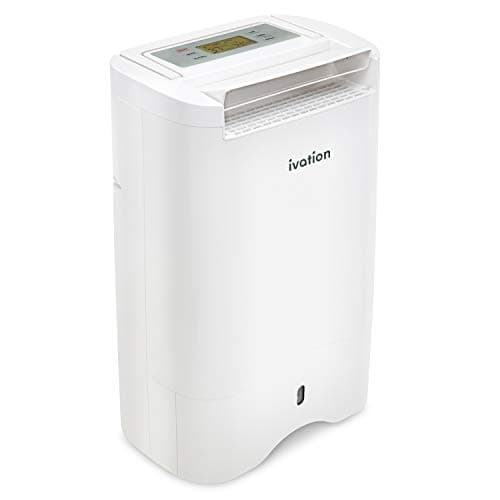 Best for an unheated room you use Ivation 19-Pint Desiccant Dehumidifier A desiccant rotor with no compressor, published down to 33 F. It is the only machine here that keeps drying at the temperatures that cause the problem. | A cold spare room, a porch, a workshop or a garage in the forties — anywhere a compressor unit would frost instead of drain | |
| — | 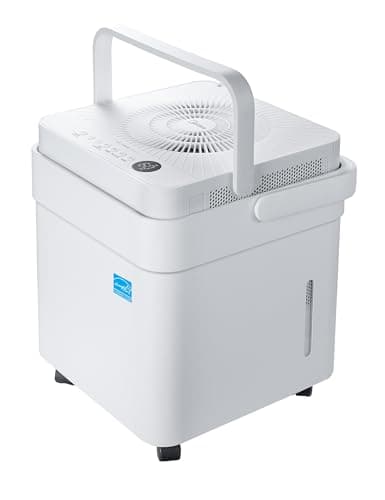 The one to skip, in winter specifically Midea Dehumidifier, 50 pints/day The most efficient household-name portable there is at IEF 2.08, and the wrong tool for a cold room. Not a bad machine: a seasonal mismatch. | A warm damp basement in summer, where it is genuinely the best-value machine in the category — and not the cold garage you were thinking of |
The intuition is that winter is damp, so winter is dehumidifier season. For the heated part of a house that is backwards, and understanding why saves most people the purchase.
The mechanism
Heating air dries it
Relative humidity is a ratio: how much water the air holds against the most it could hold at that temperature. The second half of that fraction grows quickly with temperature, so the same quantity of water in warmer air reads as a lower percentage.
Cold outdoor air in winter contains very little water in absolute terms. Leak it into a house, warm it to 68 F, and its relative humidity falls — which is why heated houses in winter are the ones with cracked furniture, static and dry skin, and why humidifiers sell in January.
So the honest general answer for a heated room is no: if anything you may have the opposite problem. Which of the two machines you actually need is worth settling before buying either.
The exception
Cold surfaces, and the four places they live
Everything changes where the air is not heated. The EPA puts the mechanism plainly: “When warm, humid air contacts a cold surface, condensation may form”, and “Mold is frequently found on walls in cold corners behind furniture where condensation forms.”
In winter the cold surfaces are the ones that matter, and they cluster in four places:
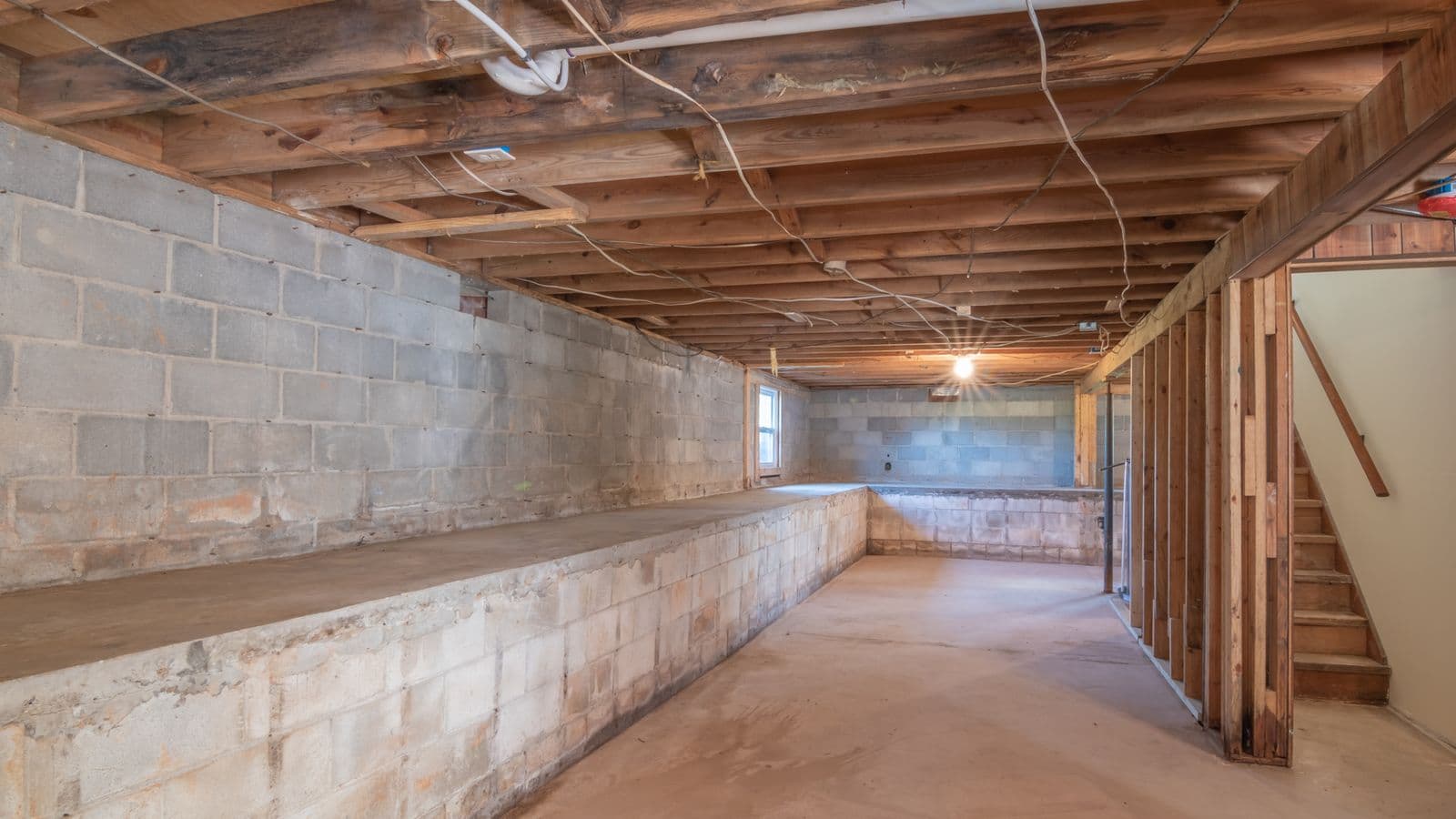
- A crawl space or under-floor void. Cold, in contact with wet ground, and ventilated with outdoor air. The clearest case for a dehumidifier running all winter. The crawl-space case.
- An unheated or part-heated basement. Masonry below grade stays cold and damp while the floor above is heated, which puts the dew point line inside the wall. Basements.
- A garage or workshop. Usually in the forties in winter, often storing metal that rusts and material that warps. Garages.
- A closed-off spare room. Heating turned off, door shut, so the surfaces track outdoor temperature while moisture from the rest of the house migrates in. It shows up as wet glass and a smell when you open it in December. What a shut-up spare room needs.
The catch
A compressor unit is the wrong machine for a cold room
Here is the trap this page exists for. The places that need drying in winter are cold, and a standard portable dehumidifier — the kind almost everyone already owns — stops working in exactly those conditions.
A compressor machine chills a coil below the dew point of the air so water condenses on it and runs off. In a cold room the coil has to go below freezing to get there, and the condensate becomes frost instead of drainage. The unit then alternates between drying and defrosting, and the water in the tank after a week tells you how little it achieved.
The specification sheets are no help, because the certified figures are measured warm:
| Machine type | Works down to | Certified efficiency | Published wattage |
|---|---|---|---|
| Compressor portable | About 60 F in practice | IEF 1.70 - 2.24 L/kWh | No |
| Desiccant portable | 33 F, published | No program exists | No |
| Crawl-space unit | Maker-stated, not certified | Not in the dataset | No |
| Ducted whole-home | Installed in warm space | IEF 2.22 - 3.26 L/kWh | No |
Efficiency ranges from the ENERGY STAR Certified Dehumidifiers dataset. The federal test procedure is run at a warm condition, so no certified figure describes performance in a cold room — and the dataset contains no low-temperature field and no wattage field at all.
Read the gaps in that table rather than the numbers. The one class with a published low-temperature limit is the desiccant, and it is the one class with no certified efficiency. You can know that it works in the cold or you can know what it costs to run. Not both.
This one is not a DIY job
Heat is the other answer, and often the cheaper one. The EPA lists “Increase air temperature” among its humidity-reduction actions, because warming a space raises how much water the air can hold and lifts the surfaces above the dew point at the same time. In a small cold room — a porch, a closet, a wardrobe on an external wall — a little heat and a little air movement frequently beats a machine, and uses less electricity than one.
Deciding
A short test before you buy anything
- Measure, in the room that has the problem. The EPA target is below 60 percent relative humidity, ideally 30 to 50. A reading from the heated living room tells you nothing about the garage.
- Take the room’s temperature at the same time. Below about 60 F, a compressor unit is off the table regardless of what the humidity says.
- Look for the source before the symptom. Winter damp in a cold room is usually the ground, a failed gutter or a leak rather than room air. A dehumidifier run against active water ingress is a permanent electricity bill with no end state.
- Try heat and air movement first in a small space. Cheaper, quieter, and it addresses the cold surface rather than the air above it.
- Then match the machine to the temperature, not to the square footage. The capacity question is secondary to whether the unit functions at all. Sizing, once you know the type.
Say the unwelcome thing
Do not leave a compressor dehumidifier running in an unheated space over winter.
Two reasons, and the second is the expensive one. It will barely dry — the coil frosts and the machine defrosts instead of collecting. And if the space drops below freezing, water in the tank, the pump and the hose can freeze; a split pump housing or a cracked reservoir is a repair that outlasts the season.
If a unit has to stay in a cold space, drain it dry and switch it off, or replace it with a desiccant machine with a published low-temperature limit. Storing a compressor unit for the winter is a five-minute job worth doing.
In full
Every pick, and what is wrong with it
Published specifications only, each linked to the page it came from. Where a manufacturer publishes nothing, the row says so — we do not fill blanks in.
1. Best for a crawl space
AlorAir Sentinel HD55S Crawl Space Dehumidifier
AlorAir · model Sentinel HD55S
120 pints a day at saturation, ductable both ends, gravity drain, 6-year warranty, covering up to 1,300 sq ft. Built to be installed once and left in a place nobody visits.
120 pints a day at saturation, 55 at AHAM, up to 1,300 sq ft, with a ductable inlet and outlet and a gravity drain hose. Six years of warranty, which is the longest in our registry and the right question to ask about a machine that will run unattended under a floor.
A crawl space is the clearest case for winter dehumidification in the whole house, and it is nothing to do with how damp the air feels upstairs. The void is cold, the ground under it is wet, and the moisture migrates up through the structure all winter whether or not you can smell it.
The honest limitation is measurement. AlorAir does not appear in the ENERGY STAR certified dehumidifier dataset for this unit, so there is no IEF, no annual kWh and no wattage on the product page. The 120-pint figure is quoted at saturation, which is a much wetter condition than the federal test uses — the 55-pint AHAM figure is the comparable one.
Gravity drain rather than a pump, so it needs somewhere downhill to send the water. The crawl-space case in full, including whether to seal first.
What’s wrong with it
Nothing about it is in the certified dataset — no IEF, no annual kWh, no published wattage — so we cannot tell you what it costs to run. It is also an installed appliance rather than something you plug in and carry.
Running cost
AlorAir does not publish a wattage for the Sentinel HD55S, so we cannot calculate what it costs to run. We are not going to estimate one. If AlorAir publishes a nameplate figure, this block will show the arithmetic.
| Water removal | 120 pints/day at saturation, 55 pints/day at AHAM |
|---|---|
| Coverage | Up to 1,300 sq ft |
| Drain | Gravity drain hose |
| Ducting | Ductable inlet and outlet |
| Dimensions | 19.2 W x 12.2 D x 13.3 H in |
| Warranty | 6 years limited |
| ENERGY STAR | Not in the certified dehumidifier dataset |
| Efficiency (IEF) | Not published |
| Power | Not published on the product page |
Every figure above is from AlorAir product page, Sentinel HD55S (white). Blanks are shown as “not published” rather than filled in.
2. Best if it is the whole house
Aprilaire E080 Whole-Home Dehumidifier, 65 pints/day
Aprilaire · model E080
IEF 2.35 L/kWh and on the Most Efficient list, which beats every one of the certified portables. 65 pints a day on the federal test.
IEF 2.35 L/kWh, certified, on the ENERGY STAR Most Efficient list. The certified portable field runs 1.70 to 2.24, so this sits above all of it — and the reason is form factor rather than brand: capacity and efficiency move together in dehumidifiers, so the ducted class simply operates in a better part of the curve.
65.00 pints a day on DOE Appendix X1 at 632 kWh a year, about $116 at 18.34¢/kWh if it ran constantly — which in winter it will not, because it runs to a humidistat.
Where this earns its place on a winter page: it installs ducted or free-standing, which means it can sit in a warm mechanical room and dry a cold one through ductwork. That sidesteps the whole cold-coil problem that disables a portable in an unheated space.
Two honest flags. The marketed 80-pint figure is not the federal 65, and at this price you are buying a permanent fixture. The Wi-Fi version adds nothing measurable to the drying.
What’s wrong with it
An order of magnitude more money than a portable and an installed fixture rather than an appliance. AprilAire markets it as 80 pint where DOE measures 65, so size against 65.
Running cost — E080
| Annual energy use | 632 kWh | ENERGY STAR certified figure |
|---|---|---|
| Annual cost | $116 | 632 × 18.34¢/kWh |
| Per cooling month | $29 | spread over a four-month season |
The annual figure is the certified value from the ENERGY STAR Certified Dehumidifiers dataset, which models a standard cooling season rather than your actual summer. It is more useful than a nameplate wattage here, because a variable-speed compressor spends most of its life well below nameplate.
Rate: 18.34¢/kWh, the US average residential price for June 2026 (EIA Electric Power Monthly, Table 5.3). Yours will differ — swap it in: (watts ÷ 1000) × hours × your rate.
| Water removal | 65.00 pints/day (DOE Appendix X1) |
|---|---|
| Efficiency (IEF) | 2.35 L/kWh |
| Annual energy use | 632 kWh/yr |
| Unit type | Whole-home (ducted or free-standing install) |
| Noise | Not published in the certified dataset |
| ENERGY STAR | Certified, and on the Most Efficient list |
Every figure above is from ENERGY STAR Certified Dehumidifiers dataset. Blanks are shown as “not published” rather than filled in.
3. Best for an unheated room you use
Ivation 19-Pint Desiccant Dehumidifier
Ivation · model IVADDH09
A desiccant rotor with no compressor, published down to 33 F. It is the only machine here that keeps drying at the temperatures that cause the problem.
Published operating range 33 F to 104 F. That one line is why it is on this page. A desiccant machine passes air over a moisture-absorbing rotor and drives the water off with heat; there is no cold coil to frost, so the floor of its working range is near freezing rather than near 60 F.
19 pints a day at 68 F and 60 percent RH, up to 410 sq ft, two speeds, removable reservoir plus a continuous drain hose. It also returns its heat to the room, which in an unheated space in winter is a feature rather than a nuisance.
The gap is the data, and it is a large one. No ENERGY STAR program covers desiccant dehumidifiers, so there is no certified efficiency, no annual energy figure, and no wattage published. Every other machine on this page can be converted into cents per liter; this one cannot, and we are not going to estimate it.
Buy it where the alternative is a machine that does not work at all. The 60-degree line, and which side of it your room is on.
What’s wrong with it
No federal program covers desiccant dehumidifiers, so there is no IEF, no annual kWh and no published wattage — the cost of running it is genuinely unknown. Its 19-pint rating is at the maker's own condition, not DOE Appendix X1.
Running cost
Ivation does not publish a wattage for the IVADDH09, so we cannot calculate what it costs to run. We are not going to estimate one. If Ivation publishes a nameplate figure, this block will show the arithmetic.
| Water removal | 19 pints/day at 68 F and 60% RH (manufacturer condition, not DOE Appendix X1) |
|---|---|
| Coverage | Up to 410 sq ft |
| Operating range | 33 F to 104 F |
| Drying element | Desiccant rotor, no compressor |
| Drain | Removable reservoir plus continuous drain hose |
| Speeds | 2 |
| Controls | LCD, timer, sleep mode, outlet swing |
| ENERGY STAR | No program covers desiccant dehumidifiers |
| Efficiency (IEF) | Not published |
| Power | Not published |
Every figure above is from Ivation product page, 19-pint small-area desiccant dehumidifier. Blanks are shown as “not published” rather than filled in.
Skip this one
Midea Dehumidifier, 50 pints/day
Midea · model MDUDMB-50AEN8-BB0F
The most efficient household-name portable there is at IEF 2.08, and the wrong tool for a cold room. Not a bad machine: a seasonal mismatch.
This is deliberately the skip card rather than a criticism. On our own warm-weather pages this is the pick: 49.67 pints a day at IEF 2.08 L/kWh, the only household-name brand above the certified ceiling, and 8.8¢ per liter of water removed.
In a cold room none of that applies. A compressor dehumidifier works by condensing water onto a coil held below the dew point of the air passing it. In a room at 45 F the coil has to run below freezing to do that, so it ices up, and the machine spends its time in a defrost cycle rather than drying.
The specification sheets are quiet about this because the federal test is run warm. The certified 515 kWh a year figure — about $94 — is a measurement taken at the test condition, not a promise about your garage in January.
Keep it for the warm half of the year. It genuinely is the efficiency pick then. Where it is the right answer, in a heated house with wet windows.
What’s wrong with it
It is a compressor unit. In a room much below 60 F the coil frosts instead of draining, so the machine cycles into defrost, collects very little water, and spends the winter paying for a result you do not get.
Running cost — MDUDMB-50AEN8-BB0F
| Annual energy use | 515 kWh | ENERGY STAR certified figure |
|---|---|---|
| Annual cost | $94 | 515 × 18.34¢/kWh |
| Per cooling month | $24 | spread over a four-month season |
The annual figure is the certified value from the ENERGY STAR Certified Dehumidifiers dataset, which models a standard cooling season rather than your actual summer. It is more useful than a nameplate wattage here, because a variable-speed compressor spends most of its life well below nameplate.
Rate: 18.34¢/kWh, the US average residential price for June 2026 (EIA Electric Power Monthly, Table 5.3). Yours will differ — swap it in: (watts ÷ 1000) × hours × your rate.
| Water removal | 49.67 pints/day (DOE Appendix X1) |
|---|---|
| Efficiency (IEF) | 2.08 L/kWh |
| Annual energy use | 515 kWh/yr |
| Refrigerant | HFC-32 (GWP 675) |
| Connected | No |
| Noise | Not published in the certified dataset |
| ENERGY STAR | Certified |
Every figure above is from ENERGY STAR Certified Dehumidifiers dataset. Blanks are shown as “not published” rather than filled in.
We are not linking a buy button for this one. If you want to look at it anyway, it is easy enough to find — but we would rather send you to something that fits your room.
Questions people actually ask
Frequently asked
Do you need a dehumidifier in winter?
In a heated room, usually not — winter air holds little moisture, so heating it drives relative humidity down and a warm house in January is typically drier than the same house in July. In cold spaces you often do: crawl spaces, unheated basements, garages and closed-off spare rooms stay damp all winter because their surfaces are cold.
Will a dehumidifier work in a cold room?
A compressor one will struggle below roughly 60 F, because the coil has to run below freezing to condense water and ices up instead of draining — the machine then cycles into defrost rather than drying. A desiccant unit has no cold coil; the one in our registry publishes an operating range down to 33 F. Desiccant or compressor.
Should I run a dehumidifier in the basement in winter?
If the basement is unheated or part-heated, yes — masonry below grade stays cold and damp while the floor above is warm, which puts the condensation line inside the structure. Use a machine rated for the temperature: a standard portable in a cold basement frosts rather than drains. Basement dehumidifiers.
Can I leave a dehumidifier in an unheated garage over winter?
Not a compressor one. It will barely collect water, and if the space drops below freezing the tank, pump and hose can freeze and split. Either drain it and switch it off for the season, or use a desiccant unit with a published low-temperature limit.
My windows are wet in winter but the house feels dry. Which is it?
Both, and they are not in conflict. Relative humidity depends on temperature, so the room air can be moderately dry while the pane — sitting close to outdoor temperature — is below the dew point of the air touching it. The glass is reporting on the coldest surface in the room, not on the room. Why the glass goes wet.
What humidity should a house be in winter?
The EPA publishes a single year-round band: below 60 percent relative humidity, ideally between 30 and 50 percent. In winter the practical constraint is tighter than that number alone implies, because the colder your windows and external walls are, the lower the humidity has to be to keep them dry.
Sources
Where these numbers came from
- ENERGY STAR Certified Dehumidifiers dataset — certified IEF, DOE Appendix X1 capacity and annual kWh; no low-temperature or wattage field exists in it
- EPA, A Brief Guide to Mold, Moisture and Your Home — the 30 to 50 percent band, and increasing air temperature among the actions that reduce humidity
- EPA Mold Course, Chapter 2 — warm humid air on a cold surface forms condensation; mold in cold corners
- Ivation product page, 19-pint small-area desiccant dehumidifier — 33 F to 104 F published operating range
- AlorAir product page, Sentinel HD55S — 120 pints at saturation, 55 at AHAM, ductable, 6-year warranty
- EIA Electric Power Monthly, Table 5.3 — electricity rate
Read next
Where to go from here
Back to Dehumidifiers, or read how we pick.