Guide and picks
How to cool a room without air conditioning
Nine things people try, ranked by how much each one actually does. The two most effective are free, and two of the most popular barely work at all.
By Sawyer V. · Published
The short answer
In order of effect: block the sun before it enters (free, and the biggest single lever); exhaust hot air once the outdoor temperature drops below indoor (31 W); turn off heat sources inside the room (free); then a fan aimed at you. Without refrigeration you cannot get below the outdoor temperature — everything here works within that limit.
Fan & Frost earns a commission when you buy through our links, at no cost to you. It never changes a ranking, and we say so when the right answer is the cheaper unit or nothing at all. Full disclosure · How we pick.

At a glance
The picks, ranked
Tap any row to jump to the full reasoning. Prices are live from Amazon where we have them, and read “check price” where we don’t — never a number we cannot verify today.
| # | Product | Best for | Price |
|---|---|---|---|
| 1 | The one purchase that lowers temperature Lasko Twin Window Fan with Remote Without a compressor, exchanging air with a cooler outside is the only way to actually lower a room's temperature. This is the tool for it. | Any room with a 24-32 inch sash window | |
| 2 | 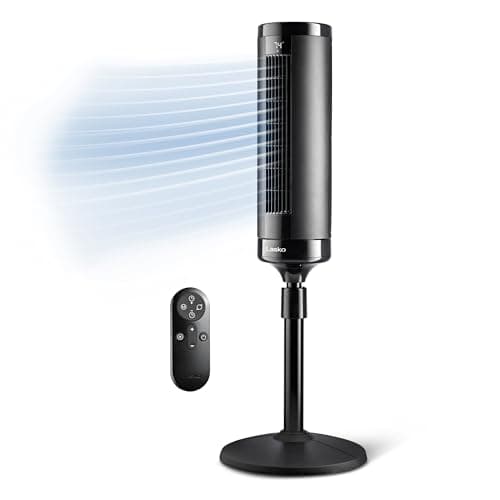 Best fan on you Lasko EcoQuiet 42" DC Tower Fan 2.9 W and 23 dBA on low — the cheapest and quietest way to feel several degrees cooler while the windows stay shut. | The hours when it is still hotter outside than in | |
| 3 | The cheap heavy lifter Lasko Power Plus 20" Box Fan A weather-resistant motor and a 4.75-inch depth make it a serviceable window fan for almost any opening. | A window that will not fit a purpose-built fan, or a big opening | |
| 4 | Only if your air is dry Honeywell CL25AE Indoor Evaporative Cooler The one non-refrigeration device that produces genuinely colder air — but only below about 40% humidity. | A single room in a genuinely dry climate, with a window open | |
| — | 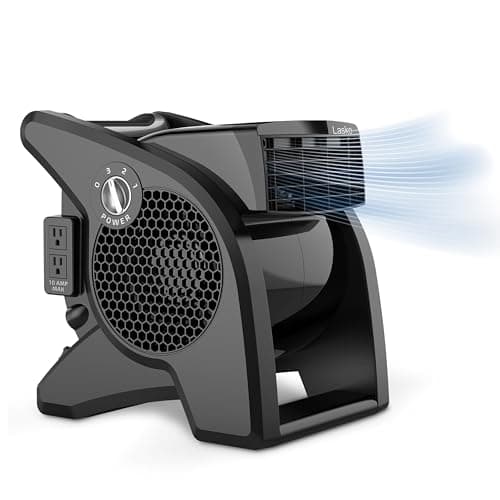 The one to skip Lasko Max Performance 15" Air Mover 178 W for a narrow noisy jet, which is the worst effect-per-watt on this page. | Drying a basement, not cooling a room |
Start with the constraint, because everything else follows from it: without refrigeration you cannot get a room below the outdoor temperature. Every method here works within that limit, either by keeping heat out, removing heat that got in, or making you feel cooler at a given temperature.
Which does not mean they are marginal. Done in the right order, they handle most of the season in most climates.
Ranked
Nine methods, by how much each actually does
| Method | What it does | Cost | Effect |
|---|---|---|---|
| 1. Block the sun at the window | Stops heat entering at all | Free | Large |
| 2. Exhaust hot air once it is cooler outside | Lowers room temperature | $1.36/mo | Large |
| 3. Turn off heat sources in the room | Removes the heat you are making | Free | Large |
| 4. Fan aimed at you | Feels several degrees cooler | 13¢/mo | Moderate |
| 5. Ceiling fan on low | Same, permanently installed | 7.9¢/mo | Moderate |
| 6. Evaporative cooler (dry climates only) | Genuinely colder air | $10/mo | Moderate, conditional |
| 7. Close doors to unused rooms | Concentrates the effect | Free | Small |
| 8. Damp cloth on the skin | Adds evaporation directly | Free | Small |
| 9. Ice in front of a fan | Very little, very briefly | Free-ish | Negligible |
Costs are our arithmetic at 18.34¢/kWh for thirty eight-hour periods, from published wattages.
The two most effective things on that list are free, and the third is also free. That is not a rhetorical flourish — it is why this page leads with them rather than with products.
Method one
Block the sun before it gets in
Sunlight through glass is the dominant heat source in most rooms in summer. It does not just warm the air — it deposits energy into the floor, the walls, the furniture and the mattress, and that mass releases it slowly for hours afterwards. A room that is unbearable at 10pm was heated at 3pm.
Preventing heat arriving beats removing it afterwards, every time, because the second requires energy and the first does not.
- Outside the glass is far better than inside. An awning, exterior shutter or shade sail stops the energy before it enters. A curtain intercepts it after it is already in the room.
- Light and reflective beats dark and heavy on the window side. A dark curtain absorbs the energy and re-radiates it into your room.
- Close before the sun arrives, not after. Timing is most of the benefit.
- Prioritize south and west windows, which take the hottest afternoon sun.
Method two
Exhaust, but only when it is genuinely cooler outside
This is the only method that lowers the actual temperature of the room, and the rule is strict enough to state twice: check the outdoor temperature against your indoor temperature with a thermometer.
Evening air feels cool long before it is cool. Opening up at 7pm when it is 88°F outside and 82°F inside pumps heat into your house. In many climates the crossover is 9 or 10pm.
Once it has crossed: fan in the highest window blowing out, another window open low on the opposite side of the house. The full method is here, and if it works well on your house, that is the test for whether a whole-house fan is worth installing.
Method three
Turn off what is heating the room
Every watt of electricity consumed inside a room becomes heat in that room. This is not approximately true; it is exactly true, and it is badly underrated.
- A gaming PC under load: 300–500 W. That is three to five times a box fan, arriving as heat. Moving one machine out of a bedroom can be worth several degrees.
- Incandescent or halogen lighting. Effectively a resistive heater that emits some light. Switching a room to LED removes most of it.
- Anything with a large power supply — networking gear, an old television, a laser printer.
- Cooking. An oven is a space heater with a door. This is also why ENERGY STAR adds 4,000 BTU to any room used as a kitchen.
In an interior room with no window, this becomes the dominant lever rather than a marginal one — the windowless-room page covers that case.
Say the unwelcome thing
Ice in front of a fan does almost nothing, and can be net negative.
Melting ice does absorb real heat — the physics is sound. The quantity is the problem. A bowl of ice holds a trivial amount of cooling compared with a room’s heat load, and it is gone within an hour, having briefly benefited only the person directly in the airstream.
Then the awkward part: if that ice came from a freezer inside the same house, the freezer dumped more heat into the house making it than the ice removes melting. A refrigeration cycle always rejects more heat than it absorbs, because the compressor’s own energy is added to the total. Ice from your own freezer is a net heat gain for the building.
It is a mildly pleasant trick for one person for twenty minutes. It is not cooling, and it should be nowhere near the top of your list.
The others
The remaining methods, honestly assessed
Close doors to unused rooms. Real but small. It concentrates whatever cooling you are achieving into a smaller volume, which helps if you are running a fan or an evaporative cooler. It does nothing on its own.
A damp cloth on the neck or wrists, with a fan. Genuinely effective for a person, and completely free. You are adding water for the fan to evaporate, which is the same mechanism sweating uses, and it works even when you have stopped sweating effectively. It does nothing for the room.
An evaporative cooler, in a dry climate, is the one purchase here that produces genuinely colder air without refrigeration. Above about 60% humidity it does not work at all, and it needs a window open regardless. The picks are here.
A ceiling fan, if you own the room, at 1.8 W on low — 7.9¢ a month, the cheapest cooling that exists. Certified rankings here.
The limit
When none of this is enough
Above roughly 95°F, a fan stops helping and starts hurting. Air hotter than your skin adds heat to you faster than the extra evaporation removes it. That is a real physiological threshold, not a comfort preference, and in a heat wave it matters.
If your room is genuinely in the high 80s or 90s at bedtime and stays there, nothing on this page will fix it. That is the point at which a correctly sized window air conditioner is the answer — and a certified 6,000 BTU unit uses 298 kWh for an entire year, about $55, which is less than most people expect. Size it before you buy it.
In full
Every pick, and what is wrong with it
Published specifications only, each linked to the page it came from. Where a manufacturer publishes nothing, the row says so — we do not fill blanks in.
1. The one purchase that lowers temperature
Lasko Twin Window Fan with Remote
Lasko · model W09550
Without a compressor, exchanging air with a cooler outside is the only way to actually lower a room's temperature. This is the tool for it.
Every other fan makes you feel cooler. This one changes the thermometer, by swapping hot indoor air for cooler outdoor air.
22–31 W and up to 560 CFM, with two independently controlled motors so a single window can do intake and exhaust at once. About $1.36 for a month of nights at 18.34¢/kWh.
The adjustable thermostat earns its place overnight — it stops the fan when the room reaches temperature instead of continuing to pull cold air in until 4am.
The discipline it demands is the whole method: check a thermometer before you open anything. Evening air feels cool well before it is cooler than your room.
What’s wrong with it
Useless while it is hotter outside than in, which in many climates is most of the day. Fits windows 24-32 inches wide only.
Running cost — W09550
| Nameplate power | 22 W – 31 W | manufacturer's published figure |
|---|---|---|
| Energy, 8-hour night | 0.25 kWh | 31 ÷ 1000 × 8 |
| Cost per hour | 0.6¢ | at 18.34¢/kWh |
| Cost per 8-hour night | 4.5¢ | on the highest speed |
| Cost per 30 nights | $1.36 | 7.4 kWh |
| Same month, lowest speed | 97¢ | at 22 W |
Rate: 18.34¢/kWh, the US average residential price for June 2026 (EIA Electric Power Monthly, Table 5.3). Yours will differ — swap it in: (watts ÷ 1000) × hours × your rate.
| Power | 22 W - 31 W at 120 V |
|---|---|
| Air delivery | Up to 560 CFM |
| Window fit | 24 - 32 in wide |
| Modes | Intake, exhaust or exchange (independent motors) |
| Thermostat | Adjustable |
| Speeds | 3 |
| Dimensions | 12.9 H x 24.0 W x 4.9 D in |
| Weight | 8.0 lb |
| Warranty | 1 year |
Every figure above is from Lasko product page, W09550. Blanks are shown as “not published” rather than filled in.
2. Best fan on you
Lasko EcoQuiet 42" DC Tower Fan
Lasko · model T42710
2.9 W and 23 dBA on low — the cheapest and quietest way to feel several degrees cooler while the windows stay shut.
During the afternoon, when it is hotter outside than in, windows and blinds stay shut and the only thing left is making yourself feel cooler. A fan does that by moving air across your skin, speeding evaporation and stripping off the warm layer against you — worth several degrees of perceived temperature.
2.9 to 19 W, 23 to 46 dBA, both published. About 13¢ for a month of eight-hour periods on low.
Aim it at yourself, not at the room. A fan running in an empty room is doing nothing at all — there is nobody for the evaporative effect to work on, and the motor is adding a little heat.
What’s wrong with it
It does not change the room's temperature at all, and above roughly 95°F moving hot air stops helping and starts hurting.
Running cost — T42710
| Nameplate power | 2.9 W – 19 W | manufacturer's published figure |
|---|---|---|
| Energy, 8-hour night | 0.15 kWh | 19 ÷ 1000 × 8 |
| Cost per hour | 0.3¢ | at 18.34¢/kWh |
| Cost per 8-hour night | 2.8¢ | on the highest speed |
| Cost per 30 nights | 84¢ | 4.6 kWh |
| Same month, lowest speed | 13¢ | at 2.9 W |
Rate: 18.34¢/kWh, the US average residential price for June 2026 (EIA Electric Power Monthly, Table 5.3). Yours will differ — swap it in: (watts ÷ 1000) × hours × your rate.
| Power | 2.9 W - 19 W (0.06-0.303 A at 120 V) |
|---|---|
| Noise | 23 dBA low, 46 dBA high |
| Speeds | 12 |
| Height | 41.6 in |
| Footprint | 12.8 x 12.8 in |
| Weight | 7.8 lb |
| Timer | 8 hours |
| Air delivery (CFM) | Not published |
| Warranty | 2 years |
Every figure above is from Lasko product page, T42710. Blanks are shown as “not published” rather than filled in.
3. The cheap heavy lifter
Lasko Power Plus 20" Box Fan
Lasko · model B20801
A weather-resistant motor and a 4.75-inch depth make it a serviceable window fan for almost any opening.
If your window is 20 inches or 40 inches, a purpose-built twin fan will not fit and this will sit in almost anything.
The weather-resistant motor matters for a fan that lives in an open window through a season, and the 2-year warranty supports that. The 4.75-inch depth lets a sash close on top of it.
73–102 W — $4.49 a month of nights against $1.36 for the twin fan. And it leaves gaps around the opening, so a good part of what you exhaust comes straight back in. Ten minutes with foam board cut to fill the gaps recovers most of that and is well worth doing.
What’s wrong with it
73-102 W, three times the twin window fan, and it does not seal the opening — so much of your exhaust loops straight back in unless you block the gaps.
Running cost — B20801
| Nameplate power | 73 W – 102 W | manufacturer's published figure |
|---|---|---|
| Energy, 8-hour night | 0.82 kWh | 102 ÷ 1000 × 8 |
| Cost per hour | 1.9¢ | at 18.34¢/kWh |
| Cost per 8-hour night | 15¢ | on the highest speed |
| Cost per 30 nights | $4.49 | 24.5 kWh |
| Same month, lowest speed | $3.21 | at 73 W |
Rate: 18.34¢/kWh, the US average residential price for June 2026 (EIA Electric Power Monthly, Table 5.3). Yours will differ — swap it in: (watts ÷ 1000) × hours × your rate.
| Power | 73 W - 102 W (0.6-0.9 A at 120 V) |
|---|---|
| Speeds | 3 |
| Dimensions | 21.25 H x 22.5 x 4.75 in |
| Weight | 10.1 lb |
| Motor | Weather-resistant |
| Air delivery (CFM) | Not published |
| Warranty | 2 years |
Every figure above is from Lasko product page, B20801. Blanks are shown as “not published” rather than filled in.
4. Only if your air is dry
Honeywell CL25AE Indoor Evaporative Cooler
Honeywell · model CL25AE
The one non-refrigeration device that produces genuinely colder air — but only below about 40% humidity.
An evaporative cooler pulls air through a wet pad; evaporation absorbs heat, so the air leaving is genuinely colder than the air entering. That is real cooling without a compressor, at 235 W — $10 for a month of eight-hour periods.
The condition is absolute. Below about 40% relative humidity these work well; above about 60% there is almost no evaporation available and you get barely cooler, noticeably damper air — which feels worse. Check your afternoon humidity first.
764 CFM on 235 W is only 3.3 CFM per watt, against 12.4 for the large outdoor units — the small indoor form factor is expensive in efficiency terms. It is the only one here quiet enough for a room, at 52–60 dBA, with a 7.5-hour timer.
What’s wrong with it
3.3 CFM per watt is poor for the category, it adds humidity to your room, and above about 60% relative humidity it does effectively nothing. It also needs a window open, which limits when it helps.
Running cost — CL25AE
| Nameplate power | 235 W | manufacturer's published figure |
|---|---|---|
| Energy, 8-hour night | 1.88 kWh | 235 ÷ 1000 × 8 |
| Cost per hour | 4.3¢ | at 18.34¢/kWh |
| Cost per 8-hour night | 34¢ | on the highest speed |
| Cost per 30 nights | $10 | 56.4 kWh |
Rate: 18.34¢/kWh, the US average residential price for June 2026 (EIA Electric Power Monthly, Table 5.3). Yours will differ — swap it in: (watts ÷ 1000) × hours × your rate.
| Air delivery | 764 CFM |
|---|---|
| Power | 235 W |
| Water tank | 6.6 gallons |
| Air throw | 33 ft |
| Noise | 52-60 dBA |
| Speeds | 3, oscillating louvers |
| Timer | Up to 7.5 hours |
| Dimensions | 18.9 x 14.6 x 33.3 in |
| Weight | 25.4 lb |
| Manufacturer coverage claim | 466 sq ft |
| Warranty | 1 year |
Every figure above is from Honeywell Air Comfort product page, CL25AE. Blanks are shown as “not published” rather than filled in.
Skip this one
Lasko Max Performance 15" Air Mover
Lasko · model U15720
178 W for a narrow noisy jet, which is the worst effect-per-watt on this page.
When a room is hot and nothing is helping, there is a temptation to escalate to the most powerful air-moving thing available. It is the wrong escalation.
An air mover concentrates air into a narrow high-velocity jet aimed at a surface. In a window it punches through a small part of the opening while air loops back around it. Aimed at a person it is an unpleasant blast rather than a comfortable wash of air.
160–178 W — $7.83 a month, six times the twin window fan that would actually be exhausting heat from the house.
It is a good tool for a garage. Not for this.
What’s wrong with it
160-178 W with no published CFM, deliberately loud, and a concentrated stream is the wrong airflow shape for either a window or a person.
Running cost — U15720
| Nameplate power | 160 W – 178 W | manufacturer's published figure |
|---|---|---|
| Energy, 8-hour night | 1.42 kWh | 178 ÷ 1000 × 8 |
| Cost per hour | 3.3¢ | at 18.34¢/kWh |
| Cost per 8-hour night | 26¢ | on the highest speed |
| Cost per 30 nights | $7.83 | 42.7 kWh |
| Same month, lowest speed | $7.04 | at 160 W |
Rate: 18.34¢/kWh, the US average residential price for June 2026 (EIA Electric Power Monthly, Table 5.3). Yours will differ — swap it in: (watts ÷ 1000) × hours × your rate.
| Power | 160 W - 178 W (1.35-1.53 A at 120 V) |
|---|---|
| Speeds | 3 |
| Dimensions | 14.5 H x 14.0 D x 11.5 W in |
| Weight | 12.55 lb |
| Extras | Two 120 V accessory outlets, 9.5 ft cord, pivoting head |
| Air delivery (CFM) | Not published |
| Warranty | 1 year |
Every figure above is from Lasko product page, U15720. Blanks are shown as “not published” rather than filled in.
We are not linking a buy button for this one. If you want to look at it anyway, it is easy enough to find — but we would rather send you to something that fits your room.
Questions people actually ask
Frequently asked
How can I cool a room without air conditioning?
In order of effect: block the sun at the window before it enters, exhaust hot air with a window fan once the outdoor temperature is genuinely below indoor, turn off heat sources inside the room, then aim a fan at yourself. The first three are free and they are the most effective.
Does putting ice in front of a fan work?
Barely, and briefly, for one person in the airstream. A bowl of ice holds a trivial amount of cooling against a room's heat load. And if the ice came from a freezer in the same house, the freezer released more heat making it than the ice absorbs melting — a net gain for the building.
Should I open my windows to cool the room?
Only once the outdoor temperature is actually below your indoor temperature — check a thermometer rather than going by feel. Evening air feels cool long before it is cool, and opening up too early pumps heat in. In many climates the crossover is 9 or 10pm.
What is the fastest way to cool a room down?
If it is cooler outside, a fan in the window blowing out with another window open on the opposite side of the house — that exchanges the whole room's air rather than stirring it. If it is hotter outside, close everything, shut the blinds, turn off heat sources and aim a fan at yourself.
Do fans actually lower the temperature of a room?
No. A fan does not remove heat, and its motor adds a small amount. It cools you by moving air across your skin, which speeds evaporation and is worth several degrees of perceived temperature — but only for someone in the airstream, which is why a fan in an empty room is pointless.
At what temperature does a fan stop helping?
Around 95°F. Above that, air moving over you is hotter than your skin, so it adds heat faster than the extra evaporation removes it. That is a genuine physiological limit, and it is the point at which you need something that actually removes heat from the room.
Sources
Where these numbers came from
- ENERGY STAR — Room Air Conditioners (kitchen heat load, sizing)
- Lasko W09550 twin window fan specifications — 22-31 W, 560 CFM, thermostat
- Lasko EcoQuiet T42710 specifications — 2.9-19 W, 23 dBA
- Honeywell CL25AE specifications — 764 CFM, 235 W
- ENERGY STAR Certified Ceiling Fans dataset — 1.8 W low-speed figure
- EIA Electric Power Monthly, Table 5.3 — electricity rate
Read next
Where to go from here
Back to Room Cooling, or read how we pick.