Guide and picks
Why is my upstairs so hot, and what actually fixes it
There are three causes and they have three different fixes. Ten minutes of diagnosis will tell you which one you are dealing with, and it is usually not the one people assume.
By Sawyer V. · Published
The short answer
Almost always one of three: attic heat radiating down through the ceilings, warm air collecting upstairs while the thermostat sits downstairs, or weak duct delivery to the top floor. Touch the ceiling in the afternoon — if it is warm, it is the attic, and that is the most common and most fixable case.
Fan & Frost earns a commission when you buy through our links, at no cost to you. It never changes a ranking, and we say so when the right answer is the cheaper unit or nothing at all. Full disclosure · How we pick.
At a glance
The picks, ranked
Tap any row to jump to the full reasoning. Prices are live from Amazon where we have them, and read “check price” where we don’t — never a number we cannot verify today.
| # | Product | Best for | Price |
|---|---|---|---|
| 1 | Best first move Lasko Twin Window Fan with Remote Upstairs is where an exhaust fan does the most work, because that is where the hot air already is. | Exhausting collected hot air once the evening cools | |
| 2 | 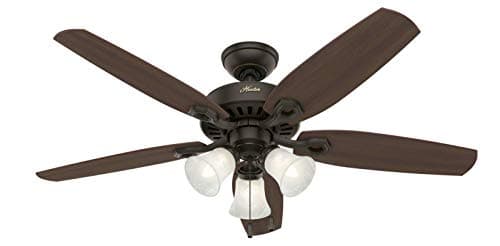 Best for stratified air Hunter Vespucci 52" Ceiling Fan Pushing ceiling-level air back down is exactly the right intervention for stratification, at 1.8 W on low. | An upstairs room where warm air sits still near the ceiling | |
| 3 | 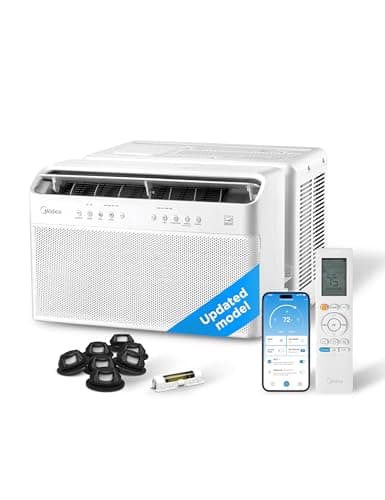 When the ductwork will not reach Midea U-Shaped Window Air Conditioner, 8,000 BTU A dedicated 8,000 BTU unit for the one room, rather than overdriving the whole system to serve it. | An upstairs bedroom the central system cannot keep up with | |
| — | 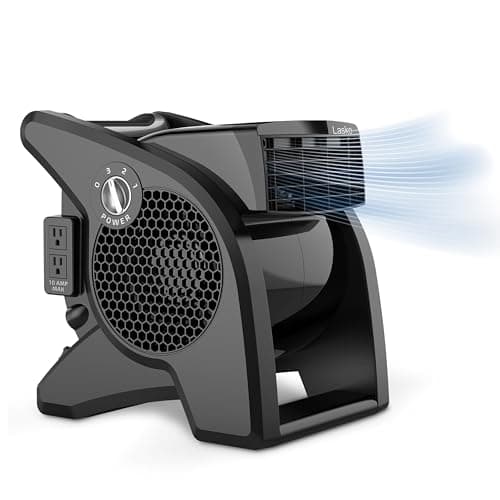 The one to skip Lasko Max Performance 15" Air Mover 178 W of blast aimed up a staircase, which moves air noisily without addressing any of the three causes. | A garage, not a landing |
“Heat rises” is true but it is not the whole answer, and treating it as the whole answer is why people buy fans that do not help. There are three distinct causes, they have three different fixes, and you can work out which you have in about ten minutes.
Diagnose first
The ten-minute diagnosis
- Touch the ceiling on a hot afternoon. Stand on something and put your palm flat on the upstairs ceiling around 4pm. If it is noticeably warm, you have attic heat, and that is cause one. This single test resolves most cases.
- Compare temperatures at floor and ceiling level. Put a thermometer at ankle height and then at head height in the same upstairs room. A difference of several degrees means air is stratifying — cause two.
- Hold a tissue to the upstairs supply vents with the air conditioning running, then do the same downstairs. If the upstairs vents are noticeably weaker, that is cause three.
- Check where your thermostat is. If it is downstairs — and it usually is — the system stops as soon as the ground floor is satisfied, regardless of what is happening above it.
Most houses have some of all three. The test tells you which one dominates, and therefore where your money should go.
Cause one
Attic heat radiating down
This is the most common cause and the one people least expect, because it is not about air at all.
An attic under a dark roof in summer sun gets extremely hot — much hotter than the outdoor air. That mass of hot material sits directly above your upstairs ceilings and radiates heat downward all afternoon and evening, continuing long after sunset because the roof structure holds heat.
Crucially, this is radiant heat, not air movement. No fan inside the room will address it, because you are being warmed by a hot surface above you rather than by hot air around you. It is why a bedroom can feel oppressive at 11pm with the air temperature reading fine.
The fixes, in order of cost:
- Improve attic ventilation. Ridge and soffit vents let hot attic air escape continuously. Often the cheapest meaningful intervention, and it is passive — nothing to run.
- Add attic insulation. Insulation between attic and ceiling reduces how much of that radiant heat reaches your rooms. It also pays back in winter, which few cooling fixes do.
- An attic fan. Actively exhausts hot attic air, pulling the attic temperature down toward outdoor temperature. This works regardless of what your overnight lows do, unlike a whole-house fan.
- A whole-house fan, which flushes the house and the attic — but only helps if your nights get genuinely cool. The temperature test is here.
This one is not a DIY job
Attic fan installation and any work involving attic wiring is licensed-professional territory. Cutting a roof or a gable, mounting a powered unit and wiring it are not a weekend job, and an incorrectly installed attic fan can pull conditioned air out of your house or create moisture problems.
Attic ventilation improvements and added insulation are more approachable, but working in a hot attic carries genuine risks of its own — heat, and ceiling joists that will not take your weight between them.
Cause two
Warm air collecting, with the thermostat downstairs
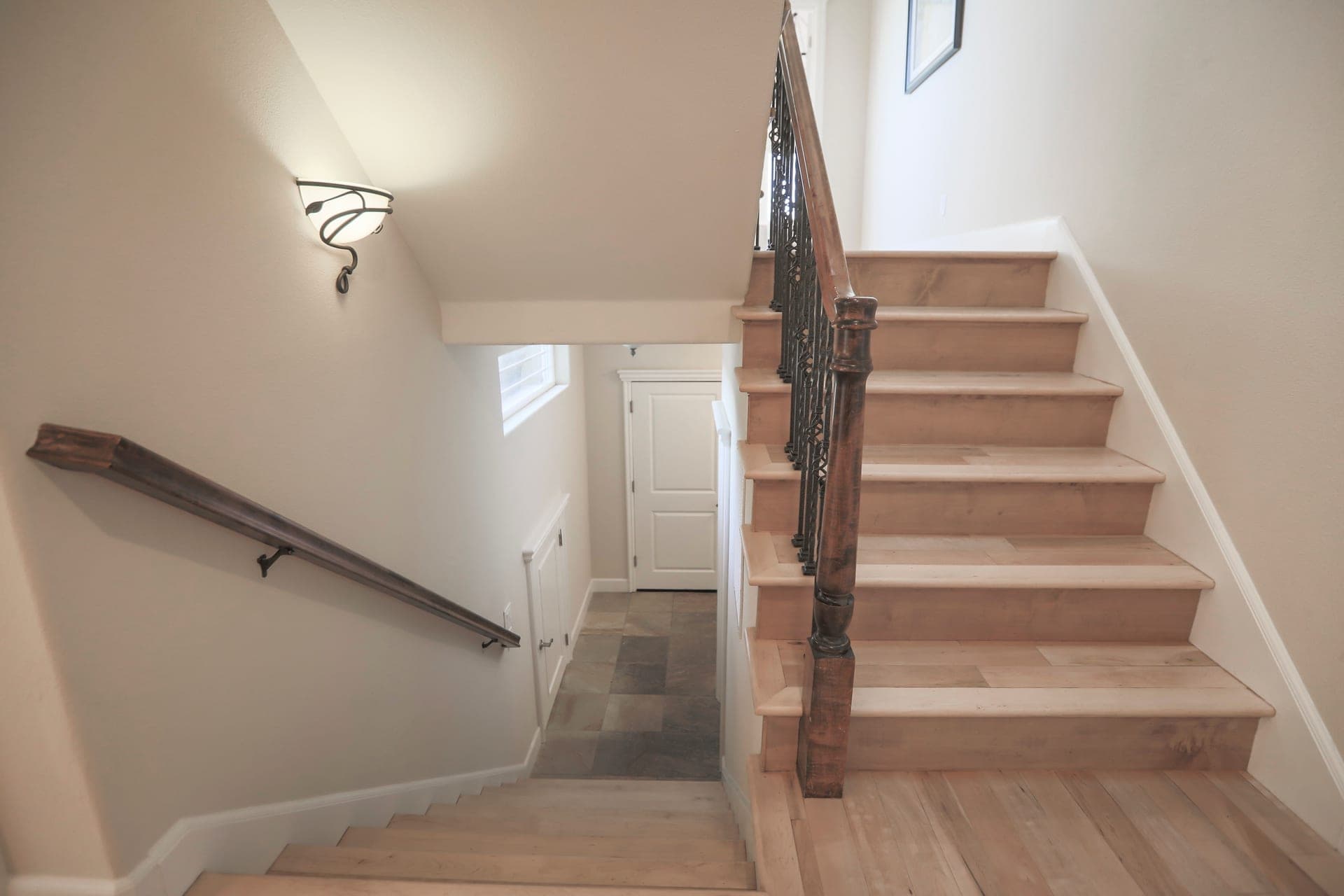
Warm air is less dense and rises. In a house with a stairwell — effectively a chimney between floors — the warmest air in the building ends up on the top floor and stays there.
Then the control problem compounds it. Your thermostat is almost certainly downstairs, so the system shuts off when the ground floor reaches temperature and never learns that the upstairs is 6°F warmer.
Fixes:
- A ceiling fan upstairs, running counterclockwise to push the ceiling layer back down. Directly addresses stratification, at 1.8 W.
- Run the HVAC fan continuously rather than on auto. Free, and often surprisingly effective — continuous circulation mixes the floors instead of letting them separate. It costs the blower wattage, not the compressor.
- Exhaust from upstairs in the evening. Once outdoor air is cooler, a window fan blowing out of the highest window removes exactly the air that has collected.
- Ask about a second thermostat or zoning. The proper fix if the house is worth it.
Cause three
Ducts that cannot deliver upstairs
Upstairs supply runs are longer, they have more bends, and they often pass through the hot attic on the way. Air arrives with less pressure behind it and warmer than it started, and every leak in an attic duct is conditioned air you paid for being delivered to your insulation.
The tissue test at the vents tells you whether this is happening. If upstairs delivery is visibly weaker:
- Close or partially close downstairs vents to push more air upstairs. Free, and worth trying first — but do not close more than about 20% of your total vents, because starving the system raises static pressure and can damage it.
- Have attic ducts sealed and insulated. This is the real fix and it is worth getting quoted. Leaky attic ductwork is extremely common and the losses are large.
- Put a dedicated unit in the room that matters. Often cheaper over a season than forcing the central system to overcome a duct problem.
Say the unwelcome thing
Do not just buy a bigger air conditioner.
It is the intuitive response to “upstairs is hot” and it fixes none of the three causes.
A bigger central unit will not make a hot attic cooler, will not stop air stratifying, and will not push more air through a duct run that is already the constraint — it will simply reach the downstairs set point faster and shut off sooner, which makes stratification worse rather than better.
It also short-cycles, so it dehumidifies less and the house feels clammy. ENERGY STAR: an oversized air conditioner “costs more to purchase, wastes energy and does not provide better cooling.”
Order of work
What to do, in order
- Do the ten-minute diagnosis. Everything below depends on it.
- Free things first. Close upstairs blinds during the day. Run the HVAC fan continuously. Check your ceiling fan is turning counterclockwise. Partially close a few downstairs vents.
- Cheap things next. A window fan exhausting from the highest window in the evening — $1.36 a month. A ceiling fan if the room lacks one.
- Then the structural fix for your specific cause. Attic ventilation and insulation if the ceiling is warm; duct sealing if delivery is weak; zoning if the thermostat is the problem.
- A dedicated unit for the room that matters, if the structural fix is out of budget.
In full
Every pick, and what is wrong with it
Published specifications only, each linked to the page it came from. Where a manufacturer publishes nothing, the row says so — we do not fill blanks in.
1. Best first move
Lasko Twin Window Fan with Remote
Lasko · model W09550
Upstairs is where an exhaust fan does the most work, because that is where the hot air already is.
Hot air rises and collects at the top of a house. That makes an upstairs window the highest-value place in the building to exhaust from — you are removing the hottest air available and pulling cooler air in from downstairs to replace it.
22–31 W, up to 560 CFM. Run both motors outward from the hottest upstairs window and open a window downstairs on the opposite side of the house. About $1.36 for a month of nights at 18.34¢/kWh.
This is also the cheap test for whether a whole-house fan is worth installing. If one window fan makes a real difference to the whole floor over an hour, a whole-house fan will do the same far faster.
The thermostat matters upstairs: without it you will overshoot overnight and wake cold.
What’s wrong with it
Only works once the outdoor temperature drops below indoor, and fits windows 24-32 inches wide. It treats the symptom, not the attic above it.
Running cost — W09550
| Nameplate power | 22 W – 31 W | manufacturer's published figure |
|---|---|---|
| Energy, 8-hour night | 0.25 kWh | 31 ÷ 1000 × 8 |
| Cost per hour | 0.6¢ | at 18.34¢/kWh |
| Cost per 8-hour night | 4.5¢ | on the highest speed |
| Cost per 30 nights | $1.36 | 7.4 kWh |
| Same month, lowest speed | 97¢ | at 22 W |
Rate: 18.34¢/kWh, the US average residential price for June 2026 (EIA Electric Power Monthly, Table 5.3). Yours will differ — swap it in: (watts ÷ 1000) × hours × your rate.
| Power | 22 W - 31 W at 120 V |
|---|---|
| Air delivery | Up to 560 CFM |
| Window fit | 24 - 32 in wide |
| Modes | Intake, exhaust or exchange (independent motors) |
| Thermostat | Adjustable |
| Speeds | 3 |
| Dimensions | 12.9 H x 24.0 W x 4.9 D in |
| Weight | 8.0 lb |
| Warranty | 1 year |
Every figure above is from Lasko product page, W09550. Blanks are shown as “not published” rather than filled in.
2. Best for stratified air
Hunter Vespucci 52" Ceiling Fan
Hunter · model Vespucci
Pushing ceiling-level air back down is exactly the right intervention for stratification, at 1.8 W on low.
When warm air collects at the top of a room and sits there, a ceiling fan is the direct fix: it pushes that layer back down and mixes the room.
366.7 CFM per watt certified, 1.8 W on low, 13.9 W on high — about 7.9¢ for a month of eight-hour nights.
Check the direction. Counterclockwise seen from below, pushing air down, is the summer setting. If your upstairs fan is running clockwise it is pulling air up and gently redistributing the hottest air in the room along the ceiling — which is what you want in January and the opposite of what you want now. Ten-second check here.
What’s wrong with it
It does nothing about attic heat — if your ceiling is warm to the touch, this makes the room more comfortable without addressing the cause.
Running cost — Vespucci
| Nameplate power | 1.8 W – 13.9 W | manufacturer's published figure |
|---|---|---|
| Energy, 8-hour night | 0.11 kWh | 13.9 ÷ 1000 × 8 |
| Cost per hour | 0.3¢ | at 18.34¢/kWh |
| Cost per 8-hour night | 2.0¢ | on the highest speed |
| Cost per 30 nights | 61¢ | 3.3 kWh |
| Same month, lowest speed | 7.9¢ | at 1.8 W |
Rate: 18.34¢/kWh, the US average residential price for June 2026 (EIA Electric Power Monthly, Table 5.3). Yours will differ — swap it in: (watts ÷ 1000) × hours × your rate.
| Blade span | 52 in |
|---|---|
| Efficiency | 366.7 CFM per watt |
| Power, high speed | 13.9 W |
| Power, low speed | 1.8 W |
| Standby power | 0.8 W |
| Type | Indoor, fan only (no light kit) |
| Warranty | 3 years, components |
| ENERGY STAR | Certified |
Every figure above is from ENERGY STAR Certified Ceiling Fans dataset. Blanks are shown as “not published” rather than filled in.
3. When the ductwork will not reach
Midea U-Shaped Window Air Conditioner, 8,000 BTU
Midea · model MAW08V1QWT-S
A dedicated 8,000 BTU unit for the one room, rather than overdriving the whole system to serve it.
If the cause is duct delivery — long, leaky runs arriving upstairs with little air behind them — the honest options are a duct fix (expensive, and worth getting quoted) or a dedicated unit for the room that matters.
400 kWh a year, about $73 at 18.34¢/kWh, CEER 15, variable-speed compressor. Frequently cheaper over a season than running central air harder to force conditioned air up a duct run that cannot deliver it.
The U-shape puts the compressor outside a closed window, which matters in a bedroom, and needs no bracket. Size it to the room first — 8,000 BTU suits 300–350 sq ft, and a typical bedroom wants 6,000.
What’s wrong with it
It treats one room and does nothing for the rest of the floor, and at 53.2 lb it has to be carried upstairs. Also needs a vertical sash window.
Running cost — MAW08V1QWT-S
| Annual energy use | 400 kWh | ENERGY STAR certified figure |
|---|---|---|
| Annual cost | $73 | 400 × 18.34¢/kWh |
| Per cooling month | $18 | spread over a four-month season |
The annual figure is the certified value from the ENERGY STAR Certified Room Air Conditioners dataset, which models a standard cooling season rather than your actual summer. It is more useful than a nameplate wattage here, because a variable-speed compressor spends most of its life well below nameplate.
Rate: 18.34¢/kWh, the US average residential price for June 2026 (EIA Electric Power Monthly, Table 5.3). Yours will differ — swap it in: (watts ÷ 1000) × hours × your rate.
| Cooling capacity | 8,000 BTU/h |
|---|---|
| CEER | 15 |
| Annual energy use | 400 kWh/yr |
| vs federal standard | 38% less energy |
| Dimensions | 13.5 H x 19.2 W x 22.0 D in |
| Weight | 53.2 lb |
| Refrigerant | R-32 |
| Installation | U-shape; sash closes through the middle of the unit |
| Compressor | Variable speed |
| ENERGY STAR | Certified |
Every figure above is from ENERGY STAR Certified Room Air Conditioners dataset. Blanks are shown as “not published” rather than filled in.
Skip this one
Lasko Max Performance 15" Air Mover
Lasko · model U15720
178 W of blast aimed up a staircase, which moves air noisily without addressing any of the three causes.
The instinct is understandable: hot upstairs, so blast air up the stairs. It does not work, and it is expensive noise.
An air mover produces a narrow high-velocity jet designed to dry a surface. Aimed up a stairwell it stirs the stairwell. It does not remove any heat from the building, does nothing about a hot attic, and does not fix duct delivery.
160–178 W — $7.83 a month of nights, roughly six times the window fan that would actually be exhausting hot air out of the house.
If you own one, it is a good garage tool. Use the window fan upstairs.
What’s wrong with it
160-178 W, deliberately loud, and a narrow jet is the wrong airflow shape for a stairwell. It also cannot exhaust anything, which is what upstairs actually needs.
Running cost — U15720
| Nameplate power | 160 W – 178 W | manufacturer's published figure |
|---|---|---|
| Energy, 8-hour night | 1.42 kWh | 178 ÷ 1000 × 8 |
| Cost per hour | 3.3¢ | at 18.34¢/kWh |
| Cost per 8-hour night | 26¢ | on the highest speed |
| Cost per 30 nights | $7.83 | 42.7 kWh |
| Same month, lowest speed | $7.04 | at 160 W |
Rate: 18.34¢/kWh, the US average residential price for June 2026 (EIA Electric Power Monthly, Table 5.3). Yours will differ — swap it in: (watts ÷ 1000) × hours × your rate.
| Power | 160 W - 178 W (1.35-1.53 A at 120 V) |
|---|---|
| Speeds | 3 |
| Dimensions | 14.5 H x 14.0 D x 11.5 W in |
| Weight | 12.55 lb |
| Extras | Two 120 V accessory outlets, 9.5 ft cord, pivoting head |
| Air delivery (CFM) | Not published |
| Warranty | 1 year |
Every figure above is from Lasko product page, U15720. Blanks are shown as “not published” rather than filled in.
We are not linking a buy button for this one. If you want to look at it anyway, it is easy enough to find — but we would rather send you to something that fits your room.
Questions people actually ask
Frequently asked
Why is my upstairs so hot even with the AC on?
Usually one of three things: heat radiating down from a hot attic, warm air collecting upstairs while the thermostat sits downstairs, or duct runs that arrive upstairs with too little air. Touch your upstairs ceiling on a hot afternoon — if it is warm, the attic is your main cause.
Why is my upstairs hot and my downstairs cold?
Almost certainly the thermostat is downstairs. The system runs until the ground floor is satisfied and then stops, regardless of the upstairs temperature — while warm air continues rising up the stairwell. Running the HVAC fan continuously rather than on auto helps, and zoning is the proper fix.
Does an attic fan actually lower the temperature in the house?
Indirectly, and it can matter a lot. An attic fan exhausts hot attic air, bringing the attic closer to outdoor temperature, which reduces the radiant heat coming down through your upstairs ceilings. Unlike a whole-house fan, it works regardless of what your overnight lows do.
Should I close downstairs vents to push air upstairs?
Partially, and cautiously. Closing some downstairs vents does redirect air upward and it costs nothing to try. Do not close more than about 20 percent of your total vents, though — starving the system raises static pressure and can damage the equipment.
Will a bigger air conditioner fix a hot upstairs?
No, and it usually makes it worse. A larger unit reaches the downstairs set point faster and shuts off sooner, which increases stratification and reduces dehumidification. It does nothing about attic heat or weak duct delivery, which are the actual causes.
Is a whole house fan good for a hot upstairs?
Very, but only if your summer nights drop below about 70°F. It flushes both the house and the attic in minutes. Test the idea first with a window fan blowing out of an upstairs window once the outdoor air is cooler — if that helps noticeably, a whole-house fan will help a lot. The temperature test.
Sources
Where these numbers came from
- ENERGY STAR — Room Air Conditioners, on oversizing
- ENERGY STAR Certified Room Air Conditioners dataset — annual kWh figures
- ENERGY STAR Certified Ceiling Fans dataset — per-speed wattage
- Lasko W09550 twin window fan specifications — 22-31 W, 560 CFM
- EIA Electric Power Monthly, Table 5.3 — electricity rate
Read next
Where to go from here
Back to Room Cooling, or read how we pick.