Guide and picks
Portable air conditioner venting
The hose kit in the box is the cheapest component in the machine, and it does more damage to performance than any other single thing.
By Sawyer V. · Published
The short answer
Venting is why a portable’s DOE-rated SACC capacity falls 14 to 50 percent below its marketing BTU. The hose radiates heat back into the room, and exhausting room air makes the room go negative so hot outdoor air infiltrates to replace it. Three fixes, in order: seal the window panel properly, insulate the hose, and keep the run short and straight. A dual-hose unit avoids the infiltration half entirely.
Fan & Frost earns a commission when you buy through our links, at no cost to you. It never changes a ranking, and we say so when the right answer is the cheaper unit or nothing at all. Full disclosure · How we pick.
At a glance
The picks, ranked
Tap any row to jump to the full reasoning. Prices are live from Amazon where we have them, and read “check price” where we don’t — never a number we cannot verify today.
| # | Product | Best for | Price |
|---|---|---|---|
| 1 | 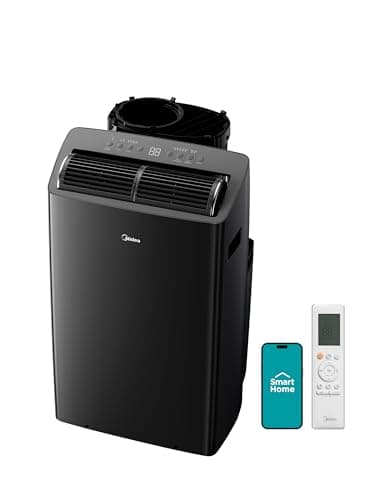 Best venting architecture Midea Duo Smart Inverter Portable Air Conditioner Hose-in-hose dual venting and a 14.3% SACC haircut — 12,000 SACC from a 14,000 BTU headline, the smallest gap we found. | Anyone buying a portable who wants the venting problem minimized | |
| 2 | Dual hose, with the numbers published Whynter ARC-14S Dual Hose Portable Air Conditioner 1,300 W published and 9,500 BTU SACC from a 14,000 BTU headline — honest figures, unflattering ones. | Someone who wants to know what it actually costs to run | |
| 3 | 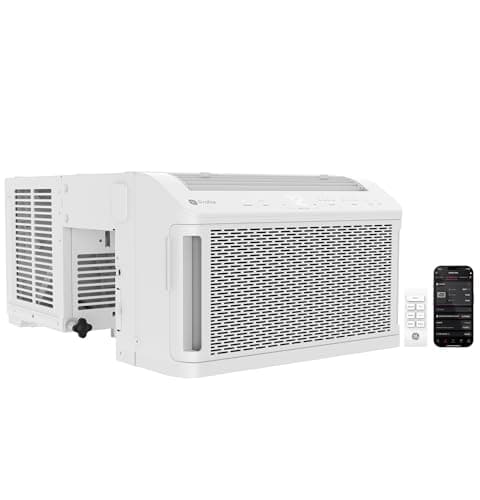 The format with no venting problem GE Profile ClearView Window Air Conditioner, 8,000 BTU CEER 16 and 375 kWh a year — no duct, no infiltration, and no gap between marketing and rated capacity. | Any room with a double-hung window that can take a unit | |
| — | 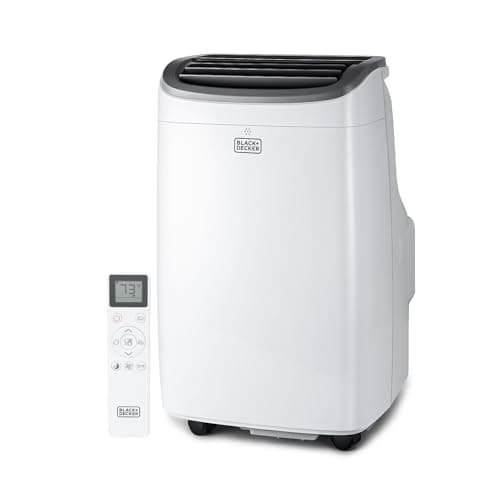 What single-hose venting costs BLACK+DECKER BPACT08WT Portable Air Conditioner The manufacturer publishes 4,000 BTU against an 8,000 BTU ASHRAE figure — a 50% gap, on their own page. | Illustrating the problem — not a recommendation |
The window kit that ships with a portable air conditioner is a piece of stamped plastic and a length of foil hose. It is the cheapest thing in the box and it determines more about how the machine performs than the compressor does.
Why it matters
Venting is the whole SACC story
The DOE’s SACC test exists specifically to capture what venting costs. It measures cooling capacity with duct heat and infiltration accounted for — neither of which the older ASHRAE marketing figure includes.
So the gap between the two numbers is a measure of how much a unit loses to its own vent. Here is every published pair we have found:
| Unit | Hoses | Marketing | SACC | Lost |
|---|---|---|---|---|
| Midea Duo MAP14S1TBL | Dual (hose-in-hose) | 14,000 | 12,000 | 14.3% |
| Whynter ARC-1230WN | Dual | 14,000 | 12,000 | 14.3% |
| Midea MAP10DV1XWT | Dual (hose-in-hose) | 13,000 | 10,000 | 23.1% |
| Whynter ARC-148MHP | Dual | 14,000 | 10,000 | 28.6% |
| Whynter ARC-14S | Dual | 14,000 | 9,500 | 32.1% |
| Whynter ARC-122DS | Dual | 12,000 | 7,000 | 41.7% |
| BLACK+DECKER BPACT08WT | Single | 8,000 ASHRAE | 4,000 | 50.0% |
Manufacturer-published pairs. Percentages are our arithmetic. No certification program covers portable air conditioners.
Between an eighth and half the machine, lost to the vent. Nothing else you can change about a portable has that magnitude of effect.
Two mechanisms
Duct heat and infiltration
Duct heat. The exhaust hose carries air that has just passed over a hot condenser, and that hose runs through the room you are cooling. Every foot of uninsulated duct radiates heat straight back into the space. A long hose coiled across a floor is a radiator.
Infiltration. This is the bigger effect and the less obvious one. A single-hose unit takes air from the room, pushes it out of the window, and that air has to be replaced. It is replaced by outdoor air pulled in through every gap in the building — under doors, around windows, through the envelope. The unit is now cooling a continuous supply of hot fresh air.
A dual-hose unit removes the second mechanism entirely by drawing condenser air from outside through a second duct. The room is not exhausted, so nothing is pulled in to replace it.
It does not remove the first — which is why the certified pairs still show dual-hose units losing 14% to 42%. Hose count sets the direction, not the magnitude.
Window types
Venting through what you actually have
| Opening | What to use |
|---|---|
| Double-hung (slides up) | The supplied kit, sealed at both ends |
| Horizontal slider | A vertical extension kit — the same panel turned 90° |
| Casement (cranks out) | A rigid panel cut to the aperture with a duct collar |
| Sliding glass door | A full-height door panel kit, sealed top and bottom |
| Awning / tilt-turn | A cut panel, as for a casement |
| No usable window | A portable is the wrong answer — see below |
For anything that is not a double-hung window, the supplied kit will not fit and improvising is where the performance goes. The casement and slider case in detail.
A cut panel — acrylic, polycarbonate or plywood, sized to the aperture with a duct collar fitted through it and foam-sealed at every edge — costs very little and outperforms every improvisation involving cardboard and tape.
This one is not a DIY job
The three fixes worth doing, in order of payoff.
1. Seal the panel perimeter. Foam or weatherstrip every edge where the panel meets the frame, and seal the gap between the sashes above it. On a single-hose unit these gaps are exactly where the infiltration comes back in, so you are working directly against the machine.
2. Insulate the exhaust hose. Purpose-made hose jackets exist, and pipe insulation works. Every foot of bare duct is heat going back into the room you are cooling.
3. Keep the run short and straight. Do not extend the hose beyond what the manufacturer supplies, do not coil the slack, and avoid sharp bends. Duct resistance rises fast with length and with every elbow, and the fan is working against all of it.
Do not seal the condensate drain while you are sealing everything else. A portable produces a lot of water — 71 pints a day on one unit here — and it needs a route out.
Common mistakes
Four things that quietly cost you capacity
- Extending the hose. Manufacturers specify a length because the fan is sized for that resistance. Adding duct reduces airflow across the condenser, which raises head pressure and cuts capacity.
- Coiling the slack. A loop of hot duct sitting in the room is a heater, and bends add resistance. Shorten it or route it straighter instead.
- Venting into another indoor space. A garage, an attic, a hallway, a fireplace. The heat has not left the building and much of it comes back.
- Leaving the window kit unsealed. The panel blocks the opening; it does not seal it. Unsealed, the exhausted air is partly re-entering right beside the unit.
Say the unwelcome thing
Do not buy a portable for a room with a usable double-hung window.
Everything on this page is a problem window units do not have. The condenser is already outside, so there is no duct in the room, no exhausted air, no infiltration, and no gap between the marketing capacity and the rated capacity.
The numbers are not close. The most efficient certified 8,000 BTU window unit uses 375 kWh a year — $69 for a whole season. The portable here with a published wattage draws 1,300 W whenever it runs, and delivers 9,500 BTU from a 14,000 BTU headline.
Window units are also covered by ENERGY STAR, so their figures are independently verified. Portables are not certified at all.
Buy a portable when the window genuinely cannot take a unit — a casement, a building rule, no exterior window. Those cases are real and we cover them.
In full
Every pick, and what is wrong with it
Published specifications only, each linked to the page it came from. Where a manufacturer publishes nothing, the row says so — we do not fill blanks in.
1. Best venting architecture
Midea Duo Smart Inverter Portable Air Conditioner
Midea · model MAP14S1TBL
Hose-in-hose dual venting and a 14.3% SACC haircut — 12,000 SACC from a 14,000 BTU headline, the smallest gap we found.
14,000 BTU marketing, 12,000 BTU SACC. A 14.3% haircut, against 32.1% for a comparable dual-hose competitor and 50% for a single-hose unit. That gap is almost entirely a venting story.
The hose-in-hose design nests the intake duct inside the exhaust duct, so you get dual-hose behavior — condenser air drawn from outside rather than from the room — through a single opening in the window.
That solves the harder half of the problem. The room is not being exhausted, so it does not go negative, so hot outdoor air is not being pulled in through every gap to replace it.
43 dBA is the lowest published portable noise figure we hold. The gap: no published wattage, and no certification program covers portables at all.
What’s wrong with it
Midea publishes no wattage at all, so there is no way to calculate what it costs to run.
Running cost
Midea does not publish a wattage for the MAP14S1TBL, so we cannot calculate what it costs to run. We are not going to estimate one. If Midea publishes a nameplate figure, this block will show the arithmetic.
| Marketing capacity | 14,000 BTU |
|---|---|
| DOE-rated capacity | 12,000 BTU SACC |
| Hoses | Dual |
| Noise | 43 dBA |
| Speeds | 3 |
| Refrigerant | R-32 |
| Dimensions | 19.52 W x 16.73 D x 32.48 H in |
| Weight | 74.96 lb |
| Manufacturer coverage claim | 550 sq ft |
| Power | Not published (115 V stated, no wattage) |
| Warranty | 1 year |
Every figure above is from Midea product page, MAP14S1TBL. Blanks are shown as “not published” rather than filled in.
2. Dual hose, with the numbers published
Whynter ARC-14S Dual Hose Portable Air Conditioner
Whynter · model ARC-14S
1,300 W published and 9,500 BTU SACC from a 14,000 BTU headline — honest figures, unflattering ones.
Dual-hose, and still a 32.1% capacity haircut. If two hoses guaranteed a small gap, this unit would not exist — duct heat, duct length and unit design all matter too.
What earns it a place here is transparency: 1,300 W and 11.6 A at 115 V published, about $1.91 for an eight-hour day, plus 71 pints a day of dehumidification and a three-year compressor warranty.
Two separate ducts means a wider window kit and more perimeter to seal than the hose-in-hose design — more work, same principle.
Under 51 dBA on low. The full single-versus-dual analysis.
What’s wrong with it
A 32.1% haircut despite dual hoses, which shows that hose count sets the direction and not the magnitude.
Running cost — ARC-14S
| Nameplate power | 1300 W | manufacturer's published figure |
|---|---|---|
| Energy, 8-hour night | 10.40 kWh | 1300 ÷ 1000 × 8 |
| Cost per hour | 24¢ | at 18.34¢/kWh |
| Cost per 8-hour night | $1.91 | on the highest speed |
| Cost per 30 nights | $57 | 312.0 kWh |
Rate: 18.34¢/kWh, the US average residential price for June 2026 (EIA Electric Power Monthly, Table 5.3). Yours will differ — swap it in: (watts ÷ 1000) × hours × your rate.
| Marketing capacity | 14,000 BTU (ASHRAE-128) |
|---|---|
| DOE-rated capacity | 9,500 BTU SACC |
| Hoses | Dual |
| Power | 1,300 W / 11.6 A at 115 V |
| Noise | Under 51 dBA low, under 56 dBA high |
| Dehumidification | 71 pints/day |
| Refrigerant | R-32 |
| Dimensions | 16 W x 19 D x 35.5 H in |
| Weight | 73 lb |
| Manufacturer coverage claim | 500 sq ft |
| Warranty | 1 year unit, 3 years compressor |
Every figure above is from Whynter product page, ARC-14S. Blanks are shown as “not published” rather than filled in.
3. The format with no venting problem
GE Profile ClearView Window Air Conditioner, 8,000 BTU
GE Profile · model PWJV08W
CEER 16 and 375 kWh a year — no duct, no infiltration, and no gap between marketing and rated capacity.
Worth stating plainly on a venting page: a window unit has no venting problem because the condenser is already outside.
No exhaust duct radiating heat into the room. No room air being blown outdoors. No negative pressure pulling outdoor air back in. And consequently no SACC-versus-ASHRAE gap at all — the capacity on the box is the capacity.
375 kWh a year certified, about $69 for a whole season, against 1,300 W for a portable whenever it runs.
If your window takes a unit, everything on this page is a problem you do not need to have. The full comparison.
What’s wrong with it
46.2 lb and it occupies the window for the season, which is exactly what portables exist to avoid.
Running cost — PWJV08W
| Annual energy use | 375 kWh | ENERGY STAR certified figure |
|---|---|---|
| Annual cost | $69 | 375 × 18.34¢/kWh |
| Per cooling month | $17 | spread over a four-month season |
The annual figure is the certified value from the ENERGY STAR Certified Room Air Conditioners dataset, which models a standard cooling season rather than your actual summer. It is more useful than a nameplate wattage here, because a variable-speed compressor spends most of its life well below nameplate.
Rate: 18.34¢/kWh, the US average residential price for June 2026 (EIA Electric Power Monthly, Table 5.3). Yours will differ — swap it in: (watts ÷ 1000) × hours × your rate.
| Cooling capacity | 8,000 BTU/h |
|---|---|
| CEER | 16 |
| Annual energy use | 375 kWh/yr |
| vs federal standard | 47% less energy |
| Dimensions | 12.6 H x 18.6 W x 15.3 D in |
| Weight | 46.2 lb |
| Refrigerant | R-32 |
| Installation | Does not straddle the windowsill |
| Compressor | Variable speed |
| ENERGY STAR | Certified, and on the Most Efficient list |
Every figure above is from ENERGY STAR Certified Room Air Conditioners dataset. Blanks are shown as “not published” rather than filled in.
Skip this one
BLACK+DECKER BPACT08WT Portable Air Conditioner
BLACK+DECKER · model BPACT08WT
The manufacturer publishes 4,000 BTU against an 8,000 BTU ASHRAE figure — a 50% gap, on their own page.
Included as evidence. BLACK+DECKER’s own product page states “4,000 BTU (8,000 BTU ASHRAE)” — a 50% gap between the two test standards, the largest in our set.
Single-hose is the reason. The unit draws room air across the condenser and blows it outside, so the room is continuously being exhausted and continuously pulling hot outdoor air in through every gap in the building to replace it.
It gets worse off the manufacturer’s site: retailer listings quote 3,950, 4,000 and 5,300 BTU SACC for this one model number.
R-410A, 52.9 lb, five-year compressor warranty. No published wattage, noise figure or coverage claim.
What’s wrong with it
No published wattage, no noise rating, no coverage claim, and three retailers quote three different SACC figures for the same model.
Running cost
BLACK+DECKER does not publish a wattage for the BPACT08WT, so we cannot calculate what it costs to run. We are not going to estimate one. If BLACK+DECKER publishes a nameplate figure, this block will show the arithmetic.
| Manufacturer capacity | 4,000 BTU (8,000 BTU ASHRAE) |
|---|---|
| Hoses | Single |
| Refrigerant | R-410A |
| Dimensions | 15.3 W x 14.0 D x 25.0 H in |
| Weight | 52.9 lb |
| Power | Not published by the manufacturer |
| Noise | Not published |
| Coverage claim | Not published by the manufacturer |
| Warranty | 1 year parts and labor, 5 years compressor |
Every figure above is from BLACK+DECKER product page, BPACT08WT. Blanks are shown as “not published” rather than filled in.
We are not linking a buy button for this one. If you want to look at it anyway, it is easy enough to find — but we would rather send you to something that fits your room.
Questions people actually ask
Frequently asked
Why does a portable air conditioner need to be vented?
Because it moves heat rather than destroying it. The heat pulled out of the room air is rejected at the condenser, and that heat has to leave the building — otherwise you are simply moving it from one part of the room to another and adding the compressor's own energy.
How much capacity does venting cost?
Between 14 and 50 percent, based on published marketing-versus-SACC pairs. The SACC test exists specifically to account for heat radiating off the exhaust duct and for outdoor air infiltrating to replace exhausted room air. BTU vs SACC explained.
Can I extend a portable air conditioner hose?
You should not. The fan is sized for the supplied duct length, and adding hose or bends raises resistance, reduces airflow across the condenser, and cuts capacity. Coiling the slack is equally bad — it puts a loop of hot duct in the room you are cooling.
Should I insulate the exhaust hose?
Yes — it is one of the few genuinely worthwhile modifications. The duct carries air that has just passed over a hot condenser, and it runs through the room you are trying to cool, so every foot of bare hose radiates heat straight back in.
How do you vent a portable air conditioner through a sliding door?
With a full-height door panel kit, sealed top and bottom and along the edge where it meets the frame. The perimeter seal matters as much as the panel — unsealed, the exhausted air partly re-enters right beside the unit.
Can you vent a portable air conditioner into a garage or attic?
No. The heat has not left the building, so much of it finds its way back into the conditioned space, and in an attic you are also adding a large moisture and heat load to the roof structure. It must terminate outdoors.
Sources
Where these numbers came from
- Whynter ARC-14S product page — 14,000 BTU ASHRAE / 9,500 BTU SACC, 1,300 W, 71 pints/day
- Whynter ARC-1230WN and ARC-122DS product pages — published SACC pairs
- Midea MAP10DV1XWT product page — 13,000 BTU / 10,000 BTU SACC, hose-in-hose
- BLACK+DECKER BPACT08WT product page — 4,000 BTU (8,000 BTU ASHRAE)
- ENERGY STAR Certified Room Air Conditioners dataset — the window unit comparison figures
Read next
Where to go from here
Back to Air Conditioners, or read how we pick.