The picks
The best fans for a wood stove that heats one wall and nothing else
A stove radiates heat in a sphere and your room is not a sphere. The fix is a fan on the stove top that runs on the stove's own heat, with no cord and no battery — and the whole category turns on one specification almost nobody publishes.
By Sawyer V. · Published
The short answer
For most wood stoves, the Ecofan AirDeco II is the pick: 190 CFM, the most Caframo publishes for any model, and it starts moving air at 70 C (158 F). If your stove runs cool on top — soapstone, gas, pellet — take the AirDeco I instead, which starts at 65 C (149 F). Start temperature decides whether a stove fan works at all.
Fan & Frost earns a commission when you buy through our links, at no cost to you. It never changes a ranking, and we say so when the right answer is the cheaper unit or nothing at all. Full disclosure · How we pick.
At a glance
The picks, ranked
Tap any row to jump to the full reasoning. Prices are live from Amazon where we have them, and read “check price” where we don’t — never a number we cannot verify today.
| # | Product | Best for | Price |
|---|---|---|---|
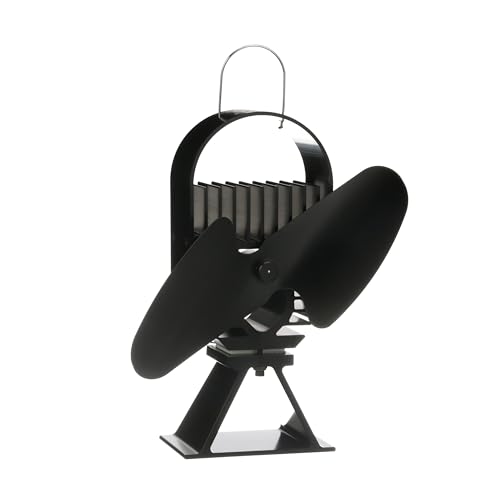
| 1 | Best overall Ecofan AirDeco II Heat Powered Stove Fan 190 CFM, the highest figure Caframo publishes for any Ecofan, from a fan that starts moving air at 70 C (158 F) and needs no cord, no battery and no socket. | A normal steel or cast-iron wood stove in a room with a cold far end — the most published airflow in the category and an early start, so it is working while the stove is still warming up | |
| 2 | 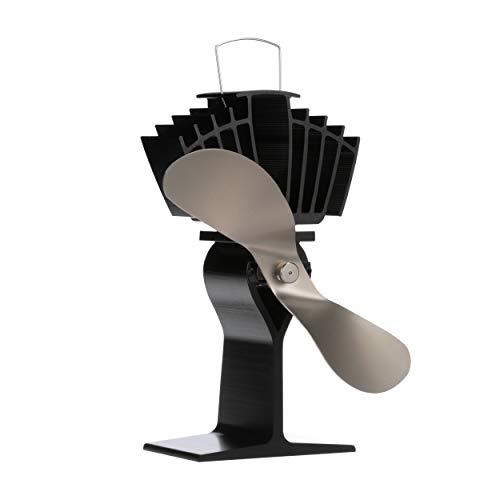 Best on a hot-running stove Ecofan AirMax Heat Powered Stove Fan 175 CFM on a 9-inch blade, with a published 85 to 345 C operating range. The original design and the one every stove shop stocks. | A steel stove you run hard — the classic shape, the biggest published airflow of the Classic range, and the one most likely to be in stock | |
| 3 | 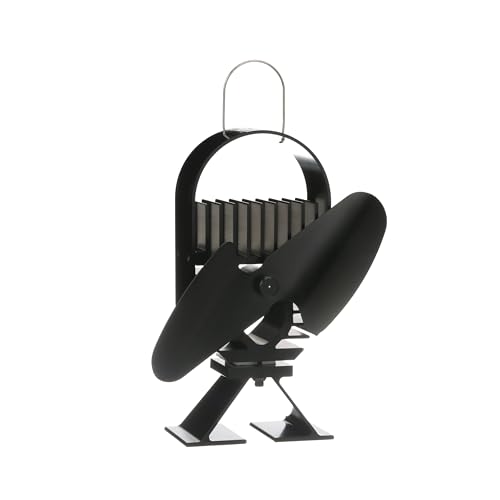 Best for a cool-running stove Ecofan AirDeco I Heat Powered Stove Fan Starts moving air at 65 C (149 F), the earliest figure Caframo publishes, and still delivers 160 CFM. The fan to buy when the stove top never gets properly hot. | Soapstone, gas and pellet stoves, and any stove with a thick or heavily enamelled top — this is the lowest start temperature published in the category | |
| 4 | 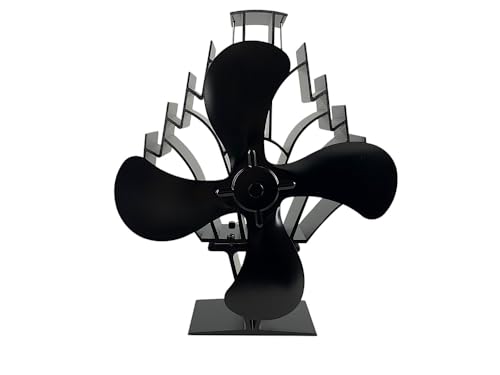 The biggest claimed number Freedom Stoves 13" 4-Blade Heat Powered Stove Fan A claimed 348 CFM from a 13-inch four-blade dual-motor design, which is nearly double anything Caframo publishes. It is also the only figure this brand publishes at all. | A large open-plan room where the published Caframo figures look too small — on the understanding that this fan's number comes from a listing rather than a specification sheet | |
| 5 | 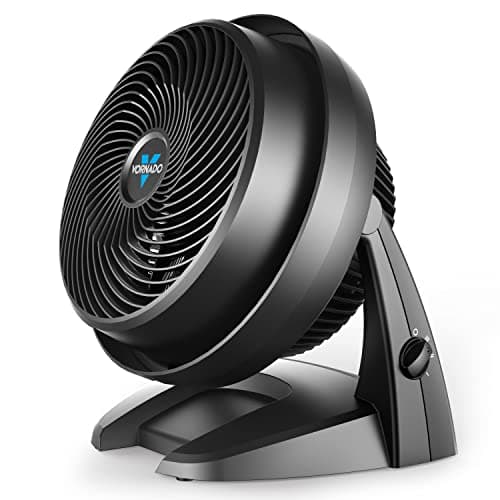 Better than all of them, if there is an outlet Vornado 630 Medium Air Circulator A five-year warranty and a published claim that it moves air up to 70 feet, for about a third the price of the stove fans above. If you can reach a socket, this is the better machine. | A room where the stove is at one end and a wall socket is anywhere at all — the honest answer is that a mains circulator moves far more air than any stove-top fan | |
| — | 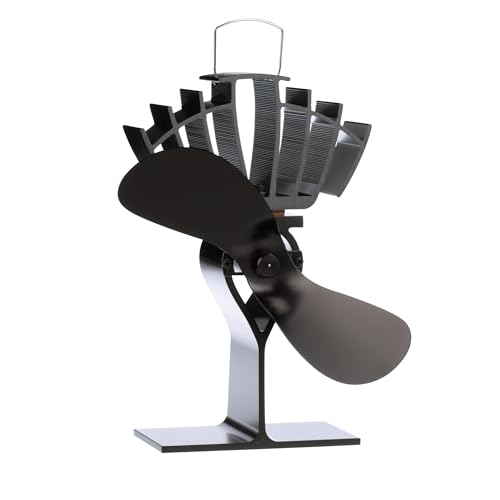 The one to skip Ecofan UltrAir Heat Powered Stove Fan 125 CFM and a 100 C (212 F) start temperature, against the AirDeco I's 160 CFM and 65 C. Less air, a later start, and usually within ten dollars of each other. | Nothing the AirDeco I does not do better for a similar price — it is here because it is the Ecofan most often recommended and the numbers do not support that |
A wood stove is a point source of radiant heat. The hearth wall gets hot, the two armchairs nearest it get hot, and the far end of the room stays at whatever it was. Opening the stove door harder does not fix that; it just makes the hot end hotter.
What fixes it is moving air, and the appeal of a stove-top fan is that it does so with no cord, no battery, no switch and no running cost. It sits on the stove, the heat generates the electricity, the blade turns. When the fire goes out it stops.
The spec that decides it
Start temperature, not airflow
Every review of this category ranks on CFM. That is the wrong first filter, because a stove fan that never reaches its start temperature delivers zero CFM no matter what the box says.
A thermoelectric module makes power from the temperature difference across it. Caframo publishes, for each model, the stove-top temperature at which the blade begins to turn — and across its range those figures differ by 35 degrees C:
| Fan | Starts at | CFM | Blade | Weight | Noise |
|---|---|---|---|---|---|
| Ecofan AirDeco I (8203) | 65 C / 149 F | 160 | 8 in | 1.84 lb | Not published |
| Ecofan AirDeco II (8204) | 70 C / 158 F | 190 | 9 in | 2.33 lb | Not published |
| Ecofan AirMax (812) | 85 C / 185 F | 175 | 9 in | 3.22 lb | Not published |
| Ecofan UltrAir (810) | 100 C / 212 F | 125 | 8 in | 2.38 lb | Not published |
| Freedom Stoves 13 in | Not published | 348 claimed | 13 in | Not published | Not published |
Every Caframo figure is from its own product pages; all four share a published upper limit of 345 C (650 F). The Freedom Stoves row is from its retail listing, which is the only place any figure for it appears. Prices are live rather than written into this page.
Read down the first column and the shopping rule falls out. A thin-top steel stove run hot will drive any of them. A soapstone, a gas stove, a pellet stove or a thickly enamelled cast-iron top may only drive the 65-degree one.
Scale
A stove fan is a nudge, not a room fan
It is worth being blunt about the numbers, because the category is sold on a promise of room-wide circulation it cannot keep.
The best published figure on this page is 190 CFM. A 20-inch box fan this site ranks publishes 2,163 CFM — eleven times as much air, for about a quarter of the price. Box fans, and what they are actually for.
So what is a stove fan for? Three things, all of them real:
- It breaks the stall right at the stove. Still air against a hot plate forms an insulating layer. Disturbing it moves heat off the stove and into the room sooner.
- It runs when nothing else can. No socket, no extension lead across the hearth, nothing to remember. In a power cut it is the only fan in the house that still works. What else keeps working in an outage.
- It is silent enough that nobody has bothered to measure it. That is a backhanded compliment, and it is also a disclosure gap: Caframo states outright that it holds no noise measurement for any Ecofan.
This one is not a DIY job
If the problem is one cold room rather than one cold corner, a stove fan is the wrong tool and a through-wall transfer fan is the right one. Suncourt’s own product pages name “fireplaces, wood stoves” as the intended case: you cut a vent between the room with the stove and the room without, and move air between them at a published 192 CFM. Room-to-room transfer fans, on published airflow and noise.
Placement
Where on the stove it goes
- At the back, toward the flue, facing into the room. The back of the stove top is usually its hottest area and the least useful work surface.
- Not touching the flue pipe. Flue temperatures run well past the 345 C (650 F) upper limit Caframo publishes for every model here, and over-temperature is what kills these fans.
- Flat, on bare metal. A trivet, a mat or a layer of ash under the base reduces the temperature difference the fan runs on, which reduces its output.
- Off the stove before you let it go cold and damp. None of these fans publishes an enclosure rating.
Say the unwelcome thing
Do not buy a stove fan to heat a different room.
The physics will not stretch that far. At a published maximum of 190 CFM, a stove fan moves roughly the air a small bathroom extractor moves — and it is doing it into open space, not down a duct. It will even out one room. It will not warm a hallway, and it will not reach upstairs.
For heat that has to cross a wall or a floor, the answer is a transfer fan or a register booster, both of which publish real airflow figures and both of which are cheaper than the fans on this page.
In full
Every pick, and what is wrong with it
Published specifications only, each linked to the page it came from. Where a manufacturer publishes nothing, the row says so — we do not fill blanks in.
1. Best overall
Ecofan AirDeco II Heat Powered Stove Fan
Caframo · model 8204 (SKU 8204CAXBX)
190 CFM, the highest figure Caframo publishes for any Ecofan, from a fan that starts moving air at 70 C (158 F) and needs no cord, no battery and no socket.
190 CFM (322 m³/h) from a 9-inch blade, with an operating range of 70 to 345 C (158 to 650 F). Those three figures are the entire case, and they come from Caframo rather than from a listing.
The second of them is the one that matters and the one buyers ignore. A stove fan is a thermoelectric generator: the temperature difference between its hot base and its cooler top makes the electricity that turns the blade. A high start temperature means that on a stove that never gets very hot on top, the fan simply never spins. 70 C is an early start — only the AirDeco I below is earlier.
2.33 lb and 3.0 x 4.0 x 9.4 inches, which matters because the thing has to sit on a hot steel plate without being in the way of the flue or the loading door.
It costs nothing to run, ever. There is no wattage to put a rate against, which is why the running-cost block under this card says it cannot calculate one — the honest reading of that block here is zero. What a mains fan costs by comparison.
What’s wrong with it
No decibel figure is published, and Caframo's own FAQ says plainly that it holds no noise measurement for any Ecofan. The warranty statement on its page contradicts itself — the spec table says 15 years, the information table and the FAQ both say four.
Running cost
Caframo does not publish a wattage for the 8204 (SKU 8204CAXBX), so we cannot calculate what it costs to run. We are not going to estimate one. If Caframo publishes a nameplate figure, this block will show the arithmetic.
| Air delivery | 190 CFM (322 m³/h) |
|---|---|
| Starts at | 70 C (158 F) stove-top temperature |
| Operating range | 70 - 345 C (158 - 650 F) |
| Blade | 9 in (228 mm) |
| Power | None. Thermoelectric: no mains, no batteries |
| Dimensions | 3.0 L x 4.0 W x 9.4 H in |
| Weight | 2.33 lb (1.06 kg) |
| Noise | Not published |
| Warranty | The page contradicts itself: the spec table says 15-year limited, the More Information table and the FAQ both say 4-year |
Every figure above is from Caframo Ecofan store, AirDeco II model 8204 — 190 CFM, starts at 70 C, 9 in blade, 2.33 lb. Blanks are shown as “not published” rather than filled in.
2. Best on a hot-running stove
Ecofan AirMax Heat Powered Stove Fan
Caframo · model 812 (SKU 812AMXBX)
175 CFM on a 9-inch blade, with a published 85 to 345 C operating range. The original design and the one every stove shop stocks.
175 CFM (297 m³/h), a 9-inch blade, and a published range of 85 to 345 C (185 to 650 F). The AirMax is the fan most people picture when they picture a stove fan, and on a stove that runs properly hot it is the right one.
Why the later start is not a dealbreaker on a steel box. A plate-steel stove with a thin top will clear 85 C within minutes of the fire taking hold, and once it is there the fan will run until the stove is cold. The later start costs you the first part of a burn, not the burn.
Two-year limited warranty, which is the clearest warranty statement of the three Caframo fans here — the two AirDeco pages disagree with themselves about whether theirs is four years or fifteen.
Nothing to plug in, nothing to charge, and no decibel rating published. A reader who needs a silent room should know that is unverifiable on every fan on this page.
What’s wrong with it
It needs 85 C (185 F) on the stove top before it starts, which is 20 degrees later than the AirDeco I and 15 later than the AirDeco II. On a soapstone or a gas stove that may mean it barely turns. It is also the heaviest here at 3.22 lb.
Running cost
Caframo does not publish a wattage for the 812 (SKU 812AMXBX), so we cannot calculate what it costs to run. We are not going to estimate one. If Caframo publishes a nameplate figure, this block will show the arithmetic.
| Air delivery | 175 CFM (297 m³/h) |
|---|---|
| Starts at | 85 C (185 F) stove-top temperature |
| Operating range | 85 - 345 C (185 - 650 F) |
| Blade | 9 in |
| Power | None. Thermoelectric: no mains, no batteries |
| Dimensions | 3.3 L x 5.5 W x 10.0 H in |
| Weight | 3.22 lb |
| Noise | Not published. Caframo's own FAQ states it holds no noise measurement for any Ecofan |
| Warranty | 2-year limited |
Every figure above is from Caframo Ecofan store, AirMax model 812 — 175 CFM, starts at 85 C, 85-345 C range, 9 in blade, 3.22 lb, 2-year warranty. Blanks are shown as “not published” rather than filled in.
3. Best for a cool-running stove
Ecofan AirDeco I Heat Powered Stove Fan
Caframo · model 8203 (SKU 8203CAXBX)
Starts moving air at 65 C (149 F), the earliest figure Caframo publishes, and still delivers 160 CFM. The fan to buy when the stove top never gets properly hot.
65 C (149 F) to start, against 70 for the AirDeco II and 85 for the AirMax, with 160 CFM (272 m³/h) on an 8-inch blade. Caframo markets the low start as being for “wood, gas, pellet and soapstone” stoves, and that list is the buying guide.
Soapstone is the clearest case. The whole point of a soapstone stove is that the mass soaks up heat and releases it slowly, which means the surface temperature stays moderate for hours. A fan that needs 85 C can sit on one all evening doing very little.
1.84 lb (0.84 kg) and 2.6 x 4.0 x 8.8 inches — the smallest and lightest here, and the one most likely to fit on a crowded stove top beside a kettle or a steamer.
Same gaps as the rest of the range: no published decibel figure, and a warranty statement that contradicts itself on Caframo’s own page.
What’s wrong with it
160 CFM is 30 less than the AirDeco II for a saving that is usually under fifty dollars, and the blade is an inch smaller at 8 inches. If your stove routinely runs hot, you are paying for a feature you will not use.
Running cost
Caframo does not publish a wattage for the 8203 (SKU 8203CAXBX), so we cannot calculate what it costs to run. We are not going to estimate one. If Caframo publishes a nameplate figure, this block will show the arithmetic.
| Air delivery | 160 CFM (272 m³/h) |
|---|---|
| Starts at | 65 C (149 F) stove-top temperature — the lowest Caframo publishes |
| Operating range | 65 - 345 C (149 - 650 F) |
| Blade | 8 in (Caframo FAQ 25) |
| Power | None. Thermoelectric: no mains, no batteries |
| Dimensions | 2.6 L x 4.0 W x 8.8 H in |
| Weight | 1.84 lb (0.84 kg) |
| Noise | Not published |
| Warranty | The page contradicts itself: the spec table says 15-year limited, the More Information table and the FAQ both say 4-year |
Every figure above is from Caframo Ecofan store, AirDeco I model 8203 — 160 CFM, starts moving air at 65 C, 1.84 lb. Blanks are shown as “not published” rather than filled in.
4. The biggest claimed number
Freedom Stoves 13" 4-Blade Heat Powered Stove Fan
Freedom Stoves · model Not stated on the listing
A claimed 348 CFM from a 13-inch four-blade dual-motor design, which is nearly double anything Caframo publishes. It is also the only figure this brand publishes at all.
348 CFM claimed, from a 13-inch, four-blade, two-motor fan. If that figure is real it is the most air on this page by a wide margin, and in a long open-plan room that is a genuine argument.
Here is the problem, and it is the same problem this site keeps running into. There is no mandatory airflow test for stove fans, and no manufacturer page for this brand — so 348 CFM is a number in a listing, measured by nobody we can name, under conditions nobody states. Caframo’s 190 CFM is a number on the maker’s own specification sheet.
The missing figure is worse than the unverified one. A stove fan with no published start temperature cannot be matched to a stove. You cannot tell whether it will run on your soapstone, and you cannot tell what stove-top temperature will cook it.
We list it because it is real, purchasable and the only alternative to Caframo with a figure attached. We rank it fourth because the figure has nothing behind it. How we pick.
What’s wrong with it
No start temperature, no operating range, no weight, no warranty and no noise rating are published anywhere we could find, and no manufacturer specification page for the brand exists. On a stove fan, a missing start temperature is the missing figure that matters most.
Running cost
Freedom Stoves does not publish a wattage for the Not stated on the listing, so we cannot calculate what it costs to run. We are not going to estimate one. If Freedom Stoves publishes a nameplate figure, this block will show the arithmetic.
| Air delivery | 348 CFM (claimed on the listing) |
|---|---|
| Blade | 13 in, 4 blades |
| Motors | Two (dual-motor design) |
| Power | None. Heat powered, no electricity needed |
| Starts at | Not published |
| Operating range | Not published |
| Noise | Not published |
| Weight | Not published on the listing |
| Warranty | Not published on the listing |
Every figure above is from Freedom Stoves product listing, 13-inch 4-blade heat powered stove fan — 348 CFM, dual motor. No manufacturer specification page could be found for this brand. Blanks are shown as “not published” rather than filled in.
5. Better than all of them, if there is an outlet
Vornado 630 Medium Air Circulator
Vornado · model 630
A five-year warranty and a published claim that it moves air up to 70 feet, for about a third the price of the stove fans above. If you can reach a socket, this is the better machine.
This page would be dishonest without this entry. A stove-top fan tops out at a published 190 CFM and costs around $150. An air circulator on the floor costs about $60, throws a tight column of air up to 70 feet by Vornado’s own claim, and carries a five-year warranty.
Point it at the stove, not at yourself. The technique that actually moves stove heat around a house is to put a fan on the floor at the far end of the room and aim it back toward the stove, low down. Cold air runs along the floor; you are pushing it under the warm layer and forcing the warm layer to come back over the top. Where to put a fan.
The catch is disclosure. Vornado publishes no airflow figure and no wattage for the 630 — not a low one, none — so we cannot tell you its CFM per watt or what an evening costs. The Ecofans publish airflow and need no power at all.
Buy a stove fan if you want silence, no cord and nothing to switch on. Buy this if you want the heat moved. Circulator against an ordinary fan.
What’s wrong with it
Vornado publishes no CFM figure and no wattage for it at all, so its airflow cannot be compared with the Ecofans' and its running cost cannot be calculated. It also needs a cord across your floor, which is the entire reason stove fans exist.
Running cost
Vornado does not publish a wattage for the 630, so we cannot calculate what it costs to run. We are not going to estimate one. If Vornado publishes a nameplate figure, this block will show the arithmetic.
| Power | Not published |
|---|---|
| Airflow reach | Moves air up to 70 ft |
| Speeds | 3 |
| Air delivery (CFM) | Not published |
| Dimensions | Not published |
| Weight | Not published |
| Warranty | 5 years |
Every figure above is from Vornado product page, 630. Blanks are shown as “not published” rather than filled in.
Skip this one
Ecofan UltrAir Heat Powered Stove Fan
Caframo · model 810 (SKU 810CAXBX)
125 CFM and a 100 C (212 F) start temperature, against the AirDeco I's 160 CFM and 65 C. Less air, a later start, and usually within ten dollars of each other.
The UltrAir is the fan a lot of stove shops hand you, and on Caframo’s own published figures it is beaten by its own stablemate on both numbers that matter.
125 CFM against 160, and a start temperature of 100 C (212 F) against 65 C. That second gap is the serious one: a 35-degree difference in start temperature is the difference between a fan that runs through a whole evening on a soapstone stove and one that runs for the hour it is at its hottest.
It is a well-made object with a two-year warranty — clearer than the AirDeco pages’ contradictory statements — and if you have one it is fine. We would not buy it new.
If your budget is under a hundred dollars, we would rather send you to a mains circulator and let you keep the change.
What’s wrong with it
The 100 C start is the highest in Caframo's range by 15 degrees, so it is the model least likely to run on a stove that does not get hot on top — which is precisely the stove a buyer is usually trying to fix.
Running cost
Caframo does not publish a wattage for the 810 (SKU 810CAXBX), so we cannot calculate what it costs to run. We are not going to estimate one. If Caframo publishes a nameplate figure, this block will show the arithmetic.
| Air delivery | 125 CFM (212 m³/h) |
|---|---|
| Starts at | 100 C (212 F) stove-top temperature |
| Operating range | 100 - 345 C (212 - 650 F) |
| Blade | 8 in (Caframo FAQ 25) |
| Power | None. Thermoelectric: no mains, no batteries |
| Dimensions | 3.0 L x 5.5 W x 9.0 H in |
| Weight | 2.38 lb |
| Noise | Not published |
| Warranty | 2-year limited |
Every figure above is from Caframo Ecofan store, UltrAir model 810 — 125 CFM, 100-345 C operating range, 2.38 lb, 2-year warranty. Blanks are shown as “not published” rather than filled in.
We are not linking a buy button for this one. If you want to look at it anyway, it is easy enough to find — but we would rather send you to something that fits your room.
Questions people actually ask
Frequently asked
What is the best fan for a wood stove?
The Ecofan AirDeco II, on Caframo's published figures: 190 CFM, the highest airflow Caframo publishes for any Ecofan, from a fan that starts moving air at 70 C (158 F). If your stove runs cool on top — soapstone, gas or pellet — the AirDeco I is the better match at 160 CFM with a 65 C start.
Do heat-powered stove fans actually work?
Yes, within a narrow brief. They move a published 125 to 190 CFM, which is enough to break up the still air at the stove and even out one room, and they do it with no cord, no battery and no running cost. They will not warm a second room: a 20-inch box fan moves eleven times as much air. What a fan can and cannot do.
What temperature does a stove fan need to start?
It depends entirely on the model, and the spread is wide. Caframo publishes 65 C (149 F) for the AirDeco I, 70 C (158 F) for the AirDeco II, 85 C (185 F) for the AirMax and 100 C (212 F) for the UltrAir. All four share a published upper limit of 345 C (650 F). Most other brands publish no start temperature at all.
Are stove fans noisy?
Nobody publishes a figure, so the honest answer is that it cannot be verified. Caframo's own FAQ says it does not hold a noise measurement for any Ecofan. What is published is the mechanism: a slow blade turned by a thermoelectric module, with no motor noise and nothing to cycle on and off. What fan noise figures mean.
Is a stove fan better than a normal fan?
Only if you want no cord. A Vornado 630 air circulator costs about a third as much, carries a five-year warranty and claims to move air up to 70 feet, against a stove fan's published 190 CFM maximum. The stove fan wins on silence, on having nothing to plug in, and on still working in a power cut. Air circulators compared.
Where should a stove fan sit on the stove?
Flat on bare metal at the back of the stove top, facing into the room, and not touching the flue pipe. A trivet or a layer of ash under the base reduces the temperature difference the fan runs on and so reduces its output, and flue temperatures exceed the 345 C upper limit every model here publishes.
Do stove fans cost anything to run?
No. They are thermoelectric: the stove's heat generates the power, so there is no wattage, no socket and no cost. That is also why the running-cost block on each card here says it cannot calculate a figure — there is no nameplate wattage to put a rate against, because there is no electricity being bought. What a mains fan costs to run.
Sources
Where these numbers came from
- Caframo Ecofan store, AirDeco II model 8204 — 190 CFM (322 m3/h), starts moving air at 70 C, 70-345 C operating range, 9 in blade, 2.33 lb
- Caframo Ecofan store, AirMax model 812 — 175 CFM (297 m3/h), starts automatically at 85 C, 85-345 C, 9 in blade, 3.22 lb, 2-year warranty
- Caframo Ecofan store, AirDeco I model 8203 — 160 CFM (272 m3/h), starts moving air at 65 C, 1.84 lb
- Caframo Ecofan store, UltrAir model 810 — 125 CFM (212 m3/h), 100-345 C operating range, 2.38 lb, 2-year warranty, and the FAQ statement that Caframo holds no noise measurement for any Ecofan
- Freedom Stoves product listing, 13-inch 4-blade heat powered stove fan — 348 CFM claimed, dual motor, no manufacturer specification page found
- Air King commercial box fan specifications, model 9723 — 2,163 CFM on 105 W, for the airflow comparison
- Suncourt ThruWall product page, naming fireplaces and wood stoves as intended applications for a room-to-room transfer fan
Read next
Where to go from here
Back to Fans, or read how we pick.